Continuous Vital Sign Monitoring at Home: Devices, Benefits, Technology & Senior Care
A person’s health can change significantly between two scheduled medical appointments. A blood pressure reading taken in the morning may look reassuring, even when unusual heart-rate fluctuations, breathing changes, or oxygen disturbances occur later that night.
Continuous vital sign monitoring at home addresses this gap by collecting physiological information over time, allowing healthcare professionals and caregivers to examine patterns that occasional measurements may miss.
For older adults managing chronic cardiovascular disease, respiratory conditions, diabetes, or complex recovery after hospitalization, these patterns can provide valuable context. A rising resting respiratory rate, a sustained change in heart rhythm, or recurrent overnight oxygen disturbances may warrant closer clinical assessment.
Yet continuous monitoring is not simply a matter of wearing a sophisticated sensor. Its value depends on measurement accuracy, uninterrupted data collection, appropriate clinical interpretation, and a clearly defined response when something changes.
Modern monitoring systems range from wearable ECG patches and connected oxygen sensors to continuous glucose monitors, smartwatches, and comprehensive remote patient monitoring platforms.
Understanding their capabilities—and equally important, their limitations—is essential when selecting a home monitoring system for an older individual.
Medical information notice: This guide is educational and does not replace diagnosis, individualized medical advice, emergency assessment, or professional supervision. Monitoring devices should be selected and used according to their intended purpose and a clinician’s recommendations.
Amazon Affiliate Disclosure: This page may contain Amazon affiliate links. TeleGeriatric may earn a commission from qualifying purchases at no additional cost to you. Product inclusion does not constitute a clinical endorsement.
Quick Picks: Navigate This Guide
Select a topic below to explore the devices, clinical applications, technological considerations, and practical decisions involved in home vital sign monitoring.
- What Continuous Vital Sign Monitoring at Home Means
- The Difference Between Continuous and Spot-Check Monitoring
- How Does Remote Patient Monitoring Work at Home
- Which Vital Signs Can Be Monitored Continuously
- Who Benefits Most From Continuous Home Monitoring
- Benefits of Continuous Vital Sign Monitoring at Home
- Remote Patient Monitoring Devices for Home Use
- Vital Signs Monitor vs Smartwatch vs Medical Patch
- Costs and Practical Ownership Considerations
- How to Choose a Home Monitoring System for Seniors
- Setup and Daily Operation of a Continuous Monitoring System
- Latest Technology and Upcoming Trends in Continuous Monitoring
- Reading Trends and Interpreting Vital Sign Changes
- Alerts Thresholds and Emergency Escalation
- Continuous Monitoring and Telehealth Care Workflows
- Common Limitations and Monitoring Risks
- Privacy Data Security and Caregiver Access
- Frequently Asked Questions About Continuous Vital Sign Monitoring
- People Also Ask About Home Vital Signs Monitoring
- Editorial Insights on Continuous Monitoring at Home
What Continuous Vital Sign Monitoring at Home Means
Continuous vital sign monitoring at home refers to the repeated or ongoing measurement of physiological signals while an individual remains outside a traditional hospital environment.
Depending on the equipment, these measurements may include heart rate, electrocardiographic activity, respiratory rate, oxygen saturation, skin temperature, movement, or glucose concentration.
The underlying principle is straightforward: a sequence of measurements reveals information that a single reading cannot.
Consider two individuals whose resting heart rates are both 78 beats per minute during a routine afternoon assessment.
The first has maintained a relatively stable resting heart rate for several weeks. The second usually rests around 60 beats per minute, but their rate has increased progressively over several days.
The same isolated number tells two different stories.
Continuous monitoring makes these individual patterns easier to recognize, although identifying the medical significance of a change still requires clinical judgment.
What Makes a Monitoring System Truly Continuous?
The term continuous is frequently used in device marketing, but it can refer to several different operating arrangements.
Continuous acquisition: The sensor measures or records a physiological signal repeatedly at a high frequency.
Periodic measurement: The device collects readings at scheduled intervals, such as every few minutes.
Continuous wear: The individual wears the device throughout the day, even though individual measurements may occur intermittently.
Continuous transmission: Recorded information is transmitted to another system with little delay, assuming a working connection.
Continuous clinical surveillance: A qualified person or clinical service actively supervises incoming information according to a defined monitoring arrangement.
These functions should not be treated as interchangeable.
A smartwatch may remain on the wrist for 24 hours but collect certain measurements only occasionally. A medical patch may record cardiac activity continuously while transmitting data in batches. A connected home monitor may send measurements automatically without anyone reviewing the information immediately.
Consequently, 24-hour device wear does not necessarily mean 24-hour measurement, transmission, or medical supervision.
The Clinical Role of Continuous Monitoring
Continuous monitoring is particularly valuable when clinicians need to understand the relationship between physiological changes and time.
A person may experience palpitations during sleep, breathlessness after walking, or an abnormal glucose trend after eating. If their next appointment occurs several days later, these episodes may be difficult to reconstruct accurately.
A continuous recording can preserve the timing and duration of relevant changes.
This expanded view forms part of the broader field of Advanced Remote Patient Monitoring Systems, where connected devices, clinical dashboards, and structured monitoring services support care beyond traditional healthcare facilities.
The Difference Between Continuous and Spot-Check Monitoring
Not every health condition requires uninterrupted data collection.
In many circumstances, carefully performed measurements once or twice daily provide more clinically useful information than a large volume of lower-quality readings.
The choice between continuous and intermittent monitoring should depend on the physiological variable, the individual’s diagnosis, and the clinical question being investigated.
Continuous Monitoring vs Intermittent Home Measurements
| Feature | Continuous monitoring | Spot-check monitoring |
|---|---|---|
| Measurement frequency | Ongoing or frequent automated sampling | Individual or scheduled readings |
| Main advantage | Captures changing patterns and episodes | Provides targeted measurements |
| Typical devices | ECG patches, CGMs, selected oxygen monitors | Blood pressure cuffs, thermometers, fingertip oximeters |
| Overnight observation | Possible with suitable devices | Usually requires a separate measurement |
| Data volume | Potentially substantial | Relatively limited |
| User involvement | Often low after setup | Usually requires active participation |
| Battery and connectivity demands | Frequently higher | Usually lower |
| Primary limitation | Artifacts, gaps, excessive alerts | Events between readings may be missed |
When Continuous Monitoring Adds Meaningful Value
Continuous monitoring can be particularly helpful when a health concern is intermittent, unpredictable, or associated with sleep.
For example, a short cardiac rhythm disturbance may not appear during a scheduled blood pressure assessment.
Similarly, an individual’s oxygen saturation may be satisfactory while sitting upright during the day but show repeated disturbances overnight.
When clinically indicated, longer recordings help establish whether an abnormality occurs once, repeatedly, or over a prolonged period.
When Spot Checks Remain Preferable
For routine hypertension management, a properly validated upper-arm blood pressure monitor is generally more appropriate than relying on an unvalidated cuffless wearable.
Likewise, daily weight measurements may be more useful for following fluid retention in heart failure than continuous heart-rate data alone.
The purpose is not to maximize the number of measurements collected.
It is to obtain the measurements most likely to influence care.
How Does Remote Patient Monitoring Work at Home?
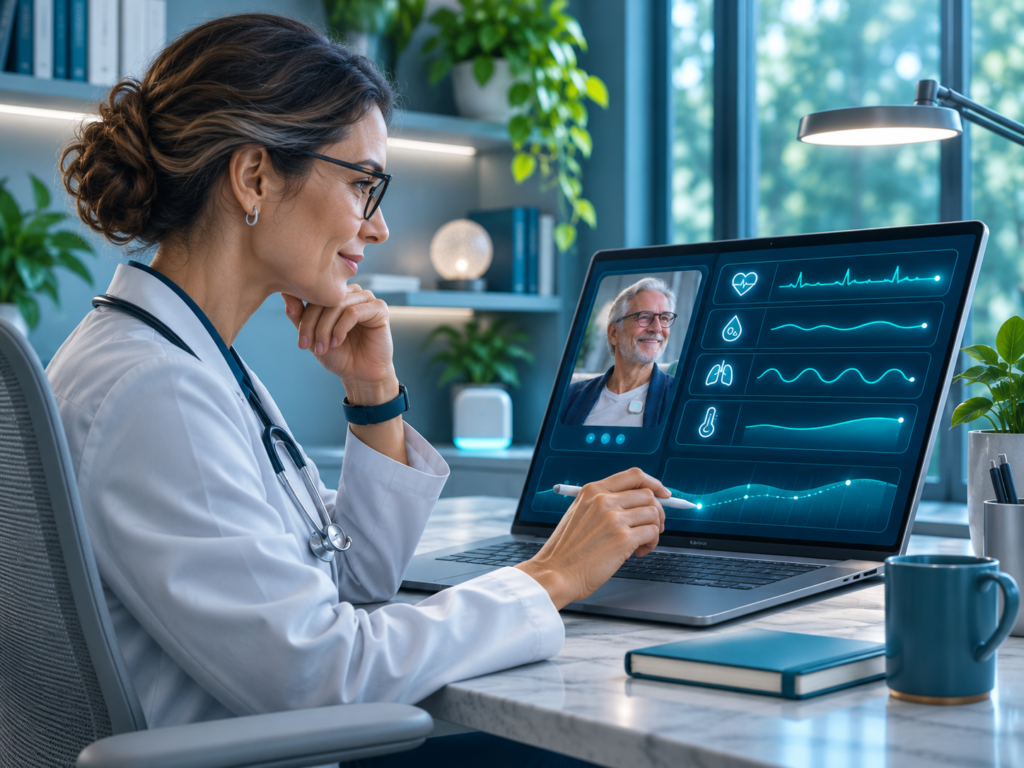
A modern remote patient monitoring system combines physiological sensors, local communication technology, data storage, and a process for clinical review.
The patient sees only part of this infrastructure.
A wearable patch or connected device may appear relatively simple, but its usefulness depends on what happens after a measurement is collected.
The Five Components of a Home Monitoring System
1. Physiological sensing
A sensor detects a measurable signal associated with a bodily function.
Examples include electrical signals from the heart, optical changes associated with blood flow, or movement of the chest during breathing.
2. Signal processing
The system converts raw sensor signals into measurements or recordings.
Depending on the device, this may involve calculating heart rate, estimating respiratory rate, or recording an ECG waveform.
3. Wireless transmission
Measurements are transferred using Bluetooth, Wi-Fi, cellular connectivity, or another supported communication method.
Some systems store information temporarily when a connection is unavailable.
4. Data organization
Measurements are presented through a mobile application, caregiver dashboard, or clinical monitoring portal.
The dashboard may display time-series charts, baseline comparisons, signal-quality indicators, and alerts.
5. Clinical review and response
When the arrangement includes professional monitoring, clinicians review relevant measurements and determine whether the information warrants follow-up, treatment review, or further investigation.
This final component determines whether the monitoring arrangement functions as a managed healthcare service rather than merely a personal recording device.
Home Monitoring Data Flow
| Stage | Action | Result |
|---|---|---|
| Sensor | Captures physiological activity | Raw health signal |
| Processing | Estimates or calculates a measurement | Interpretable value |
| Connectivity | Transfers available information | Data reaches an application or platform |
| Dashboard | Displays measurements and trends | Organized clinical context |
| Review | Assesses relevant changes | Follow-up decision |
| Response | Contacts the individual when appropriate | Clinical intervention or further assessment |
A connected device does not automatically guarantee the presence of every stage.
For example, a person may be able to view heart-rate information on their smartphone without that information being transmitted to a physician.
This distinction is central to Remote Health Monitoring, which encompasses both connected home measurements and programs that incorporate those measurements into clinical care.
Which Vital Signs Can Be Monitored Continuously?
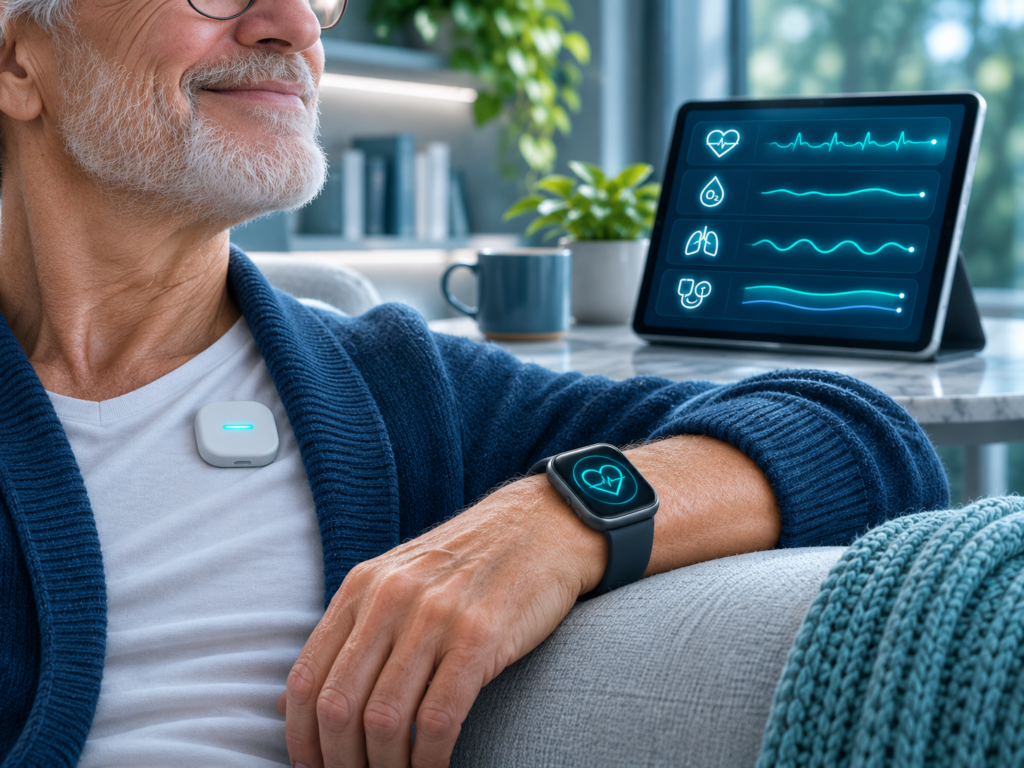
The ability to monitor a physiological parameter continuously depends on the sensing method, device design, intended clinical use, and conditions under which the measurement is taken.
Some parameters are well suited to extended recordings. Others still require periodic measurements for reliable clinical decision-making.
Heart Rate and Cardiac Rhythm
Heart rate measures the number of heartbeats per minute.
Many wearable devices use photoplethysmography, or PPG, to estimate pulse rate by detecting optical changes associated with blood circulation.
Clinical ECG monitors, by contrast, use electrodes to record the heart’s electrical activity.
These methods provide related but different information.
A pulse-rate sensor can estimate how quickly the heart is beating. An ECG recording can reveal aspects of the electrical rhythm that a pulse-rate measurement alone cannot establish.
For an older person experiencing unexplained palpitations, dizziness, or suspected intermittent arrhythmia, a clinician may recommend extended ECG monitoring.
A personal smartwatch can be useful for noticing possible irregularities, but alerts should not be interpreted as confirmed diagnoses.
Respiratory Rate
Respiratory rate describes the number of breaths taken per minute.
Wearable systems may estimate breathing from chest movement, electrical signals, impedance changes, or combinations of sensor inputs.
Respiratory patterns may be relevant when monitoring a person with chronic respiratory disease, an acute illness, or recovery following hospitalization.
However, breathing measurements can become less reliable during movement, changes in posture, or poor sensor contact.
An increasing recorded respiratory rate should prompt assessment of the individual and the quality of the measurement rather than an automatic conclusion about the cause.
Blood Oxygen Saturation
Oxygen saturation, commonly displayed as SpO₂, estimates the percentage of hemoglobin carrying oxygen.
Pulse oximeters generally rely on optical sensing.
Some devices are designed for brief fingertip measurements. Others support extended or overnight oxygen recording.
For individuals with certain respiratory conditions, clinician-directed monitoring may help identify patterns requiring further evaluation.
However, pulse oximeters have important accuracy limitations.
Motion, poor circulation, skin temperature, nail products, sensor placement, and skin pigmentation can influence readings. Certain devices may overestimate oxygen saturation in some circumstances.
An apparently reassuring oxygen reading must never override severe breathing symptoms or other signs of medical distress.
Blood Pressure
Blood pressure is an essential cardiovascular measurement, but continuous home blood pressure monitoring is more complicated than continuous pulse recording.
Conventional home monitors use an inflatable cuff to estimate systolic and diastolic pressure.
Ambulatory blood pressure monitors can collect measurements automatically over a 24-hour period, commonly at scheduled intervals. This is repeated monitoring, not necessarily a continuous beat-to-beat measurement.
Some wearable technologies attempt to estimate blood pressure without a cuff using pulse-wave characteristics or related techniques.
These technologies remain an active research area, but consumer cuffless blood-pressure estimates should not be assumed accurate enough for clinical diagnosis or medication management.
The American Heart Association’s 2025 guidance advises against using cuffless blood-pressure devices for hypertension diagnosis or management until their precision and reliability are adequately established.
For routine home hypertension management, validated upper-arm cuff monitoring remains the preferred approach.
Body Temperature
Temperature monitoring may involve skin-mounted sensors, thermometers, or wearable systems.
An important distinction exists between skin temperature and core body temperature.
Skin temperature is affected by ambient conditions, clothing, activity, and local blood circulation.
A change in skin temperature can be useful as part of a longer trend, but it does not necessarily represent the same measurement as an oral, tympanic, or other clinically appropriate body-temperature reading.
When fever is suspected, a suitable clinical thermometer may still be necessary.
Continuous Glucose Monitoring
Continuous glucose monitors, or CGMs, use a small sensor to estimate glucose concentration in interstitial fluid beneath the skin.
They provide repeated readings and show how glucose changes over time.
For appropriately selected individuals with diabetes, this can reveal glucose variability, overnight patterns, or responses to medication and meals.
CGM measurements are not identical to direct blood glucose measurements, and differences can occur during rapid glucose changes.
The suitability of a particular system depends on its labeled indications, the person’s diabetes treatment, alert requirements, and medical recommendations.
Importantly, a smartwatch claiming to measure blood glucose independently without an appropriate glucose sensor should not be treated as a substitute for an authorized CGM.
What Can Be Continuously Monitored at Home?
| Physiological parameter | Common sensing method | Continuous capability | Important consideration |
|---|---|---|---|
| Heart rate | ECG or optical pulse sensing | Often possible | Accuracy varies with activity and device |
| Cardiac rhythm | ECG electrodes | Possible with suitable monitors | Rhythm interpretation requires appropriate review |
| Respiratory rate | Motion, ECG-derived signals, impedance, radar | Possible with selected systems | Movement can impair accuracy |
| Oxygen saturation | Optical pulse oximetry | Possible with selected devices | Sensor accuracy and intended use vary |
| Blood pressure | Inflatable cuff | Usually periodic | Cuffless estimates should not replace validated clinical measurements |
| Skin temperature | Thermal sensor | Often possible | Not equivalent to core temperature |
| Blood glucose trends | Interstitial glucose sensor | Repeated automated measurements | Sensor lag and device-specific indications apply |
| Body weight | Connected scale | Periodic | Daily trends may be clinically valuable |
The most effective home monitoring arrangement may therefore combine a continuous wearable sensor with several scheduled measurements.
Who Benefits Most From Continuous Home Monitoring?
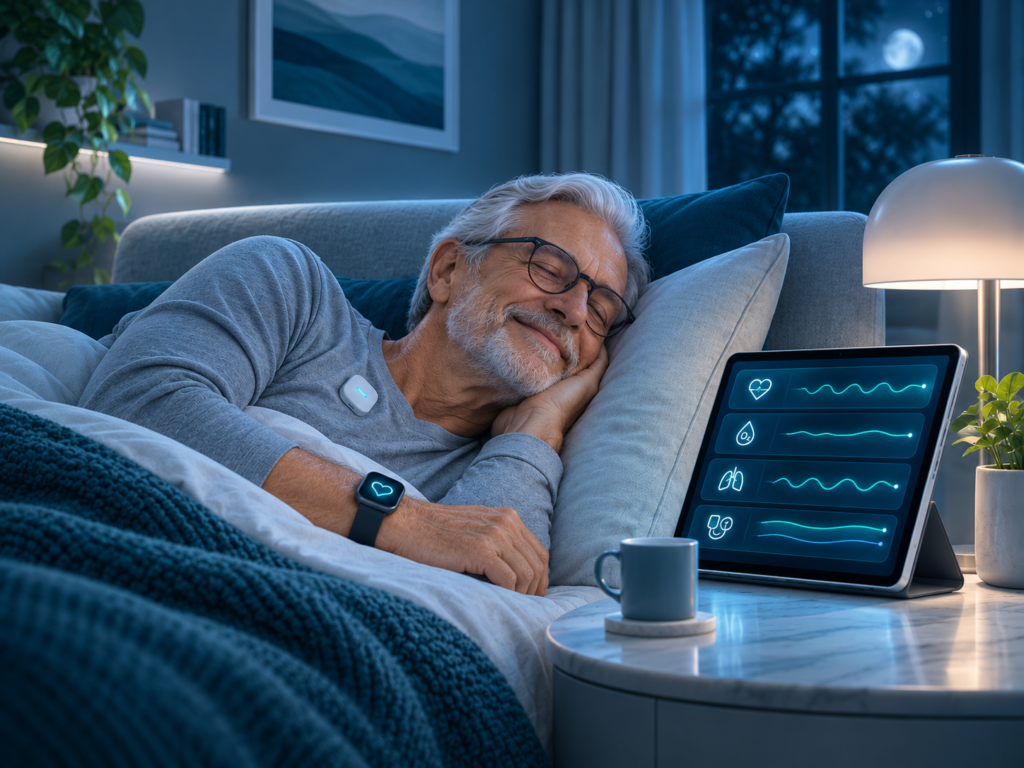
The strongest justification for continuous monitoring is a defined clinical need.
An older adult who is medically stable and comfortable performing occasional measurements may not require uninterrupted monitoring.
By contrast, an individual with fluctuating symptoms, a recent hospital discharge, or a condition requiring closer observation may benefit from a structured monitoring program.
Older Adults With Cardiovascular Conditions
Extended rhythm recording may be useful when a clinician is investigating intermittent palpitations or suspected arrhythmias.
For a person with heart failure, monitoring may also include daily weight, blood pressure, symptoms, and selected physiological trends.
Heart rate alone cannot reliably establish whether fluid retention is worsening.
The interpretation becomes more useful when several appropriate measurements are considered together.
Individuals With Chronic Respiratory Disease
Some people with chronic lung conditions require closer attention to oxygen saturation, respiratory rate, and symptoms.
Overnight measurements may help identify patterns that daytime observations do not capture.
However, home oxygen data should be used within an individualized care plan. Oxygen targets and escalation instructions can differ significantly between individuals.
Older Adults Recovering After Hospitalization
The period following discharge can involve medication adjustments, reduced mobility, fatigue, and changing physiological demands.
Selected monitoring programs may help clinicians assess recovery without requiring every observation to occur in a hospital.
The appropriate monitoring duration depends on the condition and treatment plan.
Individuals Managing Diabetes
CGM may be appropriate for people whose treatment creates a risk of hypoglycemia or whose glucose patterns would benefit from closer assessment.
For older adults, device selection must also account for vision, dexterity, cognition, and the ability to respond to alerts.
Individuals With Frailty or Multiple Chronic Conditions
An individual living with several conditions may experience changes that are difficult to interpret from a single measurement.
Nevertheless, multiple diagnoses do not automatically justify monitoring every available vital sign.
A more practical approach is to identify the two or three measurements most likely to change clinical decisions.
Clinical Suitability Matrix
| Individual situation | Potential monitoring approach | Primary clinical question |
|---|---|---|
| Suspected intermittent arrhythmia | Clinician-selected ECG monitor | Are abnormal rhythms occurring? |
| Heart failure follow-up | Connected scale, blood pressure and symptom tracking | Is the person’s condition changing? |
| Chronic respiratory disease | Appropriate oxygen monitoring and symptom review | Are breathing or oxygen patterns worsening? |
| Diabetes requiring closer management | Suitable CGM system | Are glucose trends outside the individualized plan? |
| Recovery after discharge | Condition-specific wearable or connected devices | Is recovery progressing as expected? |
| Stable older adult without a specific monitoring indication | Periodic validated measurements | Is additional continuous data necessary? |
Benefits of Continuous Vital Sign Monitoring at Home
Continuous monitoring can improve visibility into physiological changes occurring outside medical appointments.
Its potential advantages are clinical, practical, and organizational.
However, more information does not automatically translate into better medical outcomes. Benefits depend on patient selection, device performance, follow-up, and the intervention available.
1. Greater Visibility Between Appointments
Traditional appointments provide information from a limited period.
Extended monitoring can preserve measurements from evenings, overnight periods, and ordinary daily activities.
This may help clinicians understand symptoms that are absent during an office visit.
2. Better Recognition of Individual Trends
A change relative to the individual’s usual pattern can sometimes be more informative than an isolated reading.
For example, a gradual rise in resting heart rate may warrant closer attention even when the absolute value does not appear unusually high.
The cause may be benign, related to activity or medication, or associated with illness. Additional context is essential.
3. More Detailed Symptom Correlation
When an individual records dizziness, fatigue, or breathlessness, clinicians may be able to compare the reported time with available sensor measurements.
This can assist the evaluation of intermittent symptoms.
4. Reduced Dependence on Manual Recording
Connected devices can reduce the need to write measurements in notebooks or enter information manually.
Automatic synchronization may make longitudinal records easier to maintain.
This advantage is especially relevant when an older individual has difficulty using small screens, remembering measurement schedules, or handling multiple devices.
5. Better-Informed Remote Follow-Up
Monitoring information can give clinicians additional context before a scheduled remote consultation.
Instead of asking only how an individual has felt recently, the clinician may also be able to review relevant physiological changes.
6. Greater Caregiver Awareness
With appropriate permission, caregivers may have access to selected measurements or alerts.
This can be useful when relatives live in different households.
However, caregiver access should not create an assumption that someone is watching the information continuously unless such supervision has been explicitly arranged.
7. Potentially More Targeted Clinical Resources
A well-designed monitoring program can help prioritize which individuals require contact or additional assessment.
But monitoring can also increase unnecessary consultations when alerts are poorly configured.
The objective is not simply earlier notification. It is earlier recognition of meaningful change followed by an appropriate response.
Remote Patient Monitoring Devices for Home Use
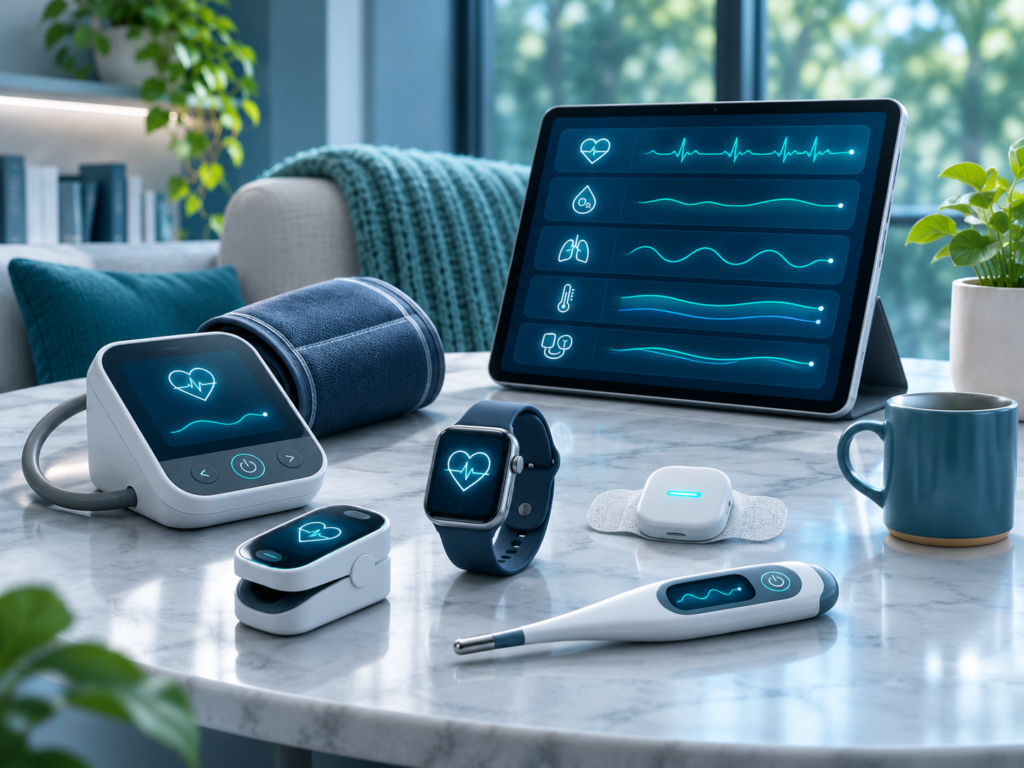
Remote patient monitoring devices differ substantially in what they measure, how they collect information, and whether they are intended for personal wellness or clinical use.
A useful distinction is between consumer-accessible equipment and devices supplied through healthcare programs.
Some home monitoring products can be obtained directly through retail channels, including Amazon.
Other systems require professional enrollment, prescription arrangements, or a contract with a healthcare provider.
Wearable ECG Patches
Adhesive cardiac patches record electrical activity through electrodes positioned against the skin.
They are commonly used for extended rhythm observation when clinically indicated.
A patch may provide information about heart rate, heart rhythm, and, depending on the design, additional physiological parameters.
Examples of clinical monitoring technologies include:
VitalConnect VitalPatch: A wearable biosensor system used for extended physiological monitoring. Supported functions depend on the specific model and monitoring platform and may include ECG, heart rate, respiratory rate, movement, and posture.
BioIntelliSense BioButton: A wearable remote monitoring system whose FDA-cleared indications include continuous physiological data collection in home and healthcare settings while an adult patient is at rest. Its intended use and measurement limitations must be checked carefully.
These systems should not automatically be treated as ordinary consumer products or independent emergency-response devices.
Connected Blood Pressure Monitors
A validated automatic upper-arm cuff is a practical component of many home monitoring arrangements.
Examples of established product families include connected Omron and Withings blood pressure monitors.
The exact model, cuff size, clinical validation status, and connectivity options should be confirmed before selection.
A connected blood pressure monitor may record measurements and transfer them to an application, but this does not make blood pressure measurement continuous.
Connected Pulse Oximeters
Fingertip pulse oximeters provide oxygen saturation and pulse-rate estimates.
Selected devices can also record measurements over longer periods.
A system intended for overnight recording may differ from a simple fingertip device in sensor design, recording capacity, and software.
For medical decision-making, verify the particular product’s regulatory status, measurement limitations, and intended patient population.
Continuous Glucose Monitors
Examples of established glucose-monitoring product families include Dexcom and Abbott systems.
Some devices require prescriptions or are intended for particular treatment groups, while selected over-the-counter systems have different labeled indications.
A CGM is not a general-purpose replacement for a blood pressure monitor, oxygen sensor, or ECG recorder.
It serves a separate physiological monitoring purpose.
Consumer Smartwatches and Health Wearables
Smartwatches and rings may record heart rate, movement, sleep-related information, and selected additional signals.
Certain models also offer ECG recording or irregular-rhythm notifications.
Their strengths include convenience, familiar interfaces, and relatively low daily user effort.
The limitation is that wellness features, medical-device functions, and sampling schedules differ between products.
A watch capable of displaying heart rate is not necessarily suitable for clinical respiratory monitoring or emergency surveillance.
Device Category Comparison
| Device category | Primary function | Typical acquisition route | Continuous capability |
|---|---|---|---|
| Medical ECG patch | Extended cardiac recording | Clinical provider | Often continuous ECG |
| Multi-parameter medical patch | Several physiological signals | Clinical monitoring program | Depends on model and indication |
| Connected blood pressure cuff | Blood pressure readings | Retail or provider | Intermittent |
| Fingertip pulse oximeter | Oxygen and pulse spot checks | Retail | Usually intermittent |
| Overnight oxygen recorder | Extended oxygen trend recording | Retail or clinical provider | Device-dependent |
| CGM | Glucose trend monitoring | Prescription or eligible OTC pathway | Frequent automated glucose readings |
| Smartwatch | General health and selected medical features | Retail | Depends on each measured parameter |
A useful purchasing principle is to identify which measurement matters clinically before selecting the device that produces it.
Vital Signs Monitor vs Smartwatch vs Medical Patch
The phrase vital signs monitor can describe anything from a bedside multi-parameter unit to a connected consumer device.
A smartwatch and a medical patch may appear to perform similar functions because both can display heart-rate information.
Their clinical roles, however, can be very different.
Dedicated Home Vital Signs Monitor
A dedicated monitoring device is designed primarily to capture specific physiological information.
It may provide a more focused interface, fewer unrelated functions, or direct integration with a healthcare service.
The main advantage is purpose-specific measurement.
The principal limitation is that many dedicated devices monitor only one or two parameters.
Smartwatch
A smartwatch combines health measurements with ordinary consumer functions.
This can improve adherence because the device already fits into daily life.
However, measurement intervals, sensor contact, battery demands, and regulatory indications vary.
A smartwatch should be evaluated feature by feature rather than regarded as a universally reliable medical monitor.
Clinical Wearable Patch
A medical patch is designed around particular physiological measurements and intended use conditions.
Some patches can collect signals without requiring the individual to interact with a display.
This may be advantageous for selected older adults.
Nevertheless, adhesive tolerance, skin health, replacement schedules, and transmission requirements must be considered.
Comparison of Monitoring Approaches
| Evaluation factor | Dedicated home monitor | Consumer smartwatch | Clinical wearable patch |
|---|---|---|---|
| Main purpose | Specific measurements | Multi-purpose personal use | Condition-specific physiological recording |
| Continuous recording | Device-dependent | Feature-dependent | Often supported for selected signals |
| User interaction | Usually required for spot checks | Routine charging and wearing | Often limited after setup |
| ECG capability | Only selected models | Selected models and features | Common in ECG-specific patches |
| Blood pressure | Often available with a cuff | Varies; estimates may be unsuitable clinically | Usually not a substitute for cuff measurement |
| Clinical integration | Device-dependent | Platform-dependent | Often linked to clinical services |
| Comfort | Not continuously worn in many cases | Wrist-based | Adhesive contact with skin |
| Retail availability | Common | Common | Frequently provider-mediated |
Which Approach Is Better for an Older Person?
There is no universal winner.
An individual who needs occasional blood pressure readings may be better served by a simple upper-arm monitor.
Someone undergoing clinical investigation for intermittent arrhythmia may require extended ECG recording.
A person interested in general activity and heart-rate trends may find a smartwatch adequate.
A complex patient whose condition requires several measurements may need a combination of devices within a professionally coordinated monitoring program.
The appropriate choice follows the clinical question, not the number of features advertised.
Costs and Practical Ownership Considerations
The cost of continuous home monitoring extends beyond the initial device.
A relatively inexpensive wearable may involve recurring sensor replacements, application subscriptions, or connectivity requirements.
A professionally managed monitoring program may include equipment, patient support, clinical review, and ongoing service fees.
These services cannot be evaluated solely by comparing device retail prices.
What Determines the Total Cost?
| Cost component | Common examples | What to verify |
|---|---|---|
| Initial equipment | Monitor, wearable, gateway | Purchase, rental, or loan arrangement |
| Consumables | Adhesive patches, sensors | Replacement frequency and availability |
| Software | Application or cloud platform | Required subscription and features |
| Connectivity | Wi-Fi or cellular data | Whether connectivity is included |
| Professional services | Clinical review or monitoring | Review frequency and response commitments |
| Maintenance | Batteries, accessories, support | Warranty and replacement process |
| Training | Setup and caregiver instruction | Whether assistance is included |
Retail Equipment vs a Managed Monitoring Service
A retail device may be appropriate for a person who can measure, interpret, and share information according to an established medical plan.
A managed monitoring service is different.
It may include clinician-selected equipment, defined monitoring procedures, review of transmitted information, and communication with the patient.
The additional cost can reflect these services rather than more advanced hardware alone.
Understanding Medicare and Insurance Coverage
In the United States, certain remote physiologic monitoring services may qualify for Medicare reimbursement when applicable requirements are met.
Coverage and billing depend on the clinical service, device qualifications, documentation, current rules, and individual insurance circumstances.
A consumer wearable purchase does not automatically qualify as a reimbursable remote patient monitoring service.
Individuals should confirm costs and coverage with their healthcare provider and insurer before enrollment.
Operational Considerations for Healthcare Organizations
For healthcare providers, device selection is also an infrastructure decision.
Operating a monitoring program may involve clinical staffing, software licensing, patient onboarding, technical support, and data governance.
An organization comparing the development of a new healthcare platform against the acquisition of an existing digital-health operation may separately examine a business for sale opportunity.
That business decision is distinct from determining which physiological monitoring device is medically appropriate for an individual.
How to Choose a Home Monitoring System for Seniors
A monitoring system should be evaluated as a complete care arrangement rather than a collection of individual features.
The most expensive device is not necessarily the most useful.
A technically impressive monitor can become ineffective if the individual cannot wear it comfortably, maintain connectivity, or understand its alerts.
Start With the Clinical Objective
Before considering products, establish what the monitoring system is expected to accomplish.
Is the intention to investigate intermittent symptoms?
Track a known respiratory condition?
Review glucose trends?
Support post-discharge follow-up?
Or provide basic caregiver visibility?
These purposes require different equipment.
Evaluate Measurement Validity
Check whether the device has been clinically validated for its intended measurements and population.
For devices marketed for clinical use in the United States, examine applicable FDA authorization or clearance and, importantly, the specific indications for use.
Regulatory status for one feature does not establish clinical validity for every function promoted by a manufacturer.
Examine Connectivity Requirements
Some monitoring systems require a nearby smartphone.
Others use dedicated gateways or cellular connections.
If an older individual does not regularly use a smartphone, a device requiring frequent manual pairing may be unsuitable.
Home internet reliability should also be assessed.
Consider Physical Usability
Important considerations include:
- Skin sensitivity and adhesive allergies
- Ability to position or fasten the device
- Battery life and charging effort
- Screen readability
- Hearing and vision limitations
- Manual dexterity
- Comfort while sleeping
- Cognitive ability to understand instructions
These characteristics can determine whether monitoring remains consistent over several weeks.
Confirm the Alert Arrangement
Determine who receives an alert, what it means, and how quickly someone is expected to respond.
A notification sent to a smartphone is not equivalent to a staffed emergency monitoring service.
Verify Data Access
An individual may need to share information with a physician, adult child, or professional caregiver.
Confirm whether the platform allows authorized access and whether permissions can be changed or revoked.
Device Selection Checklist
| Question | Why it matters |
|---|---|
| Does the device measure the required vital sign? | Prevents reliance on unrelated features |
| Is the measurement validated for its intended use? | Supports appropriate clinical interpretation |
| Can the individual use or wear it comfortably? | Improves practical adherence |
| Does it record during sleep? | Relevant for overnight monitoring |
| What happens during connectivity loss? | Identifies possible data gaps |
| Who reviews incoming information? | Clarifies monitoring responsibility |
| How are alerts delivered? | Establishes appropriate expectations |
| Are consumables required? | Affects long-term cost |
| Can clinicians access the data? | Supports care coordination |
| Is emergency monitoring actually included? | Prevents a false sense of protection |
Setup and Daily Operation of a Continuous Monitoring System
A successful monitoring program begins before the first sensor is activated.
Initial setup should establish accurate measurement, clear responsibilities, and a realistic monitoring routine.
Step 1: Establish the Monitoring Plan
A clinician should identify the relevant physiological measurements, monitoring duration, and intended clinical response.
For people with complex health conditions, this step is especially important.
Step 2: Record Baseline Information
Where clinically appropriate, establish a reference period that reflects the person’s usual measurements.
Record relevant information such as medication schedules, symptoms, activity patterns, and existing diagnoses.
A baseline allows later changes to be interpreted in context.
Step 3: Position and Activate the Sensor
Follow the manufacturer’s placement instructions.
For an adhesive patch, verify that the skin is suitable, the device is positioned correctly, and the sensor maintains adequate contact.
For optical wearables, positioning and fit can affect measurement quality.
Step 4: Test Connectivity
Confirm that measurements reach the intended application or clinical system.
If the device uses a smartphone or gateway, check the required connection and battery arrangements.
Step 5: Configure Appropriate Notifications
If alert features are available, use the settings prescribed or recommended by the responsible healthcare team.
An excessive number of notifications can reduce attention to meaningful changes.
Step 6: Establish a Daily Review Routine
A practical routine might include a brief check of device status, connectivity, battery level, and any clinician-requested symptom information.
Caregivers should understand which tasks are expected of them and which are handled by the monitoring service.
Step 7: Reassess the Arrangement
Monitoring needs can change following medication adjustments, recovery, or a new diagnosis.
A system should be periodically reviewed to determine whether continued monitoring is clinically useful.
Illustrative Monitoring Workflow
| Time or event | Activity | Responsible person |
|---|---|---|
| Initial setup | Device education and baseline assessment | Healthcare team and individual |
| Daily | Confirm device operation | Individual or caregiver |
| Scheduled review | Examine relevant trends | Assigned clinician, if enrolled in a clinical program |
| Significant alert | Verify data and follow escalation plan | Designated responder |
| Follow-up appointment | Review measurements and clinical progress | Healthcare professional |
This is an example of how responsibilities might be organized, not a universal monitoring schedule.
Latest Technology and Upcoming Trends in Continuous Monitoring
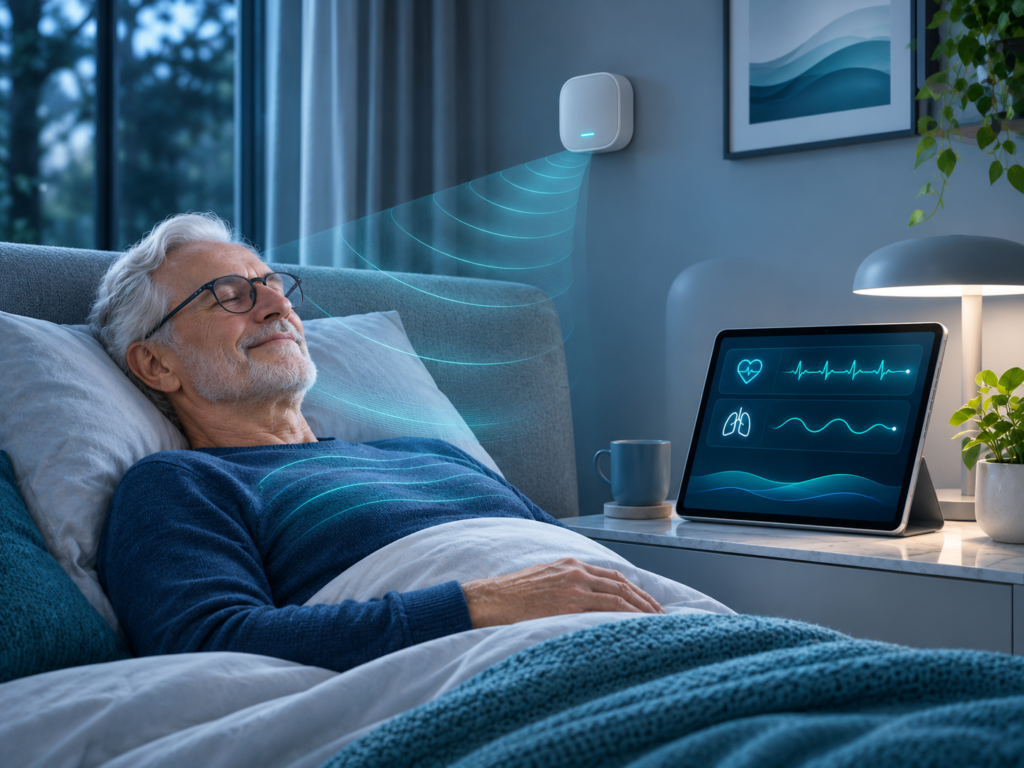
Home vital sign monitoring is gradually moving beyond isolated sensors toward systems capable of collecting several physiological measurements with less manual effort.
The most important technological developments are not necessarily those that generate the greatest amount of data.
They are the ones that improve measurement reliability, reduce operational burden, and help distinguish useful signals from irrelevant fluctuations.
1. Multi-Parameter Wearable Biosensors
A conventional home monitoring arrangement might require separate devices for heart rate, temperature, and activity.
Multi-parameter wearable biosensors can combine several sensing functions into a single patch or wearable unit.
This can reduce the number of devices an individual must maintain.
However, each measured parameter still requires appropriate validation. A device’s ability to record several signals does not establish that every output is equally accurate.
2. Contactless Respiratory and Heart-Rate Monitoring
Contactless monitoring is one of the more interesting developments in home healthcare.
Radar-based systems can detect small movements associated with breathing and, under suitable conditions, cardiac activity.
Some optical systems use cameras or related sensors to estimate physiological signals without direct skin contact.
The potential advantage is reduced dependence on wearable equipment, particularly during sleep.
However, reliable performance can be affected by body movement, positioning, multiple people in the sensing area, and environmental conditions.
Recent research and device clearances show progress, but these technologies should be evaluated according to their specific validated uses.
A contactless monitor intended to measure respiratory rate at rest should not automatically be assumed capable of reliable detection during walking or of providing life-saving emergency surveillance.
3. Better Separation of Signal and Noise
Motion artifacts remain a major challenge in wearable monitoring.
A loose sensor, temporary loss of skin contact, or unusual movement can create misleading measurements.
More advanced systems increasingly focus on recognizing poor-quality signals before presenting them as meaningful physiological changes.
This is important because a monitoring platform that produces frequent false alarms may become less useful over time.
4. Individualized Physiological Baselines
Fixed reference ranges are useful in clinical medicine, but they do not describe every individual’s normal pattern.
A monitoring system can potentially identify changes relative to a person’s established baseline.
For example, a persistent change in resting respiratory rate may deserve attention even when individual measurements remain within a broadly familiar adult range.
Baseline-sensitive monitoring must still account for normal variability, measurement error, and changing clinical circumstances.
5. Context-Aware Elderly Monitoring
Physiological measurements become more informative when interpreted alongside movement, sleep, activity, and symptom information.
A heart rate of 105 beats per minute may have different significance during a walk than while resting in bed.
Systems that combine physiological measurements with everyday activity information can offer a more complete account of an older person’s condition.
This direction is closely related to ai-based elderly monitoring systems, which explore the integration of activity patterns, physiological data, and changes in day-to-day behavior.
6. Longer Sensor Life and Lower Maintenance
Frequent recharging or sensor replacement can become a barrier to long-term monitoring.
Improvements in low-power electronics, sensor design, and connectivity may reduce the amount of attention required from the individual.
This can be particularly valuable for people with limited mobility or dexterity.
7. More Integrated Clinical Dashboards
Healthcare teams increasingly need systems that organize relevant measurements rather than merely display them.
Future development is likely to focus on more useful trend summaries, flexible monitoring protocols, and better integration with clinical records.
The principal challenge is determining which information deserves attention without overwhelming clinicians with routine data.
Technology Development Matrix
| Technology | Current direction | Potential advantage | Principal limitation |
|---|---|---|---|
| Wearable biosensor patches | Multi-parameter physiological recording | Several measurements from one device | Skin contact and intended-use restrictions |
| Contactless radar | Heart and respiratory measurements without wearables | Reduced physical burden | Motion and environmental interference |
| Optical sensing | Pulse and selected physiological measurements | Compact consumer-friendly devices | Variable accuracy |
| Personalized baseline analysis | Individual trend recognition | Better contextual interpretation | Requires sufficient reliable data |
| Extended-life sensors | Less frequent replacement | Improved usability | Battery and sensor durability |
| Integrated clinical dashboards | Combined device and clinical information | More coordinated review | Workflow and interoperability complexity |
The technology is advancing, but regulatory clearance, clinical validation, and implementation evidence remain more meaningful than promotional claims about sophistication.
Reading Trends and Interpreting Vital Sign Changes
The most important contribution of continuous monitoring is not the number of readings collected.
It is the possibility of understanding how physiological measurements change over time.
A single abnormal value may represent a temporary disturbance, measurement artifact, or clinically important event.
Trend interpretation requires examining several characteristics.
Baseline
What is normal for this particular individual under comparable conditions?
Direction
Is the measurement increasing, decreasing, or remaining relatively stable?
Duration
Has the change occurred briefly or persisted for several hours?
Repetition
Does the same pattern recur at particular times?
Context
Was the individual sleeping, exercising, taking medication, or experiencing symptoms?
Signal Quality
Was the sensor operating correctly when the measurement was recorded?
These questions can be more useful than reacting immediately to every numerical change.
Illustrative Chart: A Changing Resting Respiratory Rate
The following example shows how a hypothetical resting respiratory-rate trend might appear in a monitoring dashboard.
| Day | Illustrative resting respiratory rate | Relative trend |
|---|---|---|
| Day 1 | 16 breaths/min | ▁ |
| Day 2 | 16 breaths/min | ▁ |
| Day 3 | 17 breaths/min | ▃ |
| Day 4 | 18 breaths/min | ▅ |
| Day 5 | 20 breaths/min | █ |
Trend visualization: ▁ ▁ ▃ ▅ █
Illustrative data only. These are not observations from a patient, validated alert thresholds, or a diagnostic model.
A clinician reviewing such a pattern would consider the individual’s baseline, symptoms, measurement conditions, medications, and possible sensor artifacts.
The trend alone cannot identify an infection, heart failure exacerbation, or another diagnosis.
Data Completeness Matters
A monitoring device may remain attached for 24 hours while collecting fewer hours of usable information.
Charging interruptions, movement artifacts, connectivity failures, and sensor contact problems can create gaps.
This distinction is important when evaluating product claims.
Illustrative Chart: Usable Data During a 24-Hour Period
| Time interval | Usable data visualization | Recorded hours |
|---|---|---|
| 12 AM–6 AM | ██████ | 6 of 6 |
| 6 AM–12 PM | ████░░ | 4 of 6 |
| 12 PM–6 PM | ███░░░ | 3 of 6 |
| 6 PM–12 AM | █████░ | 5 of 6 |
| Total | 18 of 24 |
In this hypothetical example:
Usable data coverage = 18 ÷ 24 × 100 = 75%.
Although the device was intended to monitor throughout the day, only 75% of the period contains usable recorded data.
This is an illustrative completeness measure, not a published performance result for any product.
The Difference Between Normal Data and Missing Data
A clinical dashboard should distinguish between a normal physiological measurement and an absence of measurement.
No alert may mean that the monitored values remained within the configured range.
But it may also mean that the sensor was disconnected, data were delayed, or the monitoring service was not actively reviewing the information.
An absence of alerts should never be interpreted as proof of medical stability without understanding how the system operates.
Alerts Thresholds and Emergency Escalation
Alerts are among the most consequential features of home monitoring.
They are also among the easiest to misunderstand.
An alert may indicate a physiological reading outside a configured range, poor sensor contact, low battery, lost connectivity, or another operational issue.
These events do not carry equal clinical significance.
Threshold-Based Alerts
A threshold-based system generates a notification when a measurement crosses a predefined limit.
For example, a clinician may configure a relevant respiratory or heart-rate threshold for a particular individual.
However, a single threshold cannot capture every clinically important situation.
An abnormal value may be produced by movement or sensor malfunction.
Conversely, an individual may experience significant symptoms while a monitor displays apparently acceptable numbers.
Trend-Based Alerts
A trend-based approach examines measurements across time.
It may identify a sustained deviation from an individual’s established pattern.
This can provide useful context, but it also introduces complexity.
A change may reflect ordinary activity, medication effects, sleep, environmental conditions, or illness.
Trend-based notifications should therefore support assessment rather than generate automatic diagnoses.
Alert Fatigue
Excessive notifications create operational problems.
A caregiver who receives repeated false alerts may begin ignoring notifications.
A clinical team confronted with too many low-priority events may struggle to identify those requiring attention.
The quality of the alert system depends on signal reliability, appropriate thresholds, and a defined response pathway.
Emergency Response Is a Separate Service
Not every home monitoring device contacts emergency services.
Some products record data without generating alerts. Others generate notifications only within an app.
Even when alerts are available, they may not be reviewed in real time.
Individuals should establish in advance whether the device is intended for medical surveillance, who receives alerts, and whether emergency dispatch is part of the service.
Practical Escalation Framework
| Situation | Appropriate response principle |
|---|---|
| Routine measurement within the individualized plan | Continue prescribed monitoring |
| Unexpected measurement without symptoms | Check device quality, repeat a suitable measurement if appropriate, and follow the care plan |
| Persistent concerning trend | Contact the designated clinical team according to the plan |
| Device disconnection | Restore operation and assess whether important monitoring has been interrupted |
| Severe or rapidly worsening symptoms | Seek emergency medical assistance immediately |
Severe chest pain, severe difficulty breathing, collapse, new severe confusion, or signs of a stroke require urgent medical assessment.
Never delay emergency care while waiting for a wearable device to confirm a suspected emergency.
Medication changes should not be made solely in response to wearable measurements without instructions from the responsible clinician.
Continuous Monitoring and Telehealth Care Workflows
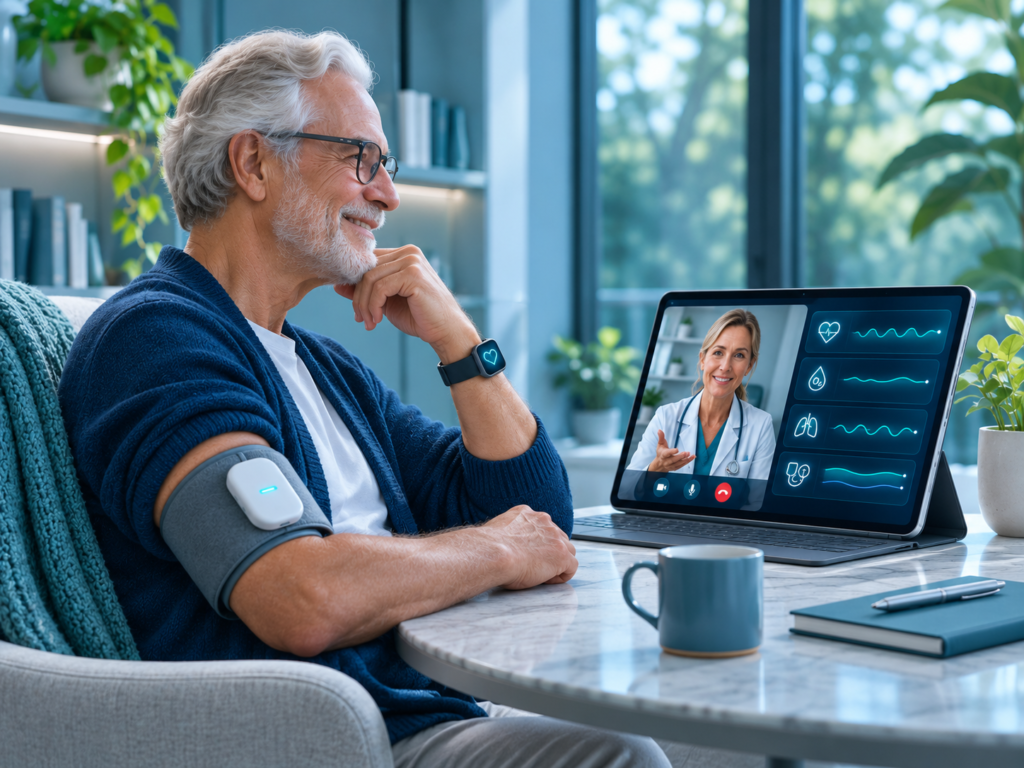
Continuous monitoring becomes more clinically useful when its measurements are incorporated into a structured care process.
The device provides information.
The healthcare service determines how that information influences decisions.
Pre-Consultation Monitoring
Before a remote appointment, a clinician may review relevant measurements collected over several days.
This can make a consultation more specific.
For example, an individual reporting intermittent palpitations may have an extended ECG recording available for review.
A patient with hypertension may provide a series of validated home cuff measurements rather than relying on one isolated reading.
Monitoring After Treatment Changes
Certain medications can affect heart rate, blood pressure, fluid balance, or glucose levels.
When clinically appropriate, a monitoring plan may help the healthcare team assess relevant trends after treatment changes.
The measurements selected should reflect the medication and condition being managed.
Post-Discharge Follow-Up
Following hospitalization, a person may require closer observation for a limited period.
Selected connected devices can support this process when paired with clear expectations about clinical review and escalation.
Continuous monitoring is not automatically necessary for every discharged patient.
Coordinated Caregiver Participation
With authorization, a caregiver may help maintain the device, record symptoms, or communicate observations.
The caregiver should not be expected to interpret complex physiological changes without adequate support.
Integration With Remote Consultations
Continuous monitoring and TeleHealth can complement one another.
Monitoring supplies information collected outside appointments, while remote consultations provide an opportunity for discussion, clinical interpretation, and individualized care planning.
Together, they can support more informed follow-up when implemented appropriately.
Clinical Workflow Model
| Clinical stage | Monitoring contribution | Healthcare team action |
|---|---|---|
| Initial assessment | Establishes available baseline information | Defines clinical objectives |
| Device selection | Matches measurements to the condition | Chooses suitable equipment |
| Monitoring period | Records physiological trends | Reviews according to the service arrangement |
| Concerning change | Provides relevant measurements | Assesses significance and contacts patient when appropriate |
| Follow-up | Supplies longitudinal context | Reviews progress and treatment |
| Discontinuation | Completes monitoring period | Determines whether continued monitoring is necessary |
The strongest programs define the clinical response before collecting the data.
Without that arrangement, home monitoring may generate substantial information without improving the individual’s care.
Common Limitations and Monitoring Risks
Continuous monitoring offers important possibilities, but several limitations deserve close examination.
False Positives
Devices may generate abnormal-looking measurements because of movement, poor contact, or processing errors.
False notifications can create unnecessary anxiety and medical consultations.
False Negatives
A system may fail to detect a clinically important change.
This can occur because the necessary physiological parameter was not measured, the signal was inaccurate, or the device was not operating as expected.
A normal recording is therefore not a guarantee that an individual is medically well.
Motion-Related Artifacts
Walking, repositioning, and other movements can affect certain sensors.
Some medical wearables are specifically intended to measure particular vital signs at rest.
Their performance during substantial activity should not be assumed.
Differences Between Individuals
Circulation, skin characteristics, body position, medical conditions, and other factors may influence measurement performance.
Pulse oximetry is a particularly important example because known limitations can affect the accuracy of oxygen saturation estimates.
Skin Problems
Adhesive patches may cause irritation or become unsuitable for individuals with sensitive or damaged skin.
Long-term wear requires attention to skin integrity and the manufacturer’s instructions.
Connectivity Failures
A device may continue recording locally while its connection to the dashboard is interrupted.
Other devices may stop providing usable information until connectivity is restored.
The presence or absence of offline storage should be verified.
Excessive Data Collection
Monitoring every available parameter can create information that has little relevance to the individual’s clinical needs.
Additional data require interpretation and can increase the likelihood of false alerts.
Psychological Burden
Frequent access to physiological measurements may increase worry in some individuals.
Caregivers may also feel obligated to check dashboards repeatedly.
The monitoring arrangement should support care without turning ordinary daily life into an uninterrupted search for abnormal readings.
Limits of Clinical Responsibility
Individuals should understand whether their data are reviewed automatically, periodically by a clinician, or only during scheduled appointments.
This distinction should be explained before monitoring begins.
The central limitation is that continuous data collection does not necessarily provide continuous medical care.
Privacy Data Security and Caregiver Access
Home monitoring systems can collect highly personal health information.
Some devices also record location-related information, activity patterns, sleep habits, and other behavioral data.
The sensitivity of this information increases when it is transmitted across several applications or shared among caregivers and service providers.
Consent and Authorized Access
An older individual should understand who can access their information and for what purpose.
Where the person has decision-making capacity, their preferences should guide caregiver access.
When another person is legally authorized to act on their behalf, access arrangements should follow the relevant legal and clinical requirements.
Secure Transmission and Storage
Monitoring providers should explain how information is transmitted, stored, and protected.
Important considerations include encryption, authentication, access permissions, retention policies, and procedures for responding to security incidents.
Healthcare Data vs Consumer Wellness Data
Consumer applications and healthcare platforms may operate under different privacy obligations.
In the United States, HIPAA protections apply to certain healthcare entities and their business associates, but not automatically to every consumer health application.
Individuals should not assume that information collected through an ordinary wellness device receives the same protection as a clinical medical record.
Shared Caregiver Dashboards
Shared access can be valuable for relatives who provide care from different locations.
Nevertheless, permissions should be limited to appropriate users.
A practical system should allow access to be reviewed, changed, or revoked when necessary.
Questions to Ask Before Sharing Health Data
| Privacy question | Why it matters |
|---|---|
| Who owns or controls access to the information? | Clarifies user rights |
| Where are measurements stored? | Identifies data-processing arrangements |
| Can information be exported? | Supports continuity of care |
| Can caregiver access be revoked? | Protects individual autonomy |
| Is information shared with third parties? | Reveals additional privacy exposure |
| What happens when the service ends? | Clarifies retention and deletion policies |
| Is access protected by strong authentication? | Reduces unauthorized access risks |
A monitoring platform should protect the individual’s independence as carefully as it measures their physiological condition.
Frequently Asked Questions About Continuous Vital Sign Monitoring
1. What is the best continuous vital sign monitor for home use?
The best continuous vital sign monitor for home use depends on which physiological measurements are clinically necessary.
For extended cardiac recording, a clinician-selected ECG patch may be appropriate. For glucose trends, a suitable continuous glucose monitor may be more useful. Routine hypertension management generally requires a validated upper-arm blood pressure monitor rather than an unvalidated cuffless device.
| Monitoring need | More appropriate device category |
|---|---|
| Extended heart rhythm recording | Medical ECG monitor |
| Glucose trends | CGM |
| Routine blood pressure | Validated upper-arm cuff |
| Overnight oxygen trends | Suitable extended-recording oximeter |
| General wellness trends | Consumer wearable |
No single device should be assumed to measure every vital sign reliably.
2. Can a wearable health monitoring device track vital signs 24 hours a day?
Some wearable health monitoring devices can record selected physiological signals throughout a 24-hour period.
However, continuous wear does not guarantee uninterrupted measurements, transmission, or professional review.
Actual monitoring coverage depends on the device’s sampling schedule, sensor contact, battery, connectivity, and intended use.
3. Are remote patient monitoring devices accurate for elderly patients?
Remote patient monitoring devices can provide clinically useful measurements when appropriately validated and used according to their instructions.
Accuracy depends on the device, physiological parameter, patient characteristics, and measurement conditions.
Older adults may require additional consideration of circulation, movement, skin condition, and device usability.
A medical-device authorization for one function does not establish accuracy for every measurement a product offers.
4. Can continuous vital sign monitoring detect health problems before symptoms appear?
Continuous vital sign monitoring may identify certain physiological changes before an individual recognizes symptoms.
For example, extended recordings can capture intermittent rhythm disturbances or changes in respiratory patterns.
However, an abnormal trend is not a diagnosis, and monitoring cannot reliably predict every deterioration or medical emergency.
The clinical value depends on the condition, the measurement, and appropriate follow-up.
5. How much does a home vital signs monitoring system cost?
The cost of a home vital signs monitoring system depends on whether it is a retail device or a professionally managed clinical service.
| Expense | Typical charging arrangement |
|---|---|
| Personal monitoring device | One-time purchase |
| Disposable sensor | Recurring replacement |
| Connected monitoring application | Free or subscription-based |
| Clinical monitoring service | Service-specific fee |
| Connectivity | Included or separately paid |
Compare total operating costs, not simply the initial equipment price. Coverage and reimbursement should be verified individually.
People Also Ask About Home Vital Signs Monitoring
1. How do you monitor vital signs at home without a nurse?
Vital signs can be monitored at home using suitable blood pressure monitors, pulse oximeters, thermometers, wearable heart-rate sensors, and other condition-specific devices.
Some connected monitors automatically transmit measurements to an application or healthcare provider.
However, home measurement without a nurse is different from professional clinical monitoring. Individuals should have instructions for using the equipment and responding to concerning readings.
2. Can a smartwatch replace a medical vital signs monitor?
A smartwatch cannot universally replace a medical vital signs monitor.
Some watches offer useful health features, but their measurements and clinical indications vary.
| Feature | Smartwatch | Dedicated medical monitor |
|---|---|---|
| Heart-rate trends | Common | Available |
| Medical ECG | Selected features and models | Available in suitable devices |
| Validated cuff blood pressure | Generally not provided | Available |
| Clinical integration | Platform-dependent | Device-dependent |
| Emergency monitoring | Not automatically included | Service-dependent |
Device selection should follow the measurement and clinical purpose.
3. Is continuous blood pressure monitoring possible at home?
Yes. Ambulatory blood pressure monitors can automatically collect repeated blood pressure readings over a day and night, although these are generally intermittent cuff measurements rather than continuous beat-to-beat recordings.
Cuffless wearable blood-pressure technology is developing, but current clinical guidance cautions against relying on insufficiently validated cuffless estimates for hypertension diagnosis or management.
4. What vital signs should caregivers monitor in elderly patients?
Caregivers should monitor the measurements specified in the older individual’s care plan.
These may include blood pressure, heart rate, oxygen saturation, respiratory rate, temperature, or glucose.
The most useful parameters depend on the individual’s medical conditions and treatment.
Routine monitoring of every available vital sign is not necessarily beneficial.
5. Can home monitoring devices alert family members during an emergency?
Some home monitoring systems can send notifications to authorized relatives or caregivers.
However, an alert is not equivalent to emergency assistance.
The system may not detect every emergency, and notifications may be delayed or missed.
Families should verify the device’s actual emergency functions, monitoring arrangements, connectivity requirements, and response procedures before relying on it.
Editorial Insights on Continuous Monitoring at Home
Continuous vital sign monitoring is changing how physiological information can be collected outside hospitals.
Wearable sensors, extended ECG recording, connected medical equipment, and emerging contactless technologies are making it possible to examine patterns that once required more specialized environments.
Yet the central question remains clinical rather than technological.
What information is needed, and what will happen when that information changes?
A system that records heart rate every moment may offer little additional value if the individual’s primary need is accurate home blood pressure management.
Conversely, an appropriately selected extended ECG monitor may provide essential information when brief examinations have failed to capture intermittent symptoms.
For older adults, the most successful monitoring arrangements are likely to be those that combine reliable measurements with minimal daily effort, appropriate clinical oversight, and clear caregiver responsibilities.
The next stage of home monitoring will increasingly be defined by its ability to provide useful context rather than simply generate more data.
Better sensor validation, improved signal-quality assessment, more individualized interpretation, and stronger integration with clinical care could make home monitoring more practical and informative.
That progress should also strengthen independence.
An older person should not have to manage an unnecessarily complicated collection of medical devices to receive appropriate monitoring.
The goal is to make clinically relevant information available when it is needed, while preserving comfort, privacy, and ordinary daily life.
For broader coverage of connected healthcare devices, elderly care technologies, and remote medical services, return to the Homepage and explore the TeleGeriatric resource center.
The future of home vital sign monitoring is not simply continuous measurement. It is reliable measurement connected to meaningful clinical decisions.