Advanced RPM Systems for Senior Home Monitoring
Amazon Affiliate Disclosure: TeleGeriatric may earn a commission from qualifying purchases when readers use affiliate links to purchase home health monitoring devices or related products. This does not change the editorial standards, informational purpose, or clinical caution used in this article.
Medical Note: This article is for informational education only. Advanced RPM systems can support care decisions, but they do not replace emergency care, in-person clinical evaluation, licensed medical advice, or a clinician’s judgment.
Updated on July, 2026
Advanced RPM systems are changing how older adults are monitored at home, especially when chronic disease, frailty, fall risk, heart failure, hypertension, diabetes, medication changes, or post-hospital recovery make ordinary check-ins too slow. The older model of care waited for a person to feel worse, call the clinic, schedule a visit, travel to the office, and explain what happened. Advanced remote patient monitoring moves part of that observation into the home, where subtle changes often appear days before a crisis becomes obvious.
In its simplest form, remote patient monitoring allows a person to collect health data through connected devices such as blood pressure monitors, weight scales, glucose monitors, and pulse oximeters, with the data transmitted to a health care provider for review and management. CMS describes RPM as connected medical-device-based monitoring for chronic or acute conditions, including education, device supply, and treatment management as key service components.
But advanced RPM systems go further. They do not merely collect numbers. They organize patterns, prioritize alerts, connect caregivers with clinicians, and help care teams decide which change matters today. For older adults, that difference is crucial. A single blood pressure reading may be unremarkable. A rising blood pressure trend after a medication change may be meaningful. A two-pound weight gain may look small. In a person with heart failure, a rapid fluid shift may require attention. A low oxygen reading may be a device error. Repeated low oxygen readings with shortness of breath and reduced activity may tell a different story.
For readers who want the broader care model first, the full RPM guide explains how remote patient monitoring fits into senior care, chronic disease management, and home-based clinical oversight.
Quick Picks
What Are Advanced RPM Systems?
What Are Advanced RPM Systems For?
Who Needs Advanced RPM Systems?
How Advanced RPM Systems Work
Core Devices Used in Advanced RPM Systems
Advanced RPM Systems vs Basic Home Monitoring
Benefits of Advanced RPM Systems for Seniors
Clinical Use Cases for Advanced RPM Systems
AI-Based Elderly Monitoring Systems
Continuous Vital Sign Monitoring at Home
Smart Dashboards for Caregivers and Physicians
How to Choose an Advanced RPM System
Advanced RPM Systems Framework
Privacy, Accuracy and Safety Considerations
Upcoming Trends and Latest Technology
Advanced RPM Systems FAQ
People Also Ask
Conclusion: Editorial Insights
What Are Advanced RPM Systems?
Advanced RPM systems are connected home health monitoring platforms that collect physiologic, behavioral, and care-management data from an older adult’s home and turn that information into usable clinical insight.
A basic remote monitoring setup may include a Bluetooth blood pressure cuff and a simple app. An advanced RPM system may include several connected devices, automatic data transmission, caregiver alerts, clinician dashboards, medication reminders, symptom surveys, escalation rules, care-team messaging, and trend analysis.
The best way to understand advanced RPM systems is to see them as a home-based observation layer. They do not turn the home into a hospital. They give the care team a clearer view of what is happening between visits.
An advanced RPM system may track:
| Monitoring Area | Common Data Collected | Why It Matters in Older Adult Care |
|---|---|---|
| Blood pressure | Systolic, diastolic, pulse | Helps monitor hypertension, medication response, dizziness risk, and cardiovascular strain |
| Glucose | Fasting, post-meal, trend patterns | Supports diabetes management and identifies high or low glucose risk |
| Oxygen saturation | SpO2, pulse rate | Useful for respiratory disease, infection recovery, sleep-related concerns, and cardiopulmonary risk |
| Weight | Daily weight, rapid weight change | Important for heart failure, edema, kidney disease, and fluid retention |
| Heart rhythm | Pulse irregularity, ECG snapshots in some systems | Helps flag rhythm concerns that may require clinical review |
| Activity | Step count, movement decline, sleep-wake rhythm | May reveal frailty progression, post-hospital decline, depression, pain, or fall risk |
| Symptoms | Breathlessness, dizziness, swelling, fatigue, pain | Adds human context to device readings |
| Medication behavior | Reminders, adherence logs, missed doses | Helps explain changes in blood pressure, glucose, symptoms, and stability |
The “advanced” part is not the number of devices alone. It is the coordination. A scale, cuff, pulse oximeter and glucose monitoring systems become more useful when their readings are interpreted together. For example, a senior with heart failure who shows rising weight, lower oxygen saturation, higher resting heart rate, and increased fatigue needs a different level of attention than a person with one isolated abnormal reading.
What Are Advanced RPM Systems For?
Advanced RPM systems are for earlier recognition, safer follow-up, and better coordination when older adults are managing health conditions outside the clinic.
They are especially valuable because senior care is rarely defined by one disease. A person may have hypertension, diabetes, arthritis, mild cognitive impairment, chronic kidney disease, and a recent hospitalization all at once. Each condition influences the others. A blood pressure medication may reduce stroke risk but increase dizziness. A diuretic may reduce fluid overload but affect kidney function. Poor sleep may worsen glucose readings. Pain may reduce activity and raise blood pressure.
Advanced RPM systems help make those connections visible.
Advanced RPM Systems Are Used For Earlier Detection
The goal is not to panic over every small change. The goal is to detect meaningful drift.
In older adult care, deterioration is often gradual before it becomes urgent. A person may eat less, move less, sleep poorly, miss medication, gain fluid, become slightly confused, or experience mild shortness of breath before a hospitalization becomes likely. Traditional care may miss that early slope because visits are separated by weeks or months. Advanced RPM systems compress that gap.
Advanced RPM Systems Are Used For Chronic Disease Stability
Common use cases include hypertension, diabetes, chronic obstructive pulmonary disease, heart failure, kidney disease, post-stroke recovery, post-surgical recovery, obesity-related cardiometabolic risk, and medication titration.
CMS notes that RPM can support chronic and acute conditions using connected devices that transmit health data for provider review and treatment management.
Advanced RPM Systems Are Used For Caregiver Confidence
Family caregivers often live with uncertainty. They may not know whether a parent’s fatigue is normal aging, dehydration, a medication effect, infection, depression, poor sleep, or worsening heart failure. A smart caregiver health dashboard can reduce guesswork by showing whether today’s concern is isolated or part of a pattern.
Advanced RPM Systems Are Used For Care Team Prioritization
Clinicians cannot treat every data point as an emergency. Advanced RPM systems help prioritize. The system should make it easier to see which person needs a phone call, which person needs medication review, which person needs urgent evaluation, and which person simply needs reassurance or coaching.
Who Needs Advanced RPM Systems?
Advanced RPM systems are not for every older adult. A healthy, independent senior with stable health and strong local support may not need continuous monitoring. The highest value appears when a person has enough medical risk that early detection matters, but enough home stability that remote monitoring can realistically help.
Older Adults With Multiple Chronic Conditions
Advanced RPM systems are often useful for individuals managing two or more conditions, especially when those conditions interact. Hypertension and diabetes, heart failure and kidney disease, COPD and low oxygen saturation, or frailty and medication complexity all benefit from structured observation.
Seniors Recently Discharged From Hospital
The weeks after discharge are vulnerable. Medications may have changed. The person may be weaker. Appetite may be poor. Sleep may be disrupted. Follow-up appointments may not happen quickly enough. Advanced RPM systems can help the care team observe whether recovery is improving or drifting in the wrong direction.
Individuals With Heart Failure or Fluid Sensitivity
Heart failure care depends heavily on trend awareness. Daily weight, symptoms, oxygen saturation, heart rate, swelling, and medication adherence can provide early clues. A sudden change in weight may be more important than the number itself.
Seniors With Hypertension Requiring Medication Adjustment
Clinic blood pressure can be misleading. Some people show higher readings in medical settings. Others look controlled during one visit but remain elevated at home. Remote monitoring systems help reveal day-to-day patterns, morning surges, medication timing effects, and possible overtreatment.
Older Adults With Diabetes
Glucose readings become more useful when combined with meal timing, symptoms, activity level, medication use, and caregiver notes. Advanced systems can help identify recurring highs, possible lows, missed readings, or patterns after dietary changes.
Caregivers Supporting a Parent From Another City
Distance caregiving is one of the clearest reasons to consider advanced RPM. A daughter in one city may not need a camera in every room, but she may need reliable signals: Did Dad take his readings? Is Mom’s oxygen stable? Did weight increase rapidly? Has activity dropped sharply? Has the clinic reviewed the alert?
Seniors in Rural or Underserved Areas
Technology-supported care can be especially valuable where local care access is limited. CMS’s ACCESS model specifically highlights technology-supported chronic care as useful for people in communities with limited local care options, including rural areas.
How Advanced RPM Systems Work
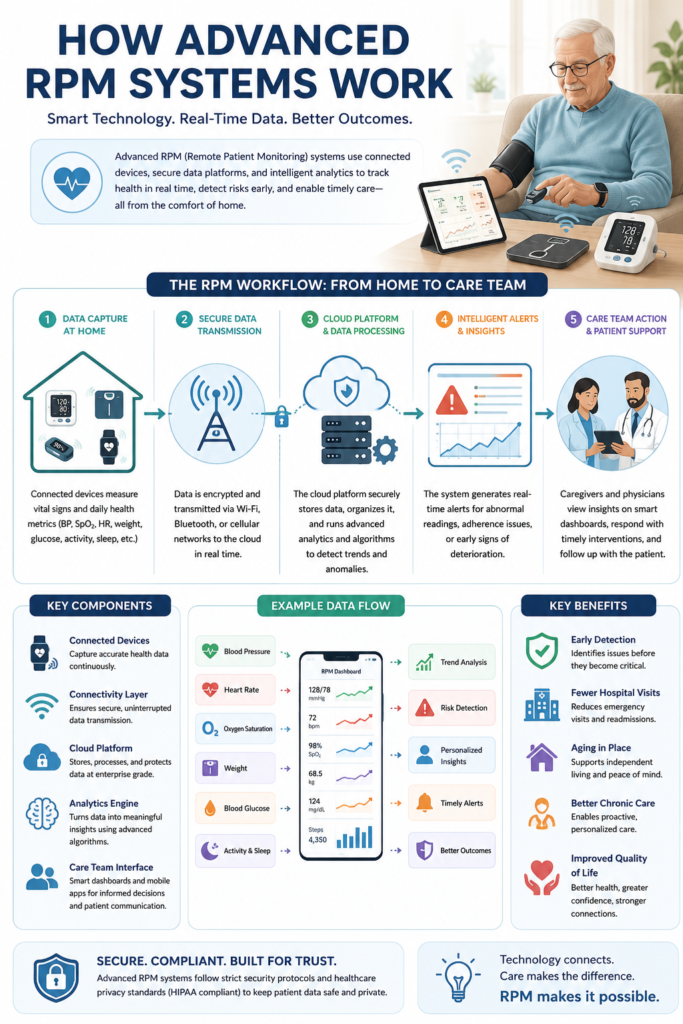
Advanced RPM systems usually work through a layered model. Each layer solves a different problem.
Layer 1: Home Devices
The first layer is the device. This may be a blood pressure cuff, pulse oximeter, glucometer, scale, thermometer, ECG patch, wearable, sleep tracker, or medication device. For older adults, device selection is not only about accuracy. It is about usability. A device that is technically impressive but confusing will not produce reliable data.
The most senior-friendly devices usually have:
| Device Feature | Why It Matters |
|---|---|
| Large display | Helps people with reduced vision |
| Few buttons | Reduces setup errors |
| Automatic transmission | Avoids manual logging mistakes |
| Cellular connectivity | Useful when Wi-Fi setup is difficult |
| Comfortable cuff or sensor | Improves adherence |
| Clear prompts | Helps people with mild cognitive load |
| Caregiver setup option | Reduces frustration during onboarding |
Layer 2: Data Transmission
The second layer sends readings from the home to the monitoring platform. This may happen through Bluetooth, Wi-Fi, cellular hubs, or device-specific cloud systems.
For senior care, cellular transmission often has an advantage because it avoids complicated Wi-Fi passwords, router issues, app pairing, and phone dependency. A system that works without the older adult touching a smartphone may produce more consistent readings.
Layer 3: Data Normalization
Raw readings can be messy. The system needs to account for missing readings, duplicate readings, device errors, irregular timing, and values that may be technically possible but clinically unlikely.
For example, a pulse oximeter may show a low reading because the hand was cold, the finger was moving, nail polish interfered, or the device was poorly positioned. Advanced RPM systems should separate possible artifacts from repeated patterns.
Layer 4: Alert Rules
Alert rules determine when someone is notified. This is where many RPM programs succeed or fail.
If the alert threshold is too sensitive, caregivers and clinicians become overwhelmed. If it is too loose, important changes may be missed. The strongest systems use a combination of fixed thresholds, trend-based triggers, diagnosis-specific rules, and clinician customization.
Layer 5: Care Team Review
Data is not care until a qualified person reviews it and acts appropriately. CMS describes treatment management as one of RPM’s main components, meaning the provider uses the transmitted data to manage the patient’s condition.
In practical terms, this may include nurse review, physician oversight, medication adjustment, telehealth follow-up, escalation to urgent evaluation, education, or coordination with family caregivers.
Layer 6: Feedback to the Older Adult
A good RPM system does not simply collect information from a senior. It gives something back. That may be reassurance, reminders, coaching, trend explanation, or a call from the care team. Without feedback, monitoring can feel like surveillance. With feedback, it can feel like support.
Core Devices Used in Advanced RPM Systems
The right RPM system depends on the person’s condition. More devices are not always better. More relevant devices are better.
Blood Pressure Monitors
Connected blood pressure monitors are among the most common RPM devices. They are used for hypertension management, medication titration, dizziness evaluation, cardiovascular risk monitoring, and post-discharge follow-up.
For older adults, cuff size, arm mobility, screen visibility, and proper positioning matter. A premium connected cuff is still poor care if the person cannot use it correctly.
Connected Weight Scales
Weight scales are especially important for heart failure, kidney disease, edema, malnutrition risk, and post-hospital recovery. The trend matters more than vanity weight. A rapid increase may suggest fluid retention. A rapid decrease may suggest dehydration, poor intake, or illness.
Pulse Oximeters
Pulse oximeters measure oxygen saturation and pulse rate. They are commonly used in respiratory disease, infection recovery, cardiopulmonary monitoring, and some sleep-related concerns. For older adults, repeated patterns are more useful than isolated readings.
Glucose Monitors
Glucose monitoring may include connected glucometers or continuous glucose monitoring devices, depending on the person’s diagnosis, treatment plan, and clinician recommendation. The key value is pattern recognition: morning highs, post-meal spikes, possible lows, medication timing issues, and diet-related variability.
ECG and Heart Rhythm Tools
Some advanced RPM systems include ECG-capable devices or rhythm screening tools. These can support review of palpitations, irregular pulse, atrial fibrillation concerns, or post-cardiac follow-up. They should not be treated as a replacement for medical evaluation.
Wearables and Passive Sensors
Wearables may collect heart rate, movement, sleep, fall signals, and activity trends. Passive sensors may detect room movement, bed exits, gait changes, or daily routine disruption. In elderly care, these tools are most useful when they respect privacy and avoid excessive intrusion.
Advanced RPM Systems vs Basic Home Monitoring
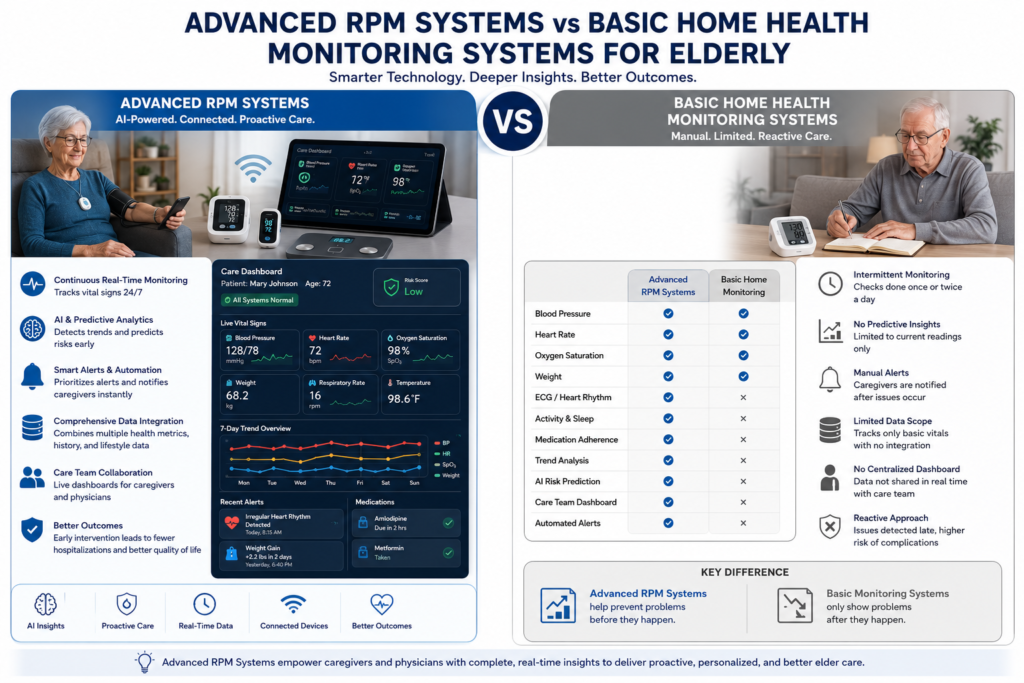
Basic home monitoring answers the question: “What was the reading?”
Advanced RPM systems answer a better question: “What does this pattern mean for this person?”
| Feature | Basic Home Monitoring | Advanced RPM Systems |
|---|---|---|
| Data collection | Manual or device-based | Connected, automated, multi-device |
| Data review | Person or caregiver checks readings | Care team, caregiver, and platform review |
| Trend visibility | Limited | Stronger pattern recognition |
| Alerts | Often absent or simple | Threshold-based and trend-based |
| Clinical workflow | Separate from care team | Integrated with care management |
| Caregiver access | Often manual sharing | Dashboard access or structured updates |
| Best for | Stable, independent individuals | Higher-risk seniors and chronic disease management |
| Main risk | Missed changes | Alert fatigue if poorly configured |
The difference is similar to checking the weather by looking out the window versus seeing a full forecast with pressure, wind, radar, and storm movement. One gives a snapshot. The other helps people prepare.
Benefits of Advanced RPM Systems for Seniors
Advanced RPM systems offer several practical benefits when they are clinically appropriate and properly managed.
Earlier Recognition of Health Changes
The most important benefit is earlier recognition. Instead of waiting for a clinic visit, advanced RPM systems can reveal changes in blood pressure, glucose, oxygen saturation, weight, pulse, symptoms, and activity patterns.
This does not mean every abnormal reading needs urgent action. It means the care team has a better chance of noticing deterioration before the person becomes unstable.
Better Chronic Disease Management
Advanced RPM systems can help clinicians adjust care based on real-world data. For example, a blood pressure medication may look effective in the office but wear off at home. A diuretic plan may need revision if weight rises repeatedly. A glucose plan may need adjustment if high readings occur after a specific meal pattern.
Reduced Caregiver Guesswork
Caregivers often carry invisible stress. They may wonder whether they are overreacting or underreacting. A smart system does not remove responsibility, but it gives caregivers a clearer frame: what changed, when it changed, how often it happened, and whether the care team has reviewed it.
Safer Aging in Place
Many older adults prefer to remain at home. Advanced RPM systems can support that goal by giving clinicians and families more visibility. They are not a guarantee of safety, but they can make home-based care more structured.
More Efficient Clinical Attention
Clinicians face enormous information pressure. A strong RPM dashboard helps sort individuals by need. The person with stable readings may not need a call today. The person with rising weight, worsening breathlessness, and lower oxygen saturation may need prompt attention.
Better Post-Hospital Recovery
After discharge, advanced RPM can help identify medication problems, poor recovery trajectory, persistent symptoms, and early relapse signs. This is especially important in heart failure, COPD, pneumonia recovery, uncontrolled hypertension, and diabetes complications.
Clinical Use Cases for Advanced RPM Systems
Advanced RPM systems work best when matched to a specific clinical problem.
Hypertension Management
For hypertension, advanced RPM systems can track morning and evening readings, pulse, medication timing, symptoms, dizziness, and adherence. The aim is not only lower blood pressure. The aim is safer control without overtreatment.
| Hypertension Signal | Possible Interpretation | Helpful Follow-Up |
|---|---|---|
| Morning readings repeatedly high | Medication timing issue, untreated morning surge | Clinician review |
| Blood pressure low with dizziness | Possible overtreatment or dehydration | Medication and hydration review |
| High readings only during stress | Behavioral or situational trigger | Coaching and repeat measurement |
| Irregular pulse alerts | Possible rhythm issue | Clinical evaluation if persistent |
Diabetes and Glucose Stability
For diabetes, readings are most useful when viewed with meal patterns, medication timing, activity, illness, and symptoms. Advanced RPM may support safer titration and more personalized coaching.
Heart Failure and Fluid Tracking
Heart failure monitoring often depends on daily weight, swelling, breathlessness, oxygen saturation, heart rate, and symptom change. A connected scale alone can help, but an advanced system can connect weight change to symptoms and care-team alerts.
COPD and Respiratory Disease
For COPD or chronic respiratory disease, pulse oximetry, symptom surveys, rescue medication tracking, activity decline, and respiratory complaints may help identify worsening status. The system must be careful not to overinterpret single oxygen readings, which can be affected by measurement error.
Medication Change Monitoring
Older adults are more vulnerable to medication side effects. A new blood pressure drug, diuretic, diabetes medication, sedative, or pain medication may change readings, appetite, energy, balance, or cognition. Advanced RPM systems can help observe the response after the change.
Frailty and Functional Decline
Frailty is not always visible through vital signs. A senior may have acceptable readings but reduced movement, poor sleep, missed meals, and increasing fatigue. Systems that include activity and symptom context may detect functional decline earlier than vital-sign-only monitoring.
AI-Based Elderly Monitoring Systems
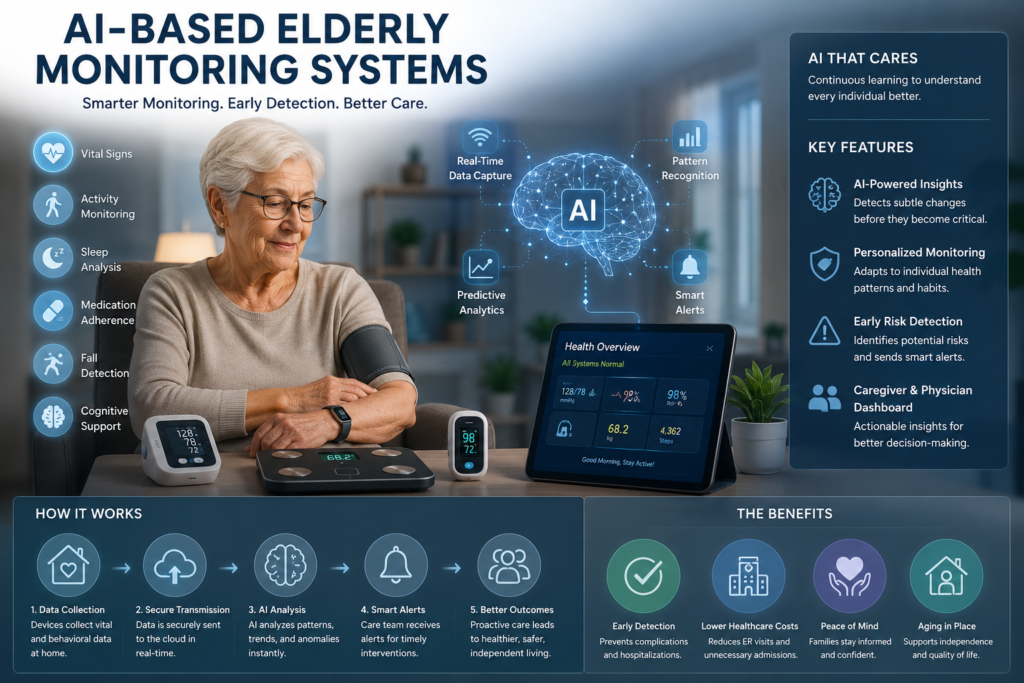
The next step in RPM is not simply more sensors. It is smarter interpretation. AI-based elderly monitoring systems are designed to help identify patterns that may be difficult to see manually, such as gradual activity decline, combined cardiometabolic risk, repeated symptom clusters, or unusual changes in routine.
The promise is meaningful, but the standard should be high. In older adult care, pattern detection must be explainable, clinically supervised, and conservative enough to avoid unsafe automation.
FDA’s Digital Health Center of Excellence includes work on AI-enabled device software, wireless medical devices, cybersecurity, software as a medical device, and real-world performance evaluation. In 2026, FDA also described the TEMPO pilot for digital health devices, connected with CMS innovation work, to promote access to certain digital health devices while safeguarding patient safety.
What AI-Based Elderly Monitoring Can Do Well
AI-based monitoring may help with:
| Use Case | Example |
|---|---|
| Pattern recognition | Detecting gradual decline in activity over two weeks |
| Alert prioritization | Ranking which alerts need clinician review first |
| Risk clustering | Combining weight gain, low oxygen, and fatigue into a higher-risk signal |
| Personal baselines | Learning that one person’s normal pulse is different from another’s |
| Caregiver support | Summarizing changes in plain language |
| Workflow triage | Reducing noise from repeated low-value alerts |
What AI-Based Elderly Monitoring Should Not Do Alone
AI should not independently diagnose, prescribe, override emergency judgment, or replace a licensed clinician. It should support human decision-making, not quietly become the decision-maker.
For seniors, the most dangerous system is not the one that admits uncertainty. It is the one that sounds confident when the clinical picture is incomplete.
The Best Model: Human-Guided Intelligence
The strongest advanced RPM systems use a human-guided model:
| Layer | Role |
|---|---|
| Device | Collects readings |
| Platform | Organizes and filters data |
| Algorithm | Detects patterns and risk signals |
| Clinician | Interprets clinical meaning |
| Caregiver | Provides context from daily life |
| Older adult | Shares symptoms, preferences, and goals |
This model respects the reality of geriatric care: data is useful, but context is decisive.
Continuous Vital Sign Monitoring at Home
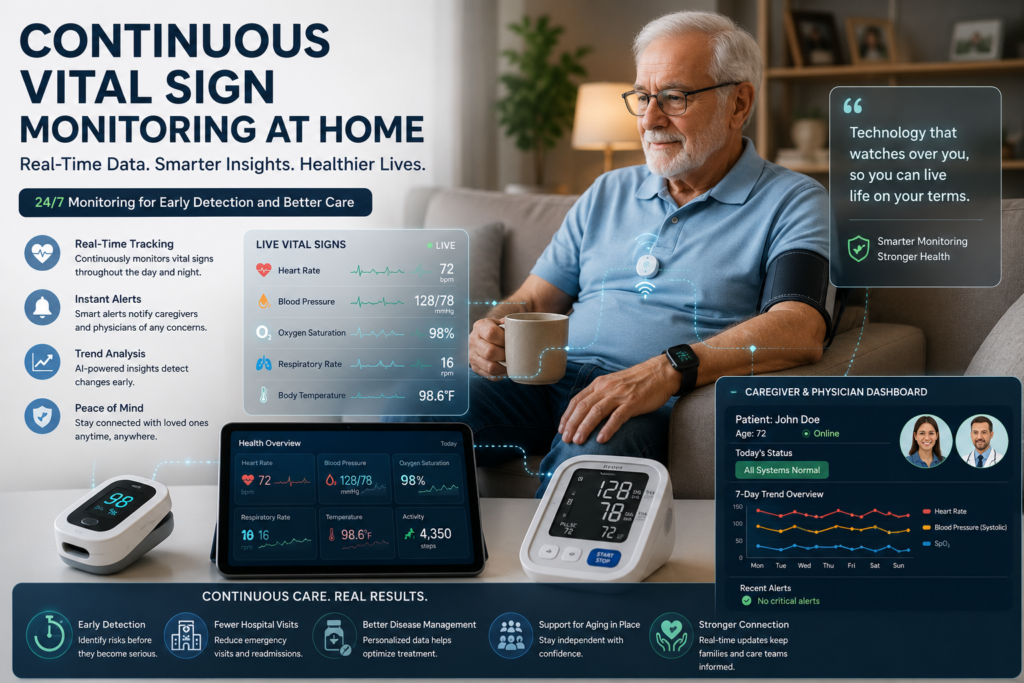
Traditional home monitoring depends on scheduled readings. A person measures blood pressure in the morning, checks oxygen when short of breath, or weighs once daily. That still has value. But continuous vital sign monitoring at home is becoming more important for higher-risk seniors, especially those recovering from hospitalization or living with unstable chronic disease.
Continuous does not always mean every second. It may mean frequent, automatic, passive, or near-real-time monitoring across the day.
What Continuous Monitoring May Track
| Vital or Signal | Why It Matters |
|---|---|
| Heart rate | Stress, infection, dehydration, arrhythmia concern, exertion response |
| Respiratory rate | Early respiratory decline, infection, cardiopulmonary stress |
| Oxygen saturation | COPD, pneumonia recovery, cardiopulmonary instability |
| Blood pressure trends | Hypertension control, hypotension risk, medication response |
| Temperature | Infection pattern, inflammatory change |
| Activity | Frailty, recovery, depression, pain, fall risk |
| Sleep-wake rhythm | Cognitive change, medication effects, respiratory issues, caregiver burden |
When Continuous Monitoring Is Most Useful
Continuous monitoring may be useful when the person has:
- Recent hospital discharge
- Heart failure with recurrent fluid overload
- COPD or respiratory instability
- High fall risk with frailty
- Medication changes that may affect blood pressure or alertness
- Cognitive impairment with unreliable symptom reporting
- Recurrent emergency visits
- Family caregivers who need structured visibility
The Risk of Too Much Data
More data can help, but it can also confuse. A person’s heart rate changes with emotion, meals, movement, sleep, pain, fever, dehydration, and medications. Oxygen readings can fluctuate with cold fingers or sensor position. Sleep trackers may estimate rather than medically measure sleep.
The best continuous monitoring system is not the one that collects the most data. It is the one that turns data into fewer, better decisions.
Smart Dashboards for Caregivers and Physicians
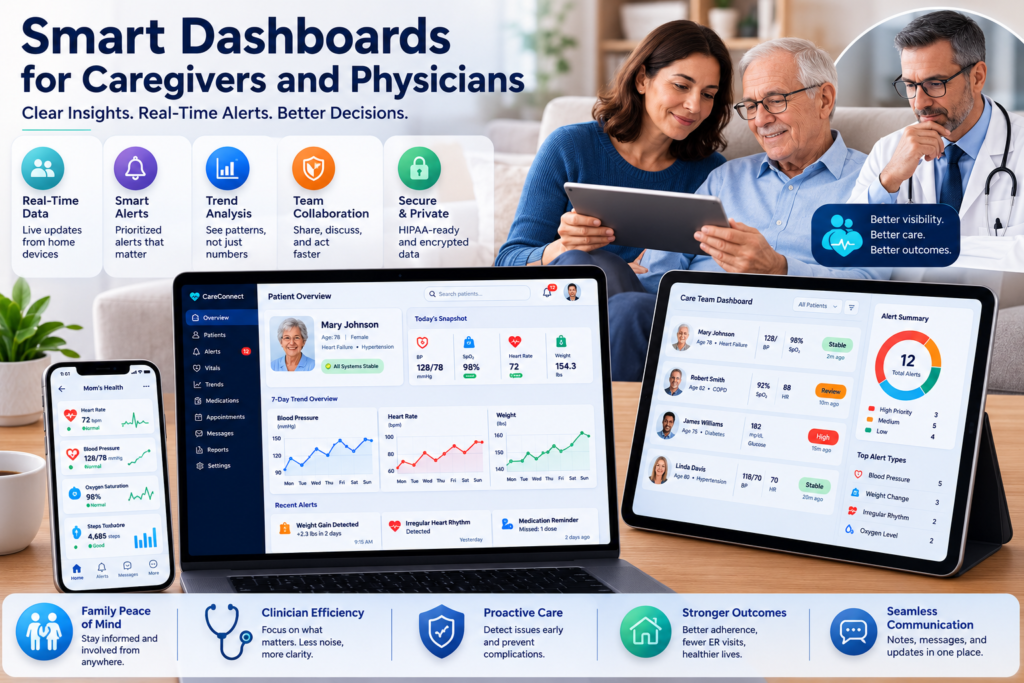
A dashboard is where RPM either becomes useful or becomes noise. Smart dashboards for caregivers and physicians should not be a wall of numbers. They should show the right information to the right person at the right level of detail.
A family caregiver needs clarity. A physician needs clinical context. A nurse reviewer needs triage. A care coordinator needs tasks. The older adult needs reassurance and simple instructions.
What a Smart RPM Dashboard Should Show
| Dashboard Element | Why It Matters |
|---|---|
| Trend lines | Shows whether a condition is improving, stable, or worsening |
| Alert status | Identifies which readings require review |
| Care-team notes | Prevents repeated calls and fragmented communication |
| Medication changes | Helps explain changes in readings |
| Symptom logs | Adds human context to numeric data |
| Missed readings | Reveals adherence, usability, or illness concerns |
| Caregiver comments | Captures daily observations |
| Escalation history | Shows what action was taken and when |
Caregiver View vs Clinician View
| Dashboard Type | Should Emphasize | Should Avoid |
|---|---|---|
| Older adult view | Simple prompts, reassurance, next step | Complex graphs and alarming language |
| Family caregiver view | Trends, alerts, missed readings, care-team status | Diagnostic conclusions |
| Nurse/care manager view | Triage list, thresholds, symptoms, adherence | Unfiltered raw data overload |
| Physician view | Clinical trends, medication context, escalation notes | Administrative clutter |
Why Dashboard Design Matters in Geriatric Care
Older adults often have layered conditions. A dashboard that treats each reading in isolation may miss the bigger story. The best dashboards show relationships.
For example:
| Combined Pattern | Possible Concern |
|---|---|
| Weight up + swelling + breathlessness | Fluid overload concern |
| Low blood pressure + dizziness + recent medication change | Possible overtreatment or dehydration |
| Glucose high + infection symptoms + low activity | Illness-related destabilization |
| Oxygen lower + respiratory symptoms + elevated pulse | Cardiopulmonary concern |
| Missed readings + less movement + caregiver worry | Functional or cognitive decline |
This is where advanced RPM earns its place. It helps people see the story beneath the numbers.
How Advanced RPM Systems Fit Into Telemedicine
Advanced RPM systems become more powerful when paired with virtual care. Data shows what is changing; virtual care gives the care team a way to respond quickly. For older adults, this combination can reduce unnecessary travel, support medication review, allow caregiver participation, and make follow-up more timely.
The broader Telemedicine model is especially relevant because remote monitoring alone is incomplete. A reading does not counsel a patient. A dashboard does not examine swollen legs. A pulse oximeter does not reconcile medications. Telemedicine closes part of that loop by allowing clinicians, caregivers, and patients to discuss what the RPM data means.
A strong workflow may look like this:
| Step | What Happens |
|---|---|
| Home reading | Senior takes or passively generates a reading |
| Data transmission | Reading enters RPM platform |
| Triage | System flags trend, threshold, or missed reading |
| Review | Nurse or clinician reviews data and symptoms |
| Virtual visit | Clinician speaks with patient and caregiver if needed |
| Care action | Medication, education, appointment, lab, or urgent evaluation |
| Follow-up | System watches whether the trend improves |
This model is not about replacing clinics. It is about making the time between clinic visits safer and more visible.
How to Choose an Advanced RPM System
Choosing an advanced RPM system requires more than comparing device features. The right question is: “What clinical problem are we trying to manage?”
Step 1: Define the Monitoring Goal
A vague goal leads to poor setup. A clear goal improves everything.
| Goal | Monitoring Focus |
|---|---|
| Control hypertension | Blood pressure, pulse, symptoms, medication timing |
| Reduce heart failure risk | Weight, oxygen, heart rate, swelling, breathlessness |
| Improve diabetes stability | Glucose, meals, medication, activity |
| Support post-discharge recovery | Vitals, symptoms, adherence, activity, follow-up |
| Reduce caregiver uncertainty | Dashboard access, alerts, care-team notes |
| Detect functional decline | Activity, sleep, missed readings, symptom reports |
Step 2: Match Devices to Conditions
A person with hypertension may not need a scale. A person with heart failure usually does. A person with COPD may need oxygen saturation monitoring. A person with diabetes may need glucose tracking. Device selection should follow medical need, not gadget appeal.
Step 3: Evaluate Ease of Use
For older adults, simplicity is not a minor feature. It is a clinical requirement.
Look for:
- Large displays
- Easy cuff placement
- Automatic syncing
- Minimal app dependence
- Cellular option
- Caregiver setup
- Clear alerts
- Human support
- Replacement plan for device failure
- Training at the beginning
Step 4: Check Clinical Oversight
An advanced RPM system should have a clear care pathway. Who reviews the readings? How often? What happens when an alert triggers? Who calls the patient? Who contacts the physician? What is the emergency instruction?
Without workflow, a monitoring system becomes a data warehouse.
Step 5: Review Privacy and Consent
Older adults should understand what is being collected, who can see it, how alerts work, and whether caregivers have access. Monitoring should preserve dignity. A person should not feel secretly watched in their own home.
Step 6: Confirm Device Reliability
Connected medical devices used for RPM should be appropriate for health care use. CMS states that eligible RPM requires an internet-connected device that meets FDA’s definition of a medical device and digitally uploads data.
Privacy, Accuracy and Safety Considerations
Advanced RPM systems must be designed with caution. They handle sensitive health data, influence care decisions, and may involve vulnerable older adults.
Privacy Risks
Privacy concerns include excessive caregiver access, unclear data sharing, weak passwords, poorly secured apps, unnecessary passive monitoring, and lack of consent. Seniors should be involved in decisions whenever possible.
Accuracy Risks
Device readings can be wrong. Blood pressure cuffs may be incorrectly sized. Pulse oximeters may misread due to poor circulation or movement. Scales may be placed on uneven floors. Glucose readings may be affected by technique. Wearables may estimate rather than medically measure some signals.
Alert Fatigue
If the system generates too many alerts, caregivers stop trusting it and clinicians stop prioritizing it. Good RPM design uses meaningful thresholds, trend logic, and escalation rules.
False Reassurance
A normal reading does not always mean a person is safe. Severe symptoms require attention even if the dashboard looks acceptable. Chest pain, severe shortness of breath, fainting, stroke-like symptoms, sudden confusion, or serious injury should be treated as urgent clinical situations.
Billing and Program Integrity
As RPM grows, oversight matters. HHS-OIG reported that Medicare RPM payments exceeded $500 million in 2024 and described billing-monitoring measures to help identify practices that may warrant scrutiny, such as billing for multiple devices in a month or billing many enrollees without prior practice history.
For families and clinicians, the practical lesson is simple: choose RPM programs that provide real education, real device support, real review, and clear documentation. Monitoring should serve the patient, not merely generate billable activity.
Upcoming Trends and Latest Technology
Advanced RPM systems are moving from device collection toward connected care intelligence. The future is less about a single cuff or scale and more about coordinated home-based clinical infrastructure.
Trend 1: Outcome-Based Technology-Supported Care
CMS’s ACCESS model is a major signal for the future of chronic care and belongs within the broader movement toward emerging systems in geriatric telemedicine. It tests outcome-aligned payments in Original Medicare for technology-supported care options, focusing on conditions such as high blood pressure, diabetes, chronic musculoskeletal pain, and depression. CMS describes the model as running for 10 years beginning July 5, 2026, with care that may include telehealth software, wearable devices, apps, clinician consultations, medication management, and FDA-authorized devices or software.
For advanced RPM systems, this means the market is likely to move toward measurable improvement, not just device deployment.
Trend 2: Hospital-Level Monitoring at Home
Hospital-at-home programs are expanding the idea that some high-acuity care can be delivered in the home with the right clinical support. CMS reported that the Acute Hospital Care at Home initiative has been extended through September 30, 2030, and participating hospitals agree to ongoing monitoring and reporting of safety and quality metrics.
This does not mean every senior should receive hospital-level care at home. It means advanced monitoring is becoming part of a larger shift: the home is becoming a more serious site of care.
Trend 3: Multi-Sensor Fusion
Future systems will combine vitals, movement, medication behavior, sleep, symptoms, voice check-ins, and caregiver reports. The value will come from correlation. A low step count alone may mean little. Low step count plus weight gain, poor sleep, and breathlessness may matter more.
Trend 4: Personalized Baselines
Older adults do not all share the same normal. A frail 89-year-old with heart failure and kidney disease should not be interpreted exactly like a healthy 65-year-old. Advanced RPM systems will increasingly compare each person to their own baseline.
Trend 5: Predictive Risk Scoring
Instead of waiting for a threshold breach, systems will estimate rising risk. For example, a person’s risk profile may rise when activity decreases, resting heart rate increases, sleep worsens, and symptom reports change.
The challenge is to keep predictive scoring transparent. A clinician should know why the score changed.
Trend 6: More Caregiver-Centered Design
Many RPM tools were originally built for clinics. Senior care requires family-centered design. Adult children, spouses, home health aides, and care managers need different views of the same reality. Expect more role-based dashboards, caregiver alerts, and plain-language summaries.
Trend 7: Privacy-Preserving Passive Monitoring
Passive monitoring will grow, but privacy will shape adoption. Many older adults will accept a bed sensor, fall detector, or motion trend system more easily than cameras. The future will favor systems that detect risk without turning the home into a surveillance space.
Trend 8: Integrated Geriatric Telehealth Workflows
The strongest programs will connect RPM data with virtual visits, medication review, lab coordination, nutrition support, fall prevention, and caregiver education. TeleGeriatric’s broader Homepage can support this kind of topic navigation by connecting seniors, families, and clinicians to education around remote care, aging in place, and geriatric telehealth.
Advanced RPM Systems Framework: The Senior-Centered Model
A practical framework for advanced RPM systems in elderly care is the S.A.F.E.R. model.
| Framework Element | Meaning | Practical Question |
|---|---|---|
| S — Specific condition | Monitoring should target a defined risk | What are we trying to prevent or stabilize? |
| A — Actionable data | Readings must lead to useful decisions | Who acts when the data changes? |
| F — Family visibility | Caregivers need clear, limited access | What should family see without being overwhelmed? |
| E — Escalation pathway | Alerts must trigger a real workflow | What happens after an abnormal trend? |
| R — Respect for dignity | Monitoring must preserve autonomy | Does the person understand and accept the setup? |
This framework prevents the most common mistake: adding devices without designing care.
Advanced RPM Systems Implementation Plan
For a family or clinic starting advanced RPM, implementation should be gradual.
Phase 1: Clinical Fit
Start with the condition. Define why monitoring is needed. Examples include uncontrolled blood pressure, fluid retention risk, post-hospital recovery, respiratory instability, or diabetes pattern management.
Phase 2: Device Selection
Choose the minimum device set that answers the clinical question. Avoid device overload.
Phase 3: Onboarding
Set up the device, confirm readings transmit properly, train the older adult, train the caregiver, and document what to do if readings are abnormal.
Phase 4: Baseline Period
The first one to two weeks should establish ordinary patterns. Baseline readings help distinguish normal variation from meaningful change.
Phase 5: Alert Refinement
Adjust alert thresholds based on diagnosis, clinician guidance, and personal baseline. The goal is sensitivity without chaos.
Phase 6: Review Rhythm
Decide who reviews the data daily, weekly, or after alerts. A system without review rhythm is not advanced care; it is passive collection.
Phase 7: Care Plan Integration
Use the data during telehealth visits, medication reviews, caregiver meetings, and chronic disease planning.
Advanced RPM Systems Comparison Chart
| System Type | Best For | Strength | Weakness |
|---|---|---|---|
| Single-device RPM | Stable hypertension or simple monitoring | Easy to start | Limited context |
| Multi-device RPM | Multiple chronic conditions | Broader clinical picture | Requires better setup |
| Continuous wearable RPM | Higher-risk seniors, post-discharge care | More frequent signals | More data noise |
| Passive home monitoring | Frailty, cognitive impairment, fall risk | Less effort from senior | Privacy concerns |
| Clinician-managed RPM | Chronic disease care | Better action pathway | May cost more |
| Caregiver-led dashboard | Distance caregiving | Better family visibility | Risk of over-worry |
| Hybrid telehealth + RPM | Complex senior care | Strongest care loop | Requires coordination |
Advanced RPM Systems FAQ
What are advanced RPM systems for seniors?
Advanced RPM systems for seniors are connected health monitoring platforms that collect home-based readings such as blood pressure, glucose, oxygen saturation, weight, pulse, activity, and symptoms. Their purpose is to help caregivers and clinicians detect meaningful health changes earlier, support chronic disease management, and reduce the blind spots between medical visits.
The main difference between ordinary home monitoring and advanced RPM is interpretation. A basic device gives a number. An advanced RPM system connects that number to trends, alerts, symptoms, medication context, and care-team review.
| Basic Question | Advanced RPM Question |
|---|---|
| What is today’s blood pressure? | Is blood pressure improving after the medication change? |
| What is today’s weight? | Is this weight gain part of a fluid-retention pattern? |
| What is oxygen saturation now? | Is oxygen lower repeatedly, and is the person more short of breath? |
| Did the person take a reading? | Are missed readings part of a larger decline? |
For seniors, this matters because health changes are often subtle. A gradual reduction in movement, small weight changes, mild breathlessness, or repeated missed readings can tell a bigger story than one dramatic event.
Are advanced remote patient monitoring systems useful for elderly people living alone?
Yes, advanced remote patient monitoring systems can be useful for elderly people living alone when there is a clear medical or safety reason for monitoring. They may help family caregivers and clinicians notice missed readings, abnormal trends, worsening symptoms, or reduced activity.
However, RPM should not create false confidence. A person living alone may still need home safety planning, medication review, fall prevention, emergency contacts, transportation support, and social connection.
A practical living-alone RPM setup may include:
| Need | Helpful RPM Feature |
|---|---|
| Chronic disease monitoring | Connected blood pressure, glucose, oxygen, or weight device |
| Caregiver reassurance | Family dashboard or scheduled updates |
| Missed routine detection | Missed reading alerts |
| Fall or frailty concern | Wearable or passive activity monitoring |
| Medication complexity | Reminders and adherence logs |
| Clinical follow-up | Telehealth-connected review |
The best system is one that supports independence without making the senior feel watched or controlled.
What devices are included in home health monitoring systems for elderly people?
Home health monitoring systems for elderly people may include connected blood pressure monitors, pulse oximeters, weight scales, glucose monitors, thermometers, ECG tools, medication devices, fall detection wearables, sleep sensors, and activity trackers.
The right mix depends on the condition:
| Condition or Risk | Common Device Mix |
|---|---|
| Hypertension | Blood pressure cuff, pulse tracking |
| Heart failure | Weight scale, blood pressure cuff, pulse oximeter, symptom survey |
| Diabetes | Glucose monitor, activity tracking, medication logs |
| COPD | Pulse oximeter, symptom survey, activity trend |
| Post-hospital recovery | Blood pressure, oxygen, temperature, weight, symptom check-ins |
| Frailty | Activity tracking, fall detection, missed routine alerts |
More devices should not be the default. The goal is the smallest reliable setup that answers the most important care questions.
Do advanced RPM systems prevent hospitalizations?
Advanced RPM systems may help reduce avoidable deterioration when they are matched to the right person, used consistently, and connected to a responsive care team. They can support earlier recognition of problems such as rising blood pressure, fluid retention, low oxygen patterns, glucose instability, medication side effects, and post-discharge decline.
But RPM does not automatically prevent hospitalization. A system can collect data and still fail if no one reviews it, if alerts are ignored, if the senior cannot use the device, or if the condition worsens despite monitoring.
| RPM Factor | Impact on Hospitalization Risk |
|---|---|
| Accurate device readings | Improves decision quality |
| Consistent use | Makes trends visible |
| Clinician review | Turns data into care |
| Caregiver involvement | Adds daily context |
| Clear escalation plan | Prevents confusion during deterioration |
| Poor setup | Reduces benefit |
| Alert overload | Can delay meaningful response |
The strongest hospital-prevention value usually comes from the combination of RPM, telehealth follow-up, medication management, caregiver education, and rapid escalation when needed.
How much do advanced RPM systems cost?
The cost of advanced RPM systems varies widely depending on device type, clinical monitoring, software platform, caregiver dashboard, cellular connectivity, support services, and whether the system is part of a covered medical program.
A simple connected blood pressure monitor may cost far less than a multi-device, clinician-managed RPM program. Systems with continuous wearables, cellular hubs, nurse review, physician oversight, and dashboard access may cost more but provide a higher level of support.
| Cost Driver | Why It Changes Price |
|---|---|
| Number of devices | More devices increase hardware cost |
| Cellular connectivity | Adds service and data transmission cost |
| Clinical monitoring | Human review increases program cost |
| Dashboard access | Software and user management add cost |
| Integration | EHR or care-team integration may increase complexity |
| Support | Training, troubleshooting, and replacement policies matter |
For older adults, the cheapest system is not always the best value. A slightly more expensive system that is easy to use, reliable, and reviewed by a care team may be more useful than a low-cost device that sits unused.
People Also Ask
What is the difference between RPM and advanced RPM systems?
RPM usually refers to remote patient monitoring with connected devices that collect and transmit health data. Advanced RPM systems add deeper functionality: multi-device monitoring, dashboards, alerts, trend analysis, caregiver access, clinician workflows, and sometimes AI-supported risk detection.
| Feature | RPM | Advanced RPM Systems |
|---|---|---|
| Connected device | Yes | Yes |
| Automatic transmission | Often | Yes |
| Multi-condition view | Sometimes | Usually |
| Caregiver dashboard | Sometimes | Often |
| Trend intelligence | Basic | More advanced |
| Clinician workflow | Variable | Central feature |
| Personal baseline | Limited | Increasingly common |
| Best use | Simple chronic monitoring | Complex senior care |
For elderly care, advanced RPM is more useful when the person has multiple conditions, caregiver involvement, post-hospital risk, or need for coordinated follow-up.
Can remote patient monitoring help with aging in place?
Remote patient monitoring can support aging in place by giving caregivers and clinicians better visibility into health trends while the person remains at home. It may help identify worsening blood pressure, glucose instability, fluid gain, low oxygen patterns, reduced activity, or missed readings.
But aging in place requires more than devices. It also depends on home safety, medication management, nutrition, mobility support, emergency planning, social connection, and access to clinicians.
Aging-in-place support works best when RPM is part of a larger plan:
| Aging-in-Place Need | RPM Contribution |
|---|---|
| Health visibility | Tracks readings and trends |
| Caregiver coordination | Shares alerts and summaries |
| Chronic care | Supports medication and lifestyle follow-up |
| Safety | May detect missed routines or activity decline |
| Access | Reduces some unnecessary travel |
| Confidence | Helps families respond earlier |
RPM should support independence, not replace human attention.
Is continuous vital sign monitoring at home accurate?
Continuous vital sign monitoring at home can be useful, but accuracy depends on the device, sensor placement, skin contact, movement, circulation, battery status, connectivity, and whether the device is intended for medical use. Some tools measure directly. Others estimate.
For example, a pulse oximeter may be affected by cold fingers, motion, nail polish, or poor positioning. Wearable heart rate readings may vary during movement. Sleep and activity tracking may be approximate.
The safest approach is to treat continuous monitoring as trend support, not absolute truth.
| Signal | Usually Useful For | Caution |
|---|---|---|
| Heart rate | Trend changes, exertion response | Motion can affect readings |
| Oxygen saturation | Respiratory monitoring | Single low readings may be artifact |
| Activity | Functional change | Does not explain cause |
| Sleep | Pattern awareness | Not equal to formal sleep study |
| Blood pressure | Medication response | Technique and cuff fit matter |
Repeated concerning patterns should be reviewed by a clinician.
Are smart caregiver dashboards safe for older adults?
Smart caregiver dashboards can be safe and helpful when they are designed with consent, privacy, role-based access, and clear boundaries. They can help family members see whether readings are stable, missed, or concerning.
The risk is over-monitoring. If every small fluctuation triggers family anxiety, the senior may feel controlled. If the dashboard exposes too much personal data, dignity may suffer.
A good caregiver dashboard should show:
| Dashboard Feature | Senior-Friendly Purpose |
|---|---|
| Simple status | Stable, needs review, missed reading |
| Trend summary | Avoids overreacting to one reading |
| Care-team notes | Shows whether someone reviewed the issue |
| Emergency guidance | Clarifies when to seek urgent help |
| Limited permissions | Protects privacy |
| Plain language | Reduces confusion |
The best dashboard builds trust between the senior, caregiver, and clinician.
What is the future of advanced RPM systems?
The future of advanced RPM systems is moving toward integrated, personalized, and outcome-focused care. Devices will matter, but platforms, workflows, and clinical accountability will matter more.
Expect growth in:
| Future Area | What It Means |
|---|---|
| Personalized baselines | Systems compare a senior to their own normal |
| AI-assisted triage | Alerts are prioritized by risk pattern |
| Multi-sensor fusion | Vitals, activity, symptoms, and medication data combine |
| Hospital-at-home support | More acute care monitoring at home |
| Caregiver-centered design | Better dashboards for family and care teams |
| Outcome-based programs | More attention to measurable improvement |
| Privacy-preserving sensors | Less intrusive passive monitoring |
The future is not a house full of gadgets. It is a better care loop: observe, interpret, respond, and adjust.
Editorial Insights
Advanced RPM systems represent one of the most important shifts in senior care because they address a quiet problem: older adults often decline between appointments, not during them. The clinic sees a moment. The home reveals the pattern.
The best systems do not chase technology for its own sake. They help a physician understand blood pressure after a medication change. They help a caregiver know whether a parent is stable. They help a nurse prioritize the person who needs attention today. They help a senior stay home with more confidence and less guesswork.
The next era of geriatric remote monitoring will be judged less by how many devices it connects and more by how well it protects dignity, reduces confusion, supports clinical decisions, and keeps the care team aligned. In that sense, advanced RPM systems are not only a technology category. They are a bridge between aging at home and being clinically seen.