
How to Monitor Blood Pressure at Home: A Clinical-Grade Guide for Seniors
Amazon Affiliate Disclosure
This page may contain affiliate links. If you purchase through these links, TeleGeriatric may earn a commission at no additional cost to you. This helps maintain clinical-grade, research-backed content.
Monitoring blood pressure at home is no longer a convenience—it is a frontline clinical practice in modern geriatric care. With hypertension being a leading cause of stroke, heart disease, and kidney failure, home-based tracking enables early detection, trend analysis, and real-time intervention.
Unlike occasional clinic readings, home monitoring reveals true blood pressure patterns, minimizing white-coat hypertension and masked hypertension—two major diagnostic blind spots.
Unlike occasional clinic readings, home monitoring reveals true blood pressure patterns, minimizing white-coat hypertension and masked hypertension—two major diagnostic blind spots. As remote healthcare technologies continue to evolve, home BP tracking is becoming a core part of modern remote patient monitoring systems and preventive elderly care strategies.
Quick Picks (Jump)
- Who this guide helps
- Step-by-step guide
- Best devices comparison
- Costs & affordability
- Risks & common mistakes
- Latest trends & smart monitors
- Who needs monitoring
- Clinical benefits
What This Guide Is For
This guide is built as a practical, clinically aligned resource for home blood pressure monitoring, hypertension management and remote cardiovascular care, reflecting the growing shift toward digital health tracking, telemedicine, and remote patient monitoring (RPM) in 2026.
It is designed to support individuals and care networks who need accurate, consistent, and medically meaningful blood pressure data outside traditional clinical settings, where single readings often fail to reflect real cardiovascular patterns.
Who This Guide Helps
Seniors managing hypertension or cardiovascular conditions
Designed for older adults dealing with chronic hypertension, arterial stiffness, or cardiovascular risk factors, this guide focuses on improving home-based blood pressure accuracy, medication monitoring, and long-term heart health tracking using validated methods and clinically trusted devices.
Caregivers overseeing elderly health remotely
For family members and professional caregivers, the guide supports structured elderly care monitoring systems, helping track fluctuations in blood pressure, detect early warning signs, and maintain continuity of care through consistent at-home readings and logs.
Telemedicine users integrating remote patient monitoring (RPM)
As telehealth and virtual cardiology consultations become standard, this guide helps users integrate home BP data into remote patient monitoring platforms, digital health dashboards, and clinician-reviewed trend reports, improving diagnostic accuracy and treatment personalization.
Individuals seeking accurate home blood pressure measurement techniques
For anyone focused on self-monitoring, this guide explains proper oscillometric blood pressure cuff usage, posture correction, measurement timing, and device calibration practices, reducing false readings and improving long-term hypertension control.
This guide also connects with broader educational resources on preventive health, metabolic balance and cardiovascular optimization available across the platform.
You can explore more structured health and wellness insights directly from the homepage
Who Needs to Monitor Blood Pressure at Home
Home blood pressure monitoring (HBPM) is a clinically recommended practice for early detection, better treatment control, and long-term cardiovascular risk reduction. It helps identify hidden hypertension patterns that may not always appear during clinic visits, such as white-coat or masked hypertension.
Regular BP tracking at home is especially important for the following groups:
Adults aged 60+
With aging, arteries naturally become less flexible, increasing the risk of elevated blood pressure and cardiovascular strain. For older adults, routine home monitoring supports early detection of hypertension trends and helps prevent complications such as heart attack, stroke, and vascular dementia. It also allows physicians to fine-tune treatment without frequent hospital visits.
Patients diagnosed with hypertension
Individuals living with Hypertension require consistent blood pressure monitoring to evaluate treatment effectiveness and maintain long-term control. Home readings provide a more accurate reflection of daily BP fluctuations compared to occasional clinic measurements, helping guide medication adjustments and lifestyle interventions.
Individuals on blood pressure medication
Patients taking antihypertensive therapy benefit significantly from home monitoring because it shows how well medications are working throughout the day. It also helps detect episodes of low blood pressure (hypotension), overtreatment, or inconsistent response to prescribed drugs, enabling safer dose optimization under medical supervision.
Patients with diabetes or kidney disease
People with Diabetes Mellitus or Chronic Kidney Disease are at a higher risk of developing cardiovascular complications linked to uncontrolled blood pressure. In these cases, even small BP variations can significantly impact kidney function, vascular health, and overall metabolic stability, making daily or frequent monitoring essential.
Stroke survivors
After a stroke or transient ischemic attack, maintaining stable blood pressure is critical to reduce the risk of recurrence. Home monitoring allows for close tracking of BP trends, ensuring that treatment goals are being met and helping clinicians quickly respond to any dangerous fluctuations.
Individuals with fluctuating BP readings
Some individuals experience inconsistent or variable blood pressure readings due to stress, lifestyle factors, sleep patterns, or underlying autonomic dysfunction. Home BP monitoring helps identify these patterns more accurately over time, revealing hidden conditions such as masked hypertension or white-coat hypertension, and providing a clearer picture for diagnosis and treatment planning.
What Is Home Blood Pressure Monitoring
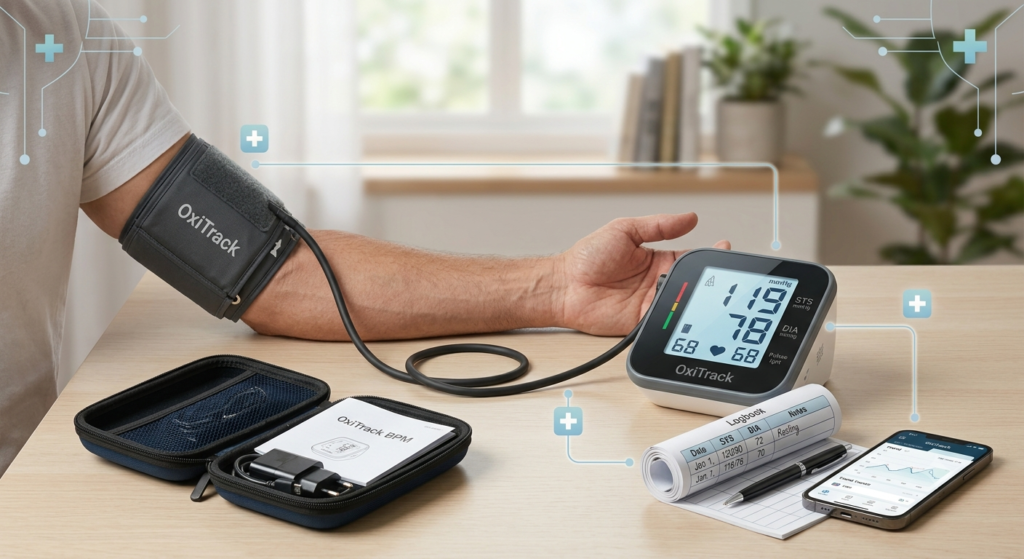
Home blood pressure monitoring is a simple yet clinically valuable method of measuring arterial blood pressure outside a hospital or clinic using a validated digital or manual device. It allows individuals to track both systolic and diastolic blood pressure in a familiar environment, typically at rest, which often produces more consistent and representative readings compared to occasional clinical measurements.
In medical terms, this practice is known as home blood pressure monitoring (HBPM), and it is widely recommended in modern hypertension management guidelines for long-term cardiovascular risk assessment and treatment optimization.
At home, most users rely on an automatic digital blood pressure monitor that uses an inflatable cuff placed around the upper arm or wrist. These devices calculate blood pressure by detecting changes in arterial flow, making the process quick, non-invasive, and easy to repeat over time.
This approach is a foundational component of modern remote patient monitoring systems and digital elderly care models, where continuous at-home tracking replaces intermittent clinic visits. It is closely aligned with evolving practices in telemedicine and chronic disease management, as described in broader discussions on what is remote monitoring in elderly care.
What Home Blood Pressure Monitoring Provides
Daily trend tracking
One of the most important benefits of HBPM is the ability to observe blood pressure patterns over days and weeks rather than relying on single readings. This helps identify how lifestyle factors such as sleep quality, stress levels, salt intake, and physical activity influence blood pressure throughout the day. Over time, these trends provide a more reliable picture of cardiovascular stability than isolated measurements.
Medication effectiveness insights
For individuals being treated for Hypertension, home monitoring is essential for evaluating how well prescribed medications are working. It helps clinicians determine whether blood pressure control is stable, insufficient, or overly aggressive. This continuous feedback loop supports safer dose adjustments and more personalized treatment strategies, especially in patients on multiple antihypertensive drugs.
Early warning signals
Home monitoring can detect early warning signs of abnormal blood pressure before symptoms become noticeable. Persistently high readings may indicate worsening hypertension, while unusually low readings may suggest overmedication or dehydration. In patients with conditions such as cardiovascular disease, diabetes, or kidney impairment—where managing interconnected risks is crucial alongside Glucose monitoring for seniors—these early signals can help prevent serious complications by prompting timely medical review.
How It Works: Home Blood Pressure Monitoring (Step-by-Step Visual Guide)
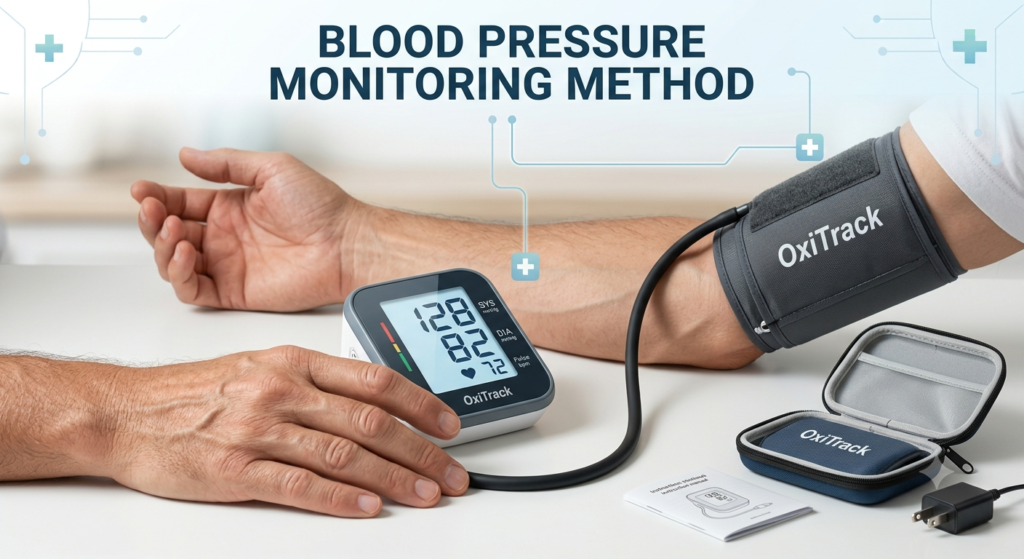
Home blood pressure monitoring is a structured process designed to improve the accuracy of readings and support long-term cardiovascular health tracking. When done correctly, it becomes a reliable hypertension self-monitoring system that helps detect changes early and supports better clinical decisions.
Below is a practical, step-by-step breakdown of how BP tracking at home works in real life.
Step 1: Choose and Set Up Your BP Monitoring Device
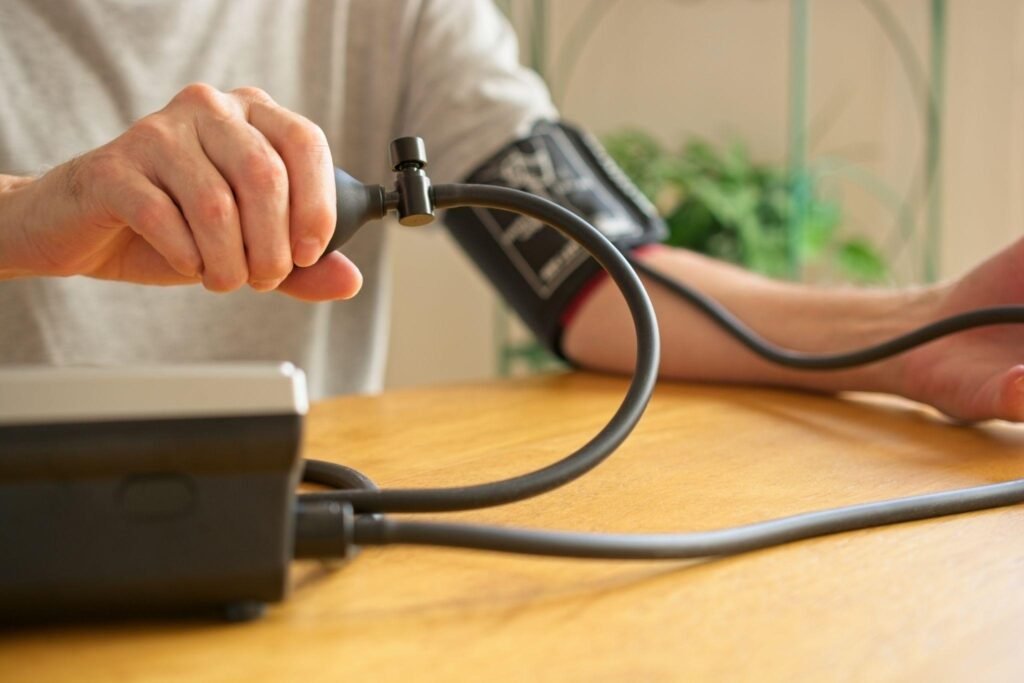
Start with a validated upper-arm digital monitor for the most accurate BP readings. Wrist devices can be used in some cases but are generally less reliable if not positioned corectly.
Key setup points:
- Place the cuff on a bare upper arm
- Ensure the tubing runs down the inner arm
- Keep the device at heart level if required by model instructions
- Sit in a quiet, well-lit environment
A properly set device forms the foundation of reliable home blood pressure monitoring (HBPM).
Step 2: Prepare Your Body Before Measurement
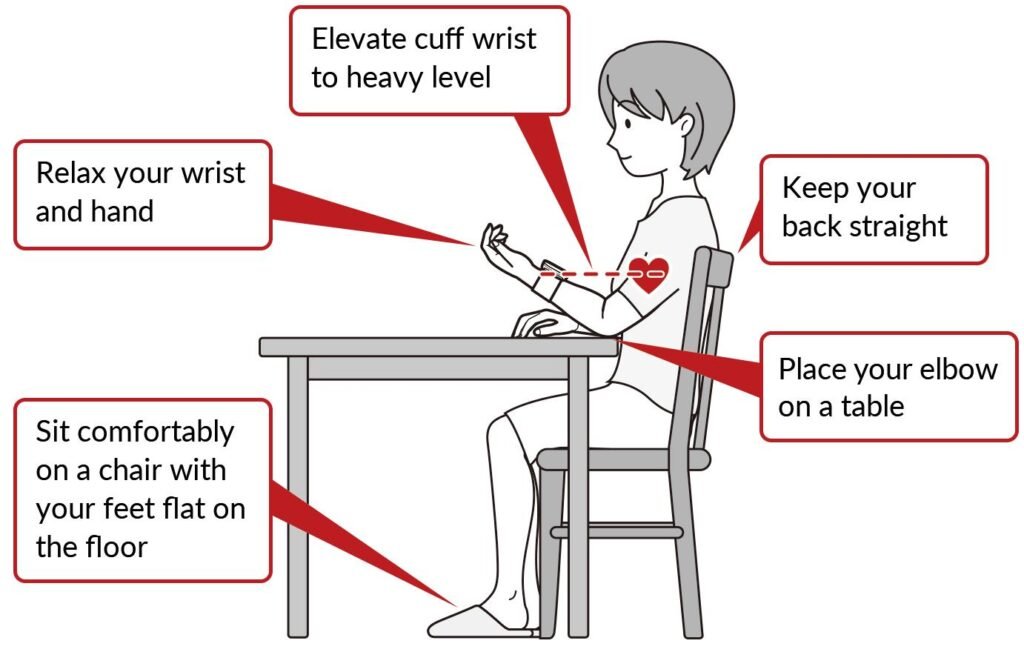
Preparation directly impacts reading accuracy. Even small lifestyle factors can temporarily alter blood pressure.
Before measuring:
- Rest for at least 5 minutes
- Avoid caffeine, smoking, or heavy meals for 30 minutes
- Sit upright with back supported
- Keep feet flat on the floor (do not cross legs)
- Place arm on a table at chest level
This step ensures more stable and clinically meaningful results for BP tracking at home.
Step 3: Take the Blood Pressure Reading Correctly
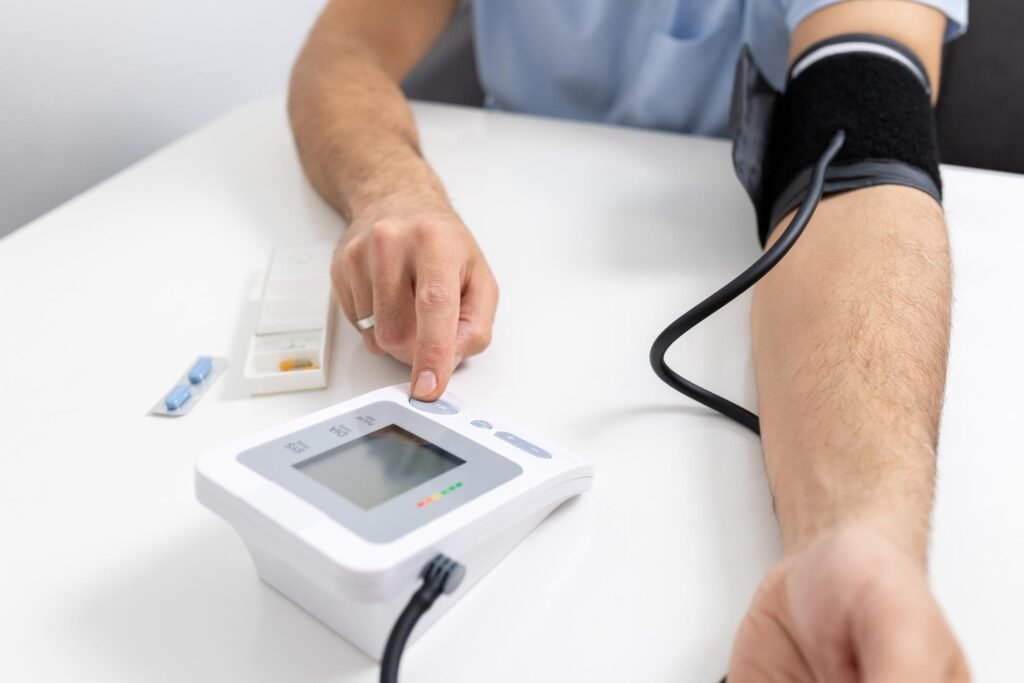
Once you are relaxed and positioned correctly:
- Press the start button on the device
- Stay still and avoid talking
- Let the cuff inflate and deflate automatically
- Wait for systolic and diastolic values to appear
Modern monitors may also display pulse rate and irregular heartbeat indicators, adding more depth to your hypertension self-monitoring system.
For consistency, take 2–3 readings one minute apart and record the average.
Step 4: Record and Track Your Results
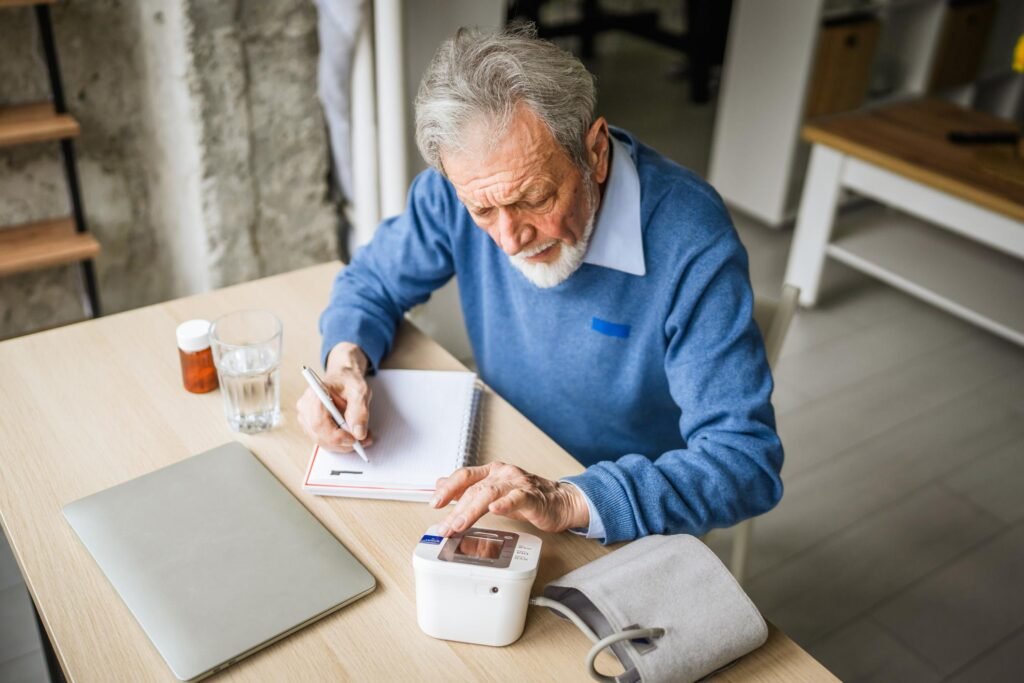
Tracking is where home monitoring becomes clinically powerful. Without recording, patterns cannot be identified.
You can log readings using:
- A paper BP diary
- Mobile health apps
- Spreadsheets or digital health platforms
Important details to record:
- Date and time
- Systolic and diastolic readings
- Heart rate (if available)
- Notes (stress, sleep, medication timing)
This creates a long-term dataset for better BP tracking at home and physician review.
Step 5: Understand Trends and Take Action
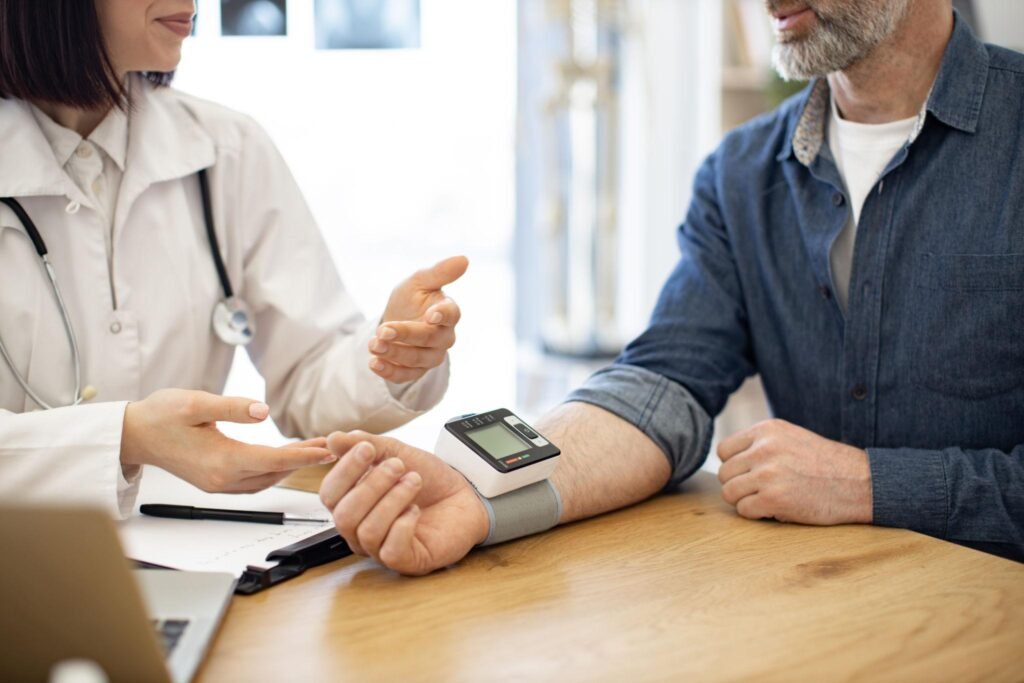
A single reading is less important than the overall pattern. What matters most is consistency over time.
Look for:
- Persistent high readings → possible uncontrolled Hypertension
- Sudden drops → possible overmedication or dehydration
- Large fluctuations → stress, sleep issues, or underlying instability
Share your recorded data with a healthcare provider for proper interpretation. This transforms home monitoring into a structured hypertension self-monitoring system that supports preventive care and early intervention.
Why This System Matters
When followed correctly, home BP monitoring becomes more than a routine—it becomes a preventive health tool. It improves diagnostic accuracy, reduces unnecessary clinic variation, and supports safer long-term management of cardiovascular risk.
Most importantly, it empowers individuals to actively participate in managing their blood pressure through consistent BP tracking at home and informed decision-making.
Blood Pressure Monitor Comparison
Comparison Chart
| Feature | Upper Arm Monitor | Wrist Monitor | Manual Monitor |
|---|---|---|---|
| Accuracy | High | Moderate | High (trained use) |
| Ease of Use | Easy | Very Easy | Difficult |
| Best for Seniors | ✅ Yes | ⚠️ Limited | ❌ No |
| App Connectivity | Yes | Yes | No |
| Price Range | Medium | Low–Medium | Low |
👉 Best Blood Pressure Monitors for Seniors →
Benefits of Monitoring Blood Pressure at Home
- Detects hypertension early
- Reduces hospital visits
- Improves medication adherence
- Enables remote doctor monitoring
- Identifies abnormal patterns
Trends & Latest Technology (2026)
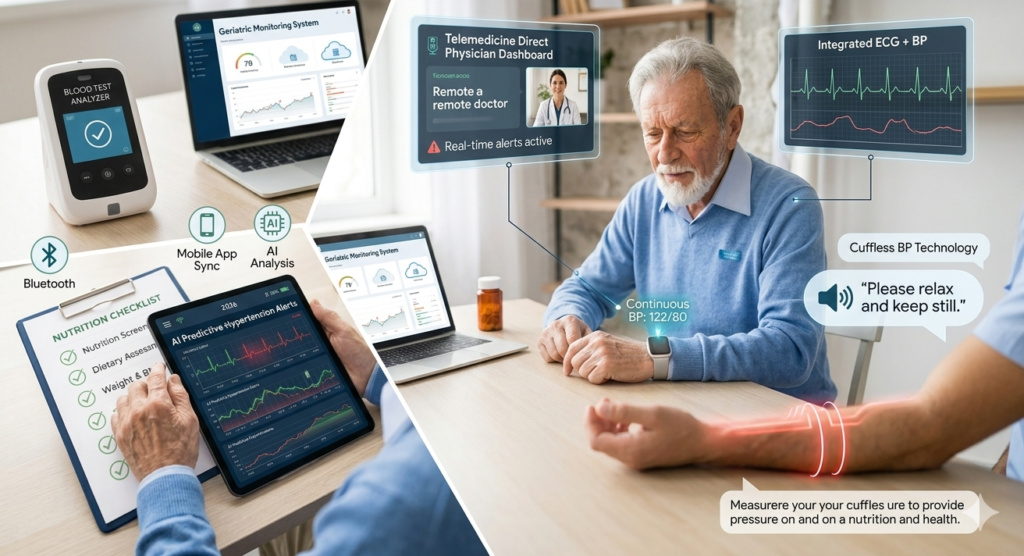
Modern blood pressure monitoring is evolving rapidly:
Smart Monitors
- Bluetooth-enabled syncing
- Mobile app integration
- AI-driven trend analysis
Wearable BP Devices
- Continuous monitoring
- Integration with smartwatches
Telemedicine Integration
- Direct physician dashboards
- Real-time alerts
Voice-Assisted Devices
- Elder-friendly voice guidance
Upcoming Models & Innovations
- Cuffless blood pressure monitoring
- AI predictive hypertension alerts
- Integrated ECG + BP devices
- Cloud-based geriatric monitoring systems
Cost of Home Blood Pressure Monitor
| Category | Cost Range (USD) |
|---|---|
| Basic Digital Monitor | $20 – $40 |
| Smart Bluetooth Monitor | $40 – $100 |
| Premium Medical Grade | $100 – $250 |
Risks & Common Mistakes
Incorrect Positioning
Leads to inaccurate readings
Wrong Cuff Size
Too small or too large affects results
Measuring at Wrong Time
BP fluctuates throughout the day
Over-monitoring Anxiety
Frequent checks may increase stress
Ignoring Trends
Single readings are not diagnostic
Ideal Blood Pressure Ranges (Reference Table)
| Category | Systolic | Diastolic |
|---|---|---|
| Normal | <120 | <80 |
| Elevated | 120–129 | <80 |
| Hypertension | ≥130 | ≥80 |
Home blood pressure monitoring transforms passive healthcare into active prevention. When done correctly, it bridges the gap between patient and physician—creating a continuous, data-driven care system that is especially critical for aging populations.
FAQs
How to Read Blood Pressure Readings From a Blood Pressure Monitor
Understanding blood pressure readings helps you recognize whether your cardiovascular system is functioning within a healthy range. A blood pressure monitor typically displays two numbers along with pulse rate information.
Understanding the Two Blood Pressure Numbers
Blood pressure is written as:
Blood Pressure=Diastolic PressureSystolic Pressure
Example:
- 120/80 mmHg
What Systolic Pressure Means
The top number represents systolic pressure. This measures the force exerted on artery walls when the heart contracts and pumps blood.
Example:
- 120 in a reading of 120/80
What Diastolic Pressure Means
The bottom number represents diastolic pressure. This measures the pressure inside the arteries while the heart rests between beats.
Example:
- 80 in a reading of 120/80
What “mmHg” Means
Blood pressure is measured in millimeters of mercury (mmHg), which is the standard unit used worldwide for arterial pressure measurement.
General Blood Pressure Categories
| Category | Systolic | Diastolic |
|---|---|---|
| Normal | Less than 120 | Less than 80 |
| Elevated | 120–129 | Less than 80 |
| High Blood Pressure Stage 1 | 130–139 | 80–89 |
| High Blood Pressure Stage 2 | 140 or higher | 90 or higher |
| Hypertensive Crisis | Above 180 | Above 120 |
These ranges are general clinical guidelines and may vary depending on age, health status, and physician recommendations.
What Pulse Rate Means on a Monitor
Most digital blood pressure monitors also display pulse rate.
Example:
- Pulse: 72 bpm
This indicates heartbeats per minute. A resting pulse between 60 and 100 bpm is generally considered normal for most adults.
Why Readings Change Throughout the Day
Blood pressure naturally fluctuates based on:
- Stress
- Sleep
- Physical activity
- Hydration
- Meals
- Medications
- Emotional state
Because of this, doctors usually evaluate patterns over time rather than relying on a single reading.
Signs of an Unreliable Reading
A reading may be inaccurate if:
- The cuff was loose
- You talked during measurement
- You crossed your legs
- The cuff was positioned incorrectly
- You measured immediately after exercise or caffeine intake
Taking two or three readings one minute apart often improves reliability.
How to Use a Blood Pressure Monitor
Using a blood pressure monitor correctly is essential for obtaining reliable readings. Whether using an upper-arm or wrist monitor, consistent technique significantly improves accuracy.
Step 1: Prepare Before Measuring
Before taking a reading:
- Avoid caffeine for at least 30 minutes
- Avoid smoking beforehand
- Empty your bladder
- Sit quietly for 5 minutes
Physical stimulation and stress can temporarily elevate blood pressure.
Step 2: Sit in the Correct Position
Proper posture matters.
Correct Sitting Position
- Sit upright in a chair
- Keep your back supported
- Place both feet flat on the floor
- Do not cross your legs
Your arm should rest comfortably on a table or armrest.
Step 3: Apply the Cuff Properly
For Upper Arm Monitors
- Wrap the cuff around bare skin
- Position it about 1 inch above the elbow
- Keep the artery marker aligned with the inner arm
For Wrist Monitors
- Wrap the cuff snugly around the wrist
- Keep the monitor facing upward
- Raise the wrist to heart level
Step 4: Start the Measurement
Press the start button and remain completely still.
During measurement:
- Do not speak
- Do not move
- Breathe normally
The cuff inflates automatically and slowly deflates while measuring arterial pressure.
Step 5: Record the Reading
Most digital monitors display:
- Systolic pressure
- Diastolic pressure
- Pulse rate
Tracking readings daily can help identify blood pressure trends and assist healthcare providers in evaluating cardiovascular health.
Best Time to Measure Blood Pressure
For consistency, many healthcare professionals recommend measuring:
- In the morning before medication
- In the evening before dinner
Try to measure at the same times each day.
Common Mistakes When Using a Blood Pressure Monitor
Measuring Over Clothing
The cuff should always touch bare skin.
Talking During the Reading
Even brief conversation can raise blood pressure temporarily.
Incorrect Arm Position
The arm should remain level with the heart.
Using the Wrong Cuff Size
A cuff that is too small may produce falsely high readings, while a loose cuff can produce inaccurate results.
How to Put On a Blood Pressure Monitor
Correct cuff placement is one of the most important parts of accurate blood pressure monitoring. Even a high-quality monitor can give unreliable readings if the cuff is worn incorrectly.
How to Put On an Upper Arm Blood Pressure Monitor
Step 1: Expose the Upper Arm
Remove tight clothing from the upper arm. Do not place the cuff over sleeves.
Step 2: Position the Cuff Above the Elbow
Wrap the cuff approximately 1 inch above the bend of the elbow.
Step 3: Align the Artery Marker
Most cuffs include an artery marker or guideline. Position this marker over the inside of the arm where the brachial artery runs.
Step 4: Tighten the Cuff Correctly
The cuff should feel snug but not painfully tight.
A simple guideline:
- You should be able to slide two fingertips under the cuff
Step 5: Support the Arm
Rest the arm on a table so the cuff remains level with the heart.
How to Put On a Wrist Blood Pressure Monitor
Step 1: Place the Monitor on Bare Skin
Position the cuff directly against the skin, not over clothing or jewelry.
Step 2: Position the Monitor Properly
Place it slightly above the wrist joint with the screen facing upward.
Step 3: Secure the Strap
The monitor should fit firmly without restricting circulation.
Step 4: Raise the Wrist to Heart Height
Support the elbow on a table if necessary to maintain proper alignment during measurement.
Signs the Cuff Is Positioned Incorrectly
You may need to reposition the monitor if:
- Readings vary dramatically
- The cuff slips during inflation
- The cuff feels excessively tight
- Error messages appear frequently
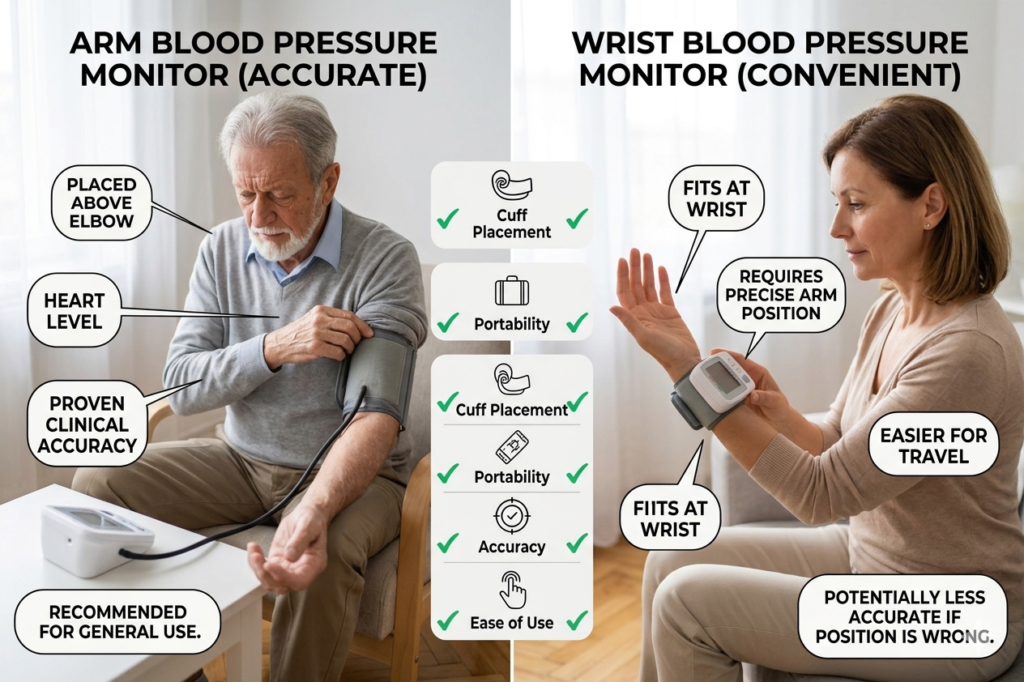
Are Wrist Blood Pressure Monitors Accurate?
Wrist blood pressure monitors can be accurate, but their reliability depends heavily on correct positioning and proper technique. Unlike upper-arm blood pressure monitors, wrist devices measure pressure from arteries that are narrower and located closer to the skin surface, making them more sensitive to body movement and arm placement.
Why Wrist Monitors Sometimes Give Incorrect Readings
Several factors can affect the accuracy of a wrist blood pressure monitor:
- Holding the wrist too low or too high
- Moving or talking during measurement
- Incorrect cuff placement
- Poor circulation in the wrist
- Using the wrong cuff size
- Measuring immediately after exercise, caffeine, or stress
Because of these variables, wrist monitors often produce readings that fluctuate more than upper-arm monitors.
How to Improve Accuracy With a Wrist Monitor
To get the most reliable reading:
Sit Correctly
- Sit upright with your back supported
- Keep both feet flat on the floor
- Rest for at least 5 minutes before measuring
Position the Wrist at Heart Level
This is the most important step. The wrist must remain level with the heart during the entire measurement. If the wrist is lower than the heart, the reading may appear falsely high. If it is above the heart, the reading may appear artificially low.
Stay Completely Still
Avoid:
- Talking
- Looking around
- Clenching your fist
- Moving the arm
Even small movements can alter the result.
Are Wrist Monitors Recommended by Doctors?
Most clinicians still prefer upper-arm monitors because they generally provide more consistent and clinically validated readings. However, wrist monitors can still be useful for:
- Travelers
- Individuals with large upper arms
- Elderly users who struggle with traditional cuffs
- Home monitoring when used correctly
Many modern wrist monitors are clinically validated and can perform well when instructions are followed carefully.
Wrist Monitor vs Upper Arm Monitor
| Feature | Wrist Monitor | Upper Arm Monitor |
|---|---|---|
| Portability | High | Moderate |
| Ease of use | Very easy | Easy |
| Accuracy consistency | Moderate | Higher |
| Sensitivity to movement | High | Lower |
| Recommended for medical tracking | Sometimes | Usually |
When Wrist Monitors Are Most Useful
Wrist monitors are often chosen for convenience and portability. They can be especially practical for daily home tracking, travel, or quick monitoring during work hours. The key is consistency. Taking readings at the same time each day and using proper positioning helps create more reliable trends over time.