Chronic Disease Telecare for Elderly Patients (Remote Chronic Illness Telehealth Management)
Amazon Affiliate Disclosure
This content may include references to medical devices or monitoring tools that can be purchased through third-party platforms. If you choose to purchase through those links, a small commission may be earned at no additional cost to you.
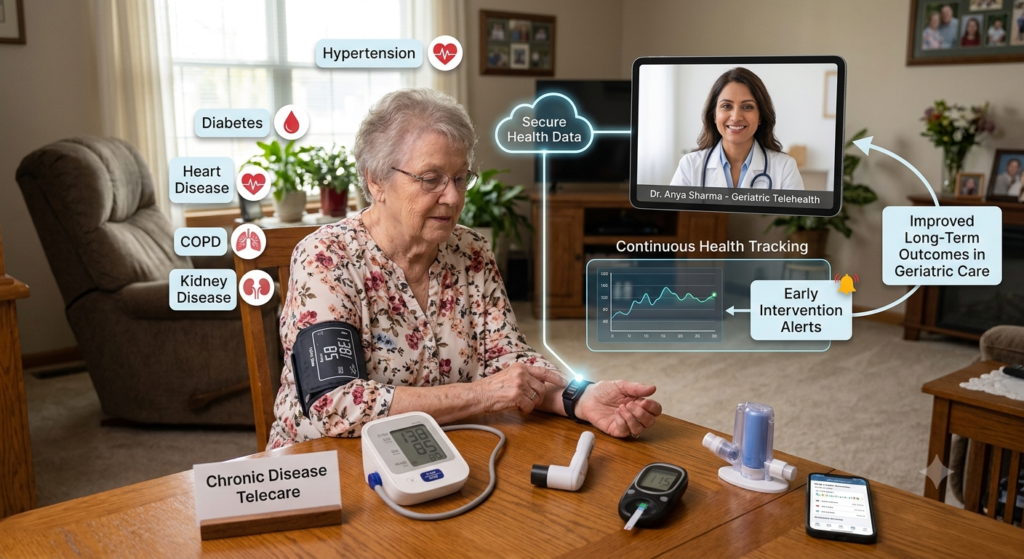
Chronic disease telecare for elderly patients is reshaping how long-term conditions are monitored, managed, and stabilized outside traditional clinics. Through connected devices, continuous data flow, and structured virtual care pathways, individuals living with hypertension, diabetes, heart disease, COPD, and kidney disorders can now receive ongoing clinical attention without frequent in-person visits.
This shift is not cosmetic—it changes the trajectory of chronic illness progression. Instead of reactive treatment during emergencies, care becomes continuous, predictive, and adaptive.
Start exploring structured care pathways through Telemedicine designed specifically for aging populations.
Quick Picks
- What is Chronic Disease Telecare?
- Who Needs It
- Benefits
- How It Works
- Hypertension Monitoring
- Diabetes Telehealth
- Heart Disease Monitoring
- COPD Oxygen Care
- Kidney Disease Tracking
- Comparison Guide
- Future Trends
What is Chronic Disease Telecare for Elderly Patients?
Chronic disease telecare for elderly patients refers to a structured healthcare model that uses remote monitoring devices, digital consultations, and real-time health tracking to manage long-term conditions continuously.
Instead of waiting for symptoms to escalate, clinicians track physiological signals such as:
- Blood pressure trends
- Glucose fluctuations
- Oxygen saturation
- Heart rhythm irregularities
- Kidney function markers (indirect via symptoms and lab integrations)
This model shifts chronic illness management from episodic care to a continuous clinical loop where early warning signs are detected before deterioration occurs.
Explore broader care frameworks through the Homepage
Who Needs Chronic Disease Telecare?
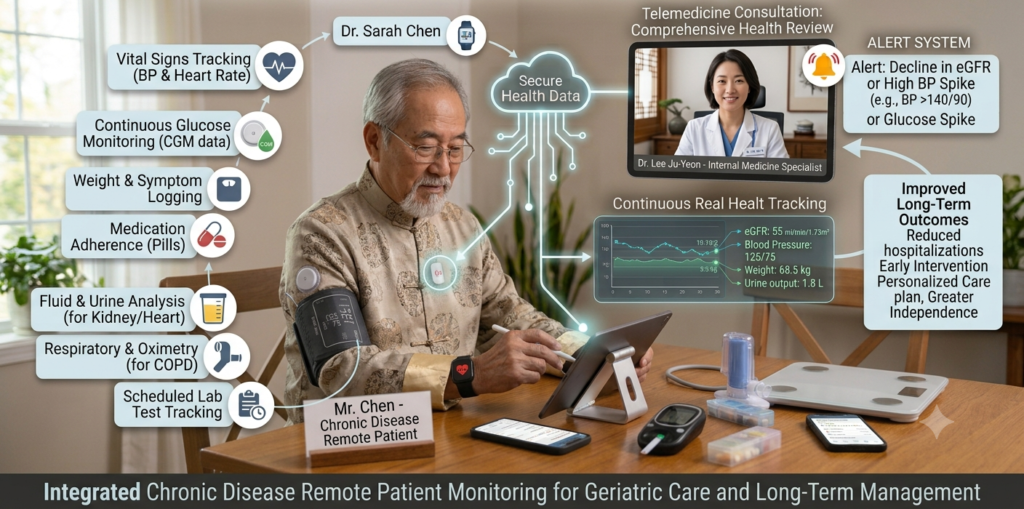
Chronic illness telehealth management is most impactful for individuals who experience:
- Multiple coexisting conditions (hypertension + diabetes + cardiac disease)
- Limited mobility or transportation barriers
- Frequent hospital readmissions
- Medication instability or poor adherence
- Post-hospital recovery requiring structured monitoring
It is especially relevant for aging individuals who require consistent oversight but not constant hospitalization.
Benefits of Chronic Disease Telecare
The benefits of chronic disease telecare for elderly patients extend beyond convenience. They reshape clinical outcomes.
Key advantages:
- Reduced emergency hospital visits
- Early detection of condition deterioration
- Improved medication adherence
- Lower long-term healthcare costs
- Continuous clinician visibility into health trends
- Reduced caregiver stress
Clinical Impact Table
| Condition | Telecare Benefit | Key Outcome Improvement |
|---|---|---|
| Hypertension | BP trend tracking | Reduced stroke risk |
| Diabetes | Glucose monitoring | Fewer hypoglycemic events |
| Heart disease | Rhythm tracking | Early arrhythmia detection |
| COPD | Oxygen monitoring | Reduced respiratory failure |
| Kidney disease | Symptom tracking | Slower progression detection |
How Does Chronic Disease Telecare Work for Seniors?
The system operates through a continuous feedback loop:
- Data Collection
Devices capture vitals (BP monitors, glucose sensors, pulse oximeters) - Transmission
Data is sent securely to healthcare dashboards - Clinical Interpretation
Algorithms flag anomalies or trends - Intervention
Providers adjust medication or recommend action - Follow-up Monitoring
Adjustments are tracked for effectiveness
This cycle creates a living health profile instead of isolated checkups.
Managing Hypertension Remotely
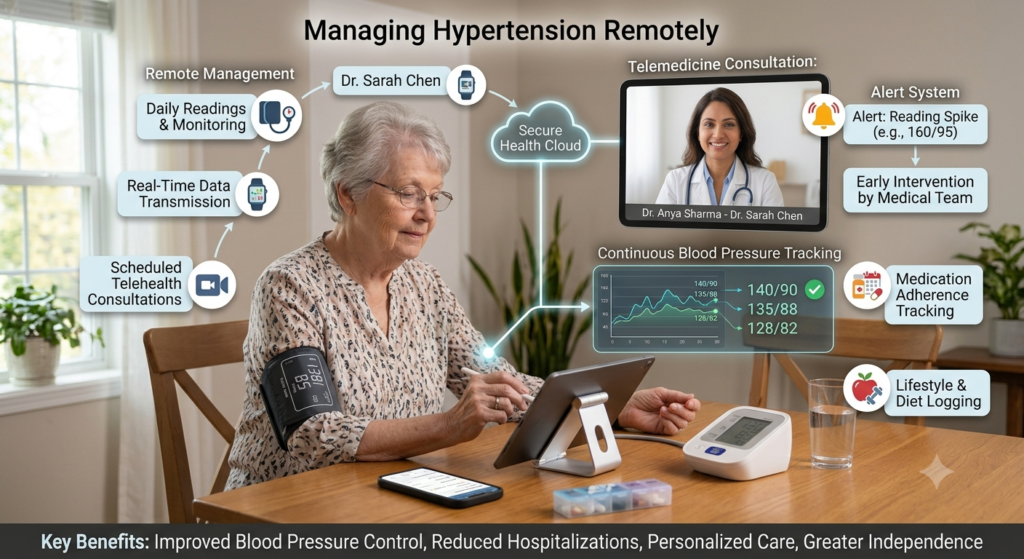
Managing hypertension remotely is one of the most common applications of chronic disease telecare.
Patients use digital blood pressure cuffs that log:
- Morning and evening readings
- Stress-related spikes
- Medication response patterns
Clinicians can detect:
- Masked hypertension
- Nocturnal blood pressure rise
- Medication underperformance
Outcome Focus:
Reducing long-term cardiovascular strain and preventing silent vascular damage.
Explore BP stabilization and stroke prevention strategies – Managing hypertension remotely 👈
Diabetes Telehealth Management
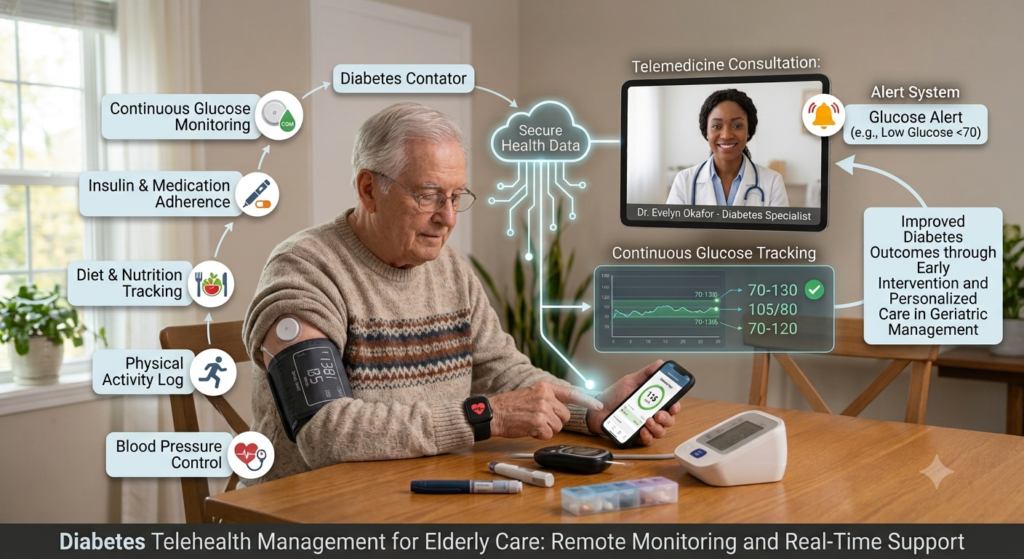
Diabetes telehealth management uses continuous glucose monitors (CGMs) or periodic finger-prick integrations.
Key insights include:
- Post-meal glucose spikes
- Overnight hypoglycemia risks
- Insulin response efficiency
This allows clinicians to refine dietary plans, medication timing, and dosage accuracy with higher precision than periodic lab visits.
Glucose optimization and insulin timing precision – Diabetes telehealth management 👈
Heart Disease Remote Monitoring
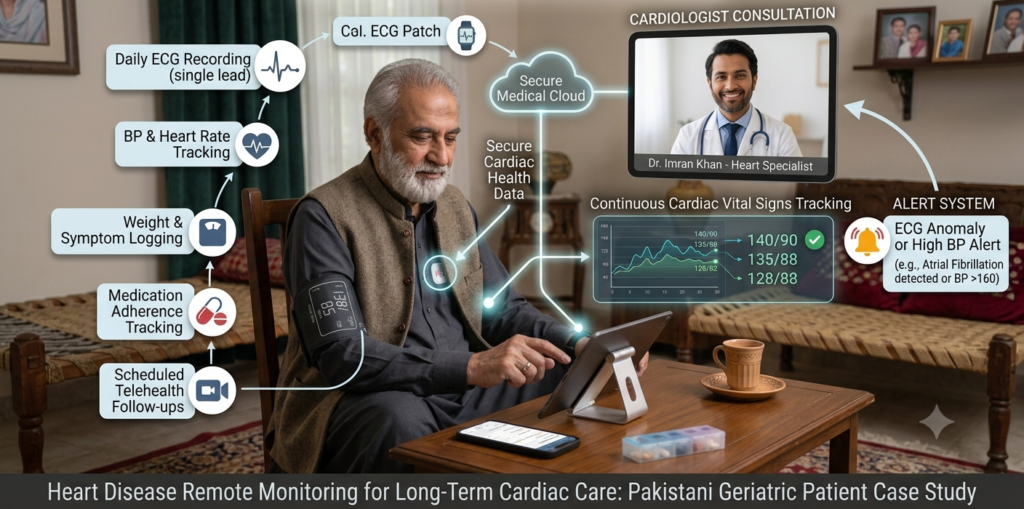
Heart disease remote monitoring focuses on rhythm stability and cardiovascular workload.
Common tracking tools:
- ECG patches
- Smart wearable heart monitors
- Heart rate variability systems
Clinical focus areas:
- Arrhythmia detection
- Post-heart attack recovery tracking
- Fluid retention early warnings
This model reduces silent deterioration risks significantly.
Rhythm detection and cardiac stress tracking – Heart disease remote monitoring 👈
COPD Telecare and Oxygen Management
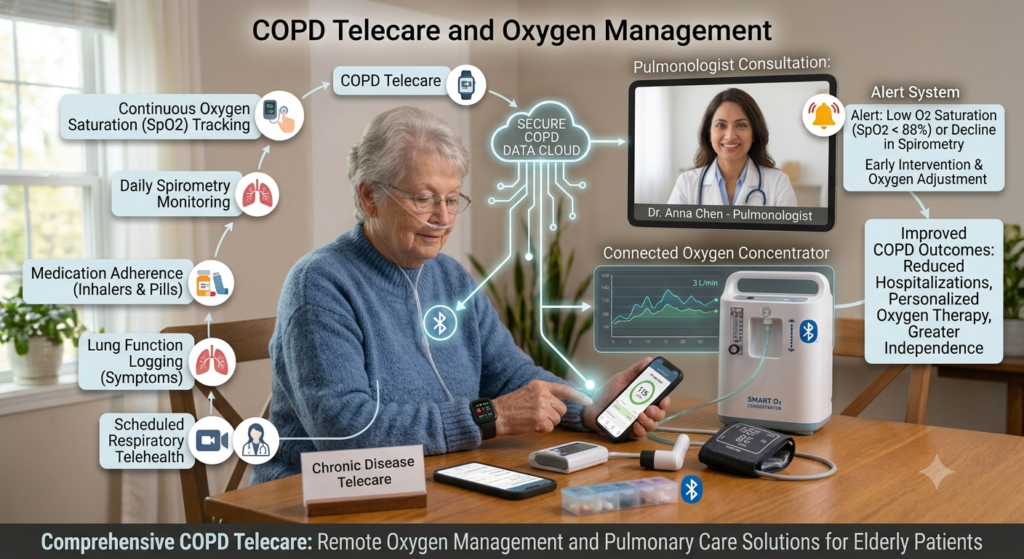
COPD telecare and oxygen management focuses on respiratory efficiency and oxygen stability.
Monitored parameters:
- Oxygen saturation (SpO2)
- Breathing rate variability
- Activity-induced desaturation
Patients often use pulse oximeters connected to mobile dashboards.
Key intervention trigger:
Early oxygen drop detection before breathlessness becomes severe.
Respiratory stability and oxygen optimization – COPD telecare and oxygen management 👈
Kidney Disease Monitoring in Elderly Patients
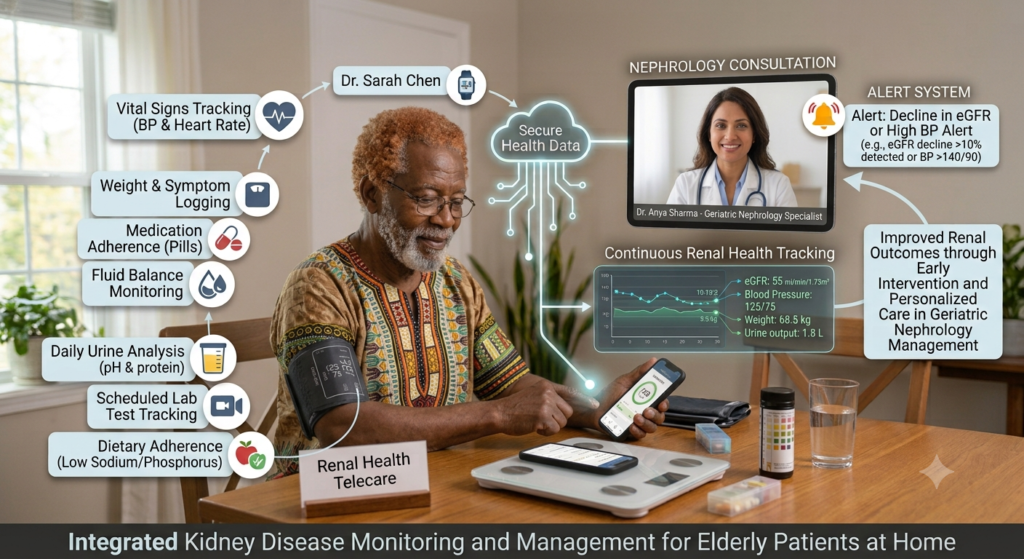
Kidney disease monitoring in elderly patients relies on indirect tracking and symptom-based surveillance.
Key signals include:
- Fluid retention patterns
- Blood pressure instability
- Fatigue progression
- Medication side effect monitoring
Although lab testing remains essential, telecare ensures early warning signs are not missed between lab cycles.
Fluid balance and progression tracking – Kidney disease monitoring in elderly patients 👈
Telecare vs Traditional Chronic Care Management
| Feature | Telecare Model | Traditional Care |
|---|---|---|
| Monitoring frequency | Continuous | Periodic |
| Intervention speed | Fast | Delayed |
| Patient visibility | High | Low |
| Emergency prevention | Strong | Moderate |
| Data usage | Real-time analytics | Manual records |
The shift is not replacement—it is augmentation, extending clinical reach into daily life.
Upcoming Trends & Latest Tech in Chronic Disease Telecare
Chronic disease telecare is entering a phase of intelligent automation and predictive modeling.
Emerging developments:
- AI-based early deterioration prediction
- Wearable biosensors with multi-vitamin tracking signals
- Smart inhalers for COPD management
- Non-invasive glucose monitoring
- Integrated hospital-at-home systems
Direction of evolution:
Care is moving from “monitor and react” to “predict and prevent.”
FAQs: Chronic Disease Telecare for Elderly Patients
How does chronic disease telecare improve elderly patient safety?
It reduces delays in detecting complications by tracking vitals continuously, allowing earlier intervention before conditions escalate into emergencies.
Can chronic disease telecare replace hospital visits?
It reduces routine visits but does not fully replace them. Physical exams and lab tests remain essential for diagnosis and long-term evaluation.
What devices are used in chronic disease telecare?
Common tools include blood pressure monitors, glucose sensors, pulse oximeters, ECG patches, and wearable heart trackers.
Is telecare effective for multiple chronic conditions?
Yes, it is especially effective for individuals with overlapping conditions because it integrates multiple data streams into a unified monitoring system.
How quickly can doctors respond in telecare systems?
Response times vary, but alerts can be near real-time, enabling faster adjustments compared to scheduled clinic visits.
People Also Ask (PAA)
What is remote chronic disease monitoring services?
It refers to digital systems that continuously track patient health data outside clinical settings and transmit it to healthcare providers for review.
How does chronic illness telehealth management work?
It combines wearable devices, mobile apps, and clinical dashboards to track symptoms, vitals, and medication response patterns.
What is the difference between telecare and regular chronic care?
Telecare provides continuous data-driven monitoring, while traditional care relies on periodic appointments and retrospective evaluation.
Can elderly patients easily use telecare devices?
Most modern devices are designed for simplicity, with automatic syncing and minimal manual input required.
Is chronic disease telecare expensive?
Costs vary, but it often reduces long-term expenses by preventing hospitalizations and emergency interventions.
The Shift Toward Continuous Chronic Care
Chronic disease telecare for elderly patients is redefining long-term care by replacing episodic intervention with continuous health intelligence. As monitoring systems become more predictive and less reactive, chronic illness management shifts closer to prevention than treatment.
The direction is clear: healthcare is moving into daily life, not just clinical environments.