Geriatric Telemedicine: Complete Guide to Virtual Elder Care
Updated: June 2026
Affiliate Disclosure: To keep TeleGeriatric.com running, we may earn a commission from qualifying purchases made through links on this page, including qualifying purchases as an Amazon Associate.
Geriatric Telemedicine and the Future of Telehealth for Seniors
Geriatric Telemedicine is changing how older adults receive medical care, follow-up support, chronic disease oversight, medication review, and home-based monitoring. For many seniors, healthcare is no longer limited to clinic visits, long drives, waiting rooms, and fragmented communication between doctors, family members, and caregivers. A modern senior care system can now begin at home, supported by virtual care, remote patient monitoring, connected devices, caregiver dashboards, and safer follow-up workflows.
At TeleGeriatric, geriatric telemedicine is viewed as a practical care model for aging adults who need medical access without unnecessary travel, stress, or delayed support. It brings together telehealth for seniors, remote monitoring, home health devices, chronic disease telecare, medication adherence systems, and caregiver coordination into one connected elderly care pathway.
This does not mean every medical problem can be solved through a screen. Seniors still need in-person care for emergencies, physical examinations, imaging, lab work, procedures, injuries, and complex symptoms that require direct clinical assessment. The real strength of geriatric telemedicine is not replacing doctors or clinics. Its value is in reducing unnecessary gaps between care moments.
For an older adult with hypertension, diabetes, heart disease, COPD, kidney disease, medication complexity, fall risk, or mobility limitations, a once-every-few-months office visit may not show the full picture. Blood pressure can rise quietly. Glucose levels can swing after missed meals. Oxygen saturation can worsen before symptoms become obvious. Weight can increase from fluid retention before a heart failure crisis. Medication mistakes can happen between appointments. A senior living alone may have a fall, confusion episode, or sudden decline that family members do not notice quickly enough.
Geriatric telemedicine helps close those gaps. Through virtual consultations, remote patient monitoring, caregiver alerts, and home-based care systems, families and clinicians can respond earlier, adjust care more intelligently, and support seniors where they spend most of their time: at home.
Quick Navigation
Use this section to choose the best starting point based on the senior’s real need.
Find the Right Geriatric Telemedicine Pathway
Use these quick links to move directly to the part of the guide that matches your senior care need, whether you are learning the basics, comparing telehealth with in-person care, setting up remote monitoring, managing chronic disease, or preparing to start virtual elder care.
What Is Geriatric Telemedicine?
Understand virtual elder care, telehealth for seniors, remote support, and how senior-focused care differs from general telehealth.How Geriatric Telemedicine Works
See the full process from intake and virtual consultation to device setup, caregiver access, monitoring, and follow-up.Who Needs Telemedicine for Seniors?
Best for seniors with mobility challenges, chronic illness, rural access issues, post-hospital needs, or caregiver support gaps.Conditions Treated Through Geriatric Telemedicine
Explore hypertension, diabetes, heart disease, COPD, kidney disease, medication review, recovery care, and cognitive concerns.Remote Patient Monitoring
Learn how blood pressure, glucose, oxygen saturation, weight, heart rate, and symptoms can be tracked from home.Virtual Care & Teleconsultation
Prepare for online senior doctor visits, medication review, caregiver participation, and chronic follow-up appointments.Chronic Disease Telecare
Best for long-term management of hypertension, diabetes, heart disease, COPD, kidney disease, and multi-condition care.Home-Based Care Systems
Set up caregiver coordination, medication adherence systems, emergency response workflows, and safer home routines.Best Telemedicine Devices for Seniors
Compare blood pressure monitors, glucose meters, pulse oximeters, smart scales, alert systems, and medication tools.Benefits of Geriatric Telemedicine
Review access, continuity, earlier detection, caregiver involvement, reduced travel burden, and chronic care benefits.Risks, Limitations & Safety
Understand when telehealth is not enough, privacy concerns, device accuracy issues, and when in-person care is needed.Cost Expectations
See common costs for virtual visits, remote monitoring subscriptions, home devices, dashboards, and care programs.Telemedicine vs Traditional Care
Compare virtual elder care with clinic-based care across access, monitoring, exams, emergencies, cost, and convenience.How to Get Started
Follow a practical setup process for choosing care needs, preparing medical information, adding devices, and involving caregivers.FAQs About Geriatric Telemedicine
Find answers about safety, devices, costs, remote patient monitoring, caregiver access, and telehealth for seniors.What Is Geriatric Telemedicine?
Geriatric Telemedicine is the delivery of healthcare services to older adults through digital communication, connected home health devices, remote monitoring tools, and virtual clinical support. It is a senior-focused form of telehealth designed around the realities of aging: mobility limits, chronic illness, medication complexity, caregiver involvement, cognitive changes, sensory limitations, and the need for more frequent follow-up.
A general telehealth visit may involve a simple video call between a patient and a provider. Geriatric telemedicine is broader. It may include:
Video consultations with doctors, nurse practitioners, nurses, therapists, pharmacists, or specialists
Remote patient monitoring for blood pressure, glucose, oxygen saturation, weight, heart rate, and symptoms
Medication review for older adults taking multiple prescriptions
Caregiver access to health updates, appointments, and alerts
Home safety systems such as fall detection, medical alert devices, and motion monitoring
Chronic disease telecare for hypertension, diabetes, heart disease, COPD, and kidney disease
Post-hospital follow-up to reduce avoidable complications
Hybrid care planning when an in-person visit is medically necessary
The defining feature is not the technology itself. The defining feature is continuity. Geriatric telemedicine allows care teams to understand what is happening between appointments, not only during appointments.
For seniors, this matters because many health risks develop gradually. A senior may not feel symptoms while blood pressure remains dangerously high. A person with diabetes may not recognize early hypoglycemia. A caregiver may not notice fluid retention until breathing becomes difficult. A senior with memory changes may forget medications but still appear stable during a short clinic visit. Geriatric telemedicine brings more frequent visibility into these everyday care moments.
How Geriatric Telemedicine Works
A strong geriatric telemedicine system usually follows a structured care pathway. The exact process depends on the patient’s condition, location, care team, and device setup, but most senior telehealth programs include the same core steps.
1. Senior Care Intake
The process begins with a review of the older adult’s health history, current symptoms, medications, chronic conditions, mobility level, home environment, caregiver support, and technology access. This intake helps determine whether the senior needs a simple virtual visit, remote monitoring, chronic disease telecare, medication review, home safety tools, or a hybrid care plan.
2. Virtual Consultation Setup
The senior or caregiver receives instructions for joining a video visit, phone visit, secure messaging session, or online care platform. For older adults, preparation matters. The device should be charged, the internet connection should be stable, the camera and microphone should be tested, and a caregiver should be available if the senior has hearing, vision, memory, or mobility challenges.
3. Medical Review and Care Planning
During the appointment, the clinician may review symptoms, medications, home readings, recent hospital visits, lab results, mobility concerns, nutrition, sleep, falls, and caregiver observations. For many seniors, caregiver input is essential because subtle changes in behavior, appetite, walking stability, confusion, or medication use may not be fully reported by the patient.
4. Remote Patient Monitoring Setup
If ongoing tracking is needed, the senior may use connected devices such as a blood pressure monitor, glucose meter, pulse oximeter, smart scale, ECG monitor, medication dispenser, or wearable alert system. Some devices automatically send readings to a clinical dashboard. Others require manual logging by the senior or caregiver.
5. Medication Review and Follow-Up
Older adults often take several medications at once. Telehealth can support medication reconciliation, side-effect review, refill coordination, adherence planning, and pharmacist or clinician oversight. Follow-ups may be scheduled weekly, monthly, or based on changes in symptoms or readings.
6. Caregiver Coordination
Family members and caregivers may join virtual visits, receive alerts, review dashboards, help record symptoms, and support medication routines. This is especially useful when adult children live far from an aging parent or when multiple caregivers are involved.
7. Escalation to In-Person Care
A responsible geriatric telemedicine program must know when virtual care is not enough. Sudden chest pain, severe shortness of breath, stroke-like symptoms, falls with injury, sudden confusion, uncontrolled bleeding, severe dehydration, and rapidly worsening symptoms require urgent in-person medical evaluation.
Who Needs Telemedicine for Seniors?
Telemedicine for seniors is useful when age, illness, distance, transportation, mobility, caregiver burden, or frequent follow-up needs make traditional care difficult. It is especially valuable for older adults who need recurring medical attention but do not always need to travel for every conversation, medication adjustment, or routine review.
Seniors With Mobility Challenges
Older adults with arthritis, chronic pain, frailty, balance disorders, neurological conditions, post-surgical limitations, or wheelchair dependence may find clinic visits physically draining. A routine appointment can require transportation, caregiver time, waiting room exposure, and long recovery after travel.
Geriatric telemedicine gives these seniors access to virtual care from home. It can support routine follow-ups, symptom checks, prescription renewals, medication review, specialist conversations, and care planning without requiring unnecessary travel.
Older Adults With Chronic Diseases
Chronic illness is one of the strongest reasons to use telehealth for seniors. Conditions such as hypertension, diabetes, heart disease, COPD, and kidney disease often require repeated monitoring, medication adjustments, lifestyle review, and early response to warning signs.
For these seniors, a single clinic reading may not be enough. Home blood pressure trends, glucose readings, oxygen saturation changes, daily weight patterns, and symptom notes can help clinicians understand whether treatment is working between visits.
Seniors in Rural or Underserved Areas
Many older adults live far from geriatricians, specialists, hospitals, or chronic care clinics. Rural travel can delay care and make follow-up inconsistent. Telehealth can reduce that distance by connecting seniors with clinicians, specialists, nurses, pharmacists, and care coordinators through virtual systems.
This does not remove the need for local emergency services or in-person diagnostics, but it can make routine care, specialist review, and chronic disease follow-up more accessible.
Post-Hospital Discharge Patients
The weeks after hospitalization are often risky for elderly patients. Medication changes, weakness, confusion, infection risk, wound care needs, fluid changes, and poor appetite can all lead to complications. Virtual follow-up and remote monitoring can help care teams identify early warning signs before the patient returns to the emergency department.
Post-discharge geriatric telemedicine may include vital sign checks, medication reconciliation, symptom review, wound photo review when appropriate, caregiver education, and escalation planning.
Elderly Adults Living Alone
Seniors living alone may benefit from a combination of virtual care, remote patient monitoring, medication reminders, fall detection, medical alert systems, and caregiver notifications. The goal is not to remove independence. The goal is to make independence safer.
A senior living alone may need help with medication timing, emergency response, chronic condition tracking, and regular check-ins. Home-based telehealth systems can help families stay aware without constantly interrupting the senior’s daily life.
Families Managing Elderly Care Remotely
Modern families often live in different cities, states, or countries. Adult children may be responsible for an aging parent’s care while managing work, travel, and their own household. Geriatric telemedicine gives families a way to participate in appointments, review care plans, receive alerts, and coordinate support from a distance.
Clinics Managing High-Volume Senior Patients
Clinics, home health organizations, senior care programs, and telehealth providers can use geriatric telemedicine to manage follow-ups more efficiently. Instead of relying only on office appointments, care teams can use remote readings, virtual check-ins, nurse-led monitoring, and risk-based outreach to focus attention where it is most needed.
Conditions Treated Through Geriatric Telemedicine
Geriatric telemedicine can support many common senior health concerns, especially when the condition requires follow-up, symptom review, medication adjustment, or home monitoring. It is most effective when used for ongoing care, early warning detection, and communication between the senior, caregiver, and clinician.
Cardiometabolic Conditions
Hypertension, diabetes, heart disease, heart failure, high cholesterol, weight changes, and vascular risk are common reasons older adults use telehealth. Remote patient monitoring can help track blood pressure, glucose levels, heart rate, weight, and symptoms over time.
For example, a person with hypertension may send home blood pressure readings before a virtual visit. A senior with diabetes may review fasting glucose, post-meal trends, or continuous glucose monitor data. A heart failure patient may track daily weight to watch for fluid retention.
Respiratory Conditions
COPD, asthma, post-infection respiratory symptoms, oxygen use, and chronic breathlessness can be monitored through telehealth when the situation is stable. Pulse oximeters, symptom logs, inhaler review, and virtual follow-up may help clinicians and caregivers recognize worsening patterns earlier.
Severe shortness of breath, bluish lips, chest pain, confusion, or rapidly falling oxygen levels should not be managed through routine telemedicine alone. Those symptoms require urgent medical attention.
Kidney and Fluid-Related Conditions
Older adults with chronic kidney disease often need careful monitoring of blood pressure, diabetes control, fluid balance, medication safety, and lab results. Telehealth can help review symptoms, home readings, medication risks, and follow-up plans, while in-person lab testing remains important.
Cognitive and Neurological Concerns
Telemedicine can support early dementia concerns, memory changes, medication confusion, sleep disruption, caregiver observations, and behavioral changes. It may also help families discuss safety planning, home routines, nutrition, fall risk, and the need for specialist evaluation.
Medication Management Issues
Polypharmacy is a major challenge in elderly care. Many seniors take multiple prescriptions from different providers. Telehealth medication review can help identify duplicate therapies, missed doses, confusing schedules, side effects, refill problems, and possible interactions that should be reviewed by a licensed clinician or pharmacist.
Recovery and Follow-Up Care
Virtual care can support post-hospital discharge, post-surgery check-ins, wound review when clinically appropriate, therapy coordination, nutrition concerns, and caregiver education. The goal is to keep recovery visible and organized after the senior returns home.
Remote Patient Monitoring in Geriatric Telemedicine
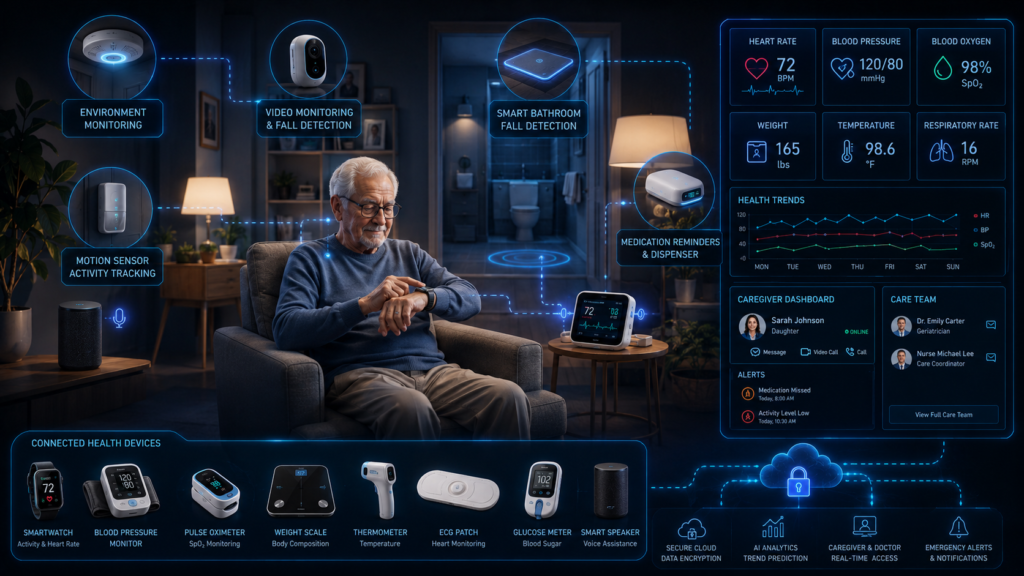
Remote Patient Monitoring is one of the most important parts of geriatric telemedicine because it turns home health readings into useful care information. Instead of waiting for the next appointment, seniors and caregivers can track vital signs, symptoms, and condition-specific measurements from home.
Remote patient monitoring may include blood pressure, glucose, oxygen saturation, weight, heart rate, ECG readings, temperature, activity levels, sleep signals, and medication adherence. The value is not only the number itself. The value is the pattern.
A single blood pressure reading may be misleading. A two-week trend may show whether medication is working. A single glucose reading may not explain risk. A daily pattern may show missed meals, nighttime lows, or post-meal spikes. A single weight measurement may seem ordinary. A three-pound overnight increase in a heart failure patient may require attention.
What Is Remote Monitoring in Elderly Care?
Remote monitoring in elderly care means using home devices, wearables, digital logs, or connected systems to track health information outside the clinic. The readings may be reviewed by the senior, caregiver, nurse, physician, or monitoring team.
The most useful RPM systems are simple, accurate, and tied to a care plan. Seniors should not be overwhelmed by technology. A good system should answer practical questions:
What should be measured?
How often should it be measured?
Who reviews the reading?
What number is concerning?
When should a caregiver call the clinician?
When is emergency care needed?
How to Monitor Blood Pressure at Home
Blood pressure monitoring is especially useful for seniors with hypertension, heart disease, stroke risk, diabetes, kidney disease, dizziness, falls, or medication changes. A senior-friendly blood pressure monitor should have a properly sized cuff, a clear display, simple controls, memory storage, and preferably caregiver sharing or app connectivity.
For better accuracy, the senior should sit quietly, keep feet flat, support the arm at heart level, avoid talking during the reading, and measure at consistent times when advised by the care team. Repeated abnormal readings should be reviewed according to the clinician’s plan.
Glucose Monitoring for Seniors
Glucose monitoring for seniors may involve finger-stick meters, Bluetooth glucose meters, or continuous glucose monitors. CGM systems may be especially useful for seniors who use insulin, experience hypoglycemia, live alone, have memory concerns, or need caregiver alerts.
For elderly patients, glucose monitoring should focus on safety, not only strict numbers. Preventing dangerous lows, dehydration, skipped meals, medication errors, and confusion episodes may be more important than aggressive targets in some seniors.
Oxygen Saturation Monitoring in Elderly Patients
Pulse oximeters can help seniors with COPD, respiratory illness, heart disease, or oxygen therapy track oxygen saturation at home. They are useful for noticing changes, but they must be interpreted carefully. Cold fingers, nail polish, poor circulation, movement, and device quality can affect readings.
A low or rapidly worsening oxygen reading, especially with breathlessness, chest pain, confusion, or bluish lips, should be treated as urgent.
Weight and Fluid Tracking in Heart Failure Patients
Daily weight tracking can be important for seniors with heart failure or fluid retention. Sudden weight gain may suggest fluid buildup, even before severe breathlessness appears. A smart scale or daily log can help caregivers and clinicians notice trends earlier.
Weight should be measured at the same time each day, under similar conditions, and reviewed alongside swelling, breathing, fatigue, appetite, and medication changes.
Advanced RPM Systems for Telehealth for Seniors
Advanced RPM systems go beyond basic readings. They use connected devices, AI-supported alerts, dashboards, and continuous monitoring tools to identify patterns across multiple signals.
AI-Based Elderly Monitoring Systems
AI-based elderly monitoring systems can help detect unusual changes in activity, vital signs, sleep patterns, medication behavior, or daily routines. These systems should not be treated as a replacement for clinical judgment. Their best use is as an early warning layer that helps caregivers and clinicians decide when a senior may need attention.
For a deeper look at predictive AI, digital twins, smart home hospitals, nocturnal monitoring, and future elder-care intelligence, explore Advanced Emerging Systems.
Continuous Vital Sign Monitoring at Home
Continuous vital sign monitoring may use wearables, patches, smartwatches, bed sensors, or connected medical devices. These tools may track heart rate, rhythm patterns, sleep, movement, respiratory signals, oxygen trends, or temperature.
Continuous monitoring can be useful for high-risk seniors, but it should be designed carefully. Too many alerts can overwhelm families. Too little context can create confusion. The best systems prioritize clinically meaningful changes.
Smart Dashboards for Caregivers and Physicians
A smart dashboard brings readings, alerts, notes, and care tasks into one place. This can help caregivers see whether medications were taken, whether blood pressure is trending upward, whether glucose is unstable, whether activity has changed, or whether a follow-up is due.
For clinicians, dashboards can help prioritize attention. A stable senior may need routine review. A high-risk senior with worsening readings may need earlier contact.
Virtual Care and Teleconsultation for Seniors
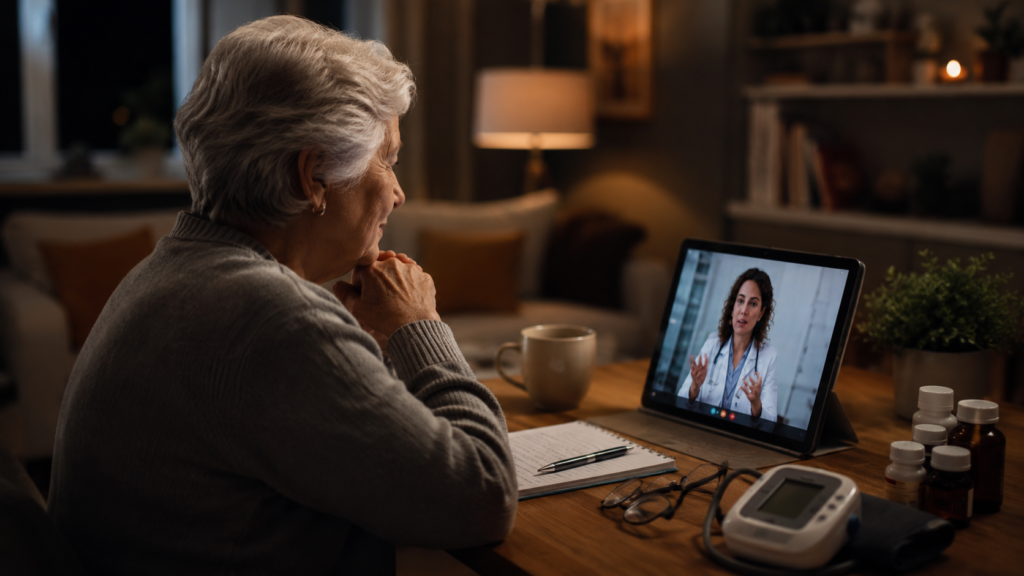
Virtual Care & Teleconsultation is the interaction layer of geriatric telemedicine. It is where the senior, caregiver, and clinician communicate through video, phone, messaging, or a secure care platform.
A teleconsultation for an older adult should be more structured than a casual video call. Seniors may need extra time, larger text, clearer audio, caregiver assistance, medication review, and written instructions after the visit.
How Telemedicine Works for Seniors
A typical senior telemedicine visit may include appointment booking, pre-visit intake, device testing, symptom review, medication list upload, video consultation, care plan explanation, prescription coordination, follow-up scheduling, and caregiver notes.
For many older adults, the best telehealth visit includes a caregiver or family member who can help explain symptoms, hold the camera when needed, read medication labels, assist with technology, and write down instructions.
Benefits of Virtual Doctor Visits
Virtual doctor visits can reduce travel burden, shorten access time, lower stress for fragile patients, allow family participation, and support more frequent follow-up. They are especially useful for medication review, chronic condition check-ins, lab result discussions, minor symptom triage, and post-discharge follow-up.
How to Prepare Elderly Patients for Teleconsultation
Preparation improves the quality of care. Before a senior telehealth visit, the family should gather:
Current medication list
Recent blood pressure, glucose, oxygen, weight, or temperature readings
Symptoms and when they started
Recent falls, confusion, appetite changes, or sleep changes
Hospital discharge papers if relevant
Questions for the clinician
Pharmacy information
Caregiver contact details
The senior should sit in a quiet, well-lit room. Hearing aids, glasses, mobility aids, and medication bottles should be nearby if needed.
Medication Review via Telehealth
Medication review is one of the strongest uses of telehealth for seniors. A virtual visit allows the clinician, pharmacist, nurse, senior, and caregiver to discuss the actual medications in the home. This may uncover old prescriptions, duplicate bottles, missed doses, confusing instructions, side effects, or refill gaps.
Follow-Up Care for Chronic Elderly Patients
Follow-up care is where telemedicine becomes especially valuable. A senior with chronic disease often needs repeated adjustments and monitoring. Virtual follow-ups can review symptoms, home readings, medication response, side effects, caregiver observations, and whether in-person care is needed.
Chronic Disease Telecare for Older Adults
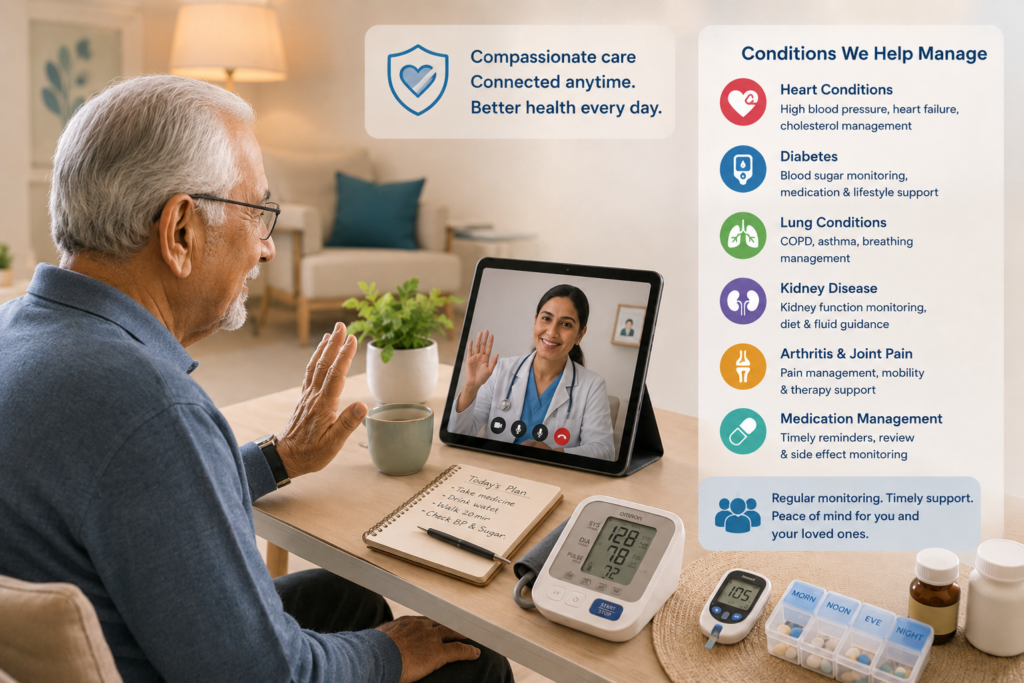
Chronic Disease Telecare focuses on long-term condition management, not one-time appointments. It combines virtual care, remote patient monitoring, medication review, caregiver support and escalation planning.
Older adults often have more than one chronic condition. A senior may have hypertension, diabetes, kidney disease, heart disease, arthritis, sleep issues, and memory changes at the same time. Treating one condition without considering the others can create risk. Chronic disease telecare helps bring those moving parts into one care view.
Managing Hypertension Remotely
Remote hypertension management may include home blood pressure readings, medication review, lifestyle discussion, dizziness checks, fall risk review, and follow-up scheduling. For seniors, the goal is not only reducing high readings. It is also avoiding overly low blood pressure that may increase weakness, dizziness, or falls.
Diabetes Telehealth Management
Diabetes telehealth management may include glucose logs, CGM trend review, meal timing, medication adjustment, insulin safety, foot care reminders, kidney risk, vision concerns, and caregiver alerts. Seniors with diabetes may need a more safety-focused approach than younger adults, especially when appetite, memory, kidney function, or fall risk is involved.
Heart Disease Remote Monitoring
Heart disease remote monitoring may involve blood pressure, heart rate, symptoms, weight, swelling, ECG devices, medication adherence, and follow-up after hospitalization. For heart failure patients, weight and fluid tracking can be particularly important.
COPD Telecare and Oxygen Management
COPD telecare may include pulse oximetry, oxygen use review, inhaler technique, symptom tracking, exacerbation planning, medication review, and virtual follow-up. Seniors with COPD should have clear instructions for when worsening breathlessness or low oxygen requires urgent care.
Kidney Disease Monitoring in Elderly Patients
Kidney disease telecare may focus on blood pressure, diabetes control, medication safety, fluid status, lab follow-up, diet discussion, and coordination with primary care or nephrology. Because kidney disease interacts with heart disease and diabetes, integrated care is often important.
Integrated Chronic Care Models
Many seniors do not fit into a single-disease category. Integrated chronic care models are designed for older adults with overlapping conditions, multiple providers, and higher risk of hospitalization.
Multi-Disease Elderly Care Coordination
A senior with diabetes, hypertension, heart disease, and kidney disease may need coordinated monitoring rather than separate advice from different providers. Telehealth can help align medication review, home readings, symptoms, caregiver concerns, nutrition, and follow-up timing.
Risk Stratification in Geriatric Patients
Risk stratification means identifying which seniors need closer attention. A low-risk senior may need occasional virtual follow-up. A moderate-risk senior may need routine monitoring. A high-risk senior with recent hospitalization, unstable readings, falls, cognitive decline, or multiple conditions may need more frequent contact.
Preventing Hospital Readmissions via Telecare
Telecare may help reduce avoidable readmission risk by supporting medication reconciliation, early symptom review, vital sign tracking, caregiver education, and faster follow-up after discharge. The goal is to notice trouble while it is still manageable.
Home-Based Care Systems for Aging in Place
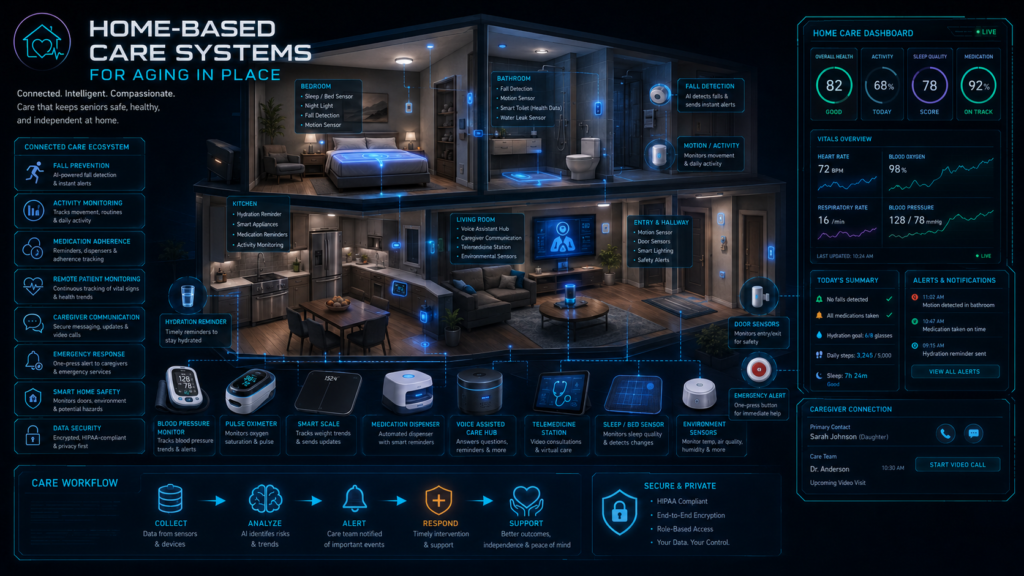
Home-Based Care Systems support the practical side of aging at home. They combine care routines, devices, emergency plans, caregiver communication, medication systems, and safety tools.
Aging in place is not simply staying in the same house. It requires a home environment that can respond to health changes, mobility risks, medication needs, and emergencies.
Setting Up Home Care for Elderly Adults
A basic home care setup may include a reliable phone or tablet, internet connection, medication list, emergency contacts, blood pressure monitor, pulse oximeter, glucose monitor if needed, smart scale if needed, medical alert system, and caregiver communication plan.
The setup should match the senior’s condition. A person with hypertension may need a blood pressure monitor. A person with diabetes may need glucose monitoring. A person with heart failure may need a smart scale. A person living alone may need fall detection or medical alert support.
Caregiver Remote Coordination Systems
Caregiver coordination systems help families and professionals stay organized. These systems may include shared dashboards, appointment notes, medication schedules, symptom logs, emergency alerts, and clinician messages.
This is especially valuable when several people help one senior. Without a shared system, one caregiver may not know what another caregiver observed, what the clinician changed, or whether a medication was missed.
Medication Adherence Systems for Seniors
Medication adherence systems may include pill organizers, smart pill dispensers, phone reminders, caregiver alerts, pharmacy packaging, refill reminders, or nurse check-ins. These tools can reduce missed doses, duplicate doses, and confusion.
Medication systems are especially useful for seniors with memory changes, complex prescriptions, vision problems, hand tremors, or multiple daily dosing schedules.
Emergency Response Workflows at Home
Every home-based care plan should include an emergency workflow. The family should know who gets contacted first, when emergency services should be called, where medications are stored, how to access medical information, and how fall detection or medical alert devices are used.
Smart Home Elderly Care
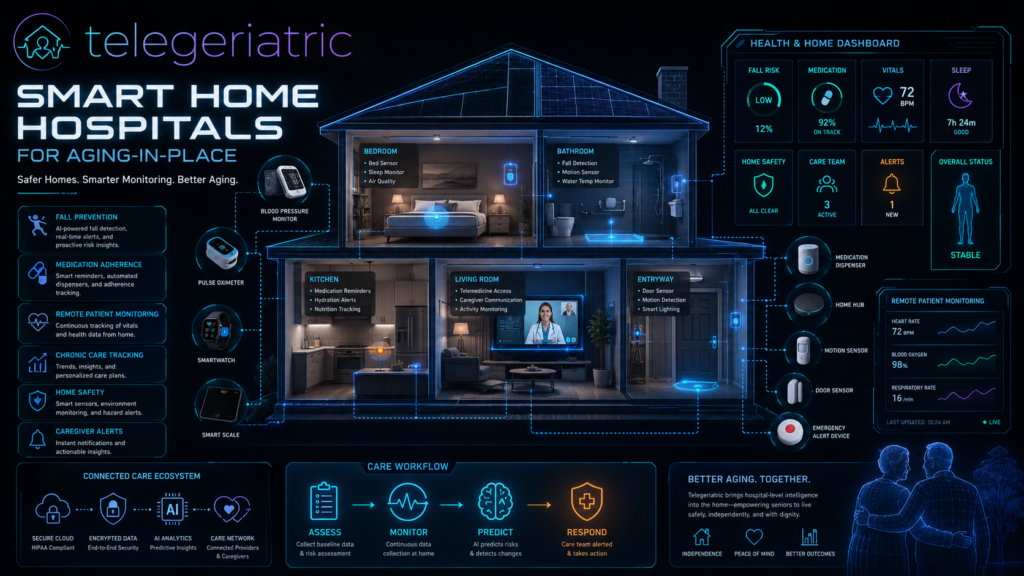
Smart home elderly care uses technology to support safety, routine, and independence. The best systems are quiet, respectful, and practical. They should help without making the senior feel watched or controlled.
Fall Detection Systems
Fall detection systems may use wearables, pendants, watches, smart sensors, or home-based detection tools. They are useful for seniors with balance problems, frailty, dizziness, Parkinson’s disease, previous falls, or living-alone risk.
Motion and Activity Monitoring
Motion and activity monitoring can help caregivers notice changes in routine. Less movement than usual, unusual nighttime activity, missed kitchen activity, or long bathroom stays may suggest a change in health, cognition, sleep, hydration, or mobility.
Privacy matters. Families should choose systems that match the senior’s comfort level.
Voice-Assisted Care Systems
Voice-assisted systems can help seniors set reminders, call family, request help, hear medication prompts, manage appointments, and interact with smart home devices hands-free. These systems may be useful for seniors with limited mobility, low vision, or difficulty using small screens.
Best Telemedicine Devices for Seniors
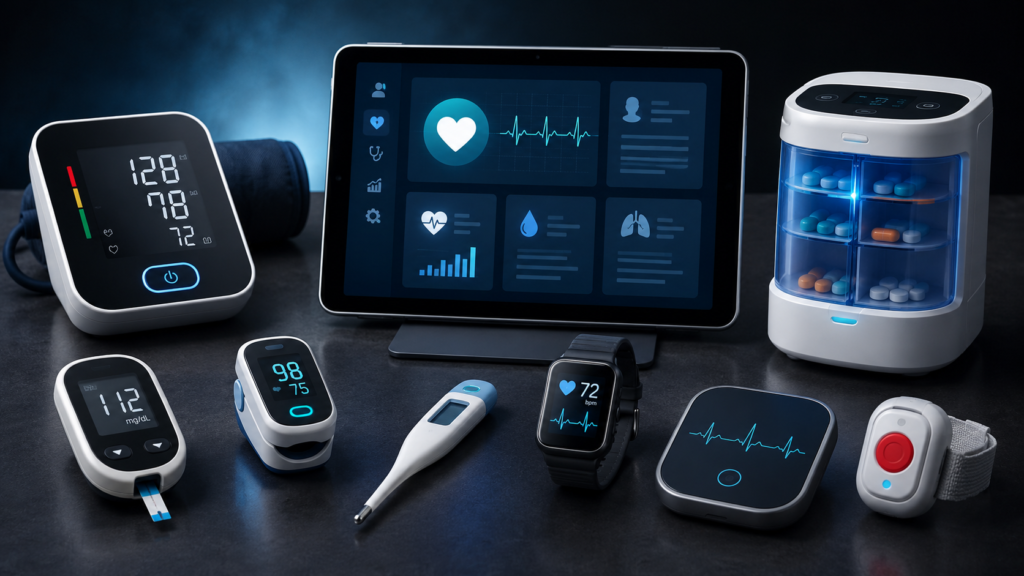
Geriatric telemedicine becomes more useful when supported by the right home health tools. The best device setup depends on the senior’s condition, comfort level, caregiver support, and clinical needs.
For a deeper device-by-device guide, visit Telemedicine Devices.
| Device Type | Best For | Why It Matters |
|---|---|---|
| Blood pressure monitor | Hypertension, heart disease, kidney disease | Tracks one of the most important senior risk signals |
| Glucose monitor | Diabetes, insulin use, unstable blood sugar | Helps prevent dangerous highs and lows |
| Pulse oximeter | COPD, oxygen therapy, respiratory illness | Tracks oxygen saturation at home |
| Smart scale | Heart failure, fluid retention, frailty | Helps identify weight and fluid changes |
| ECG monitor | Heart rhythm concerns | May support rhythm review when clinically appropriate |
| Medical alert system | Seniors living alone | Helps trigger faster emergency response |
| Fall detection device | Fall risk, frailty, balance issues | Alerts caregivers after possible falls |
| Smart medication dispenser | Polypharmacy, memory issues | Reduces missed or duplicate doses |
| Senior-friendly tablet | Virtual consultations | Makes video visits easier |
| Hearing support devices | Hearing difficulty | Improves communication during virtual care |
| Caregiver monitoring system | Remote family support | Helps families stay aware of changes |
The right device is not always the most advanced one. For many seniors, simplicity matters more than features. A device should be easy to read, easy to use, accurate enough for its purpose, and connected to a clear care plan.
Longevity Supplements, Nutrition and Telehealth for Seniors

Telehealth for seniors is not limited to prescriptions and monitoring. Nutrition, muscle preservation, hydration, protein intake, vitamin status, appetite changes, and supplement decisions can all affect aging outcomes.
Older adults may experience reduced appetite, lower protein intake, muscle loss, medication-nutrient interactions, vitamin deficiencies, blood sugar instability, and difficulty preparing meals. Virtual care can help identify nutrition concerns early and connect seniors with dietitians, clinicians, caregivers, and condition-specific nutrition planning.
For a deeper look at nutrition, supplementation, and healthy aging support, visit Longevity Supplements.
Supplements should not be treated as a replacement for medical care. Seniors taking prescriptions, blood thinners, diabetes medications, heart medications, kidney-related medications, or multiple supplements should review them with a qualified clinician.
Benefits of Geriatric Telemedicine
Geriatric telemedicine is growing because it solves practical problems in senior care. Its strongest benefits are access, continuity, monitoring, caregiver participation, and earlier response.
Better Access to Care
Telemedicine can reduce the need for travel, especially for seniors with mobility limitations, rural distance, transportation barriers, pain, fatigue, or caregiver scheduling challenges.
More Consistent Follow-Up
A senior may not need to visit a clinic for every medication question, symptom update, or routine review. Virtual follow-up allows care teams to stay connected without creating unnecessary travel burden.
Earlier Detection of Health Changes
Remote patient monitoring can reveal changes before they become emergencies. Blood pressure, glucose, oxygen saturation, weight, activity, and medication adherence can all provide early warning signs.
Stronger Caregiver Involvement
Family members can join visits, review care instructions, receive alerts, and help manage care remotely. This is especially helpful when caregivers live far away or when multiple people support the same senior.
Reduced Stress for Frail Seniors
Travel, waiting rooms, and clinic logistics can be tiring for fragile older adults. Virtual care allows some appointments to happen in a familiar environment.
Better Chronic Disease Management
Chronic disease telecare allows clinicians to review trends, not only isolated readings. This is useful for hypertension, diabetes, heart disease, COPD, kidney disease, and post-hospital recovery.
Where In-Person Care Still Matters
Geriatric telemedicine should be used responsibly. Some situations require in-person care, urgent evaluation, or emergency services.
In-person care is still necessary for:
Severe chest pain
Sudden weakness or stroke-like symptoms
Severe shortness of breath
Falls with injury
Uncontrolled bleeding
Sudden confusion or loss of consciousness
Severe dehydration
Major infection symptoms
Imaging, lab testing, and procedures
Physical examination requiring touch
Surgery or wound care that cannot be managed remotely
Severe pain or rapidly worsening symptoms
The safest care model for many seniors is hybrid care. Telemedicine handles monitoring, follow-up, medication review, and routine coordination. In-person care handles emergencies, diagnostics, hands-on examination, procedures, and complex clinical decisions.
Cost Expectations for Geriatric Telemedicine
Geriatric telemedicine costs vary based on the service, care model, clinician type, monitoring needs, device setup, insurance coverage, and whether the senior uses a subscription program.
Common Cost Categories
Virtual doctor visits
Telehealth nurse check-ins
Remote patient monitoring subscriptions
Home health devices
Medical alert systems
Caregiver dashboards
Medication review services
Chronic disease management programs
Specialist teleconsultations
What Can Increase Cost
Continuous monitoring
Multiple connected devices
High-risk chronic disease care
Specialist involvement
Caregiver dashboard access
Emergency alert subscriptions
More frequent clinical review
What Can Reduce Overall Cost Burden
Reduced travel expenses
Fewer missed appointments
Earlier detection of deterioration
Fewer unnecessary urgent visits
Better medication organization
Bundled virtual follow-up
Home-based chronic disease management
The cheapest option is not always the best option. A senior with complex conditions may need a stronger monitoring system, while a stable senior may only need occasional virtual consultations and one or two basic devices.
Risks, Limitations and Safety Considerations
No telehealth system is perfect. Geriatric telemedicine should be designed around safety, simplicity, privacy, and clear escalation rules.
Key Limitations
Limited physical examination
Technology barriers
Poor internet access
Device inaccuracy
Over-alerting and caregiver fatigue
Data privacy concerns
Misinterpretation of readings
Missed symptoms if the senior underreports changes
Not appropriate for emergencies
How to Reduce Risk
Use hybrid care when needed
Choose senior-friendly devices
Include caregivers in visits when appropriate
Keep an updated medication list
Create clear emergency instructions
Review abnormal readings with clinicians
Use validated devices when possible
Schedule in-person exams when symptoms require them
Avoid relying only on apps for complex medical decisions
A safe geriatric telemedicine plan should make the senior feel supported, not abandoned to technology.
Geriatric Telemedicine vs Traditional Care
Geriatric telemedicine and traditional care are not enemies. They work best when combined intelligently.
| Feature | Geriatric Telemedicine | Traditional In-Person Care |
|---|---|---|
| Access | Easier for homebound or mobility-limited seniors | Requires travel |
| Monitoring | Can be frequent or continuous | Usually periodic |
| Physical exam | Limited | Strong |
| Chronic disease follow-up | Strong for trends and medication review | Strong for exams and diagnostics |
| Emergency care | Not appropriate for severe emergencies | Essential |
| Caregiver participation | Easier for remote family members | Requires physical coordination |
| Cost burden | May reduce travel and indirect costs | May involve travel, time, and caregiver burden |
| Best use | Follow-ups, monitoring, medication review, chronic care | Exams, labs, imaging, urgent care, procedures |
Best for Chronic Disease Management
Telemedicine has a strong advantage when a condition needs repeated tracking. Diabetes, hypertension, heart disease, COPD, and kidney disease often benefit from home readings and virtual review.
Best for Acute Illness
Telemedicine can help with early triage, but acute illness may require in-person evaluation if symptoms are severe, sudden, or unclear.
Best for Seniors Living Alone
Telemedicine combined with home monitoring, fall detection, and caregiver alerts can make independent living safer.
Best Hybrid Model
The best model is usually not virtual-only or clinic-only. It is a planned combination of remote support, home monitoring, virtual follow-up, and in-person evaluation when medically necessary.
Telehealth News and the Direction of Virtual Elder Care
Telehealth news continues to show a larger shift toward home-based care, remote monitoring, chronic disease management, AI-assisted workflows, and virtual access for older adults. The most important development is not that more appointments can happen online. The deeper change is that healthcare is becoming more continuous.
For seniors, this shift matters because aging-related care is rarely solved in a single appointment. Chronic disease, medication safety, falls, nutrition, cognition, sleep, caregiver burden, and home safety all change over time. Geriatric telemedicine gives families and clinicians more ways to respond to those changes before they become crises.
The next generation of telehealth for seniors will likely include better caregiver dashboards, more passive monitoring, improved fall detection, voice-assisted care, smarter medication systems, AI-supported risk alerts, and more integrated chronic care programs. These tools should be used carefully, with privacy, consent, clinical oversight, and senior comfort at the center.
Telehealth Nurse Jobs: Apply to Support Senior Virtual Care
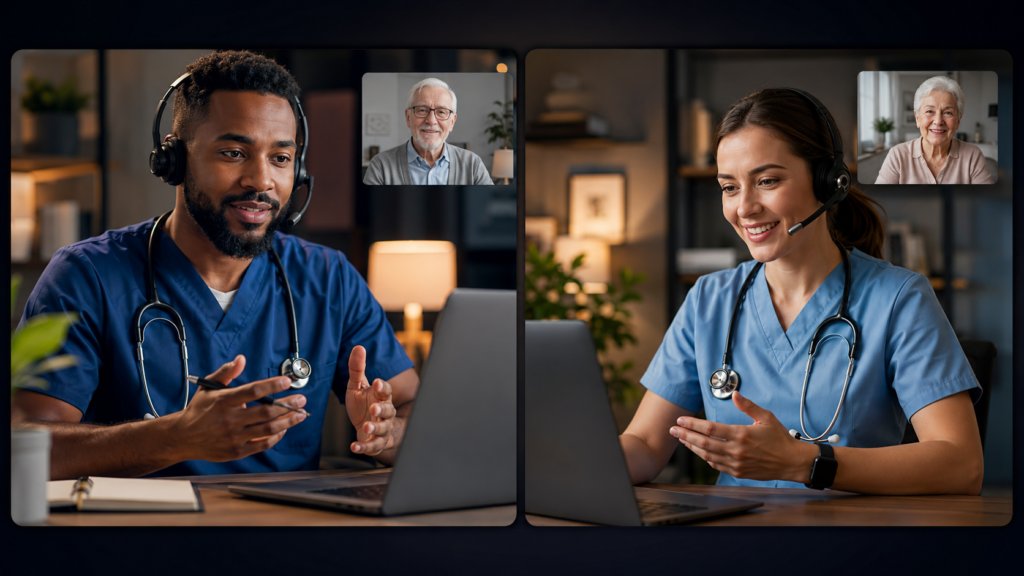
TeleGeriatric welcomes interest from qualified nurses who want to support older adults through virtual care, chronic disease follow-up, remote patient monitoring, medication coordination, caregiver communication, and home-based senior health support.
Telehealth nurse jobs can be especially meaningful for nurses who understand elderly care, chronic disease management, patient education, family communication, post-discharge follow-up, and compassionate support for seniors who may feel overwhelmed by technology.
Potential responsibilities may include:
Supporting seniors during telehealth visits
Reviewing remote patient monitoring alerts according to care protocols
Helping caregivers understand care instructions
Assisting with medication adherence workflows
Supporting chronic disease follow-up
Identifying when a senior may need escalation to a licensed clinician or urgent care
Educating families on device use and home monitoring routines
Documenting senior care interactions clearly and professionally
Nurses interested in telehealth work with TeleGeriatric may send an email with their name, location, license details, experience in senior care or chronic disease management, and availability.
Apply by email: contact@telegeriatric.com
Suggested subject line: Telehealth Nurse Jobs Application – Senior Virtual Care
TeleGeriatric is especially interested in nurses with experience in geriatrics, home health, chronic care, remote patient monitoring, post-hospital follow-up, medication education, palliative support, dementia-related family communication, and compassionate elderly care.
Explore Telehealth Nurse Jobs
How to Get Started With Geriatric Telemedicine
Getting started should be practical. The best first step is not buying every device or signing up for every service. The best first step is identifying the senior’s main care need.
Step 1: Identify the Main Problem
Is the senior struggling with chronic disease, mobility, medications, post-hospital recovery, living alone, fall risk, or access to doctors?
Step 2: Choose the Right Care Pathway
A senior who needs doctor access may begin with virtual consultation.
A senior with blood pressure, glucose, oxygen, or heart failure concerns may need remote patient monitoring.
A senior with multiple chronic illnesses may need chronic disease telecare.
A senior living alone may need home-based care systems and emergency response planning.
Step 3: Prepare Medical Information
Gather medication lists, diagnoses, recent readings, hospital papers, symptoms, allergies, pharmacy details, and caregiver contact information.
Step 4: Set Up Basic Devices
Start with the devices that match the condition. Avoid unnecessary complexity. A blood pressure monitor, glucose meter, pulse oximeter, smart scale, medical alert device, or tablet may be useful depending on the senior’s needs.
Step 5: Include Caregivers
Caregivers should know how to join appointments, review instructions, access emergency contacts, and recognize warning signs.
Step 6: Create an Escalation Plan
Every family should know what to do when readings are abnormal, symptoms worsen, or the senior cannot be safely managed at home.
Step 7: Review the Plan Regularly
Senior care changes. A plan that worked six months ago may need adjustment after hospitalization, medication changes, falls, weight loss, cognitive decline, or new symptoms.
To explore more senior-focused virtual care resources, visit TeleGeriatric.
FAQs About Geriatric Telemedicine
What is Geriatric Telemedicine?
Geriatric Telemedicine is healthcare for older adults delivered through telehealth, virtual care, remote patient monitoring, caregiver coordination, and home-based support systems. It is designed for senior-specific needs such as chronic disease management, mobility limitations, medication complexity, fall risk, caregiver involvement, and follow-up care.
Is telemedicine for seniors safe?
Telemedicine for seniors can be safe when used for the right situations and supported by licensed clinicians, caregivers, accurate devices, clear instructions, and in-person escalation when needed. It is not appropriate for severe emergencies, major injuries, sudden neurological symptoms, severe breathing difficulty, or conditions that require immediate hands-on assessment.
What is the difference between telehealth and geriatric telemedicine?
Telehealth is a broad term for healthcare delivered through digital communication. Geriatric telemedicine is a senior-focused form of telehealth designed around aging-related care needs, including chronic disease monitoring, medication review, caregiver coordination, mobility limitations, cognitive changes, and home safety.
What conditions can be managed through geriatric telemedicine?
Geriatric telemedicine can support hypertension, diabetes, heart disease, COPD, kidney disease, medication management, post-hospital follow-up, mobility concerns, cognitive changes, nutrition concerns, and routine chronic care review. Emergencies and complex physical symptoms may still require in-person care.
What devices are needed for telehealth for seniors?
Common telehealth devices for seniors include blood pressure monitors, glucose meters, pulse oximeters, smart scales, ECG monitors, medical alert systems, fall detection devices, smart medication dispensers, senior-friendly tablets, hearing support devices, and caregiver monitoring systems. The right device depends on the senior’s condition and care plan.
How does remote patient monitoring help elderly patients?
Remote patient monitoring helps elderly patients by tracking health readings between appointments. It can show trends in blood pressure, glucose, oxygen saturation, weight, heart rate, medication adherence, and symptoms. This helps caregivers and clinicians respond earlier when health patterns begin to change.
Can caregivers join virtual care appointments?
Yes. Caregivers can often join virtual care appointments with the senior’s permission. This can be helpful for medication review, symptom reporting, technology support, follow-up instructions, and care coordination, especially when the senior has hearing, vision, memory, or mobility challenges.
Is virtual care good for chronic disease management?
Virtual care can be very useful for chronic disease management because it supports regular follow-up, remote readings, medication adjustments, symptom review, and caregiver communication. It is especially useful for hypertension, diabetes, COPD, heart disease, kidney disease, and post-hospital recovery.
How much does geriatric telemedicine cost?
Costs vary depending on the type of visit, provider, insurance coverage, remote monitoring needs, devices, and subscription plans. A simple virtual visit may cost less than an in-person appointment, while advanced monitoring programs may include device and monthly service fees.
When should an elderly patient see a doctor in person instead of using telehealth?
An elderly patient should seek in-person or urgent care for chest pain, severe shortness of breath, stroke-like symptoms, falls with injury, sudden confusion, severe weakness, uncontrolled bleeding, major infection symptoms, severe dehydration, or rapidly worsening symptoms. Telehealth is useful, but it should not delay emergency care.
Are telehealth nurse jobs available in geriatric care?
Telehealth nurse jobs in geriatric care may involve remote patient monitoring, senior education, chronic disease follow-up, medication coordination, caregiver communication, post-discharge support, and escalation review. Nurses interested in working with TeleGeriatric can email contact@telegeriatric.com with their experience and availability.
How is telehealth news affecting senior care?
Telehealth news reflects a continuing move toward home-based care, remote monitoring, virtual access, AI-assisted alerts, and chronic disease management. For seniors, the most important trend is more connected support between appointments, especially for chronic illness, caregiver coordination, and aging in place.
Medical Disclaimer
This page is for educational purposes only and does not replace diagnosis, treatment, or emergency care from a licensed medical professional. Seniors with chest pain, severe breathing difficulty, stroke-like symptoms, falls with injury, sudden confusion, uncontrolled bleeding, severe dehydration, or rapidly worsening symptoms should seek urgent in-person medical care.
Editorial Team
The TeleGeriatric Editorial Team develops educational content across geriatric telemedicine, remote patient monitoring, telehealth for seniors, home-based care systems, chronic disease telecare, senior health technology, caregiver support, geronutrition, and emerging AI-assisted elder-care models. The team focuses on medically cautious, reader-first content that helps older adults, families, caregivers, and care professionals understand safer ways to support aging at home.