Emerging Systems in Geriatric Care: Predictive AI, Digital Twins, Smart Home Hospitals & Overnight Health Intelligence.
Amazon Affiliate Disclosure:
TeleGeriatric.com may earn a commission from qualifying purchases made through affiliate links, including Amazon Associate links. This does not affect the price you pay and does not influence our editorial judgment. Devices, platforms, sensors and monitoring tools discussed on this page should be evaluated with clinical guidance before being used for medical decision-making.
Why Emerging Systems in Geriatric Care Matter Now
Emerging systems in geriatric care are changing the center of elderly medicine from the clinic visit to the living environment itself. For decades, geriatric care depended on episodic snapshots: a blood pressure reading at an appointment, a caregiver report after a fall, a medication review every few months, or a hospital visit after decline had already become visible. That model is no longer enough for aging populations with complex chronic disease, frailty risk, cognitive changes, sleep disruption, and increasing preference for aging at home.
The next generation of geriatric technology is not simply about adding more devices. It is about connecting signals. Predictive AI, digital twin models for elderly patients, smart home hospitals, integrated nocturnal monitoring ecosystems, AI-driven sleep disorder prediction systems, continuous overnight health intelligence platforms, autonomous elder-care sleep optimization systems, and multi-sensor fusion for sleep plus vitals analytics are all part of a larger shift: healthcare systems are learning how to observe subtle deterioration before it becomes a crisis.
This page focuses on the advanced systems layer of Telemedicine Geriatric Care. It does not replace our foundation on Geriatric Telemedicine, Instead, it explains the intelligent infrastructure that sits above devices and consultations: the systems that combine data, context, prediction, automation and clinical interpretation.
In simple terms, TeleGeriatric is building a practical knowledge base for families and professionals navigating the future of elderly virtual care.
What This Guide Is For
This guide is designed to help families, caregivers, clinicians, senior-care organizations, and health technology buyers understand where elderly care is heading next. It explains the major categories of emerging geriatric care systems, how they work, where they fit, what they cost, what risks to consider, and which models are likely to become more important over the next several years.
It is especially useful for readers comparing advanced care technologies such as:
- Predictive AI in geriatric care
- Digital twin models for elderly patients
- Smart home hospitals for aging-in-place
- Integrated nocturnal monitoring ecosystems
- AI-driven sleep disorder prediction systems
- Continuous overnight health intelligence platforms
- Autonomous elder-care sleep optimization systems
- Multi-sensor fusion for sleep and vitals analytics
Before investing in advanced systems, families should understand the core Telemedicine Devices that collect blood pressure, oxygen, glucose, weight, and sleep data.
The goal is not to chase every new gadget. The goal is to understand which systems can meaningfully improve safety, independence, clinical visibility, caregiver confidence, and long-term aging-at-home planning.
Explore Emerging Systems in Geriatric Care
Use this interactive guide to jump directly to the section that matches your priority—predictive AI, smart home hospitals, nocturnal monitoring, sleep intelligence, sensor fusion, costs, risks, or implementation planning.
Search by topic or filter by care goal. Each card opens the exact article section using the assigned anchor link.
Benefits of Emerging Systems in Elderly Care
See how predictive, connected, and ambient technologies improve safety, independence, and caregiver confidence.
Open section →Trends & Latest Tech in Emerging Systems
Review the newest direction of geriatric technology, including ambient sensing, connected care, and predictive platforms.
Open section →Predictive AI in Geriatric Care
Understand how AI can identify risk patterns before a fall, decline, readmission, or clinical escalation.
Open section →Digital Twins in Healthcare for Elderly Patients
Explore patient-specific models that combine vitals, sleep, mobility, medications, and home context.
Open section →Smart Home Hospitals for Age in Place
See how connected homes can support monitoring, safety, virtual care, and post-hospital recovery.
Open section →Integrated Nocturnal Monitoring Ecosystems
Jump to overnight systems that monitor sleep, bed exits, movement, oxygen, wandering, and fall risk.
Open section →AI-Driven Sleep Disorder Prediction Systems
Review systems that identify sleep apnea risk, insomnia patterns, oxygen dips, and circadian disruption.
Open section →Continuous Overnight Artificial Intelligence in Healthcare Platforms
Open the section on passive overnight interpretation across sleep, vitals, breathing, movement, and safety events.
Open section →Autonomous Elder-Care Sleep Optimization Systems
Learn how smart rooms can support safer nights through lighting, environmental changes, and low-risk automation.
Open section →Multi-Sensor Fusion for Sleep + Vitals Analytics
See how multiple signals combine into a more reliable view of overnight and chronic health risk.
Open section →Emerging Systems Comparison in Geriatric Care
Compare platforms by purpose, complexity, use case, required data, and ideal care setting.
Open section →Emerging Systems Maturity Map
Evaluate which technologies are ready now, which are developing, and which require deeper clinical integration.
Open section →Costs of Emerging Systems in Elderly Care
Understand device costs, subscriptions, monitoring services, clinical review, and smart-home setup expenses.
Open section →Upcoming Models in Emerging Geriatric Systems
Explore where geriatric care systems are heading next: ambient intelligence, digital twins, and autonomous support.
Open section →Risks, Limitations and Clinical Safeguards
Review privacy, false alerts, bias, data overload, user adherence, and safe clinical escalation rules.
Open section →Buying and Implementation Framework
Use a practical decision path to match each elderly care risk with the right emerging system.
Open section →Who Needs Emerging Systems in Geriatric Care?
Emerging systems are most relevant when ordinary monitoring no longer gives enough insight. A healthy 68-year-old who walks daily and sees a physician once a year may not need a predictive geriatric intelligence platform. But an 84-year-old with heart failure, diabetes, mild cognitive impairment, nighttime wandering, fragmented sleep, medication complexity, and a distant caregiver may benefit from systems that can detect patterns early.
Older Adults Aging at Home
Seniors who want to remain independent often need invisible support rather than constant supervision. Smart home hospitals and nocturnal monitoring systems can help detect risk without turning the home into a clinical ward.
Family Caregivers
Adult children and spouses often notice changes before the health system does, but they may lack data. Emerging care systems can convert uncertainty into structured insight: sleep quality, overnight movement, bathroom frequency, oxygen trends, heart rate variability, medication adherence, and activity decline.
Geriatricians and Primary Care Teams
Clinicians managing older adults need more than one-off readings. Predictive AI in geriatric care can help prioritize which patients may need earlier review, medication adjustment, fall-risk assessment, nutrition screening, or home health intervention.
Senior Living Operators
Assisted living, independent living, and memory-care facilities can use multi-sensor analytics to identify changes across residents without relying only on manual observation. This is especially important during overnight hours, when staffing is thinner and risk is higher.
Remote Care and Telemedicine Programs
For organizations building virtual geriatric care, emerging systems create the intelligence layer above the video visit. Teleconsultation becomes more valuable when it is informed by continuous home data.
Benefits of Emerging Systems in Elderly Care
The strongest benefit is earlier recognition. In geriatric medicine, decline often appears as a pattern before it appears as a complaint. A senior may not say, “I am decompensating.” Instead, they may sleep less, move less, wake more often, eat less, forget medication, show slower gait, or need more nighttime bathroom visits. Emerging systems can detect those weak signals.
1. Earlier Detection of Health Deterioration
Predictive AI can flag changes in vitals, mobility, sleep, activity, and behavior before the situation becomes urgent. This is particularly valuable for heart failure, respiratory disease, diabetes, frailty, post-hospital recovery, and cognitive decline.
2. Safer Aging-in-Place
Smart home hospitals for aging-in-place help older adults remain at home while still being observed through connected devices, sensors, and virtual care pathways. The home becomes a monitored care environment rather than an isolated setting.
3. Reduced Caregiver Anxiety
Family caregivers often worry most at night. Nocturnal monitoring ecosystems can provide structured insight into sleep disruption, falls, wandering, oxygen dips, and unusual movement without requiring constant bedside checking.
4. More Personalized Clinical Decisions
Digital twin models for elderly patients allow clinicians and care teams to understand the patient as a dynamic system rather than a static chart. The model can reflect changing physiology, environment, behavior, and risk.
5. Better Use of Telemedicine Visits
When a virtual visit is supported by home data, the conversation becomes more precise. Instead of asking, “How have you been?” the clinician can ask, “Why did your nighttime heart rate rise for four nights after your medication change?”
6. Stronger Chronic Disease Management
Emerging systems can connect chronic disease monitoring with sleep, movement, nutrition, medication adherence, and home safety.
How Emerging Systems Fit Inside TeleGeriatric.com
Emerging Systems covers the intelligence layer of future geriatric care. The geriatric telemedicine hub explains how virtual care works. The telemedicine devices section explains the hardware used to collect health data. Emerging Systems explains what happens when that data becomes predictive, personalized, automated, and clinically meaningful.
A simple way to understand the hierarchy:
| Layer | Example | Main Purpose |
|---|---|---|
| Telemedicine | Video consultations, remote follow-ups | Connect patient and clinician |
| Telemedicine Devices | Blood pressure cuffs, pulse oximeters, scales, wearables | Collect health signals |
| Remote Monitoring Programs | RPM dashboards, alerts, care-team review | Track chronic conditions |
| Emerging Systems | Predictive AI, digital twins, smart home hospitals, sensor fusion | Interpret patterns and anticipate risk |
Trends & Latest Tech in Emerging Systems for Elderly Care
The latest technology in elderly care is moving in four directions: predictive, ambient, personalized, and integrated.
Predictive means systems are no longer satisfied with recording events. They attempt to forecast risk. Ambient means the technology blends into the environment through non-intrusive sensors, passive monitoring, and smart-home infrastructure. Personalized means the system learns the older adult’s baseline instead of comparing every patient to a generic average. Integrated means sleep, vitals, movement, medication, cognition, nutrition, and environment are analyzed together.
Key Trends Shaping Emerging Systems
| Trend | What It Means | Why It Matters for Seniors |
|---|---|---|
| Predictive analytics | Systems identify risk before obvious symptoms appear | Supports earlier intervention |
| Digital twins | A virtual model reflects the patient’s changing health state | Enables personalized care planning |
| Smart home hospitals | The home becomes a monitored clinical setting | Supports aging-in-place and post-acute care |
| Ambient sensors | Monitoring works without constant user interaction | Better for frail or cognitively impaired seniors |
| Sleep intelligence | Overnight data becomes a clinical signal | Helps detect respiratory, cardiac, cognitive, and fall risk |
| Multi-sensor fusion | Multiple data streams are interpreted together | Reduces blind spots and improves context |
| Autonomous optimization | Systems adjust environment or prompts automatically | Supports comfort, sleep, and safety |
The most important shift is that elderly care is becoming less reactive. Instead of waiting for a fall, hospitalization, delirium episode, or medication crisis, emerging systems aim to identify the quiet pattern that comes before the event.
Predictive AI in Geriatric Care
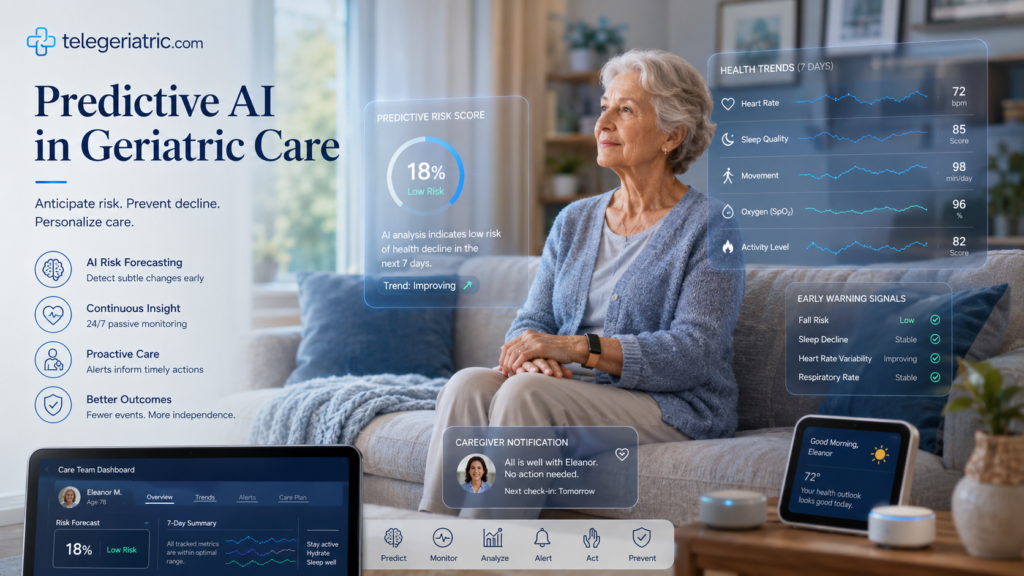
Predictive AI in geriatric care is one of the strongest emerging categories because older adults often experience deterioration through subtle, multi-factor changes. A younger patient may present with a clear symptom. An older adult may present with fatigue, confusion, reduced appetite, slower movement, poor sleep, or a caregiver saying, “Something seems different.”
Predictive systems attempt to convert those uncertain signals into usable risk intelligence.
What Predictive AI Looks For
A predictive geriatric care platform may analyze:
- Blood pressure trends
- Heart rate and heart rate variability
- Oxygen saturation patterns
- Weight changes
- Glucose variability
- Sleep fragmentation
- Nighttime movement
- Bathroom frequency
- Fall-risk signals
- Medication adherence
- Activity decline
- Post-discharge recovery patterns
- Cognitive or behavioral changes
The value is not in one reading. It is in the pattern. A single elevated heart rate may mean little. Elevated heart rate plus reduced sleep, lower activity, increased nighttime bathroom visits, and rising weight may suggest a need for clinical review in a patient with heart failure.
Why It Matters for Geriatric Telemedicine
Predictive AI strengthens virtual care because it gives clinicians better context before the appointment. A telemedicine visit informed by trend data is more useful than a video call based only on memory.
This is where Emerging Systems connects naturally to geriatric telemedicine. Telemedicine provides access. Predictive AI provides timing. Together, they help answer the most important question in elder care: who needs attention before the situation becomes urgent?
Practical Use Cases
| Use Case | Predictive Signal | Possible Care Response |
|---|---|---|
| Heart failure risk | Weight gain, reduced sleep, rising resting heart rate | Medication review or earlier clinician contact |
| Fall risk | Reduced gait stability, nighttime wandering, poor sleep | Home safety review and mobility intervention |
| Infection risk | Sleep disruption, lower activity, temperature variation | Check-in, labs, or clinical assessment |
| Cognitive decline | Changes in routine, medication errors, nocturnal confusion | Cognitive screening and caregiver planning |
| Post-hospital monitoring | Abnormal vitals, low activity, worsening symptoms | Escalation to remote care team |
Editorial Insight
The best predictive AI systems for geriatric care will not be the ones that simply generate more alerts. They will be the systems that understand baseline. In elderly patients, “normal” is deeply personal. A frail 89-year-old with chronic atrial fibrillation, mild kidney disease, and limited mobility should not be judged by the same thresholds as a healthy 67-year-old. The future belongs to systems that learn the patient’s usual rhythm and detect meaningful deviation.
Digital Twins in Healthcare for Elderly Patients
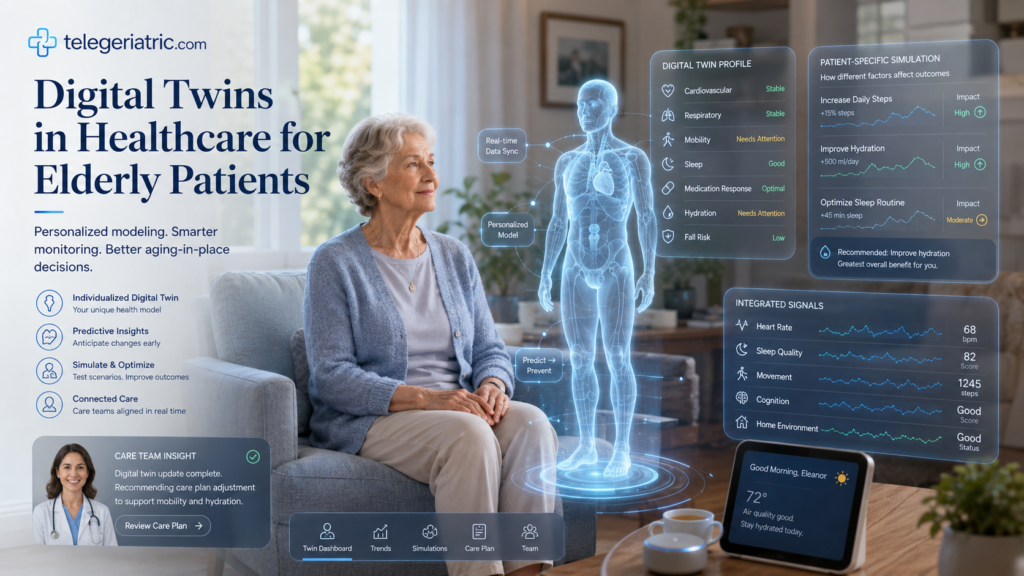
Digital twins in healthcare for elderly patients create a virtual representation of a person’s health status, behavior, environment, and risk profile. The idea comes from engineering: before changing an aircraft engine or industrial system, teams may simulate what could happen. In healthcare, a digital twin attempts to model the patient as a living system.
For geriatric care, this is especially powerful because aging is not one disease. It is the interaction of multiple systems: cardiovascular function, mobility, cognition, nutrition, sleep, medication burden, home safety, social support, and resilience.
What a Geriatric Digital Twin May Include
A meaningful elderly patient digital twin may combine:
- Medical history
- Medication profile
- Vitals trends
- Sleep quality
- Mobility and gait signals
- Nutrition and hydration patterns
- Cognitive status
- Fall history
- Home environment
- Caregiver involvement
- Chronic disease risks
- Hospitalization history
- Personal goals and care preferences
The strongest digital twin is not just a dashboard. It is a dynamic model that updates as the older adult changes.
Why Digital Twins Are Different from Regular Monitoring
Remote monitoring tells you what happened. A digital twin helps estimate what the change means within the patient’s broader context.
For example, a senior’s oxygen saturation may dip overnight. A regular monitoring system may flag the number. A digital twin may interpret it alongside sleep position, respiratory history, heart failure status, medication timing, weight trend, and prior episodes. The clinical question becomes richer: is this an isolated dip, a sleep apnea pattern, fluid overload, medication effect, or worsening respiratory disease?
Digital Twin Use Cases in Elderly Care
| Use Case | Digital Twin Value |
|---|---|
| Medication changes | Simulates how changes may affect sleep, falls, blood pressure, or cognition |
| Frailty tracking | Models decline across mobility, nutrition, strength, and activity |
| Hospital-at-home care | Helps coordinate vitals, symptoms, environment, and escalation rules |
| Cognitive monitoring | Detects changes in routine, wandering, sleep, and adherence |
| Care planning | Supports personalized aging-in-place decisions |
Strategic Placement on TeleGeriatric.com
Digital twins should be treated as an advanced cluster under Emerging Systems, not as a basic device article. A blood pressure cuff belongs under telemedicine devices. A digital twin that interprets blood pressure alongside sleep, frailty, nutrition, and medication belongs here.
Smart Home Hospitals for Age in Place
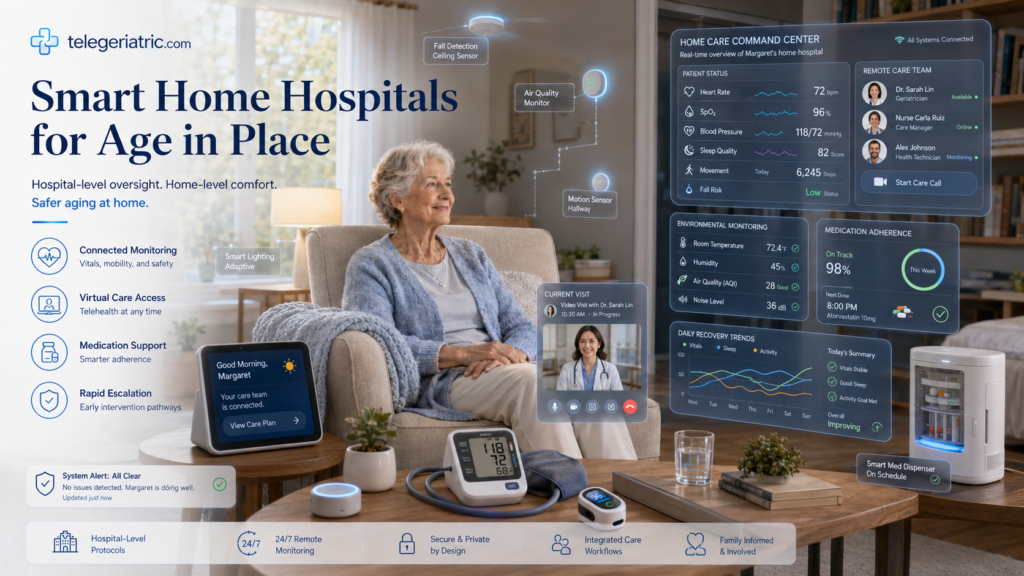
Smart home hospitals for aging-in-place represent one of the most important movements in elderly care. The concept is simple but ambitious: bring hospital-level observation, coordination, and response into the home without removing the older adult from familiar surroundings.
This does not mean turning every bedroom into an ICU. It means creating a home environment where clinical-grade monitoring, telemedicine access, caregiver communication, medication support, safety alerts, and escalation pathways work together.
Core Components of a Smart Home Hospital
A smart home hospital may include:
- Connected blood pressure monitor
- Pulse oximeter
- Smart scale
- Glucose monitor
- Wearable or contactless vitals sensor
- Fall detection system
- Medication dispenser
- Smart lighting
- Motion sensors
- Bed sensors
- Sleep and breathing monitor
- Video consultation access
- Caregiver dashboard
- Clinician escalation protocol
The home becomes a care network.
Why This Matters for Aging-in-Place
Many older adults prefer to remain at home, but home can become risky when health changes are invisible. A smart home hospital reduces that invisibility. It gives the care team a way to see patterns without requiring the senior to travel repeatedly for routine checks.
Smart home hospitals are especially relevant for:
- Post-discharge recovery
- Chronic heart failure
- COPD and respiratory disease
- Frailty management
- Diabetes monitoring
- Medication complexity
- Fall-risk reduction
- Cognitive impairment
- Palliative and supportive care
Difference Between Smart Home Hospitals and Basic Remote Monitoring
| Feature | Basic Remote Monitoring | Smart Home Hospital |
|---|---|---|
| Data type | Usually vitals-focused | Vitals, movement, sleep, environment, medication, symptoms |
| Care model | Periodic review | Continuous or near-continuous oversight |
| Patient setting | Home | Home as a structured care environment |
| Alerts | Device-based | Contextual, risk-based, and workflow-driven |
| Best for | Stable chronic conditions | Complex aging-in-place and post-acute care |
Integrated Nocturnal Monitoring Ecosystems
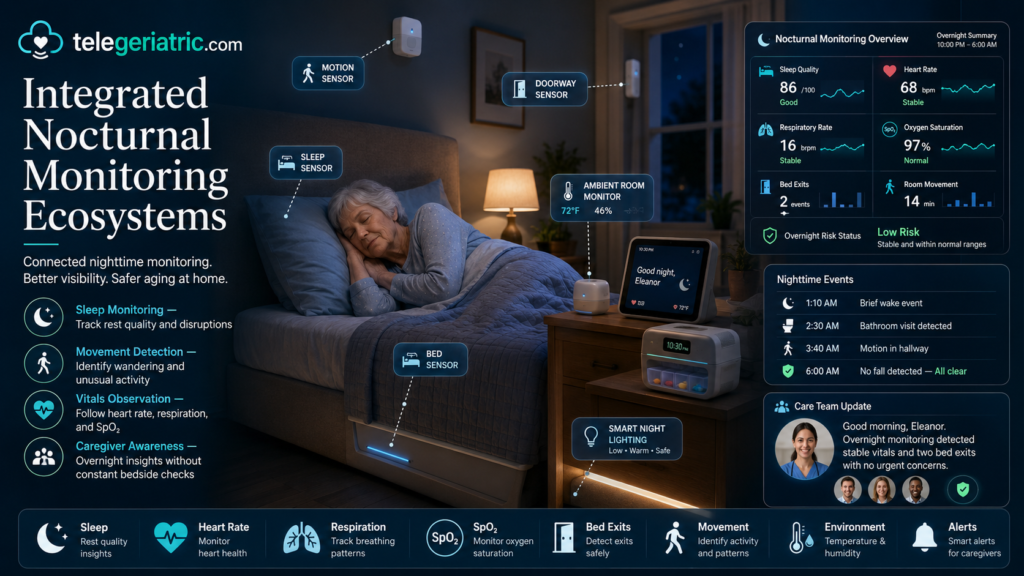
Night is one of the most under-measured periods in elderly care. Many serious geriatric risks appear after dark: falls, wandering, breathing problems, nocturia, delirium, insomnia, oxygen desaturation, heart rhythm changes, and caregiver exhaustion. Integrated nocturnal monitoring ecosystems are designed to observe this hidden half of the care day.
What Nocturnal Monitoring Tracks
A nocturnal ecosystem may monitor:
- Sleep duration
- Sleep fragmentation
- Bed exits
- Room movement
- Bathroom visits
- Respiratory rate
- Oxygen saturation
- Heart rate
- Snoring patterns
- Restlessness
- Wandering
- Fall events
- Bedroom temperature and air quality
The strongest systems do not treat sleep as a wellness metric only. They treat overnight behavior as a clinical window into aging physiology.
Why Overnight Monitoring Is Clinically Important
Poor sleep in older adults can worsen cognition, blood pressure, glucose control, pain perception, mood, fall risk, and caregiver burden. Nighttime bathroom frequency may suggest fluid balance problems, prostate issues, diabetes control concerns, medication timing issues, or sleep disruption. Repeated bed exits may point toward fall risk, delirium, restless legs, pain, anxiety, or urinary symptoms.
Nocturnal monitoring ecosystems are especially valuable for families who cannot watch a senior overnight but need to know whether the night was safe.
Best Use Cases
| Situation | Why Nocturnal Monitoring Helps |
|---|---|
| Dementia or mild cognitive impairment | Detects wandering, restlessness, and disrupted sleep-wake cycles |
| Fall risk | Identifies high-risk bed exits and nighttime movement |
| Sleep apnea suspicion | Flags breathing irregularity and oxygen dips |
| Heart failure | Tracks nighttime breathing, heart rate, and fluid-related sleep disruption |
| Caregiver burnout | Reduces uncertainty and unnecessary checking |
Editorial Insight
Nighttime data is often the missing chapter in geriatric care. A patient may appear stable during a daytime visit but spend the night repeatedly waking, struggling to breathe, wandering, or getting out of bed unsafely. Emerging systems make the night visible.
AI-Driven Sleep Disorder Prediction Systems
AI-driven sleep disorder prediction systems are becoming increasingly relevant for older adults because sleep disorders are often underdiagnosed in geriatric populations. Seniors may not describe insomnia, sleep apnea, circadian rhythm disruption, restless legs, or REM behavior disorder in textbook language. Instead, they may report fatigue, irritability, forgetfulness, morning headache, daytime sleepiness, nighttime confusion, or falls.
Predictive sleep systems look for patterns that suggest a sleep problem may need clinical evaluation.
Conditions These Systems May Help Flag
- Obstructive sleep apnea risk
- Insomnia patterns
- Restless sleep
- Circadian rhythm disruption
- Nocturnal hypoxia
- REM behavior disorder patterns
- Excessive nighttime movement
- Sleep fragmentation related to pain or urinary symptoms
- Medication-related sleep disruption
How Sleep Prediction Supports Geriatric Care
Sleep is connected to nearly every major aging concern. Poor sleep can worsen cognition. Fragmented sleep can increase fall risk. Breathing disruption can affect cardiovascular strain. Nighttime agitation can increase caregiver burden. AI-driven sleep disorder prediction systems can help identify which patients may need sleep evaluation, medication review, environmental changes, or referral.
When Sleep Prediction Should Trigger Clinical Review
| Pattern | Possible Concern |
|---|---|
| Repeated oxygen dips | Sleep apnea, respiratory disease, heart failure concern |
| Frequent bed exits | Nocturia, fall risk, pain, agitation, medication timing issue |
| Severe sleep fragmentation | Insomnia, anxiety, pain, circadian disruption |
| High movement during sleep | Restless legs, REM behavior disorder, discomfort |
| Day-night reversal | Dementia-related circadian disruption or delirium risk |
Important Caution
AI-driven sleep disorder prediction is not the same as a formal diagnosis. These systems can indicate risk, support screening, and guide discussion with a clinician. Diagnosis and treatment decisions should involve qualified healthcare professionals.
Continuous Overnight Artificial Intelligence in Healthcare Platforms
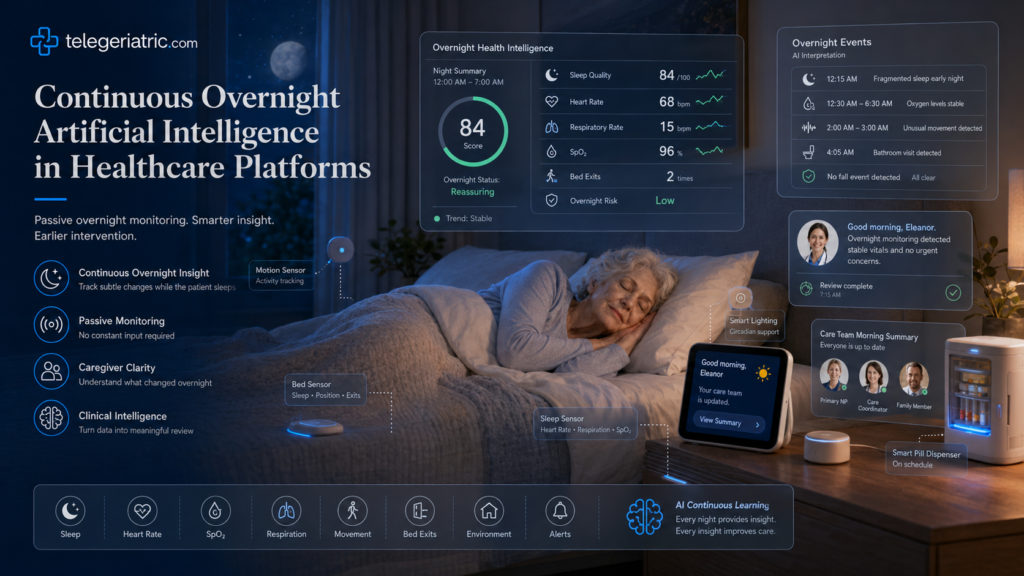
Continuous overnight artificial intelligence in healthcare platforms represents one of the most important shifts in geriatric monitoring: the movement from passive sleep tracking to clinically meaningful overnight interpretation. For older adults, the night is not a quiet gap between two care days. It is often the period when hidden risk becomes visible. Breathing changes, oxygen instability, repeated bed exits, restlessness, wandering, nocturnal confusion, pain-related movement, and abnormal heart-rate patterns may all appear long before a family member or clinician notices daytime decline.
Traditional sleep trackers usually answer a narrow question: how long did the person sleep? A continuous overnight healthcare intelligence platform asks a more useful geriatric question: what changed during the night, and does that change matter?
That distinction is critical. A basic consumer device may report that an older adult slept for six hours. A more advanced overnight intelligence platform may show that the same person left bed eight times, had unstable oxygen patterns, showed elevated overnight heart rate, experienced fragmented deep rest, and moved unusually between 2:00 AM and 4:00 AM. For a healthy adult, that may be a poor night. For an older adult with heart failure, sleep apnea risk, dementia, frailty, or medication changes, it may be an early warning signal.
The strength of these platforms is not simply that they collect more data. Their value comes from connecting separate overnight signals into a coherent health picture. Sleep duration, respiratory rhythm, pulse trends, body movement, room activity, bed-exit frequency, temperature, noise, light exposure, and safety events can be interpreted together instead of being treated as isolated readings. In geriatric care, this kind of pattern recognition is far more useful than a single number.
A platform becomes true healthcare intelligence when it can establish a personal baseline for the older adult. Many seniors do not fit textbook averages. One person may naturally wake twice each night. Another may have mild chronic oxygen variation. Another may move frequently because of arthritis or restless legs. The system becomes useful when it learns what is normal for that individual and then identifies meaningful deviation from that pattern.
This is why continuous overnight artificial intelligence in healthcare platforms is different from ordinary remote monitoring. Daytime monitoring often depends on participation. The patient checks blood pressure, steps on a scale, answers a symptom questionnaire, joins a telemedicine visit, or wears a device consistently. Overnight monitoring must work with less effort. The older adult may be asleep, confused, frail, or unwilling to manage another device. The best systems therefore rely on passive, contactless, or low-friction technologies such as bed sensors, ambient room sensors, smart lighting, motion detection, connected oxygen monitoring, and environmental sensing.
For caregivers, the benefit is clarity. Instead of waking up to uncertainty, they can see whether the night was stable, disrupted, or clinically concerning. A caregiver does not need raw graphs for every movement. They need interpretation: did the senior get out of bed more often than usual? Was there a breathing pattern worth discussing with a clinician? Did oxygen levels fluctuate unusually? Was movement consistent with restlessness, wandering, or possible fall risk? Did the night look different from the patient’s normal baseline?
For clinicians, continuous overnight intelligence can make virtual care more precise. A telemedicine appointment becomes more valuable when the provider can review overnight trends rather than relying only on memory or broad caregiver impressions. If an older adult reports fatigue, confusion, or worsening weakness, overnight data may help reveal whether sleep fragmentation, nocturnal hypoxia, medication timing, pain, bathroom frequency, or heart-rate changes are contributing factors.
The most advanced platforms do not create panic with every abnormal reading. They prioritize alerts based on context. A single bed exit may not matter. Repeated bed exits combined with unstable gait, poor sleep, and unusual room movement may deserve attention. A brief oxygen dip may be less meaningful than repeated desaturation patterns across several nights. Elevated overnight heart rate may become more important when paired with reduced daytime activity or recent medication changes.
This is the difference between data collection and clinical intelligence. Data collection records what happened. Healthcare intelligence helps determine whether the pattern deserves review, reassurance, adjustment, or escalation.
In elderly care, continuous overnight artificial intelligence platforms are especially relevant for seniors with dementia, fall risk, heart failure, COPD, sleep apnea suspicion, post-hospital recovery needs, frailty, or caregiver supervision challenges. They are also useful for aging-in-place programs because they make the home more observable without requiring constant physical presence.
The future of overnight geriatric monitoring will likely be quieter, more ambient, and more personalized. Instead of asking seniors to manage multiple devices, the care environment itself will become more intelligent. Beds, rooms, wearables, lights, sensors, and telehealth systems will work together to detect when the night is no longer normal. For older adults, that may mean earlier help. For families, it may mean less uncertainty. For clinicians, it may mean better timing. And for the broader future of geriatric care, it marks a shift from watching isolated symptoms to understanding the overnight patterns that often reveal decline first.
Autonomous Elder-Care Sleep Optimization Systems
Autonomous elder-care sleep optimization systems are the next step beyond monitoring. Instead of only detecting a problem, these systems may adjust the environment or prompt supportive actions to improve sleep safety and comfort.
This could include:
- Adjusting room temperature
- Dimming lights automatically
- Activating pathway lighting for bed exits
- Reducing noise
- Reminding about bedtime routines
- Alerting caregivers only when risk is meaningful
- Supporting circadian rhythm with light timing
- Coordinating medication reminders
- Adjusting smart beds or sleep surfaces
- Triggering fall-prevention lighting at night
Why Autonomy Must Be Carefully Designed
Autonomy in elder care should never mean removing human judgment. It means automating low-risk supportive actions while escalating higher-risk patterns to caregivers or clinicians.
For example, turning on soft floor lighting when a senior gets out of bed is a low-risk automation. Changing medication timing automatically would not be appropriate without clinician oversight.
Best Applications
| Application | Benefit |
|---|---|
| Night pathway lighting | Reduces fall risk during bathroom trips |
| Smart temperature control | Supports sleep comfort |
| Circadian lighting | Helps regulate day-night rhythm |
| Bed-exit alerts | Supports dementia and fall-risk monitoring |
| Caregiver notification filtering | Reduces alarm fatigue |
Editorial Insight
The future of sleep optimization in elder care will not be about luxury sleep gadgets. It will be about reducing risk while preserving dignity. The best systems will help seniors sleep safely without making them feel watched, controlled, or institutionalized.
Multi-Sensor Fusion for Sleep + Vitals Analytics
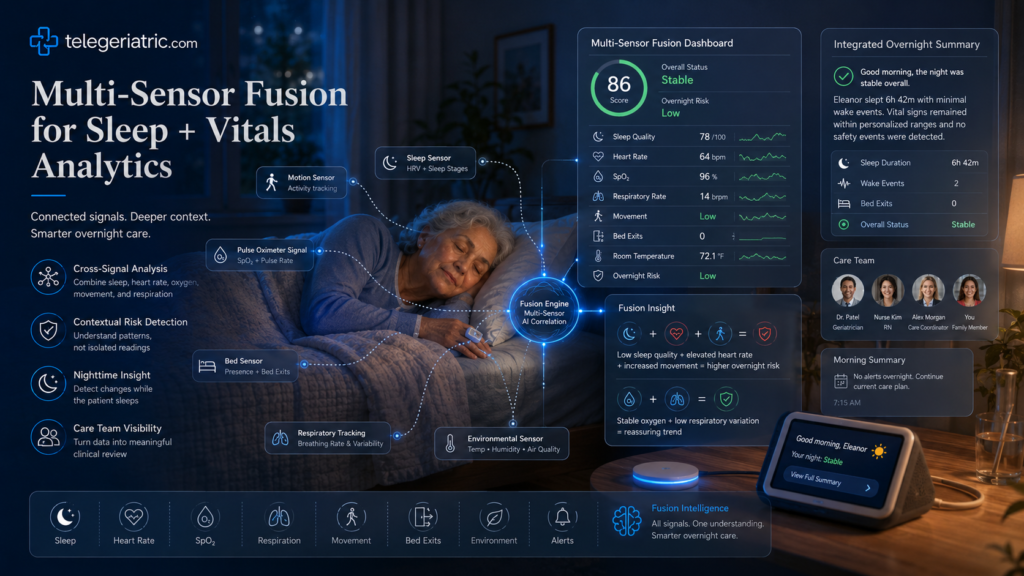
Multi-sensor fusion for sleep plus vitals analytics is the technical foundation behind many emerging geriatric systems. Instead of depending on one sensor, fusion systems combine multiple signals to produce a more accurate interpretation.
A single motion sensor may detect movement. A bed sensor may detect restlessness. A pulse oximeter may detect oxygen drops. A wearable may detect heart rate changes. A smart scale may detect fluid retention. A medication device may show missed doses. Individually, each signal is limited. Together, they tell a story.
Why Multi-Sensor Fusion Matters
Older adults often have noisy data. Wearables may be removed. Sensors may miss events. Blood pressure readings may be inconsistent. Sleep may be fragmented. Cognitive impairment may reduce adherence. Multi-sensor fusion reduces dependence on any one device and helps create a more reliable picture.
Example: Heart Failure Overnight Risk
A multi-sensor system may notice:
- Weight trending upward
- Overnight breathing becoming irregular
- Resting heart rate rising
- Sleep becoming fragmented
- Bathroom visits increasing
- Activity declining during the day
A single data point may not trigger concern. The combined pattern may suggest fluid overload or worsening cardiovascular status.
Example: Fall Risk
A fusion system may combine:
- Slower daytime movement
- Poor sleep
- More nighttime bed exits
- Low lighting
- Medication change
- Prior fall history
The system can then classify risk more intelligently than a simple motion detector.
Practical Takeaway
Multi-sensor fusion is where emerging systems become clinically useful. The value is not more data. The value is better context.
Emerging Systems Comparison in Geriatric Care
| Emerging System | Primary Purpose | Best For | Data Needed | Complexity | Typical Cost Level |
|---|---|---|---|---|---|
| Predictive AI in geriatric care | Forecast deterioration and prioritize intervention | Chronic disease, frailty, post-discharge care | Vitals, symptoms, activity, history | High | Medium to high |
| Digital twin models for elderly patients | Create a personalized health model | Complex seniors with multiple conditions | Medical history, sensors, behavior, environment | Very high | High |
| Smart home hospitals for aging-in-place | Deliver hospital-style oversight at home | Post-acute care, chronic disease, high-risk seniors | Devices, sensors, telehealth, care team | High | High |
| Integrated nocturnal monitoring ecosystems | Monitor nighttime risk | Dementia, falls, sleep problems, caregiver anxiety | Sleep, motion, bed exits, vitals | Medium to high | Medium |
| AI-driven sleep disorder prediction systems | Identify sleep-related risk patterns | Sleep apnea risk, insomnia, oxygen dips | Sleep and breathing signals | Medium | Low to medium |
| Continuous overnight health intelligence platforms | Combine sleep, vitals, movement, and risk | High-risk seniors living at home | Multi-sensor overnight data | High | Medium to high |
| Autonomous elder-care sleep optimization systems | Improve sleep safety and environment | Fall risk, dementia, sleep disruption | Sensors plus smart-home controls | Medium to high | Medium |
| Multi-sensor fusion analytics | Interpret multiple signals together | Complex monitoring programs | Multiple connected devices | High | Medium to high |
Emerging Systems Maturity Map
| System Category | Today’s Availability | Future Potential | Clinical Integration Need |
|---|---|---|---|
| Predictive AI | ███████░░░ | ██████████ | █████████░ |
| Digital Twins | ████░░░░░░ | ██████████ | ██████████ |
| Smart Home Hospitals | ██████░░░░ | ██████████ | ██████████ |
| Nocturnal Monitoring | ███████░░░ | █████████░ | ████████░░ |
| AI Sleep Prediction | ██████░░░░ | █████████░ | ███████░░░ |
| Overnight Intelligence | █████░░░░░ | ██████████ | █████████░ |
| Autonomous Sleep Optimization | ████░░░░░░ | ████████░░ | ███████░░░ |
| Multi-Sensor Fusion | ██████░░░░ | ██████████ | █████████░ |
Costs of Emerging Systems in Elderly Care
Costs vary widely because emerging systems range from simple sensor bundles to advanced clinical platforms. Buyers should think in layers rather than one-time purchases.
Cost Categories
| Cost Type | What It Includes | Expected Cost Level |
|---|---|---|
| Consumer devices | Wearables, sleep sensors, smart scales, pulse oximeters | Low to medium |
| Clinical remote monitoring devices | Connected BP cuffs, glucose monitors, oxygen devices | Medium |
| Smart-home safety infrastructure | Motion sensors, lighting, fall detection, door sensors | Medium |
| Subscription platforms | Dashboards, analytics, caregiver apps, alerts | Monthly recurring |
| Clinical monitoring services | Nurse review, escalation, telemedicine support | Medium to high |
| Smart home hospital programs | Devices, clinical team, logistics, medication, monitoring | High |
| Digital twin platforms | Advanced modeling and integration | High to very high |
Practical Budget Framework
| User Type | Sensible Starting Point |
|---|---|
| Family caregiver | Bed sensor, motion detection, fall alerts, medication support |
| Chronic disease patient | Connected BP monitor, scale, pulse oximeter, RPM program |
| High-risk senior | Multi-sensor home monitoring plus clinician review |
| Post-discharge patient | Smart home hospital or structured remote care pathway |
| Senior living operator | Facility-level nocturnal monitoring and risk dashboards |
| Advanced clinical program | Predictive AI, digital twins, EHR integration, escalation workflows |
The smartest approach is not to buy everything at once. Start with the main risk: falls, heart failure, sleep disruption, cognitive wandering, medication adherence, or post-hospital decline. Then choose the system that targets that risk.
Upcoming Models in Emerging Geriatric Systems
The next wave of emerging geriatric systems will likely move toward less friction, better personalization, and stronger clinical integration.
1. Ambient-First Monitoring
Future systems will rely less on devices seniors must remember to wear or charge. Contactless sensors, bed-based monitoring, radar-based motion detection, smart flooring, and room-level analytics will become more important.
2. Geriatric Digital Twin Platforms
Digital twins will move from concept to applied care planning. Instead of only showing data, they may help clinicians model medication changes, fall-risk interventions, nutrition support, sleep improvement, or post-discharge recovery.
3. Sleep-Centered Elder-Care Intelligence
Sleep will become a central signal in elderly care. Systems will connect sleep fragmentation with falls, cognition, pain, heart failure, respiratory disease, and caregiver burden.
4. Autonomous Home Safety Response
Smart homes will increasingly respond to risk automatically: lights turning on during bed exits, stove shutoff systems activating, doors alerting caregivers during wandering, or environmental adjustments supporting sleep routines.
5. Caregiver-Aware Dashboards
The best platforms will not overwhelm families with raw data. They will translate patterns into plain-language summaries: “sleep was more disrupted than usual,” “bathroom visits increased,” “activity dropped for three days,” or “review may be needed.”
6. Nutrition + Monitoring Integration
Aging health is not only about vitals. Nutrition, hydration, muscle preservation, protein intake, and micronutrient risk will become more integrated into predictive care models.
Risks, Limitations and Clinical Safeguards
Emerging systems can improve geriatric care, but they also create new risks. The most advanced system is not automatically the safest system. In elderly care, technology must be clinically careful, privacy-conscious, and easy enough to use in real homes.
1. False Alerts and Alarm Fatigue
Too many alerts can make caregivers ignore important ones. A useful system should prioritize risk, not panic. The difference between “motion detected” and “unusual bed exit pattern with fall risk” is enormous.
2. Privacy Concerns
Older adults may resist monitoring if it feels intrusive. Systems using cameras, microphones, or room-level sensors require careful consent and transparent boundaries. Privacy-preserving design is especially important in bedrooms and bathrooms.
3. Data Overload
More data does not automatically mean better care. Families and clinicians need interpretation, not endless charts. The best platforms summarize what changed, why it may matter, and what action is reasonable.
4. Bias and Poor Personalization
If predictive models are trained on populations that do not represent frail older adults, cognitively impaired seniors, or people with multiple chronic conditions, predictions may be less reliable. Geriatric systems must learn individual baselines.
5. Over-Reliance on Automation
Autonomous sleep optimization and predictive alerts should support human care, not replace clinical judgment. Serious changes in oxygen, heart rhythm, mental status, or mobility should be reviewed by qualified professionals.
6. Device Adherence Problems
Wearables may be removed. Batteries may die. Sensors may disconnect. Seniors with memory impairment may not use devices consistently. Systems must be designed for real-world use, not ideal laboratory behavior.
7. Cost and Access Inequality
The most advanced systems may be expensive, creating unequal access. This is why practical system design matters: not every older adult needs a full digital twin. Many need a smaller, targeted safety layer.
Buying and Implementation Framework
Before investing in emerging systems for geriatric care, use this practical framework.
Step 1: Define the Primary Risk
Do not begin with technology. Begin with the problem.
| Primary Concern | Best Emerging System |
|---|---|
| Falls at night | Nocturnal monitoring + smart lighting |
| Heart failure deterioration | Predictive AI + vitals monitoring |
| Complex chronic disease | Digital twin model + clinician dashboard |
| Dementia wandering | Integrated nocturnal ecosystem |
| Sleep apnea suspicion | AI-driven sleep disorder prediction |
| Post-hospital recovery | Smart home hospital |
| Caregiver uncertainty | Continuous overnight health intelligence |
Step 2: Choose the Least Intrusive System That Works
Older adults are more likely to accept systems that feel natural. Contactless or passive monitoring may work better than complex wearables for frail seniors.
Step 3: Confirm Clinical Review Pathways
A system that generates alerts without a response plan is incomplete. Decide who receives alerts, when to call a clinician, when to call emergency services, and what patterns require follow-up.
Step 4: Protect Dignity and Consent
Technology should preserve independence. Explain what is monitored, what is not monitored, who sees the data, and how it will be used.
Step 5: Start Small and Expand
A family worried about nighttime falls may start with bed-exit monitoring and pathway lighting. A clinician managing heart failure may start with connected scale, blood pressure, oxygen, and symptom check-ins. Expand only when the extra data improves decisions.
FAQs
What are emerging systems in geriatric care?
Emerging systems in geriatric care are advanced technology frameworks that help monitor, interpret, predict, and support elderly health across the home and clinical environment. They include predictive AI, digital twin models, smart home hospitals, nocturnal monitoring ecosystems, sleep disorder prediction tools, and multi-sensor analytics. Unlike basic telemedicine, these systems focus on continuous insight rather than one-time communication. Their purpose is to detect meaningful changes earlier, support aging-in-place, reduce avoidable emergencies, and give caregivers and clinicians a clearer picture of daily and overnight health.
How does predictive AI in geriatric care help older adults?
Predictive AI in geriatric care helps by analyzing patterns across vitals, sleep, movement, symptoms, medication adherence, and behavior. Older adults often decline gradually, and the signs may be subtle. Predictive systems can detect when a senior’s baseline is changing, such as lower activity, more fragmented sleep, rising resting heart rate, increasing nighttime bathroom visits, or unstable oxygen levels. These patterns may prompt earlier caregiver check-ins, telemedicine visits, medication review, or clinical assessment before a serious event occurs.
Are digital twin models for elderly patients useful for home care?
Digital twin models for elderly patients can be useful in home care when a senior has multiple chronic conditions, changing functional status, or complex care needs. A digital twin creates a virtual model of the older adult by combining medical history, sensor data, sleep patterns, mobility, medications, and environmental factors. This can help care teams understand how different risks interact. For example, a digital twin may show how poor sleep, medication timing, reduced mobility, and rising blood pressure are connected rather than treating each issue separately.
What is a smart home hospital for aging-in-place?
A smart home hospital for aging-in-place is a home-based care setup that combines connected medical devices, smart sensors, telemedicine access, caregiver alerts, and clinical oversight. It is designed to help older adults receive structured care at home, especially after hospitalization or during chronic disease management. A smart home hospital may include a connected blood pressure monitor, pulse oximeter, smart scale, fall detection, bed sensors, medication support, video consultations, and escalation pathways. The goal is to make the home safer and more clinically visible without removing the senior from familiar surroundings.
What are the risks of AI-based elderly monitoring systems?
The main risks of AI-based elderly monitoring systems include false alerts, privacy concerns, data overload, poor personalization, bias, and over-reliance on automation. A system that sends too many alerts can overwhelm caregivers. A system that collects sensitive bedroom or behavioral data must protect privacy and consent. Predictive tools should also be reviewed carefully because older adults vary widely in baseline health. These systems should support caregivers and clinicians, not replace medical judgment.
People Also Ask
What is the best emerging technology for elderly care at home?
The best emerging technology for elderly care at home depends on the senior’s main risk. For fall risk, nocturnal monitoring and smart lighting may be most useful. For heart failure or chronic disease, predictive AI connected to vitals monitoring may be stronger. For complex patients with multiple conditions, digital twin models and smart home hospital systems may provide deeper insight. The most practical approach is to choose the technology that solves the clearest problem first instead of buying the most advanced system available.
Can AI predict falls in older adults?
AI can help estimate fall risk by analyzing patterns such as gait changes, reduced activity, poor sleep, nighttime movement, medication changes, prior falls, and environmental risk factors. However, AI should not be treated as a perfect fall predictor. Falls are complex and can happen suddenly. The best fall-risk systems combine prediction with prevention: pathway lighting, bed-exit alerts, mobility support, medication review, home safety changes, and caregiver response planning.
How do nocturnal monitoring systems help seniors with dementia?
Nocturnal monitoring systems help seniors with dementia by detecting nighttime wandering, frequent bed exits, disrupted sleep, unusual movement, and possible fall events. Many dementia-related risks increase at night because confusion, agitation, and day-night reversal can become more noticeable. These systems can notify caregivers when a pattern is unsafe while reducing the need for constant physical checking. The best systems preserve dignity by using passive monitoring rather than intrusive surveillance whenever possible.
Are smart home hospitals better than nursing homes?
Smart home hospitals and nursing homes serve different needs. A smart home hospital may be better for older adults who can remain at home with the right monitoring, clinical support, and caregiver involvement. Nursing homes may be necessary when a senior needs continuous hands-on care, advanced mobility assistance, severe dementia supervision, or complex medical support that cannot be safely delivered at home. The decision should be based on safety, caregiver capacity, clinical needs, cost, and the older adult’s preferences.
How much do advanced elderly monitoring systems cost?
Advanced elderly monitoring systems can range from relatively affordable monthly subscriptions to expensive clinical programs. A basic home setup with sensors and caregiver alerts may cost far less than a full smart home hospital or digital twin platform. Costs usually include devices, installation, software subscriptions, monitoring services, and clinical review. Families should begin by identifying the highest-risk problem, such as falls, sleep disruption, heart failure, or post-hospital recovery, and then choose a system that directly addresses that need.
The Future of Geriatric Care Is Pattern Recognition
Emerging systems in geriatric care are not replacing doctors, caregivers, or family judgment. They are changing what those people can see. The future of elderly care will depend less on isolated readings and more on pattern recognition: how sleep changes before decline, how movement shifts before a fall, how oxygen and heart rate behave overnight, how medication changes affect cognition, and how home environments shape safety.
The most important systems will be those that make aging at home safer without making it feel mechanical. Predictive AI, digital twins, smart home hospitals, nocturnal monitoring, sleep intelligence, autonomous optimization, and multi-sensor fusion all point toward the same goal: earlier insight, better timing, and more personalized support for older adults.