What Is Remote Monitoring in Elderly Care?
Affiliate Disclosure
This page may contain affiliate links. If you purchase through these links, we may earn a commission at no extra cost to you. This supports research-driven content and continuous updates.
Updated on October, 2026.
Remote monitoring in elderly care—commonly known as RPM (Remote Patient Monitoring)—is redefining how aging is supported in a digital-first healthcare era. Instead of relying on occasional checkups or emergency-driven care, this approach enables continuous health monitoring, real-time data tracking, and early risk detection—all from the comfort of home.
At its core, remote monitoring allows caregivers, doctors, and family members to track a senior’s health remotely using connected medical devices, wearable technology, and smart home health systems. Vital signs such as heart rate, blood pressure, oxygen levels, sleep patterns, and activity are captured and transmitted securely, creating a live, data-driven view of a patient’s condition.
This shift is critical. Traditional elderly care often suffers from delayed interventions and limited visibility between appointments. Remote monitoring changes that by enabling proactive healthcare, where subtle warning signs can be detected early—before they escalate into serious complications or hospitalizations.
In practical terms, it bridges three critical gaps:
- Distance between patient and caregiver — enabling care without physical presence through telehealth and IoT-enabled systems
- Delay between symptom and diagnosis — reducing response time with real-time alerts and continuous tracking
- Lack of continuous health visibility — replacing isolated checkups with 24/7 monitoring and trend analysis
As a result, remote monitoring has become a core pillar of modern geriatric telemedicine, supporting safer independent living, improving chronic disease management, and reducing the burden on healthcare systems.
In essence, it transforms elderly care from reactive and episodic → to predictive, personalized and always-on.
👉 Explore the future of geriatric telemedicine
Who Is This Guide For?
This guide is designed for anyone navigating the rapidly evolving world of remote elderly care, telehealth, and smart health monitoring systems—whether you’re supporting someone else or planning for your own independence.
It speaks directly to:
- Families managing aging parents remotely
If you’re balancing distance with responsibility, this guide helps you understand how remote patient monitoring (RPM), real-time health tracking, and caregiver alert systems can keep you connected and informed—without needing to be physically present 24/7. - Caregivers seeking automation in elderly care
For professional and at-home caregivers, the focus is on reducing workload through automated monitoring, AI-powered alerts, and smart care systems—freeing up time while improving the quality and consistency of care. - Healthcare providers integrating telehealth
Doctors, clinics, and telemedicine platforms can explore how digital health tools, connected devices, and continuous patient data enhance diagnosis, improve patient outcomes, and support scalable, remote-first care models. - Seniors wanting independence without compromising safety
For older adults, this guide highlights how technology enables aging in place—maintaining freedom, privacy, and dignity while staying protected through 24/7 health monitoring and emergency response systems.
At its core, this guide is for anyone looking to move from uncertain, reactive care → to structured, proactive, and technology-enabled elderly care.
Quick Navigation
- How Remote Patient Monitoring Works
- Who needs it
- Benefits for seniors & caregivers
- Devices involved
- Costs & affordability
- Risks & limitations
- Remote monitoring vs traditional care
- Future trends & upcoming innovations
- FAQs
How Remote Monitoring Works
At its core, remote patient monitoring (RPM) operates as a continuous, intelligent data loop—turning everyday health signals into actionable medical insights. Instead of relying on occasional checkups, this system enables real-time health tracking, automated analysis and early intervention, which are critical in elderly care.
The Remote Monitoring Data Loop
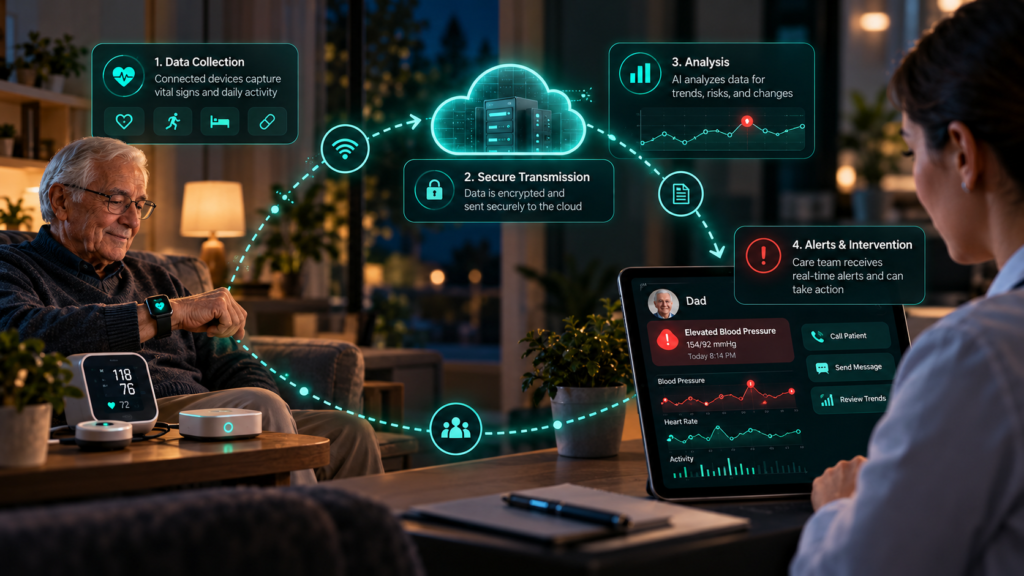
Remote monitoring works through four essential steps:
- Health data is collected through devices and sensors
Wearables, smart medical devices, and in-home sensors continuously track vital signs such as heart rate, oxygen levels, mobility, and sleep patterns. By integrating specialized devices and learning how to monitor blood pressure at home, families can track cardiovascular trends alongside daily vitals. This forms the foundation of continuous health monitoring for seniors. - The data is securely transmitted to cloud-based systems
Using wireless connectivity (Wi-Fi, Bluetooth, or cellular networks), patient data is sent in real time to HIPAA-compliant cloud platforms or secure health databases, ensuring privacy and accessibility. - Healthcare providers analyze trends and abnormalities
Advanced dashboards and AI-driven health analytics process incoming data, identifying patterns, deviations, and early warning signs that may not be visible during routine checkups. - Alerts are triggered if intervention is needed
When irregularities are detected—such as abnormal vitals, fall risks, or sudden inactivity—automated alerts and notifications are sent to caregivers, doctors, or family members for immediate action.
Why This Model Is Transformational
This closed-loop system replaces delayed, episodic care with a proactive, data-driven healthcare model.
Instead of:
- Waiting for symptoms to worsen
- Reacting after emergencies occur
RPM enables:
- Early detection of health risks
- Faster clinical decision-making
- Continuous visibility into patient health
The Real Impact in Elderly Care
For seniors, this shift is especially powerful. Aging-related conditions often develop gradually and subtle changes can go unnoticed without constant observation.
Remote monitoring transforms care from:
➡️ Reactive treatment → Proactive prevention
➡️ Periodic checkups → 24/7 health intelligence
➡️ Uncertainty → Real-time reassurance
This is what makes RPM a cornerstone of modern elderly healthcare and telemedicine systems—not just tracking health, but actively protecting it.
To better understand the technology behind connected elderly healthcare, explore our complete guide on what remote monitoring means and how remote patient monitoring systems work in real-world care environments.
Key Components of Remote Monitoring Systems
| Category | Function | Example Use Case |
|---|---|---|
| Wearables | Track vitals | Heart rate, oxygen levels |
| Fall Detection Devices | Detect accidents | Auto-alert after fall |
| Smart Home Sensors | Monitor movement | Detect inactivity |
| Medical Devices | Clinical tracking | Blood pressure, glucose |
| Mobile Apps | Data interface | Caregiver monitoring dashboard |
1. Wearable Health Devices
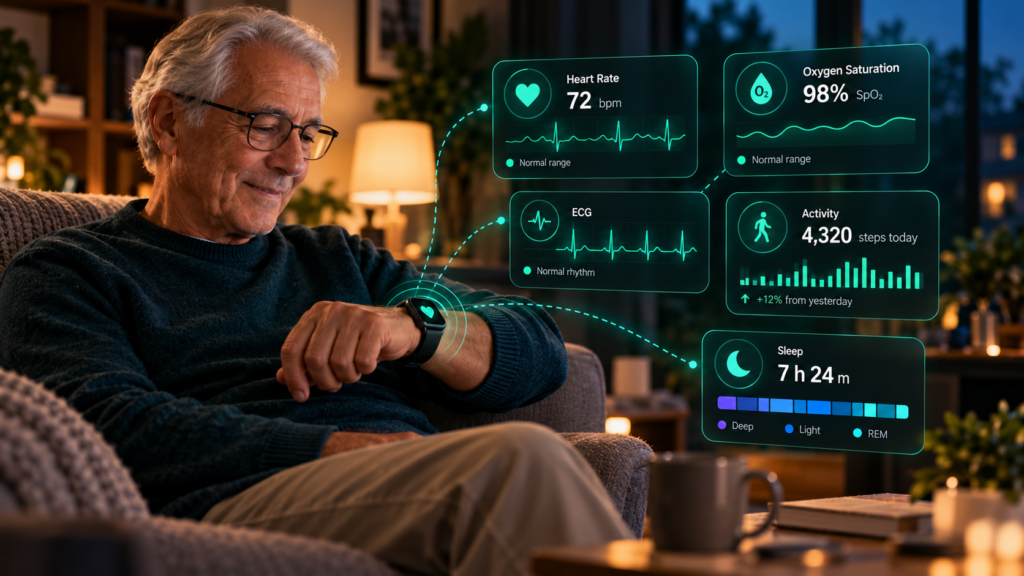
Wearable health devices are the foundation of remote patient monitoring (RPM), enabling continuous, real-time tracking of vital signs without disrupting daily life. Designed for comfort and ease of use, these devices allow seniors to be monitored passively—supporting both independent living and proactive healthcare.
What Wearable Devices Track
Modern wearable devices collect a wide range of critical health data, including:
- Heart rate monitoring
Continuous tracking helps identify abnormalities such as unusually high or low heart rates, which may signal underlying cardiac issues. - Blood oxygen (SpO₂) tracking
Monitoring oxygen saturation levels is essential for detecting respiratory problems, sleep-related breathing disorders, or sudden oxygen drops. - Electrocardiogram (ECG) readings
Advanced wearables can record ECG data, enabling early detection of irregular heart rhythms such as atrial fibrillation. - Step count and activity levels
Movement tracking provides insight into mobility, physical activity, and overall lifestyle—key indicators of a senior’s health and independence.
Why Wearables Are Essential in Elderly Care
Wearables turn everyday activity into continuous health intelligence. Instead of relying on occasional measurements, they provide a 24/7 stream of biometric data, allowing subtle changes to be detected early.
This is especially valuable for:
- Identifying irregular heart rhythms before they become critical
- Detecting oxygen level drops in real time
- Monitoring declines in mobility or sudden inactivity
- Supporting long-term chronic disease management
By combining ease of use, real-time monitoring, and AI-driven insights, wearable devices play a central role in shifting elderly care from:
➡️ Periodic measurement → Continuous monitoring
➡️ Symptom-based care → Early detection and prevention
In modern RPM systems, wearables are not just tracking tools—they are early warning systems that help protect senior health around the clock.
2. In-Home Monitoring Sensors
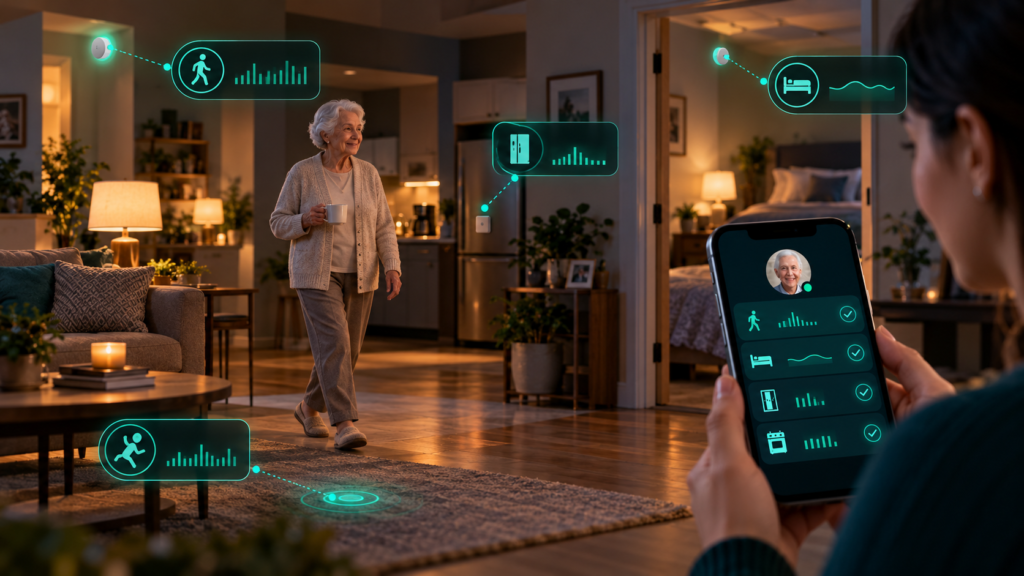
In-home monitoring sensors bring invisible, always-on safety into a senior’s living environment. Unlike wearables, these systems are non-intrusive and passive, meaning they require no active input—making them ideal for elderly individuals who may forget or resist using devices. Together, they form a critical layer of smart home healthcare and ambient assisted living systems.
What In-Home Sensors Monitor ?
These sensors are strategically placed around the home to track daily behavior and detect risks:
- Fall detection systems
Using motion sensors, pressure sensors, or AI-based vision systems, these tools can instantly detect falls and trigger emergency alerts—one of the most critical features in elderly care. - Motion tracking (activity patterns)
Sensors monitor movement throughout the home, helping identify changes in routine, reduced mobility, or unusual inactivity that may signal health issues. - Sleep monitoring sensors
Bed-based or room sensors track sleep duration, restlessness, and breathing patterns—offering insights into overall health, recovery, and potential disorders. - Door and appliance usage tracking
Monitoring entry points and daily appliance use (like kitchens or refrigerators) helps detect behavioral changes, which can be early indicators of cognitive decline or memory-related conditions.

Why These Sensors Matter for Independent Living
In-home monitoring systems provide a safety net without compromising independence. Seniors can live freely in their own homes while caregivers receive continuous updates in the background.
These systems are especially valuable for:
- Seniors at risk of falls or mobility issues
- Individuals with dementia or cognitive decline
- Those living alone without constant supervision
By analyzing patterns over time, these sensors go beyond safety—they deliver behavioral insights and early warning signals that would otherwise go unnoticed.
They help shift elderly care from:
➡️ Manual supervision → Automated, passive monitoring
➡️ Emergency response → Preventive risk detection
➡️ Visible care → Invisible, ambient support
In modern remote monitoring ecosystems, in-home sensors are essential for enabling safe, independent, and dignified aging in place.
3. Mobile Apps & Caregiver Dashboards
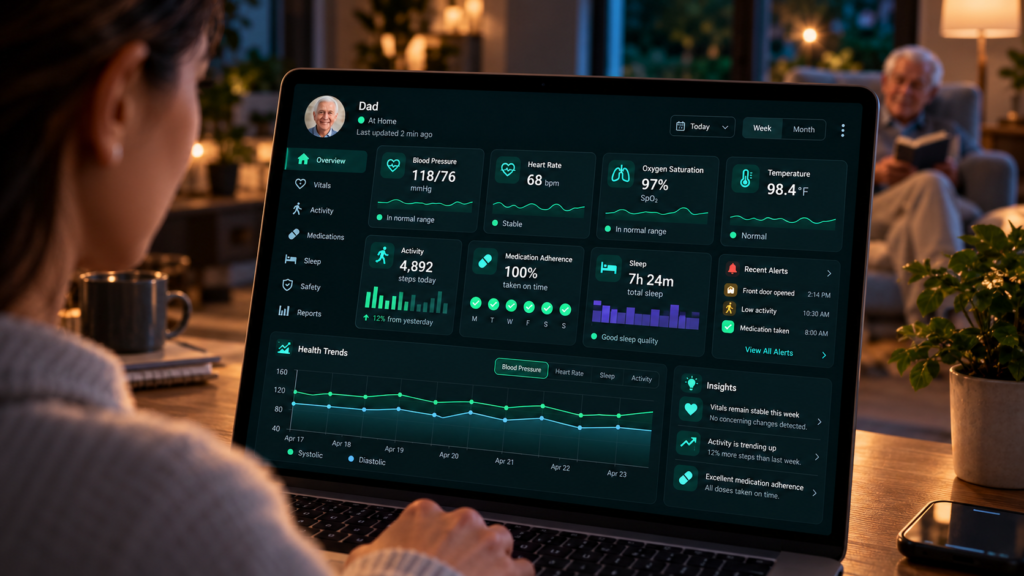
Mobile apps and caregiver dashboards are the control center of remote patient monitoring (RPM)—transforming raw health data into clear, actionable insights. These platforms connect seniors, families, and healthcare providers through real-time visibility, intelligent alerts, and coordinated care workflows.
How Data Becomes Actionable
Once health data is collected from wearables and in-home sensors, it is processed and displayed through intuitive digital interfaces:
- Mobile apps for family caregivers
User-friendly apps provide instant access to a senior’s health status, activity levels, and alerts—allowing family members to stay informed and respond quickly, even from a distance. - Clinical dashboards for doctors
Healthcare providers use advanced dashboards to monitor multiple patients simultaneously, review trends, and prioritize cases based on urgency and risk levels. - Real-time health trend analysis
Visual graphs and AI-driven insights highlight patterns over time—making it easier to detect gradual declines, anomalies, or improvements in health. - Medication and appointment reminders
Built-in scheduling systems ensure adherence to treatment plans through automated reminders, reducing missed doses and improving overall care consistency.
Why These Platforms Matter
Without proper visualization, health data is just noise. These platforms convert continuous data streams into meaningful, decision-ready information.
They enable:
- Faster response to health changes
- Better communication between caregivers and clinicians
- Reduced errors in medication and care routines
- Scalable monitoring for multiple patients
Mobile apps and dashboards are what make remote monitoring truly usable and effective in real-world elderly care.
They shift care from:
➡️ Fragmented information → Centralized health intelligence
➡️ Delayed decisions → Real-time action
➡️ Isolated caregivers → Connected care networks
In modern geriatric healthcare, these platforms are essential for delivering coordinated, data-driven, and responsive care at scale.
4. Cloud-Based Data Systems
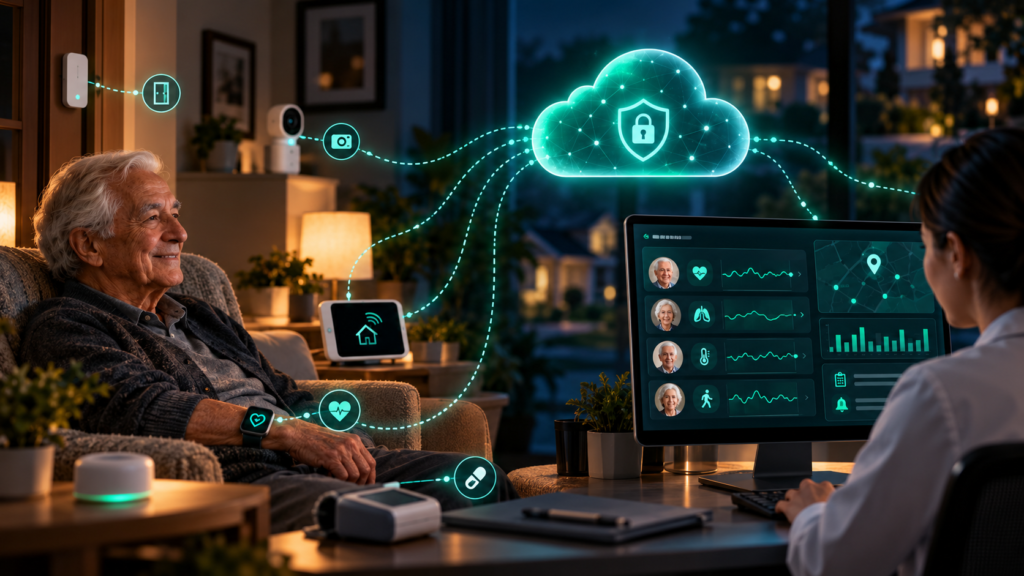
Cloud-based systems are the backbone of remote patient monitoring (RPM), enabling secure, scalable, and always-accessible healthcare data management. Without cloud infrastructure, continuous monitoring would remain fragmented and limited. With it, elderly care becomes connected, intelligent and accessible from anywhere.
What Cloud Systems Enable
Cloud platforms power remote monitoring by handling the entire lifecycle of health data:
- Store large volumes of health data
Continuous streams from wearables, sensors, and devices are securely stored, creating a long-term health record for each patient. - Enable remote access for healthcare providers
Doctors and care teams can access patient data anytime, anywhere—supporting telehealth, virtual consultations, and remote diagnostics. - Apply AI-driven analytics for risk detection
Cloud systems integrate with AI engines to process data at scale, identifying patterns, predicting risks, and triggering early warnings. - Ensure compliance with healthcare data privacy standards
Advanced encryption, access controls, and regulatory frameworks (like HIPAA and GDPR equivalents) protect sensitive patient information.
Why Cloud Infrastructure Is Critical
Cloud computing transforms isolated data into a unified, intelligent health ecosystem. It ensures that information is not only stored—but also accessible, shareable and actionable in real time.

This enables:
- Seamless coordination between multiple caregivers and providers
- Continuous monitoring across different locations
- Scalable systems that can support thousands of patients simultaneously
Cloud-based systems are what make modern RPM scalable and future-ready.
They shift healthcare from:
➡️ Local data storage → Connected, cloud-based ecosystems
➡️ Limited access → Anywhere, anytime availability
➡️ Raw data → AI-powered health intelligence
In elderly care, this infrastructure supports reliable, secure, and data-driven decision-making, forming the foundation of next-generation digital health platforms.
5. Alerts & Emergency Response Systems
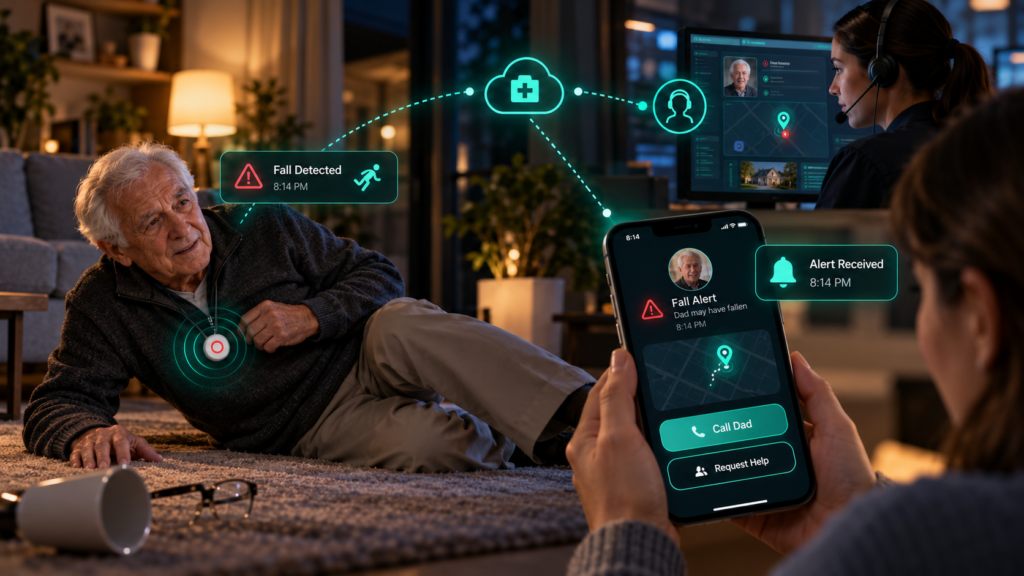
Alerts and emergency response systems are the safety engine of remote patient monitoring (RPM)—turning continuous data into instant, life-saving actions. In elderly care, where timing is critical, these systems ensure that no warning sign goes unnoticed and no emergency goes unanswered.
How Alert Systems Work

Modern RPM platforms use automated triggers and intelligent algorithms to deliver real-time alerts:
- Instant notifications for abnormal vitals
If heart rate, blood pressure, or oxygen levels move towards normal ranges, alerts are immediately sent to caregivers or healthcare providers for rapid assessment. - Fall alerts sent to caregivers or emergency services
Fall detection systems automatically identify sudden impacts or inactivity and trigger alerts—often including location data for faster response. - SOS buttons for immediate assistance
Wearables and home devices include emergency buttons that seniors can press to instantly request help, connecting them to family members or emergency responders. - AI-based early warning systems
Advanced systems analyze patterns over time to predict potential health risks—sending alerts before a critical event occurs.
Why These Systems Are Essential
In elderly care, delays can turn minor issues into serious emergencies. Alert systems eliminate that delay by enabling real-time intervention and rapid response.
They provide:
- Immediate awareness of critical health changes
- Faster emergency response times
- Reduced risk of complications or hospitalizations
- Continuous reassurance for families and caregivers
Alerts and emergency systems transform monitoring into active protection.
They shift care from:
➡️ Waiting for emergencies → Instant detection and response
➡️ Manual check-ins → Automated, 24/7 vigilance
➡️ Uncertainty → Real-time safety assurance
Within modern remote monitoring ecosystems, these systems are essential for ensuring senior safety, independence, and peace of mind—making them one of the most vital components of digital elderly care.
Who Needs Remote Monitoring?
Remote patient monitoring (RPM) is not just a convenience—it becomes essential in situations where continuous health visibility, safety, and timely intervention are critical. In elderly care, certain conditions and lifestyles make real-time monitoring and remote caregiving support far more than optional.
When Remote Monitoring Becomes Necessary

Remote monitoring is especially important in the following scenarios:
- A senior lives alone
For older adults living independently, RPM provides a virtual safety net, ensuring that any sudden health issue, fall, or inactivity is detected—even without someone physically present. - Chronic conditions require continuous tracking
Conditions like diabetes, hypertension, and heart disease need ongoing monitoring of vital signs and health trends. RPM enables better disease management through real-time data and early intervention. - There’s a risk of falls or cognitive decline
Seniors with mobility issues or early-stage dementia benefit from fall detection systems, activity tracking, and behavior monitoring, which help identify risks before they escalate. - Caregivers cannot be physically present full-time
Whether due to distance or time constraints, caregivers can stay connected through mobile apps, alerts, and remote dashboards, ensuring consistent oversight without constant presence. - Post-hospital recovery requires supervision
After surgery or hospitalization, patients often need close monitoring. RPM supports safe recovery at home, reducing readmission risk and enabling faster response to complications.
The Bigger Picture
These scenarios highlight a common need: continuous, reliable and proactive care.
Remote monitoring fills the gap by shifting care from:
➡️ Occasional supervision → Continuous oversight
➡️ Physical presence → Remote, connected care
➡️ Uncertainty → Data-driven reassurance
In essence, RPM is most valuable wherever there is risk, distance or the need for ongoing medical awareness—making it a crucial tool in modern elderly care.
Why Remote Monitoring Matters in Elderly Care
Remote patient monitoring (RPM) is becoming a foundational shift in elderly healthcare, moving care from reactive hospital-based systems to continuous, home-centered, and preventive health management. As global aging populations grow, this model is no longer optional—it is increasingly essential for sustainable, high-quality care.
Key Benefits of Remote Monitoring in Elderly Care

Remote monitoring delivers measurable improvements across multiple areas of senior healthcare:
- Reducing hospital visits and readmissions
Continuous tracking of vital signs allows early detection of health deterioration, helping prevent unnecessary emergency visits and reducing avoidable hospital readmissions. - Enabling aging in place with greater independence
Seniors can remain in their own homes safely while still being monitored through wearables, sensors, and connected health systems, supporting dignity and autonomy in later life. - Supporting early detection of health issues
Subtle changes in heart rate, oxygen levels, sleep or movement patterns can be identified early through AI-powered health analytics, enabling timely intervention before conditions worsen. - Improving chronic disease management
Conditions such as diabetes, hypertension, and heart disease require ongoing monitoring. RPM provides continuous data tracking and trend analysis, improving treatment accuracy and adherence.
Nutrition also plays a critical role in healthy aging and chronic disease prevention—explore how geronutrition supports elderly health, recovery and longevity through targeted dietary strategies and age-focused nutritional care.
- Lowering long-term healthcare costs
By reducing emergency care, hospital admissions, and delayed diagnoses, remote monitoring helps shift healthcare spending from treatment to prevention, significantly lowering long-term costs.
The Bigger Shift in Elderly Healthcare
As populations continue to age globally, healthcare systems are under increasing pressure. Remote monitoring is emerging as a core pillar of modern elderly care, telemedicine, and digital health infrastructure.
It enables a transformation from:
➡️ Reactive treatment → Preventive care
➡️ Hospital-centered systems → Home-based healthcare
➡️ Episodic checkups → Continuous monitoring
Ultimately, remote monitoring matters because it redefines what safe aging looks like. It combines technology, data, and connectivity to create a healthcare model that is more proactive, efficient, and human-centered—ensuring seniors receive the right care at the right time, wherever they are.
Detailed Benefits of Remote Monitoring in Elderly Care
Remote Patient Monitoring (RPM) is more than a technological upgrade—it represents a fundamental transformation in elderly healthcare, shifting the focus from reactive treatment to continuous, preventive, and data-driven care. By integrating wearable devices, in-home sensors, AI analytics, and telehealth platforms, RPM significantly improves safety, independence, and long-term health outcomes for seniors.
1. Continuous Health Visibility

One of the most powerful advantages of remote monitoring is continuous, real-time visibility into a senior’s health status. Unlike traditional healthcare models that depend on occasional visits or episodic checkups, RPM creates an uninterrupted flow of health data.
Instead of relying on isolated measurements, caregivers and healthcare providers gain access to a complete, evolving health profile that reflects daily life patterns and long-term changes.
Key improvements include:
- 24/7 monitoring of vital signs
Continuous tracking of heart rate, oxygen saturation (SpO₂), blood pressure, sleep quality, and activity levels ensures that even subtle changes are detected early. - Long-term health trend analysis
Rather than one-time readings, RPM builds a historical health dataset, helping doctors identify gradual decline, recovery patterns, or early warning signs. - Better chronic disease management
Conditions such as hypertension, diabetes, and cardiovascular disease can be managed more effectively through continuous feedback loops and data-driven adjustments.
Why Continuous Visibility Matters
This always-on monitoring approach enables healthcare providers to move from:
➡️ Snapshot-based diagnosis → continuous health intelligence
➡️ Reactive treatment → early intervention and prevention
➡️ Limited data → comprehensive patient insights
As a result, clinical decisions become more accurate, timely, and personalized, significantly improving the quality of elderly care and reducing avoidable health risks.
2. Early Detection of Health Issues


One of the most impactful advantages of remote patient monitoring (RPM) is its ability to support early detection of health deterioration, often before visible symptoms appear. Instead of waiting for a condition to worsen, RPM continuously analyzes subtle physiological and behavioral changes in real time.
This shift is critical in elderly care, where small deviations can quickly develop into serious complications if left unnoticed.
How Early Detection Works in RPM
Modern remote monitoring systems combine wearable devices, in-home sensors, and AI-driven analytics to detect early warning signs such as:

- Irregular heart rhythms or oxygen fluctuations
Continuous monitoring can identify abnormalities like arrhythmias or sudden drops in SpO₂ levels, which may indicate cardiovascular or respiratory issues. - Changes in mobility or activity levels
Reduced movement, slower walking patterns, or prolonged inactivity can signal declining physical health or increased fall risk. - Unusual sleep patterns or rest disturbances
Disruptions in sleep duration or quality may be early indicators of neurological conditions, stress, or worsening chronic illness. - AI-powered abnormal trend detection
Machine learning systems analyze long-term data to identify patterns that deviate from a patient’s baseline, triggering early alerts for potential health risks.
Why Early Detection Is a Game Changer
The real value of RPM lies not just in monitoring—but in predicting and preventing escalation.
By identifying risks early, it enables:
- Faster medical intervention before conditions become severe
- Reduced emergency hospital admissions
- Improved outcomes for chronic disease patients
- Greater safety for seniors living independently
The Bigger Impact on Elderly Care
Early detection transforms elderly healthcare from a reactive model into a preventive care system powered by continuous intelligence.
Instead of:
➡️ Waiting for symptoms → Detecting risks early
➡️ Emergency treatment → Preventive intervention
➡️ Crisis response → Proactive health management
This makes RPM a core technology in preventive healthcare for seniors, chronic disease monitoring, and modern geriatric care systems, where timing can directly influence survival, recovery and quality of life.
3. Reduced Hospital Visits & Healthcare Costs

Remote patient monitoring (RPM) plays a major role in making elderly care more efficient, affordable, and less dependent on physical hospital infrastructure. By shifting care from reactive hospital visits to continuous home-based monitoring, it significantly reduces both medical costs and system overload.
Instead of waiting for symptoms to worsen and require urgent care, RPM enables early detection, remote consultations, and timely interventions, preventing many situations from escalating into emergencies.
How RPM Reduces Healthcare Burden
The cost-saving impact of remote monitoring comes from multiple layers of care optimization

- Fewer hospital admissions and readmissions
Continuous tracking of vital signs and AI-based alerts help identify health risks early, reducing the likelihood of emergency hospitalization and repeat admissions after discharge. - Reduced dependency on in-person clinic visits
Many routine checkups, follow-ups, and chronic disease reviews can now be handled through telehealth consultations and remote data reviews, saving time and travel costs. - Lower overall healthcare expenses for families and systems
By preventing complications and minimizing emergency interventions, RPM reduces expensive hospital stays, diagnostic procedures, and long-term treatment costs.
Why This Matters for Elderly Care
Elderly patients often require frequent monitoring due to chronic conditions, mobility issues, or post-treatment recovery needs. Without RPM, this leads to repeated hospital visits and high financial strain.
With remote monitoring in place, care becomes:
➡️ Preventive instead of emergency-driven
➡️ Home-based instead of hospital-dependent
➡️ Continuous instead of episodic
The Bigger System-Level Impact
Beyond individual savings, RPM also strengthens healthcare systems by:
- Reducing pressure on hospitals and emergency departments
- Optimizing resource allocation for critical patients
- Improving efficiency in chronic disease management programs
This makes remote monitoring a key driver of cost-effective elderly care, scalable telemedicine models, and sustainable healthcare systems worldwide.
4. Greater Independence for Senior


A central goal of modern geriatric healthcare is enabling safe aging in place, where seniors can continue living in their own homes without compromising safety. Remote patient monitoring (RPM) makes this possible by combining continuous health tracking, smart alerts, and connected care systems that operate in the background of daily life.
Instead of shifting seniors into institutional care settings earlier than necessary, RPM supports a model where independence and medical safety coexist.
How RPM Supports Independent Living
Remote monitoring strengthens senior independence by providing a silent layer of protection around everyday life.

- Seniors can live safely in their own homes
With wearables, in-home sensors, and emergency alert systems, older adults can maintain their lifestyle while still being monitored for potential risks. - Reduced reliance on constant physical supervision
Family members and caregivers no longer need to be physically present at all times, as real-time dashboards and alerts provide continuous oversight remotely. - Preservation of dignity, autonomy, and daily routines
Seniors retain control over their schedules, activities, and personal space, while still benefiting from discreet health monitoring and emergency protection.
Why Independence Matters in Elderly Care
Independence is not only a lifestyle preference—it is closely tied to mental, emotional, and physical well-being. Loss of autonomy is often associated with stress, anxiety, and reduced quality of life in older adults.
RPM helps maintain a healthier balance by ensuring:
- Freedom without isolation
- Safety without restriction
- Support without intrusion
The Bigger Impact on Quality of Life
By enabling aging in place, remote monitoring transforms elderly care into a system that is both protective and empowering.
It shifts care from:
➡️ Institutional dependence → home-based independence
➡️ Constant supervision → smart, remote oversight
➡️ Restricted living → supported autonomy
This balance between freedom and safety is what makes RPM a cornerstone of modern elderly care, smart home healthcare, and long-term geriatric well-being strategies.
5. Peace of Mind for Families & Caregivers

Remote patient monitoring (RPM) is not only transformative for seniors—it is equally impactful for the families and caregivers responsible for their well-being. By providing continuous visibility and timely updates, it replaces uncertainty with confidence, reassurance, and control from a distance.
How RPM Supports Families and Caregivers
Modern remote monitoring systems are designed to keep caregivers informed without overwhelming them, offering a clear, real-time picture of a loved one’s health and safety:

- Real-time alerts for emergencies or unusual activity
Caregivers receive instant notifications if something abnormal occurs—such as a fall, irregular vital signs, or sudden inactivity—enabling quick response when it matters most. - Remote access to health data via mobile apps
Through dedicated apps and dashboards, families can check vital signs, activity levels, and health trends anytime, creating a transparent and always-accessible care system. - Reduced anxiety about unattended health risks
Continuous monitoring reduces the emotional burden of not knowing what is happening in real time, especially for families living far away from their elderly relatives.
Why This Matters Emotionally
One of the most overlooked challenges in elderly care is not just physical responsibility, but emotional stress and constant worry. RPM helps ease this burden by ensuring that someone is always “watching over” the senior—even when family members cannot be physically present.
It creates a sense of:
- Security through visibility
- Confidence through real-time updates
- Relief through reduced uncertainty
The Bigger Impact on Care Relationships
Remote monitoring strengthens the relationship between seniors and their caregivers by shifting it from:
➡️ Reactive concern → continuous reassurance
➡️ Distance-based anxiety → connected awareness
➡️ Guesswork → data-driven clarity
Ultimately, RPM allows families to stay emotionally connected and operationally informed, ensuring that their loved ones are continuously monitored, protected, and supported—no matter the distance.
The Bigger Impact
Taken together, these benefits position remote patient monitoring as a cornerstone of:
- Smart elderly care ecosystems
- Digital health transformation
- Telemedicine for aging populations
It shifts healthcare from reactive treatment → proactive prevention, ultimately improving longevity, safety and quality of life.
Cost of Remote Monitoring Systems
Costs vary depending on complexity and integration level.
| Type | Price Range (USD) | Use Case |
|---|---|---|
| Basic Wearables | $30 – $150 | Entry-level monitoring |
| Mid-range RPM Kits | $150 – $500 | Chronic care |
| Advanced Systems | $500 – $1500+ | Full-home monitoring |
| Subscription Services | $10 – $50/month | Cloud + alerts |
👉 Insight: Long-term savings often outweigh upfront costs due to reduced hospitalizations.
Remote Monitoring vs Traditional Elderly Care
| Feature | Remote Monitoring | Traditional Care |
|---|---|---|
| Monitoring | Continuous | Periodic |
| Response Time | Instant alerts | Delayed |
| Cost Efficiency | Lower long-term | Higher |
| Independence | High | Limited |
| Caregiver Load | Reduced | High |
Visual Comparison Chart
| Metric | RPM Systems | In-Person Care |
|---|---|---|
| Real-Time Data | ✅ | ❌ |
| Emergency Alerts | ✅ | ❌ |
| Physical Presence | ❌ | ✅ |
| Scalability | High | Low |
| Cost Over Time | Lower | Higher |
Risks & Limitations of Remote Monitoring in Elderly Care
Remote Patient Monitoring (RPM) has become a major advancement in digital elderly healthcare, telemedicine, and smart home health systems, but it is not without challenges. Like any connected healthcare technology, its effectiveness depends on infrastructure, user adoption, and strong safeguards.
Understanding these limitations is essential for designing safe, reliable, and truly patient-centered remote monitoring systems. A balanced perspective helps families, caregivers, and healthcare providers make informed decisions when adopting elderly monitoring technologies.
1. Data Privacy & Security Concerns

One of the most critical challenges in remote patient monitoring is the protection of sensitive health data. Since RPM systems rely on continuous connectivity, large volumes of personal medical information are constantly being transmitted and stored digitally.
This introduces several privacy and security considerations:
- Transmission of sensitive health data over connected networks
Vital signs, medical history, and behavioral data are sent through internet-connected devices, increasing exposure if networks are not properly secured. - Risk of data breaches without strong cybersecurity protections
Weak encryption, outdated systems, or poorly managed platforms can leave health records vulnerable to unauthorized access or cyberattacks. - Need for secure cloud infrastructure and compliance standards
Reliable RPM systems must use end-to-end encryption, access control systems, and regulated cloud storage that comply with healthcare privacy frameworks (such as HIPAA-equivalent protections).
Why This Matters in Elderly Care
Elderly patients are particularly vulnerable because their health data is continuous, detailed, and highly sensitive, making it a valuable target in digital ecosystems.
Without proper safeguards, risks may include:
- Unauthorized access to medical records
- Misuse of personal health information
- Loss of trust in digital healthcare systems
The Bigger Picture
To remain safe and effective, remote monitoring must balance innovation with security. This shifts system design from:
➡️ Open data flow → secure, encrypted ecosystems
➡️ Convenience-first design → privacy-first architecture
➡️ Simple connectivity → regulated digital health infrastructure
Ultimately, strong cybersecurity is not optional—it is a core requirement for trustworthy and scalable remote elderly care systems.
2. Technology Dependence & Device Reliability

Remote patient monitoring (RPM) is highly dependent on digital infrastructure, connected devices, and uninterrupted power supply. While this is what enables continuous care, it also introduces a key limitation: the entire system is only as reliable as the technology behind it.
Unlike traditional healthcare, where a doctor’s observation is immediate and physical, RPM relies on data flow between devices, networks, and cloud platforms—meaning any disruption can affect monitoring quality.
Key Reliability Challenges in RPM Systems
Several technical dependencies can directly impact the performance of remote monitoring systems

- Battery failure can interrupt continuous monitoring
Wearable devices and home sensors require regular charging or power supply. If batteries run out, health data tracking stops immediately, creating gaps in monitoring. - Internet outages may delay data transmission
RPM systems depend on stable connectivity (Wi-Fi, mobile data, or IoT networks). Any disruption can cause delayed alerts, missing updates, or incomplete health records. - Device malfunctions can lead to missing or inaccurate readings
Hardware issues, sensor errors, or software glitches may produce incorrect vitals or inconsistent data, which can affect clinical decision-making.
Why This Is a Critical Limitation
In elderly care, consistency is essential. Even short interruptions in monitoring can reduce the effectiveness of:
- Fall detection systems
- Chronic disease tracking
- Emergency alert mechanisms
- AI-based health predictions
This makes reliability not just a technical concern, but a patient safety factor.
The Bigger Infrastructure Requirement
To ensure safe and effective RPM deployment, systems must be supported by:
- Backup power solutions (battery redundancy, UPS systems)
- Stable internet or multi-network connectivity options
- Device self-diagnostics and error detection systems
- Redundant monitoring pathways for critical alerts
Final Perspective
Technology dependence is both the strength and limitation of remote monitoring. It enables continuous, intelligent elderly care, but also requires robust infrastructure to ensure uninterrupted performance.
Ultimately, RPM shifts care from:
➡️ Human-only reliability → human + machine dependency
➡️ Isolated checkups → always-on connected systems
➡️ Physical certainty → data-dependent continuity
This makes system reliability and backup design essential pillars of any modern elderly remote care solution.
3. Learning Curve for Seniors

One of the most practical challenges in remote patient monitoring (RPM) is the learning curve associated with technology adoption among seniors. While these systems are designed to improve safety and independence, not all elderly users are immediately comfortable with digital tools such as apps, wearables, or smart home devices.
This human factor plays a significant role in how effectively RPM solutions are adopted and used in real-life elderly care settings.
Common Challenges for Seniors
Several usability barriers can affect engagement with remote monitoring systems:
- Difficulty setting up apps, wearables or dashboards
Initial setup often involves pairing devices, configuring settings, and navigating apps—steps that may feel complex or overwhelming for non-technical users. - Challenges in understanding alerts or notifications
Health alerts, data dashboards, or warning messages may be difficult to interpret without clear explanations or simplified interfaces. - Resistance to new technology due to unfamiliarity
Some seniors may feel hesitant or resistant to adopting digital tools, especially if they are not accustomed to smartphones, apps, or connected devices.
Why This Matters in Elderly Care
If users struggle to interact with the system, the effectiveness of remote monitoring is reduced. Even advanced technologies like AI health tracking or fall detection systems rely on proper usage and engagement to deliver value.
This makes usability just as important as functionality in elderly healthcare technology.
How to Improve Adoption and Usability
To overcome these challenges, RPM systems must prioritize simplicity, accessibility, and human support:
- User-friendly design with large icons and simple navigation
Interfaces should be visually clear, minimal, and designed specifically for older adults. - Caregiver assistance during setup and daily use
Family members or caregivers can help with installation, training, and ongoing support. - Simplified alerts and clear communication
Notifications should be easy to understand, avoiding technical language and focusing on actionable messages.
The Bigger Picture
Addressing the learning curve is essential for making remote monitoring truly inclusive. Without it, even the most advanced systems risk underutilization.
This shifts design priorities from:
➡️ Technology-first → user-first design
➡️ Complex systems → simple, guided experiences
➡️ Independent usage → supported adoption models
Ultimately, the success of RPM in elderly care depends not only on innovation—but on how easily seniors can understand, trust, and use the technology in their daily lives.
4. False Alerts & Alarm Fatigue
While alerts are one of the most important safety features in remote patient monitoring (RPM), they are not always perfectly accurate. As systems rely on sensors, algorithms and automated detection, there is always a possibility of false positives or unnecessary notifications.

This introduces a key challenge in elderly care technology: balancing safety sensitivity with alert accuracy.
Common Causes of False Alerts
Several technical and environmental factors can lead to incorrect or unnecessary warnings:
- Sensors misinterpreting normal movements as falls
Everyday actions such as sitting quickly, bending, or lying down may sometimes be incorrectly detected as a fall event. - Temporary fluctuations in vital signs triggering warnings
Short-term changes in heart rate, oxygen levels, or movement can be flagged as abnormal even when they are not clinically significant. - Environmental interference and sensor limitations
Poor device placement, low battery, or signal noise can affect accuracy and lead to inconsistent readings.
The Problem of Alert Fatigue
One of the most serious consequences of false alarms is alert fatigue, where caregivers or family members become overwhelmed by frequent notifications.

Over time, this can lead to:
- Reduced attention to alerts
- Delayed response to genuine emergencies
- Increased stress for caregivers
- Lower trust in the monitoring system
Why This Matters in Elderly Care
In remote monitoring systems, every alert is intended to signal potential risk. However, when alerts become too frequent or inaccurate, their effectiveness decreases.
This creates a critical challenge:
➡️ Too few alerts = missed emergencies
➡️ Too many alerts = desensitization and fatigue
The Solution: Smarter, AI-Driven Monitoring.
To address this limitation, modern RPM systems are increasingly using:
- AI-based filtering and pattern recognition
Algorithms help distinguish between normal behavior and true medical risks. - Context-aware alert systems
Systems consider long-term trends instead of reacting to single data points. - Multi-sensor validation
Combining data from multiple devices reduces the chance of false positives.
The Bigger Perspective
Reducing false alerts is essential for building trustworthy and sustainable elderly monitoring systems. It shifts system design from:
➡️ Reactive alerting → intelligent, context-aware detection
➡️ Raw notifications → prioritized, meaningful signals
➡️ Over-alerting → balanced, clinically relevant communication
Ultimately, improving alert accuracy ensures that RPM systems remain reliable, actionable and truly effective in protecting senior health.
The Powerful Reality, Requires Balance.
Remote monitoring is not a replacement for human care—it’s a support system that enhances it.
To maximize its effectiveness:
- Combine RPM with regular medical supervision
- Choose high-quality, clinically validated devices
- Ensure strong data security and backup systems
- Provide proper onboarding and training for seniors
When implemented thoughtfully, the benefits of remote monitoring far outweigh its limitations—making it a critical component of modern elderly care, telehealth solutions and smart home healthcare systems.
Trends & Latest Technology (2026)
Remote patient monitoring (RPM) is no longer just about tracking vitals—it has evolved into a fully intelligent, predictive, and connected healthcare ecosystem. In 2026, innovation is driven by AI, advanced sensors, and ultra-fast connectivity, enabling a shift from reactive care to proactive, preventive healthcare.
Below are the most important trends shaping the future of remote monitoring:
1. AI-Driven Predictive Health Analytics

Artificial Intelligence has become the core engine of modern remote patient monitoring systems.
Instead of simply displaying data, AI now:
- Detects early signs of deterioration before symptoms appear
- Builds personalized health baselines for each patient
- Predicts risks such as cardiac events, hospital readmission or complications

Advanced machine learning models analyze continuous streams of:
- Heart rate
- Oxygen levels
- Glucose trends
- Behavioral patterns
This enables real-time risk scoring and automated alerts, allowing clinicians to intervene earlier and reduce emergency events. (GlobeNewswire)
2. Smart Assistants Integrated with Health Systems

AI-powered virtual assistants are transforming how patients interact with healthcare systems.
These assistants can:
- Provide medication reminders and adherence tracking
- Answer health-related questions in real time
- Offer mental health support and coaching
- Automate appointment scheduling and follow-ups

On the clinical side, they:
- Generate automated documentation using NLP
- Reduce administrative workload
- Improve patient engagement and compliance
This creates a continuous care loop, where patients are supported even outside clinical environments. (GlobeNewswire)
3. Contactless Monitoring (Radar-Based & Ambient Sensors)

One of the most groundbreaking advancements in 2026 is contactless patient monitoring.
Using technologies like:
- Radar-based sensors
- Computer vision
- Under-the-mattress tracking systems
Healthcare providers can monitor:
- Heart rate
- Respiratory rate
- Sleep patterns
- Movement and fall risk

This is especially valuable for:
👉 Without wearables or physical contact.
- Elderly care
- ICU monitoring
- Infection control environments
It reduces patient discomfort while enabling continuous, passive health tracking.
4. 5G-Enabled Real-Time Data Transmission

The rollout of 5G is solving one of the biggest challenges in remote healthcare: latency and reliability.
With 5G, RPM systems can:
- Transmit high-frequency real-time data instantly
- Enable continuous streaming of patient vitals
- Support AI processing at the edge (edge computing)
- Deliver care even in remote or rural areas
This ultra-low latency allows:
- Faster clinical decisions
- Real-time alerts
- Scalable monitoring of large patient populations
👉 Studies show 5G-enabled systems can significantly reduce delays and improve prediction accuracy in monitoring systems. (Aigen1)
5. Voice-Based Health Interaction Systems

Voice technology is making remote healthcare more accessible, natural and inclusive.
Key capabilities include:
- Voice-enabled symptom reporting
- Hands-free health tracking for elderly patients
- Speech-to-text clinical documentation
- Integration with smart home devices

For elderly and low-tech users, this removes barriers like:
- Complex interfaces
- Small screens
- Manual data entry
Voice systems are increasingly integrated with AI assistants, creating a frictionless healthcare experience.
6. The Bigger Shift: From Reactive to Predictive Care
All these technologies point to a larger transformation:
➡️ Healthcare is shifting from episodic treatment → continuous monitoring → predictive intervention
Modern RPM systems now:
- Monitor patients 24/7
- Predict health risks before symptoms
- Personalize care dynamically
- Reduce hospitalizations and costs
This aligns with the global move toward value-based healthcare, where outcomes—not visits—define success. (PharmiWeb.com)
Final Takeaway
In 2026, remote patient monitoring is defined by AI intelligence, contactless sensing and real-time connectivity. The combination of these technologies is creating a healthcare model that is:
- Predictive rather than reactive
- Continuous rather than episodic
- Personalized rather than generic
👉 For healthcare providers, this means better outcomes and efficiency.
👉 For patients, it means safer, smarter, and more accessible care—anytime, anywhere.
Upcoming Innovations in Remote Patient Monitoring
The next wave of remote patient monitoring (RPM) is moving beyond tracking and prediction toward fully autonomous, intelligent healthcare environments. These innovations aim to eliminate friction, reduce human dependency, and create invisible, always-on care systems.
Here’s what’s coming next:
1. Non-Wearable Vital Tracking Through Walls

Future monitoring systems are advancing beyond contactless sensors into through-wall vital detection.
Using technologies such as:
- RF (radio frequency) sensing
- Ultra-wideband radar
- Wireless signal reflection analysis
These systems can detect:
- Breathing patterns
- Heart rate
- Movement and presence
👉 Even when the patient is in another room or behind obstacles.
This enables:
- Zero-effort monitoring (no devices, no interaction)
- Continuous observation in elderly homes
- Early detection of inactivity, falls, or distress
Combined with ambient intelligence, this creates fully passive health monitoring environments, where care happens without the patient even noticing.
2. Emotion & Mental Health Detection via AI

The next frontier of healthcare is not just physical—it’s emotional and psychological monitoring.
AI systems are being developed to analyze:
- Voice tone and speech patterns
- Facial expressions and micro-expressions
- Behavioral changes (sleep, activity, social interaction)
- Smartphone and wearable data (digital biomarkers)

These signals allow early detection of:
- Depression
- Anxiety
- Cognitive decline
- Stress-related conditions
Research shows AI-driven mental health tools are already being used for screening, therapy support, and continuous monitoring, improving access and early intervention. (arXiv)
👉 This enables a shift toward preventive mental healthcare, where issues are detected before crisis stages.
3. Integrated Telemedicine + Pharmacy Delivery Ecosystems

Healthcare is evolving into a fully integrated digital ecosystem, combining consultation, diagnosis and treatment delivery.
Future platforms will unify:
- Virtual doctor consultations
- AI-assisted diagnosis
- E-prescriptions
- Automated pharmacy fulfillment
- Same-day or drone-based medication delivery

This creates a closed-loop care system:
➡️ Symptom → AI triage → Doctor consultation → Prescription → Medication delivered → Monitoring continues
Remote patient monitoring already supports continuous care outside hospitals (Wikipedia), and this integration extends it into a complete digital healthcare journey.
Benefits include:
- Faster treatment cycles
- Reduced hospital visits
- Improved medication adherence
4. Fully Autonomous Elderly Care Ecosystems

Perhaps the most transformative innovation is the rise of autonomous elderly care ecosystems.
These systems combine:
- Ambient sensors (motion, vitals, environment)
- AI decision-making engines
- Robotics and smart home automation
- Voice assistants and digital companions
Together, they enable:
- Fall detection and emergency response
- Medication reminders and automated dispensing
- Continuous health monitoring
- Social interaction through AI companions
Some platforms already use continuous algorithmic analysis to detect early health decline and trigger interventions. (Wikipedia)
The goal is clear:
👉 Allow elderly individuals to live independently, safely, and with dignity—without constant human supervision.
5. The Future Vision: Invisible, Autonomous Healthcare
All these innovations converge toward a single outcome:
➡️ Healthcare becomes invisible, predictive and autonomous
Instead of requiring:
- Manual input
- Scheduled visits
- Active engagement
Future systems will:
- Monitor continuously in the background
- Detect risks across physical and mental health
- Trigger interventions automatically
- Deliver care without delays
This represents the evolution from:
- Remote monitoring → Intelligent monitoring → Autonomous care ecosystems
Final Insight
The future of remote patient monitoring lies in zero-touch sensing, AI-driven emotional intelligence, and fully integrated care platforms. These innovations will redefine healthcare by making it:
- Passive yet powerful
- Intelligent yet unobtrusive
- Continuous yet personalized
👉 The result: a world where healthcare doesn’t wait for symptoms—it anticipates, adapts and acts in real time.
Want to set up remote monitoring for your loved ones?
👉 Compare top-rated RPM devices
👉 Discover best systems for elderly safety
👉 Explore budget-friendly monitoring solutions
Frequently Asked Questions (FAQs): Remote Monitoring for Elderly Care
1. What is remote monitoring for elderly adults, and how does remote elderly care work?
Remote monitoring for elderly adults uses connected medical devices, wearable technology, home sensors, and digital dashboards to help caregivers and healthcare professionals monitor health and safety from another location.
A remote elderly care system may collect blood pressure, heart rate, oxygen saturation, glucose measurements, activity patterns, and emergency alerts. Depending on the technology, this information is shared with family caregivers or clinical teams.
Medical remote patient monitoring (RPM) generally focuses on managing health conditions, while broader elderly care monitoring may include home safety, wandering alerts, medication reminders, and daily routine tracking.
The goal is to support safer independent living while maintaining appropriate human supervision.
2. How does remote monitoring technology for elderly care collect and transmit health data?
Remote monitoring technology for elderly care connects compatible health devices and sensors to software that collects, stores, and organizes patient information.
A typical remote monitoring system follows four stages:
| Stage | Function | Example |
|---|---|---|
| Data collection | Measures health or activity | Connected BP monitor |
| Transmission | Sends information securely | Wi-Fi or cellular |
| Analysis | Identifies trends and configured thresholds | Clinician dashboard |
| Response | Notifies responsible caregivers | Health or safety alert |
Some elderly patient monitoring technology captures information continuously, while other devices transmit readings only when a measurement is taken.
The distinction matters because remote monitoring does not automatically mean that a clinician is watching every measurement around the clock.
3. What are the best remote monitoring systems for seniors living independently?
The best remote monitoring systems for seniors depend on the older adult’s health conditions, mobility, cognitive abilities, and home environment.
For independent living, useful options include non-camera motion sensors, door monitoring devices, fall-detection wearables, medical alert systems, connected blood pressure monitors, and smartphone caregiver dashboards.
A senior with hypertension may benefit from clinician-managed remote patient monitoring, while someone with dementia-related wandering risk may need GPS tracking and door alerts.
Families choosing remote monitoring systems for independent living should prioritize reliable notifications, accessible interfaces, low-maintenance devices, clear subscription terms, and a defined emergency response plan.
4. Can remote elderly monitoring detect early signs of dementia or cognitive decline?
Remote elderly monitoring can identify changes in behavior that may justify further assessment, but it cannot diagnose dementia or establish that cognitive decline is occurring.
Passive sensors may reveal unusual nighttime activity, reduced movement, irregular sleep schedules, unexpected door openings, or changes in kitchen and appliance usage.
These patterns can have many explanations, including illness, medication effects, environmental changes, or ordinary variation.
Remote monitoring services for seniors with cognitive decline are most useful when caregivers compare new patterns with the person’s usual routine and share meaningful changes with a qualified healthcare professional.
5. Can families monitor elderly remotely without cameras or wearable devices?
Yes. Families can monitor elderly remotely using passive home monitoring sensors that do not require cameras or wearable devices.
Privacy-focused remote monitoring seniors no wearable solutions may use motion detectors, door sensors, radar-based occupancy monitoring, bed occupancy sensors, pressure mats, and smart plugs.
These technologies can help identify unusual inactivity, nighttime movement, or changes in household routines.
However, non-wearable sensors generally cannot provide the same personal physiological measurements as connected medical devices. They also may not identify every fall or medical emergency.
Passive monitoring works best when caregivers prioritize privacy, appropriate sensor placement, and meaningful alerts.
6. Which elderly health monitoring devices are used for remote patient monitoring for seniors at home?
Remote patient monitoring for seniors at home commonly uses connected medical devices that measure physiological information relevant to a diagnosed or suspected health problem.
| Elderly Health Monitoring Device | Measurement | Common Application |
|---|---|---|
| Blood pressure monitor | Systolic and diastolic pressure | Hypertension |
| Pulse oximeter | SpO₂ and pulse rate | Respiratory monitoring |
| Smart scale | Body weight | Heart failure monitoring |
| Glucose monitor | Blood glucose | Diabetes management |
| ECG device | Electrical heart activity | Selected rhythm monitoring |
| Connected thermometer | Temperature | Recovery monitoring |
A remote patient monitoring program should use devices appropriate to the patient’s clinical needs and configured to transmit usable information to the responsible healthcare team.
Not every consumer device qualifies for Medicare-covered RPM services.
7. Are wearable trackers better than remote home monitoring for elderly residents?
Neither wearable devices nor remote home monitoring for elderly residents is universally superior. They measure different aspects of health and safety.
Wearables can collect heart rate, activity, movement, and selected ECG or oxygen measurements. Home sensors can monitor room occupancy, doors, bed exits, and daily routines without requiring seniors to charge or wear equipment.
| Feature | Wearable RPM Devices | Non-Wearable Home Sensors |
|---|---|---|
| Heart rate | Often supported | Device-dependent |
| ECG | Selected devices | Generally unavailable |
| Door activity | Not usually | Common |
| Room occupancy | Limited | Common |
| Wearing required | Yes | No |
| Caregiver alerts | Device-dependent | Platform-dependent |
Combining the two can provide broader monitoring coverage when device integration is supported.
8. Can caregiver remote monitoring reduce family stress and caregiver burnout?
Caregiver remote monitoring may reduce uncertainty by providing access to health readings, daily activity information, medication notifications, and emergency alerts without requiring constant phone calls.
For people managing remote elderly care, a clear dashboard can support shared responsibility among siblings, spouses, and professional caregivers.
However, monitoring does not automatically reduce caregiver burnout. Poorly configured systems may create additional stress through false alarms, frequent notifications, or difficult-to-understand information.
The greatest practical value comes from assigning alert responsibilities, configuring appropriate notification thresholds, and ensuring that caregivers know when and how to respond.
9. How accurate are geriatric monitoring devices for fall detection and emergency alerts?
The accuracy of geriatric monitoring devices varies according to sensor technology, device placement, algorithms, and the type of event being detected.
Wearable fall detectors may analyze acceleration and movement, while camera or radar-based systems can identify selected movement patterns within their coverage areas.
False-positive alerts can occur during normal activity, and false-negative events can occur when an actual fall is missed.
Families evaluating elderly safety monitoring should check independent testing where available, detection limitations, battery reliability, notification delays, and whether emergency calls reach family members or a professional monitoring center.
No fall-detection system can guarantee recognition of every emergency.
10. Does Medicare cover remote patient monitoring for seniors in the United States?
Yes. Medicare Part B can cover qualifying remote patient monitoring for seniors when the service is medically reasonable and necessary and meets applicable Medicare requirements.
Covered RPM generally involves a qualifying acute or chronic condition, patient consent, connected medical devices, appropriate setup, electronic data transmission, and provider-led treatment management.
Medicare’s 2026 policies include billing options for different monitoring and treatment-management durations. Coverage and billing requirements depend on the specific service and code.
Buying a smartwatch, medical alert pendant, or home sensor does not automatically make it Medicare-reimbursable.
Patients should confirm eligibility, deductible requirements, coinsurance, and possible out-of-pocket costs with their healthcare provider.
Reference: CMS — Remote Patient Monitoring
11. Which health conditions benefit from remote health supervision for elderly patients?
Remote health supervision for elderly patients may be useful when a medical condition requires repeated measurements, trend analysis, or follow-up between appointments.
Common applications include hypertension, heart failure, diabetes, selected respiratory diseases, and recovery after hospitalization.
For example, remote health monitoring of elderly patients with heart failure may include daily weight measurements and blood pressure tracking. Diabetes monitoring may use compatible glucose devices and clinician-reviewed trends.
The clinical value depends on whether the information supports an actionable treatment decision.
RPM should complement medical care rather than replace physical examinations, diagnostic testing, or emergency assessment.
12. How does remote patient monitoring support seniors living in assisted or independent living communities?
Remote patient monitoring in senior living environments can help residents and healthcare professionals track relevant medical measurements without requiring every routine check to occur during an in-person appointment.
For residents with chronic conditions, connected blood pressure monitors, glucose devices, and smart scales may support medical follow-up.
Meanwhile, senior living remote monitoring systems focused on general safety can provide activity monitoring, emergency call buttons, and room-based alerts.
These services should be distinguished because clinical RPM requires appropriate medical oversight, whereas general wellness monitoring may be managed by residential staff or family caregivers.
13. Can remote monitoring systems for independent living work without Wi-Fi?
Yes. Some remote monitoring systems for independent living use built-in cellular connectivity rather than relying on home Wi-Fi.
Cellular-enabled blood pressure monitors, medical alert devices, and GPS trackers may transmit readings or emergency notifications through supported mobile networks.
Other devices use Bluetooth to connect to a smartphone, which then transmits information through Wi-Fi or mobile data.
Before purchasing, verify cellular coverage, subscription costs, device compatibility, offline functionality, and what happens during connectivity loss.
A device may continue recording measurements when disconnected without being able to deliver immediate remote alerts.
14. How does senior medicine monitoring improve medication adherence?
Senior medicine monitoring combines reminders, medication schedules, dispensing records, and caregiver notifications to help older adults follow prescribed treatment routines.
Connected pill dispensers can release scheduled doses or notify caregivers when a compartment is not accessed as expected.
Some systems provide medication histories that families can review during telemedicine consultations.
However, an opened medication compartment or recorded dispensing event does not prove that the patient swallowed the medication.
For seniors managing multiple prescriptions, monitoring should be combined with accurate medication reconciliation, safe storage, caregiver support, and guidance from a pharmacist or prescribing clinician.
15. How much does remote monitoring for seniors cost?
The cost of remote monitoring for seniors depends on whether the household needs basic activity sensors, wearable devices, connected medical equipment, professional monitoring, or a clinician-managed RPM service.
A basic consumer system may involve a one-time equipment purchase, while more comprehensive services can include monthly cellular, software, emergency-response, or monitoring fees.
Medical RPM programs may be billed through participating healthcare providers and insurers.
Families should compare the complete ownership cost rather than the advertised device price alone.
Important expenses include installation, replacement sensors, subscriptions, caregiver app access, connectivity, support, and cancellation terms.
16. Is senior remote monitoring software safe and HIPAA compliant?
Senior remote monitoring software can support secure healthcare workflows, but compliance depends on who operates the system, how information is collected, and the applicable legal requirements.
In the United States, HIPAA applies to covered entities and their business associates, not automatically to every consumer wellness app or smart home device.
When a platform processes protected health information for a HIPAA-regulated healthcare organization, appropriate safeguards and business associate arrangements may be required.
Look for encryption, access controls, multifactor authentication, audit logs, update policies, data retention controls, and secure sharing permissions.
Reference: HHS — HIPAA Covered Entities and Business Associates
17. What is the difference between remote patient monitoring for seniors and general elderly care monitoring?
Remote patient monitoring for seniors focuses primarily on physiological health measurements used by healthcare professionals to manage medical conditions.
General elderly care monitoring focuses on safety, independence, and everyday activities, including home movement, medication reminders, door activity, and emergency notifications.
For example, a connected blood pressure cuff transmitting readings to a clinician may support RPM, while a motion sensor notifying an adult child about unusual inactivity is generally a caregiver safety tool.
Some platforms combine both functions, but clinical responsibilities, device requirements, reimbursement rules, and data access permissions differ.
18. Can AI replace human caregivers in remote elderly care?
No. Artificial intelligence can support remote elderly care by organizing data, identifying unusual trends, prioritizing notifications, and assisting with repetitive monitoring tasks.
However, AI cannot replace professional clinical judgment, hands-on assistance, emotional support, or the personal relationships involved in caring for older adults.
AI-generated health predictions can also produce incorrect results, especially when information is incomplete or collected through unreliable devices.
The safest use of intelligent geriatric monitoring is as a decision-support tool, with trained professionals and family caregivers responsible for interpreting alerts and responding appropriately.
19. What happens when remote monitoring devices fail or generate false alerts?
Remote monitoring can be interrupted by low batteries, weak network connections, inaccurate measurements, software outages, or incorrectly positioned sensors.
False alerts may cause unnecessary concern, while missed alerts can create dangerous gaps in awareness.
Reliable elderly monitoring systems should provide device status indicators, battery notifications, connectivity warnings, and clear troubleshooting instructions.
For higher-risk seniors, establish alternative contact methods and emergency arrangements.
Caregivers should never assume that the absence of an alert guarantees that the older adult is safe.
20. How can families manage elderly care remotely while preserving independence and dignity?
Families learning how to manage elderly care remotely should begin by identifying specific health and safety needs rather than installing every available monitoring device.
For one senior, a connected blood pressure monitor may be sufficient. Another may benefit from non-camera activity sensors, medication reminders, or a professional medical alert service.
Discuss monitoring preferences with the older adult whenever possible, explain who can access the information, and avoid unnecessary surveillance.
Remote senior monitoring should support meaningful independence through proportionate safety measures, regular human communication, and agreed-upon response procedures.
People Also Ask (PAA): Elderly Remote Monitoring, RPM Technology & Senior Care
1. What is the difference between telehealth, telemonitoring, and RPM for senior care?
Telehealth describes healthcare services delivered through remote communication technologies, including virtual consultations and selected follow-up services.
Telemonitoring refers more specifically to observing and sharing health information from another location.
RPM for senior care is a form of telemonitoring that uses connected medical devices to collect physiological readings for clinical management.
A telemedicine appointment may involve a scheduled video consultation, while an RPM program can collect health measurements between appointments.
The technologies often complement one another but serve distinct purposes.
2. What virtual healthcare services are available for home treatment, specifically for seniors?
Virtual healthcare services available to seniors in the United States may include primary care follow-ups, chronic disease management, medication reviews, behavioral health consultations, remote patient monitoring, nutrition counseling, and selected rehabilitation services.
Depending on the provider and clinical situation, geriatric telemedicine may also support cognitive assessments, caregiver training, diabetes education, and post-discharge follow-up.
Not every condition can be evaluated or treated remotely, and some services require laboratory testing or physical examination.
Medicare coverage depends on the service, provider, and current reimbursement rules.
Reference: Medicare — Telehealth Coverage
3. What is the impact of health monitoring on elderly care in the United States?
In the United States, senior health monitoring technology can improve access to health information between appointments, support chronic disease follow-up, and help caregivers recognize potentially important changes.
Remote health monitoring also allows selected older adults to collect measurements from home rather than traveling for every routine check.
Research suggests RPM may improve certain healthcare outcomes, but effects on hospitalization, emergency visits, costs, and caregiver burden vary by population and program.
Successful monitoring depends on reliable devices, clinical oversight, patient engagement, and a clear process for acting on abnormal readings.
4. What are the benefits of remote patient monitoring for nursing homes?
The potential benefits of remote patient monitoring for nursing homes include more organized vital-sign tracking, earlier recognition of concerning measurement trends, and improved information sharing with responsible clinicians.
Residents with hypertension, heart failure, diabetes, or selected respiratory conditions may benefit from structured monitoring when clinically appropriate.
Staff may also use connected systems to organize readings and prioritize medical follow-up.
However, RPM does not replace routine nursing assessments, physical care, or emergency observation.
Facilities should evaluate clinical outcomes, staff workload, system reliability, and reimbursement eligibility before adopting a program.
5. How does remote patient monitoring in nursing homes support RPM for skilled nursing?
Remote patient monitoring in nursing homes can support clinical teams by collecting connected health measurements and presenting relevant trends through authorized dashboards.
In skilled nursing settings, RPM may complement existing care workflows for residents who require repeated physiological assessment.
RPM for skilled nursing requires particular attention to staff responsibilities, medical oversight, device accuracy, clinical documentation, and payer rules.
Not every resident or monitoring activity qualifies for separate reimbursement.
A facility should confirm whether the proposed service duplicates already-covered care and ensure that remote alerts are integrated into existing escalation procedures.
6. How does remote patient monitoring for long-term care differ from monitoring in a care home?
Remote patient monitoring for long-term care usually refers to ongoing clinical measurement and review of health information for people with sustained care needs.
A remote monitoring care home solution may instead emphasize resident movement, emergency calls, room activity, bed exits, or general safety.
The difference is the purpose of monitoring.
Clinical RPM is designed to inform healthcare management, while residential safety monitoring is designed to help staff and caregivers recognize events that may require attention.
Facilities may use both, but they should maintain separate clinical responsibilities and privacy controls.
7. Can remote patient monitoring in long-term settings replace routine surveillance and nursing assessments?
No. Remote patient monitoring in long-term settings can supplement routine observation, but it cannot replace physical nursing assessments, direct assistance, or appropriate clinical examination.
Connected devices may help detect changes in blood pressure, glucose, weight, or oxygen measurements.
However, many important clinical findings require observation, communication, physical assessment, or laboratory testing.
Routine surveillance should also be proportionate, clinically justified, and respectful of resident privacy.
Long-term care facilities should use RPM as part of a comprehensive care plan rather than treating digital monitoring as a substitute for adequate staffing.
8. Can remote patient monitoring seniors use after hospitalization reduce readmissions?
Remote patient monitoring may help some seniors after hospitalization by providing clinicians with measurements relevant to recovery, such as blood pressure, weight, oxygen saturation, or glucose.
This can support earlier review of potential deterioration and help organize post-discharge communication.
However, the evidence is mixed across conditions and interventions.
A reduction in hospital readmissions is not guaranteed. Outcomes depend on the quality of monitoring, patient participation, clinical response time, and the underlying condition.
The most useful programs combine appropriate devices with planned follow-up and clear escalation procedures.
9. What internet speed is needed for real-time health monitoring for seniors?
Most connected medical devices transmit relatively small amounts of data, so real-time health monitoring for seniors often depends more on connection reliability than very high internet speed.
Blood pressure readings, weight measurements, and periodic glucose uploads may work through modest Wi-Fi or cellular connections.
Video consultations require more consistent bandwidth and generally benefit from a stable broadband connection.
Check the manufacturer’s exact connectivity requirements, including Wi-Fi frequency, Bluetooth compatibility, cellular coverage, and power backup.
Not every RPM service streams continuously, and a stable connection does not guarantee immediate clinical review.
10. Which healthcare cloud platforms support remote monitoring data?
Healthcare cloud infrastructure can support the storage, exchange, and analysis of medical information collected through remote patient monitoring devices.
Examples include:
| Cloud Platform | Relevant Capability |
|---|---|
| Microsoft Azure Health Data Services | FHIR-based clinical data exchange |
| Google Cloud Healthcare API | Healthcare data storage and FHIR integration |
| AWS HealthLake | FHIR-based healthcare data organization and analytics |
These are cloud infrastructure services rather than ready-made consumer caregiver monitoring apps.
Healthcare organizations must evaluate device integration, security configuration, access permissions, interoperability, and applicable privacy obligations before deployment.
11. How do real-time patient monitoring analytics work in elderly care?
Real-time patient monitoring analytics transforms incoming health measurements into organized trends, threshold notifications, and information that clinicians or caregivers can interpret.
A monitoring platform may compare a patient’s current readings with previous measurements, configured thresholds, or individualized clinical targets.
For example, a sudden weight change may prompt further assessment in a patient managing heart failure.
Advanced analytics may also identify trends that deserve review, but automated warnings do not establish a medical diagnosis.
The value of real-time health monitoring depends on accurate measurements, appropriate thresholds, and timely human interpretation.
12. What is passive monitoring for seniors, and can it work without wearables?
Passive monitoring for seniors uses technologies that collect selected activity or environmental information without requiring the older adult to operate a device repeatedly.
Examples include radar occupancy sensors, door contacts, bed sensors, pressure mats, and motion detectors.
These systems can support remote monitoring seniors no wearable setups, particularly for people who dislike wrist devices or have difficulty remembering to charge them.
Passive systems are useful for identifying routine changes and possible safety events.
However, detecting room activity is not equivalent to measuring vital signs, diagnosing illness, or ensuring continuous emergency supervision.
13. Can remote monitoring services for seniors with cognitive decline detect depression or mental health changes?
Remote monitoring services for seniors with cognitive decline may reveal changes in sleep, activity, social routines, or household behavior that warrant further discussion.
Some emerging systems examine behavioral patterns or digital biomarkers to identify possible changes in wellbeing.
However, these signals are nonspecific.
Reduced movement may reflect depression, pain, illness, medication changes, or environmental factors.
Remote elderly monitoring cannot independently diagnose depression, dementia, anxiety, or another mental health condition.
Any concerning changes should be reviewed through an appropriate clinical assessment, with informed consent and careful handling of sensitive information.
14. How do you write an RFP outline for passive senior monitoring technology?
A request for proposal (RFP) helps senior living operators, healthcare organizations, and home care providers compare vendors against defined functional, technical, financial, and privacy requirements.
For organizations planning passive senior monitoring technology, a practical RFP outline should include:
| RFP Section | Required Information |
|---|---|
| Project scope | Resident population and monitoring objectives |
| Sensor technology | Motion, radar, door, bed, or environmental sensors |
| Alerts | Event types, escalation rules, response workflow |
| Software | Caregiver dashboards, permissions, reports |
| Integrations | EHR, FHIR, API, or existing nurse-call systems |
| Security | Encryption, audit logs, access controls |
| Reliability | Battery backup, offline alerts, uptime expectations |
| Implementation | Installation, training, technical support |
| Commercial terms | Setup fees, licenses, maintenance, exit terms |
| Evaluation | Pilot objectives and measurable performance metrics |
An effective RFP should also require vendors to document detection limitations, false-alert performance, accessibility, consent controls, and ownership of collected data.
15. What RemoteCare specifications should senior remote monitoring software meet?
When evaluating remotecare specifications, organizations should define measurable technical and operational requirements rather than relying on broad claims such as intelligent monitoring or comprehensive safety.
Useful specifications include device compatibility, sensor coverage, alert delivery time, connection failure notifications, report exports, multi-user permissions, accessible interface design, and integration options.
For clinical deployments, requirements may also include FHIR support, audit logs, data retention policies, and business associate agreements where applicable.
Buyers should request written documentation showing what the product actually supports, which features require subscriptions, and how performance is measured during real-world use.
16. How should healthcare teams compare RPM software for immediate measurable ROI and user adoption?
Healthcare teams comparing remote patient monitoring software should evaluate measurable results rather than relying only on vendor rankings or claims about AI capabilities.
Useful performance measures include patient enrollment, active device use, successful data transmission, staff review time, alert resolution, integration costs, and patient satisfaction.
A practical pilot scorecard might include:
| Performance Indicator | What to Measure |
|---|---|
| Patient adoption | Percentage successfully onboarded |
| Data completeness | Expected readings received |
| Clinical workload | Minutes spent reviewing alerts |
| Alert usefulness | Relevant versus unnecessary alerts |
| Financial performance | Total program cost versus attributable value |
| Patient experience | Usability, satisfaction, and retention |
The highest-rated vendor is not necessarily the best choice for a particular care team.
A short pilot with predefined clinical, operational, and financial objectives provides stronger evidence of suitability than marketing claims alone.
17. How do smart pill dispensers with remote monitoring compare for senior medicine monitoring?
Smart pill dispensers (SPDs) with remote monitoring help caregivers organize medication schedules and receive information about dispensing or access events.
Different devices offer different levels of automation.
| Feature | Connected Pill Box | Automatic Dispenser | Managed Medication System |
|---|---|---|---|
| Scheduled reminders | Often | Usually | Usually |
| Remote caregiver alerts | Model-dependent | Common | Common |
| Controlled dispensing | Limited | Often | Often |
| Medication history | Model-dependent | Common | Common |
| Professional support | Uncommon | Varies | May be included |
For senior medicine monitoring, families should compare medication compatibility, reminder functions, locking mechanisms, caregiver notifications, refill procedures, and ongoing service fees.
No dispenser can confirm that medication has been swallowed merely because a dispensing event occurred.
18. What health solutions provide telemonitoring specifically for elderly or homebound patients?
Telemonitoring for elderly or homebound patients can include clinician-managed RPM programs, connected chronic disease monitoring kits, medical alert services, home safety sensors, and medication management systems.
Clinical solutions may transmit blood pressure, glucose, oxygen saturation, or weight measurements to a responsible healthcare provider.
Caregiver-facing solutions may instead track movement, emergency requests, or household activity.
Homebound patients may also benefit from virtual appointments, remote medication reviews, and coordinated home healthcare.
The most suitable option depends on medical necessity, available caregiver support, accessibility, insurance coverage, and whether the system provides clinical management or only general monitoring.
19. Can remote patient monitoring devices for caregivers combine all senior health information in one dashboard?
Some remote patient monitoring devices for caregivers can share information through an integrated platform, but universal compatibility is uncommon.
One dashboard may support connected blood pressure monitors, pulse oximeters, smart scales, or medication devices, while another specializes in fall detection, GPS tracking, or household sensors.
Before purchasing senior remote monitoring software, verify that it supports the exact device models involved.
Also check whether caregivers can view historical readings, receive alerts, export reports, and share relevant data with clinicians.
A unified interface is valuable only when the underlying information is accurate, current, and appropriately accessible.
20. What is the future of remote senior monitoring and elderly patient monitoring technology?
The future of remote senior monitoring is moving toward more integrated, accessible, and less intrusive systems.
Emerging elderly patient monitoring technology includes contactless radar sensing, improved connected medical devices, more sophisticated trend analysis, voice-enabled interfaces, and better integration with telemedicine platforms.
These developments may make it easier to monitor selected health and safety information without requiring constant manual interaction.
However, AI predictions, automated decisions, and continuous monitoring still require appropriate validation, privacy safeguards, and human oversight.
The most valuable advances will be those that improve meaningful care decisions while preserving senior independence, dignity, and safety.
Explore more:
- Return to Home
- Dive deeper into Geriatric Telemedicine
- Continue into Remote Patient Monitoring