AI-Based Elderly Monitoring Systems: Smart Home Safety, Fall Detection & Remote Senior Care
Amazon Affiliate Disclosure: TeleGeriatric.com participates in affiliate programs, including Amazon Associates. We may earn a commission from qualifying purchases made through eligible links. This does not increase the price you pay or influence our editorial evaluation of monitoring technologies, clinical evidence, product safety, or suitability for older adults.
Medical Disclaimer: This article is educational and does not replace professional medical advice, emergency services, clinical assessments, or supervised care. AI-supported monitoring systems have limitations and should never be assumed to provide guaranteed fall detection, continuous clinical supervision, or emergency response.
Updated: November 2026
An older adult living independently may appear perfectly healthy during a weekly family visit while experiencing subtle changes throughout the remaining six days. Walking becomes slower. Nighttime bathroom visits increase. Meals become irregular. The time spent sitting or lying down gradually expands.
Individually, these changes may mean very little. Together, they may justify a closer look.
AI-based elderly monitoring systems are designed to identify patterns in movement, daily routines, environmental activity, and selected health measurements that conventional check-in calls or isolated monitoring devices may miss. By combining connected sensors with pattern-recognition software, these systems can help caregivers notice unusual activity, investigate possible falls, and recognize deviations from established routines.
Their importance extends beyond emergency detection. A well-designed elderly monitoring system can help families understand whether a person is maintaining familiar daily habits, whether assistance needs are changing, and when communication with a healthcare professional may be appropriate.
Yet the technology has important boundaries. Detecting an unusual pattern is not equivalent to diagnosing disease. A fall alert does not guarantee that a fall occurred, and the absence of an alert does not establish that someone is safe.
The real objective is to make home monitoring useful without turning independent living into constant surveillance.
For a broader understanding of connected medical devices, monitoring platforms, and clinical workflows, explore Advanced RPM Systems.
Quick Picks: AI Elderly Monitoring Guide
Navigate directly to the section that addresses your monitoring needs.
Understanding the Technology
- What Are AI-Based Elderly Monitoring Systems?
- Why Elderly Monitoring Needs Context
- How AI-Based Elderly Monitoring Systems Work
- Elderly Monitoring Devices and Sensor Technologies
- Passive vs Wearable Smart Home Monitoring
Safety, Comparisons and Health Monitoring
- AI Fall Detection and Predictive Fall-Risk Monitoring
- AI Monitoring vs Medical Alert Systems
- What AI Can Monitor at Home
- Dementia, Wandering and Cognitive Safety
- Personal Baselines and Risk Detection
- Caregiver Dashboards and Emergency Alerts
Selecting and Operating a System
- How to Monitor Elderly Parents Remotely
- Choosing an AI Elderly Monitoring System
- Costs and Subscription Considerations
- Accuracy, False Alarms and Clinical Evidence
- Privacy, Consent and Cybersecurity
- Connecting AI Monitoring With Healthcare
- 30-Day Installation and Evaluation Plan
Care Situations, Limitations and Future Technology
- Which System Fits Different Care Needs?
- When AI Monitoring Is Not Enough
- Future AI Elderly Monitoring Technology
- Frequently Asked Questions
- People Also Ask
- Editorial Insights
What Are AI-Based Elderly Monitoring Systems?
AI-based elderly monitoring systems are connected safety and health-support technologies that use computational models to interpret information about an older adult’s activities, environment, or physiological condition.
Unlike conventional devices that respond only when a preset threshold is crossed, some AI-enabled systems can identify changes in patterns over time.
A simple motion detector reports that movement occurred in a room. An intelligent activity-monitoring platform may examine how movement varies by time of day, how long a room remains occupied, and whether the observed pattern differs meaningfully from the person’s usual routine.
The difference is the interpretation of information rather than the collection of information alone.
The Four Main Functions
Most advanced elderly monitoring platforms are designed around four functions.
1. Observation
Sensors collect information such as motion, presence, activity, selected vital signs, door events, or wearable movement.
2. Pattern Recognition
Software examines the measurements for recurring behaviors, changes from established patterns, or signals resembling a predefined event.
3. Alert Generation
When a relevant change is identified, the system may generate an alert, request confirmation, or notify an authorized caregiver.
4. Human Response
A caregiver, monitoring center, or healthcare professional evaluates the notification and takes an appropriate action.
This last stage is essential. A system that produces an alert without a reliable response pathway provides information, but not necessarily protection.
What Makes a Monitoring System Intelligent?
The term AI is used broadly in consumer technology. Not every connected sensor uses machine learning.
| Capability | Conventional Monitoring | AI-Supported Monitoring |
|---|---|---|
| Motion detection | Reports movement | May analyze activity patterns |
| Fall detection | Uses fixed triggers or manual activation | May classify movement signatures |
| Daily routines | Records individual events | May identify deviations from a baseline |
| Alerts | Fixed rules | May combine signals or rank concerns |
| Personalization | Manual settings | May adapt to individual activity patterns |
| Health assessment | Displays measurements | May identify changes requiring review |
| Clinical diagnosis | Generally unavailable | Not established unless specifically validated and authorized |
AI is not automatically superior to a fixed rule.
For some safety functions, a simple, reliable threshold is preferable to a complex model. The appropriate design depends on the risk being monitored, the available evidence, and the consequences of an incorrect result.
Why Elderly Monitoring Needs Context, Not Just Motion Alerts
Older adults frequently experience changes that are difficult to understand through isolated observations.
A single day of reduced movement may reflect poor weather, a family visit, fatigue, or personal preference. Reduced movement sustained over several days, accompanied by worsening balance or appetite, may deserve attention.
The difficulty is distinguishing ordinary variation from a change that affects care.
The Gap Between Scheduled Check-Ins
Traditional home monitoring often relies on three forms of contact:
- Scheduled family calls.
- Home caregiver visits.
- Periodic healthcare appointments.
Each provides important information. However, the periods between contacts may remain largely unobserved.
An elderly monitoring system can sometimes help identify events occurring during those gaps, particularly when the person lives alone.
It should not be interpreted as continuous human supervision.
Why Daily Function Matters
Clinical measurements explain only part of a person’s health.
An older adult may have acceptable blood pressure and oxygen readings while experiencing substantial functional decline.
Daily functioning can provide additional context:
| Home-Based Observation | Possible Explanation | Appropriate Interpretation |
|---|---|---|
| Walking less frequently | Fatigue, pain, weather, preference | Look for persistence and symptoms |
| More nighttime movement | Bathroom use, sleep disruption, discomfort | Discuss persistent changes |
| Reduced kitchen activity | Different meal schedule, visitors, poor appetite | Confirm directly |
| Longer bed occupancy | Illness, fatigue, altered sleep | Review alongside other changes |
| Repeated exit-door events | Normal outings, visitors, disorientation | Establish who triggered the sensor |
| Slower movement | Arthritis, mobility change, equipment interference | Consider functional assessment |
None of these signals independently proves an illness.
Their value comes from directing attention toward questions worth asking.
How AI-Based Elderly Monitoring Systems Work
An AI-powered elderly monitoring system typically operates through a sequence of sensors, communication devices, data processing, event classification, and notification services.
The specific components vary substantially between consumer home-safety products and clinical monitoring platforms.
Stage 1: Data Collection
Connected devices gather signals from the home or the individual.
Depending on the system, these may include:
- Motion and room-presence events.
- Accelerometer and gyroscope measurements.
- Bed occupancy and sleep-related movement.
- Door-opening activity.
- Selected physiological measurements.
- Manual check-ins and emergency button activation.
Some systems use only ambient sensors. Others combine wearables with environmental monitoring.
Stage 2: Communication and Data Processing
Sensor data may pass through a home hub, smartphone, cellular gateway, or cloud platform.
The system should distinguish legitimate observations from technical problems.
For example, a missing motion signal could mean the person has not moved. It could also mean the battery failed, the network disconnected, or the sensor became obstructed.
A reliable system treats device failure as a separate condition, rather than interpreting missing information as evidence of inactivity.
Stage 3: Pattern Analysis
AI models may process several forms of information.
Time-series analysis: Examines how activity changes across hours, days, or weeks.
Anomaly detection: Identifies measurements that differ from an established baseline.
Event classification: Attempts to distinguish a fall-like movement from ordinary activity.
Multisensor analysis: Combines information from more than one device.
Risk prioritization: Helps determine which alerts deserve review first.
These capabilities depend on the specific product. A platform described as intelligent does not necessarily perform every type of analysis.
Stage 4: Notification and Verification
When a concerning event is identified, the system may:
- Ask the older adult to confirm whether assistance is needed.
- Notify a designated family member.
- Contact a professional monitoring service, if included.
- Escalate according to a predefined response plan.
- Record whether the concern was acknowledged or resolved.
Stage 5: Review and Adjustment
A monitoring platform should be evaluated after deployment.
If normal nighttime bathroom visits repeatedly trigger alerts, sensitivity or event rules may need adjustment.
If important events are missed, sensor coverage, placement, algorithm suitability, and escalation procedures require review.
The most important principle is that a system must continuously account for both the person’s changing condition and the reliability of its own measurements.
Elderly Monitoring System Devices and Sensor Technologies
The effectiveness of an elderly monitoring system depends heavily on the technologies used to collect information.
Different sensors measure different phenomena. No single device can reliably observe every relevant aspect of senior safety.
Passive Infrared Motion Sensors
Passive infrared, or PIR, sensors detect changes in infrared energy associated with movement.
They are frequently used for room activity monitoring because they are relatively simple, affordable, and unobtrusive.
Their limitations are significant. They cannot identify a person reliably, may miss periods of stillness, and generally cannot distinguish a fall from an ordinary movement event.
They are better suited to broad activity patterns than detailed clinical assessment.
Radar and Millimeter-Wave Sensors
Radar-based monitoring uses reflected radio-frequency signals to estimate motion or presence.
Some systems use radar to identify fall-like events, occupancy, or selected movement characteristics.
Advantages may include operation without ordinary visual imaging and reduced dependence on wearing a device.
However, performance depends on installation geometry, room layout, occlusion, multiple occupants, and the specific validated capabilities of the product.
Radar-based monitoring is not automatically equivalent to medical-grade respiratory or cardiac monitoring.
Wearable Motion Sensors
Smartwatches, pendants, and body-worn sensors commonly use accelerometers and gyroscopes.
These components can measure sudden acceleration, changes in orientation, and movement.
Software may interpret particular combinations as possible falls.
The main limitation is adherence: a wearable cannot detect an event through its onboard sensors if it is not being worn.
Charging requirements, comfort, mobility aids, and individual movement patterns also affect suitability.
Camera-Based Monitoring
Vision systems may use ordinary video, infrared imaging, or depth-sensing technologies.
Some algorithms estimate body position or recognize movements without requiring continuous human viewing.
These systems can provide detailed movement information, but introduce substantial privacy concerns.
Technical controls such as local processing, image masking, limited retention, and restricted access can reduce exposure. They do not eliminate it.
Bed and Chair Sensors
Pressure-sensitive or contact-based sensors can indicate occupancy, movement, or departure from a bed or chair.
These may support nighttime safety monitoring or scheduled care routines.
They cannot independently explain why someone got out of bed, whether the person fell elsewhere, or whether the person needs medical care.
Door, Environmental and Location Sensors
Contact sensors detect entry and exit events. Environmental devices may register temperature changes, appliance activity, or other household conditions.
GPS-enabled wearables can provide location information outside the home, subject to battery life, coverage, and positioning accuracy.
These systems may be useful when unsupervised exits are a concern, provided the person understands and consents to the monitoring arrangements wherever possible.
Sensor Technology Comparison
| Monitoring Technology | Primary Strength | Main Limitation | Suitable Application |
|---|---|---|---|
| PIR motion sensor | Room-level activity awareness | Cannot identify falls reliably | Daily routine monitoring |
| Radar sensor | Contactless motion or presence analysis | Installation and classification limitations | Passive fall-related monitoring |
| Wearable motion sensor | Direct movement measurement | Must be worn and charged | Personal fall alerts |
| Camera or depth sensor | Detailed movement information | Privacy and environmental constraints | Specific high-supervision settings |
| Bed sensor | Bed occupancy information | Limited outside-bed coverage | Nighttime routines |
| Door sensor | Entry and exit awareness | Cannot identify who opened a door | Exit monitoring |
| GPS wearable | Location information outdoors | Connectivity and battery dependence | Wandering-related safety planning |
| Connected medical device | Physiological measurements | Measures only selected parameters | Clinician-directed monitoring |
For higher-risk individuals, complementary sensors may be more valuable than relying on one technology.
Smart Home Monitoring for Elderly Adults: Passive vs Wearable
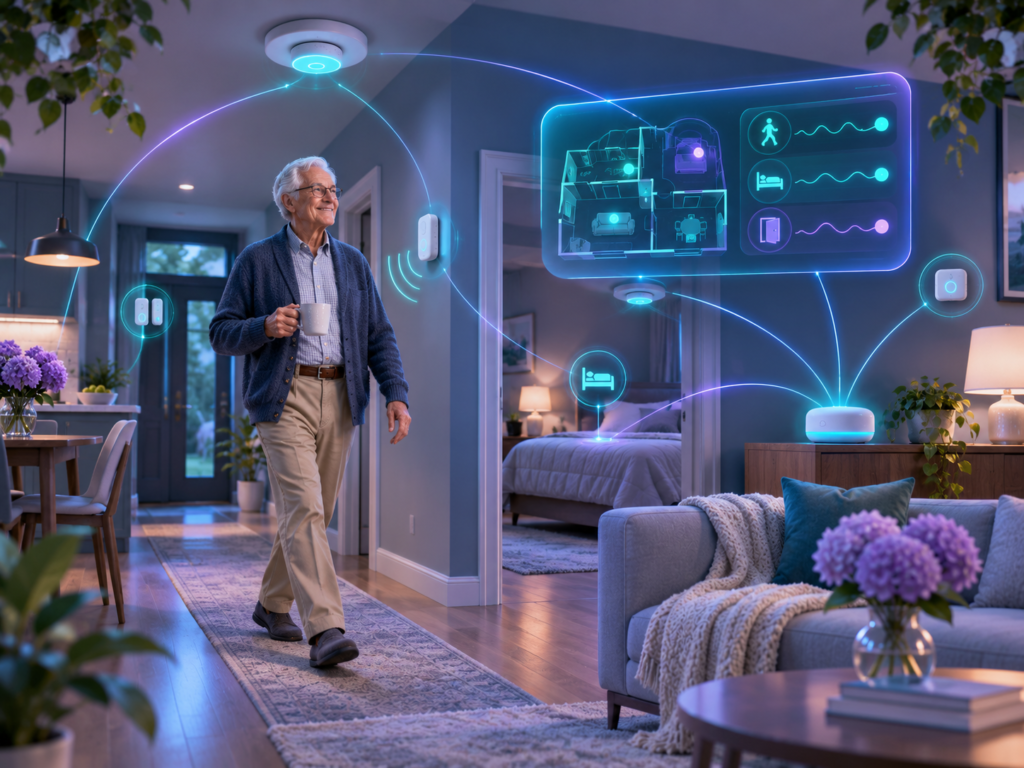
Smart home monitoring for elderly adults generally follows two approaches: passive environmental monitoring and personal wearable monitoring.
Neither is universally preferable.
Passive Monitoring
Passive systems collect information from devices installed in the home.
They can reduce the need for an older adult to remember to wear, activate, or charge a monitoring device.
This may be useful for people who find wearable devices uncomfortable or difficult to manage.
However, passive systems have coverage boundaries.
They may not provide protection outdoors, may struggle with multiple household occupants, and can be affected by installation changes or connectivity interruptions.
Wearable Monitoring
Wearable elderly monitoring systems stay with the individual while worn.
Some offer manual emergency buttons, fall detection, location sharing, and cellular connectivity.
Wearables are particularly relevant when the person leaves home regularly.
Their effectiveness depends on consistent use.
Hybrid Monitoring
A hybrid arrangement combines ambient sensors with a wearable device.
For example, home-based presence monitoring may support routine awareness while a cellular medical alert wearable provides an additional way to request assistance outdoors.
A hybrid system creates overlapping sources of information, although it also increases cost, setup complexity, and maintenance.
| Decision Factor | Passive Monitoring | Wearable Monitoring | Hybrid Monitoring |
|---|---|---|---|
| Requires wearing a device | No | Yes | Sometimes |
| Home activity analysis | Often | Limited or product-dependent | Potentially broad |
| Outdoor coverage | Usually limited | Available on supported models | Available through wearable |
| Charging responsibilities | Sensors or hubs still need power | Regular personal-device charging | Both |
| Installation effort | Moderate to high | Usually lower | Higher |
| Privacy considerations | Household sensing | Location and personal data | Both categories |
| Best consideration | Indoor daily patterns | Personal alerts and mobility | Multiple monitoring needs |
The choice should begin with the person’s actual risks and routines, not the number of features advertised.
AI Fall Detection and Predictive Fall-Risk Monitoring
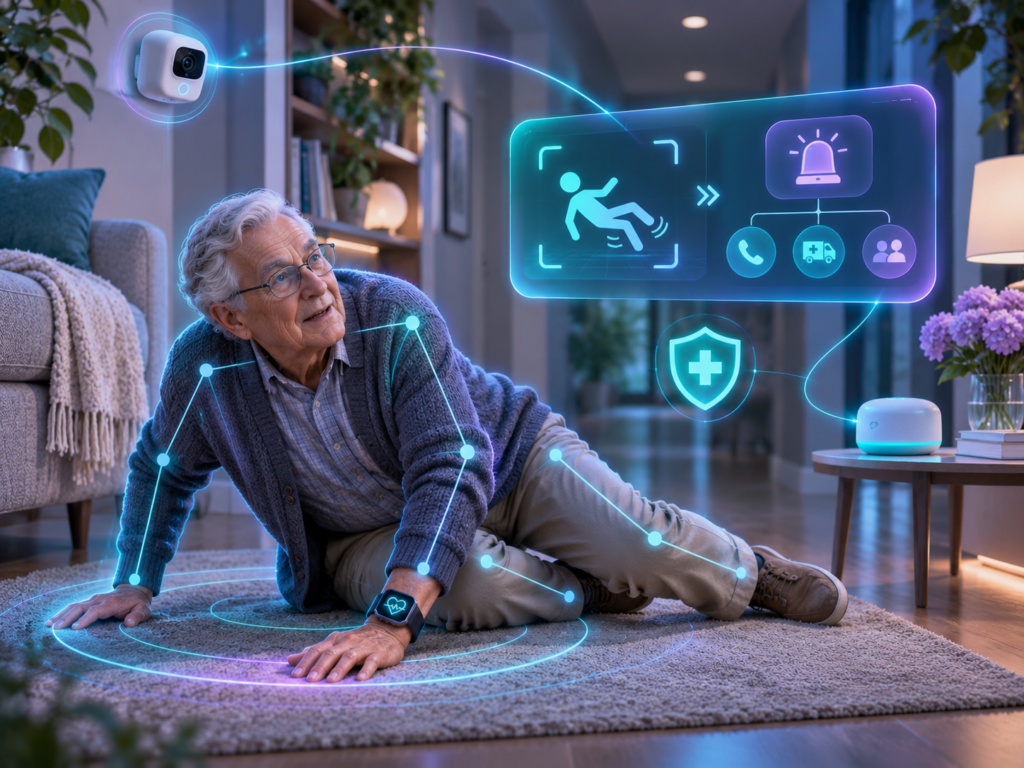
Fall-related technology is one of the most prominent applications of AI in elderly care.
However, three distinct functions are frequently grouped under the same marketing language.
1. Fall Detection
Fall detection attempts to recognize that a fall has occurred.
An algorithm may evaluate sudden acceleration, changes in body position, or environmental sensor data.
A suspected event can then trigger a notification or emergency-response workflow.
Detection occurs during or after the event. It does not necessarily prevent the fall.
2. Fall-Risk Assessment
Fall-risk assessment estimates whether someone may be more likely to fall.
Potential inputs include gait characteristics, activity patterns, balance measurements, and previously documented risk factors.
Such estimates require careful validation. A consumer score is not a substitute for a clinician’s fall-risk assessment.
3. Fall Prevention
Fall prevention involves interventions intended to reduce the likelihood of falling.
These may include strength and balance exercises, medication review, vision care, appropriate footwear, mobility aids, and changes to the physical environment.
A monitoring system may support these activities by identifying concerns, but it does not replace the interventions themselves.
Comparing Three Different Functions
| Function | Main Question | Typical Technology | Important Limitation |
|---|---|---|---|
| Fall detection | Did a fall-like event occur? | Wearable, radar, vision processing | Missed events and false alarms |
| Fall-risk assessment | Is this person at increased risk? | Gait and movement analysis | Prediction may not generalize |
| Fall prevention | How can fall likelihood be reduced? | Clinical assessment and intervention | Requires real-world action |
The distinction matters because a device advertised as providing predictive safety may only recognize unusual movement.
A family should ask the manufacturer exactly what the system detects, how the feature was tested, and what action follows an alert.
Falls and the Scale of the Problem
According to the CDC’s older adult fall data, approximately one in four adults aged 65 and older reports falling each year in the United States.
This supports the importance of prevention and response planning.
It does not establish that every AI fall detection product reduces falls, injuries, hospital admissions, or mortality.
Those outcomes require appropriate evidence for the intervention being evaluated.
AI-Based Elderly Monitoring Systems vs Medical Alert Systems for Seniors
Medical alert systems for seniors and AI-based elderly monitoring systems address overlapping but different needs.
Traditional medical alerts primarily provide a way to request help or trigger an emergency notification.
AI-supported monitoring may provide broader information about movement, routines, and changes in the home.
Traditional Medical Alert Systems
A conventional medical alert system commonly includes a wearable button and a connected base station or mobile communication device.
When activated, the system may contact an authorized individual or monitoring service.
Some models include automatic fall detection.
The essential function is an established pathway for requesting assistance.
AI-Powered Elderly Monitoring Systems
An AI monitoring platform may attempt to recognize concerning changes without requiring the older adult to press a button.
For example, it might identify a sudden change in room activity or detect an event resembling a fall.
However, automatic recognition is imperfect, and not every AI platform includes professional emergency monitoring.
Comparison: Which Type Offers Better Protection?
| Feature | Traditional Medical Alert | AI Elderly Monitoring | Hybrid System |
|---|---|---|---|
| Manual emergency button | Common | Product-dependent | Common |
| Automatic fall alerts | Available on some models | Available on some platforms | Product-dependent |
| Daily routine analysis | Usually limited | Often a central capability | May be included |
| Activity anomaly alerts | Limited | Product-dependent | May be included |
| Professional monitoring | Available on many services | Not always included | Depends on provider |
| Outdoor protection | Available on mobile models | Often limited for ambient-only systems | Possible |
| Health-device integration | Limited or variable | Sometimes available | Platform-dependent |
| Maintenance | Device and subscription management | Sensor, network and app management | More components |
When a Medical Alert System May Be Preferable
A conventional medical alert service may be more appropriate when the principal need is a straightforward emergency contact mechanism.
An individual who is cognitively able to press an emergency button and wants a simple system may not benefit from complex household sensing.
When AI Monitoring Adds Value
AI-supported monitoring may be useful when family members need information about daily functioning between visits.
Examples include reduced mobility, changing activity patterns, or difficulties maintaining regular check-ins.
When Both Make Sense
Combining monitoring and emergency communication can be reasonable when the person needs both activity awareness and a dependable method of requesting help.
Even then, the system must be tested for communication failures, device removal, missed alerts, and response delays.
Monitoring capabilities should not be confused with guaranteed emergency service.
What AI Can Monitor: Health, Mobility and Daily Routines
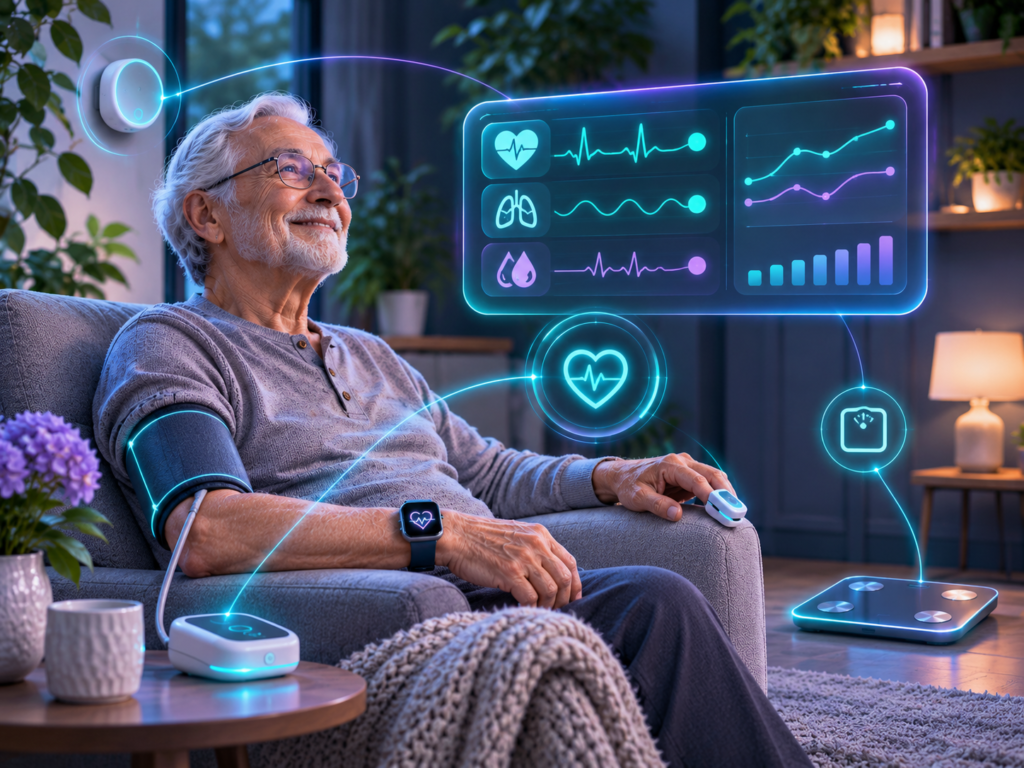
The information collected by AI elderly monitoring systems can be organized into three categories: physiological, functional, and behavioral signals.
These categories have different levels of clinical meaning.
Physiological Monitoring
Physiological measurements include selected indicators such as heart rate, blood pressure, glucose, oxygen saturation, respiratory rate, or body weight.
Such readings require appropriate measuring devices.
Some wearables generate estimates, while clinically validated connected medical devices are intended for particular measurement functions.
AI software may help identify changes in the measurements, but cannot compensate for consistently inaccurate source data.
Readers interested in this clinical measurement layer can explore Continuous vital sign monitoring at home.
Mobility and Functional Monitoring
Mobility-related information may include:
- Walking duration or activity frequency.
- Changes in movement speed.
- Room-to-room transitions.
- Time spent inactive.
- Bed-exit activity.
- Changes in movement regularity.
Some platforms attempt to use these patterns as indicators of functional changes.
Yet reduced activity can have many explanations. The data should lead to questions, not automatic conclusions.
Daily Routine Monitoring
Routine monitoring examines whether familiar activities occur in recognizable patterns.
Examples include usual waking periods, kitchen activity, household movement, and nighttime routines.
This information is especially relevant when the person has a relatively stable schedule.
The system becomes less reliable when it assumes that every change is negative.
Monitoring Categories and Interpretation
| Category | Possible Signal | What It May Suggest | What It Cannot Establish Alone |
|---|---|---|---|
| Physiological | Changing resting heart rate | A measurement needing review | Specific medical diagnosis |
| Mobility | Lower activity frequency | Change in function or routine | Cause of reduced movement |
| Sleep-related | More frequent nighttime activity | Altered nightly routine | Sleep disorder diagnosis |
| Nutrition-related | Less kitchen activity | Possible meal-pattern change | Actual food consumption |
| Safety-related | Unusual room occupancy | Potential incident or routine change | Verified emergency |
| Social activity | Reduced movement or interaction indicators | Potential change in daily life | Loneliness or depression diagnosis |
The value lies in bringing several observations together while maintaining uncertainty about their cause.
Dementia, Wandering and Cognitive Safety Monitoring
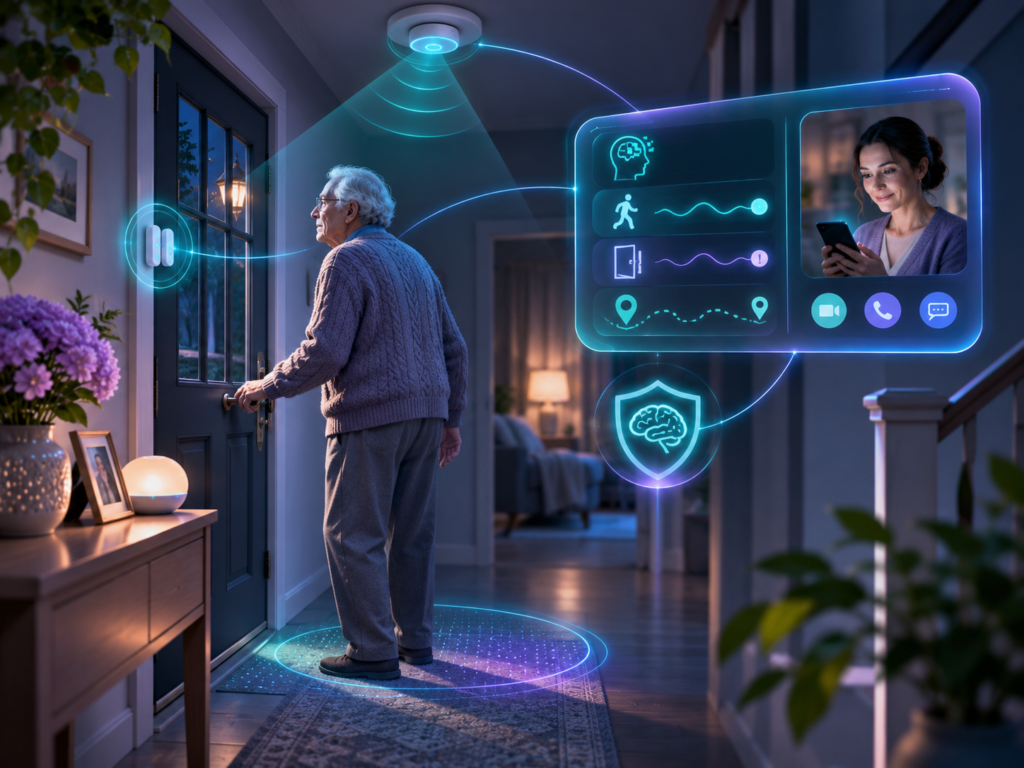
Cognitive impairment introduces additional challenges for remote elderly monitoring.
A person experiencing memory difficulties may forget to charge a wearable, respond inconsistently to automated reminders, or have difficulty explaining an unexpected event.
Passive monitoring can reduce some of these practical demands.
However, cognitive safety monitoring requires particularly careful attention to consent, dignity, and interpretation.
Unusual Exit Patterns
Door sensors and location devices may help identify events that warrant checking.
For example, an exit event during a time when a vulnerable person normally remains indoors may justify contacting a caregiver.
But a door opening does not establish wandering.
Visitors, household members, ordinary errands, and sensor errors must be considered.
Nighttime Movement
Nighttime monitoring can identify changes in activity frequency or room occupancy.
Possible explanations range from ordinary bathroom use to pain, sleep disruption, medication effects, or changes in cognition.
A monitoring system cannot diagnose dementia from increased nighttime movement.
Cognitive Decline and Behavioral Pattern Recognition
Some research systems investigate whether long-term activity changes can support assessment of cognitive or functional decline.
This remains different from establishing a clinical diagnosis.
Dementia assessment requires medical evaluation, history, examination, and appropriate cognitive testing.
Monitoring data may provide useful supplementary observations, but cannot establish whether a particular change reflects dementia, depression, medication effects, illness, or another cause.
Respecting the Person’s Autonomy
Cognitive impairment does not automatically eliminate decision-making capacity.
Where possible, the older adult should participate in decisions about which rooms are monitored, who receives notifications, what information is retained, and how the system may be turned off.
When decision-making capacity is limited, authorized representatives and care professionals should follow applicable law and use the least intrusive approach appropriate to the person’s safety.
Personal Baselines and Multisensor Risk Detection
A major technical distinction between ordinary monitoring and some advanced AI systems is the use of individualized baselines.
A baseline is an estimate of what is typical for a particular individual.
It may reflect activity during different times of day, sleep-related movement, or recurring patterns of household activity.
Why Population Averages Are Not Enough
One older adult may walk for an hour every morning.
Another may have limited mobility and spend much of the day seated.
Comparing both individuals against one universal movement target could create misleading notifications.
A personal baseline instead asks whether an individual’s pattern has changed meaningfully.
Static Thresholds vs Adaptive Analysis
A static threshold follows a predetermined rule.
For example, a device may notify a caregiver if a particular sensor has not registered activity within a configured interval.
An adaptive model may consider whether the absence of movement is unusual for that person at that time.
This can improve contextual interpretation in suitable systems, but personalization also introduces risks.
If the person’s health gradually deteriorates, a system that repeatedly adapts to a worsening baseline may begin treating that decline as normal.
The Baseline Drift Problem
Consider an older adult whose usual daytime movement gradually decreases over several weeks.
If the monitoring platform continually resets its definition of normal, the decline could become less visible.
This is known as a form of baseline drift.
A stronger design should distinguish between short-term adaptation and longer-term change.
It may use a recent baseline for immediate anomaly detection while preserving a historical reference for identifying sustained decline.
Combining Multiple Signals
Multisensor analysis may improve interpretation when signals are independent and reliable.
Imagine a system observing three changes:
- A sustained reduction in daytime activity.
- Increased nighttime movement.
- Repeatedly missed scheduled health measurements.
The combination may justify a caregiver check-in even when none of the signals independently establishes an emergency.
A responsible platform should explain which observations contributed to the notification.
A Practical Pattern-Interpretation Framework
| Observation | Initial Interpretation | Additional Context Needed | Response |
|---|---|---|---|
| One low-activity afternoon | Temporary variation | Weather, visitors, symptoms | Routine confirmation |
| Reduced activity over several days | Sustained deviation | Illness, mobility, medication | Caregiver review |
| Abnormal activity with reported dizziness | Possible safety concern | Symptoms, measurements, medication | Prompt clinical contact |
| Fall-like event with no response | Potential emergency | Device confidence, contact confirmation | Follow emergency plan |
This is an explanatory framework, not a validated medical scoring algorithm.
The aim is to combine information without pretending that more data always produces certainty.
Alerts, Caregiver Dashboards and Emergency Escalation
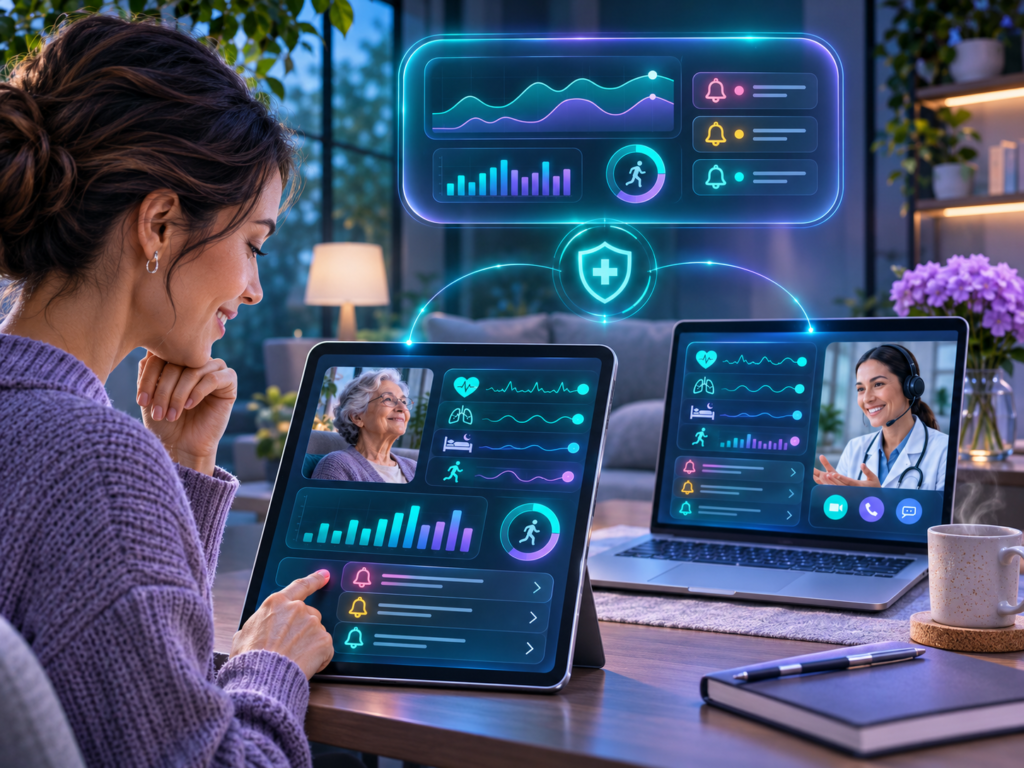
A monitoring system becomes operationally useful when a detected event reaches the person responsible for responding.
The notification process is therefore as important as the algorithm.
Alert Classification
A practical system may distinguish between routine changes, events requiring review, and possible emergencies.
| Alert Category | Example | Intended Action |
|---|---|---|
| Informational | Normal daily summary | Review when convenient |
| Technical | Device offline or battery low | Restore monitoring capability |
| Follow-up | Persistent routine change | Contact the older adult |
| Clinical review | Concerning measured trend | Consult the responsible clinician |
| Potential emergency | Suspected fall with no response | Follow the emergency response protocol |
These are conceptual categories. Actual response timing must be established according to the person’s circumstances and the service’s capabilities.
What Caregivers Need to See
A caregiver dashboard should answer a small number of practical questions.
- Is the system currently functioning?
- Has a concerning event occurred?
- Has the person confirmed their safety?
- Has someone already responded?
- What happens if the first contact does not answer?
A dashboard overwhelmed with unexplained graphs can make these questions harder to answer.
A more useful approach is to emphasize actionable information and provide detailed data only when needed.
The operational design of Smart dashboards for caregivers and physicians becomes particularly important when several family members or healthcare professionals share responsibility for an older adult.
The Alert Ownership Problem
An alert sent to three family members does not guarantee that anyone responds.
Each recipient may assume another person is handling the situation.
A robust monitoring arrangement therefore needs clear ownership.
One person should have primary responsibility, with a designated backup and a defined escalation pathway.
The monitoring platform should ideally record acknowledgement and resolution rather than merely confirming that a notification was delivered.
Example of a Response Workflow
For a suspected fall:
- The system identifies a possible event.
- It attempts confirmation through a supported method.
- An authorized contact receives the alert.
- The contact attempts to reach the older adult.
- If the person cannot be reached and the event may indicate serious harm, the established emergency procedure is followed.
- The incident and response are documented.
For an apparent medical emergency, notification software should not delay contacting emergency services.
The exact workflow should match the monitoring service, location, medical risks, and existing care plan.
How to Monitor Elderly Parents Remotely
Families often begin searching for elderly monitoring systems after a particular concern appears: a missed phone call, an unexpected fall, a hospital discharge, or increasing difficulty with daily activities.
The right starting point is to define what needs to be observed.
Step 1: Identify the Main Safety Concern
Different problems require different monitoring approaches.
An individual at risk of falls may benefit from personal emergency response and fall-detection features.
Someone with unstable blood pressure may require connected clinical monitoring rather than household activity sensors.
A person with memory difficulties may need environmental safety measures, regular supervision, and carefully selected activity notifications.
Step 2: Discuss Monitoring Preferences
Explain which information the system collects and who will have access.
For older adults who value independence, a privacy-preserving sensor that records room occupancy may be more acceptable than a camera.
Personal preferences should influence product selection wherever possible.
Step 3: Assess the Living Environment
Review the home layout.
Consider stairs, bathrooms, bedrooms, common areas, Wi-Fi coverage, power outlets, and areas where a sensor might be obstructed.
Confirm whether monitoring is needed outside the home.
Step 4: Establish Caregiver Responsibilities
Create a practical contact plan.
Identify the primary contact, backup contact, local person able to check on the individual, and the relevant emergency services.
Confirm whether anyone is available overnight.
Step 5: Test the Complete System
Do not evaluate the platform only by checking whether its app opens.
Test appropriate non-emergency alerts, sensor disconnections, low-battery notifications, caregiver acknowledgement, and backup communication.
Never create a genuine emergency call merely to test the system without following the provider’s testing procedure.
Step 6: Review Changes and Adjust
After installation, discuss whether notifications are useful or excessive.
The older adult’s experience matters.
A system that creates constant anxiety or disrupts daily life may require substantial changes, even when the equipment functions as designed.
Choosing an AI Elderly Monitoring System for Home Care
Selecting an AI elderly monitoring system involves more than comparing product features.
The central question is whether the platform can reliably support a specific care need under ordinary household conditions.
1. Evaluate the Monitoring Purpose
Decide whether the requirement is emergency communication, fall detection, daily activity awareness, location monitoring, or medical measurement.
Do not assume that a product capable of one function can safely perform the others.
2. Examine the Evidence
Ask what the manufacturer has demonstrated.
For fall-detection claims, useful information includes sensitivity, specificity, false-alarm frequency, testing conditions, and performance in the intended population.
Laboratory testing with staged falls may not fully represent real-world falls among frail older adults.
3. Understand Coverage Limits
Determine where monitoring works.
A room-mounted sensor may not cover a hallway or another floor.
A wearable may work outdoors only when the relevant wireless or cellular connection is available.
4. Verify Emergency Response
Ask whether the service includes a staffed monitoring center, family-only notifications, or no emergency response service at all.
Also establish which locations and countries are supported.
5. Review Ease of Use
Assess device comfort, charging requirements, accessibility of notifications, app complexity, and available technical support.
The equipment should not create substantial additional work for the person it is intended to assist.
6. Examine Data and Privacy Controls
Look for clear information about data retention, household audio or video processing, user permissions, deletion, and third-party access.
7. Calculate Long-Term Costs
A system with an affordable initial price may involve ongoing subscriptions, cellular service, replacement devices, or professional monitoring charges.
Elderly Monitoring System Evaluation Scorecard
The following weights are an illustrative decision framework rather than a validated clinical rating.
| Evaluation Category | Suggested Weight |
|---|---|
| Suitability for the actual care need | 25% |
| Reliability and supporting evidence | 20% |
| Emergency response capability | 20% |
| Privacy and consent controls | 15% |
| Ease of use and maintenance | 10% |
| Total ownership cost | 10% |
| Total | 100% |
Score each category consistently using evidence specific to the product.
A system that performs poorly on a critical safety requirement should not be selected merely because its overall weighted score appears favorable.
Costs and Subscriptions for Elderly Monitoring Systems
The price of an AI elderly monitoring system depends on its sensor architecture, communication services, monitoring arrangements, and software features.
A single-device solution can have a very different cost structure from a professionally monitored multisensor installation.
Main Cost Categories
| Expense | What It Covers | What to Check |
|---|---|---|
| Initial hardware | Wearable, sensors, hubs | Included components |
| Installation | Mounting and configuration | Professional setup required? |
| Software subscription | App, analytics, notifications | Features behind subscription |
| Connectivity | Cellular or broadband | Included or separate |
| Professional monitoring | Staffed emergency-response service | Operating hours and service area |
| Maintenance | Battery and device replacement | Warranty and replacement terms |
| Technical support | Troubleshooting and assistance | Availability and response |
| Cancellation | Contract termination | Fees and data access |
The Cost of Unused Features
A family may pay for complex AI analytics when the actual requirement is a dependable emergency button.
Conversely, choosing the cheapest available device may leave an important monitoring need uncovered.
The appropriate financial comparison is therefore not simply the lowest purchase price.
It is the cost of obtaining the monitoring capability and response arrangement that the person genuinely needs.
Total Cost of Ownership
A useful calculation is:
Total ownership cost = Initial equipment + Installation + Subscription charges + Connectivity + Maintenance + Replacement expenses
Compare systems over the intended period of use rather than only their first-month cost.
For clinical programs, additional costs may include staff review, documentation, and integration with healthcare systems.
AI Fall Detection Accuracy, False Alarms and Evidence
AI fall detection for seniors must be evaluated through more than an advertised accuracy percentage.
A system could perform well in a laboratory while generating frequent false alarms in a real home.
The distinction becomes particularly important when the event being detected is relatively uncommon compared with ordinary household activity.
Understanding the Performance Metrics
Sensitivity describes the proportion of actual target events correctly identified.
Specificity describes how often non-events are correctly rejected.
Precision, also called positive predictive value, describes the proportion of generated positive alerts that correspond to genuine target events.
False-negative rate reflects missed target events.
False-positive rate reflects ordinary activity incorrectly classified as an event.
These measures answer different questions.
A family concerned about missed emergencies may prioritize sensitivity, while a monitoring service facing excessive alerts must also consider specificity and precision.
Chart 1: Why Rare Events Can Produce Many False Alerts
Consider a purely hypothetical evaluation containing 10,000 observation windows, of which 20 contain the target event.
Assume sensitivity is 90%.
| Hypothetical Specificity | Correctly Detected Events | Approx. False Alerts | Precision |
|---|---|---|---|
| 98% | 18 | 200 | 8.3% |
| 99% | 18 | 100 | 15.3% |
| 99.9% | 18 | 10 | 64.3% |
Illustrative comparison of false alerts:
98% specificity: ████████████████████ 200
99% specificity: ██████████ 100
99.9% specificity: █ 10
All values are hypothetical mathematical examples, not measured performance figures for any commercial product. The event frequency and observation-window design are assumptions.
This example reveals a crucial point.
Even relatively high specificity can produce many false alerts when genuine events are rare.
Consequently, an impressive headline accuracy figure is not enough to establish whether a system will be manageable in everyday care.
Alert Burden and Caregiver Workload
Frequent alerts create practical costs.
If caregivers repeatedly receive notifications that turn out to be harmless, they may become less attentive.
This phenomenon is commonly called alert fatigue.
Chart 2: Illustrative Weekly Alert Review Workload
Assume 100 monitored individuals and an average of four minutes spent reviewing each alert.
| Average Alerts per Person per Week | Total Weekly Alerts | Weekly Review Time |
|---|---|---|
| 0.25 | 25 | 1.7 hours |
| 1 | 100 | 6.7 hours |
| 3 | 300 | 20 hours |
These figures are illustrative workload calculations, not observed industry averages.
The lesson is operational: an alert-generating platform must be assessed not only for whether it detects events, but also for whether caregivers can realistically respond.
What Clinical Research Suggests
A 2025 systematic review and meta-analysis published in the Journal of the American Medical Directors Association examined smart home technologies in older adult care.
Across 13 included studies with 1,941 participants, the analysis reported a reduction in fall incidence associated with smart home interventions, with a pooled relative risk of 0.72 and a 95% confidence interval of 0.57–0.93.
However, this finding applies to the studied smart home interventions collectively. It does not establish that every AI monitoring device independently prevents falls.
A separate 2025 systematic review of fall-detection technology examined 80 studies and reported stronger performance metrics in some non-wearable and hybrid sensor approaches.
Such research provides useful technical direction but does not remove concerns about study design, varied testing conditions, or performance in ordinary homes.
Evidence sources: Smart home fall prevention meta-analysis and Fall detection technology systematic review.
Questions Manufacturers Should Answer
Before relying on an automatic fall-detection feature, establish:
- Was it tested with older adults resembling the intended user?
- Were real falls included, or primarily staged movements?
- How many true events were missed?
- How many false alerts occurred during ordinary daily activity?
- Was performance tested with walking aids?
- Were multiple occupants or pets present?
- What happens during a communication failure?
- Does the device have evidence supporting its exact advertised use?
The answers matter more than promotional descriptions of intelligent safety.
Privacy, Consent and Cybersecurity for Home Monitoring
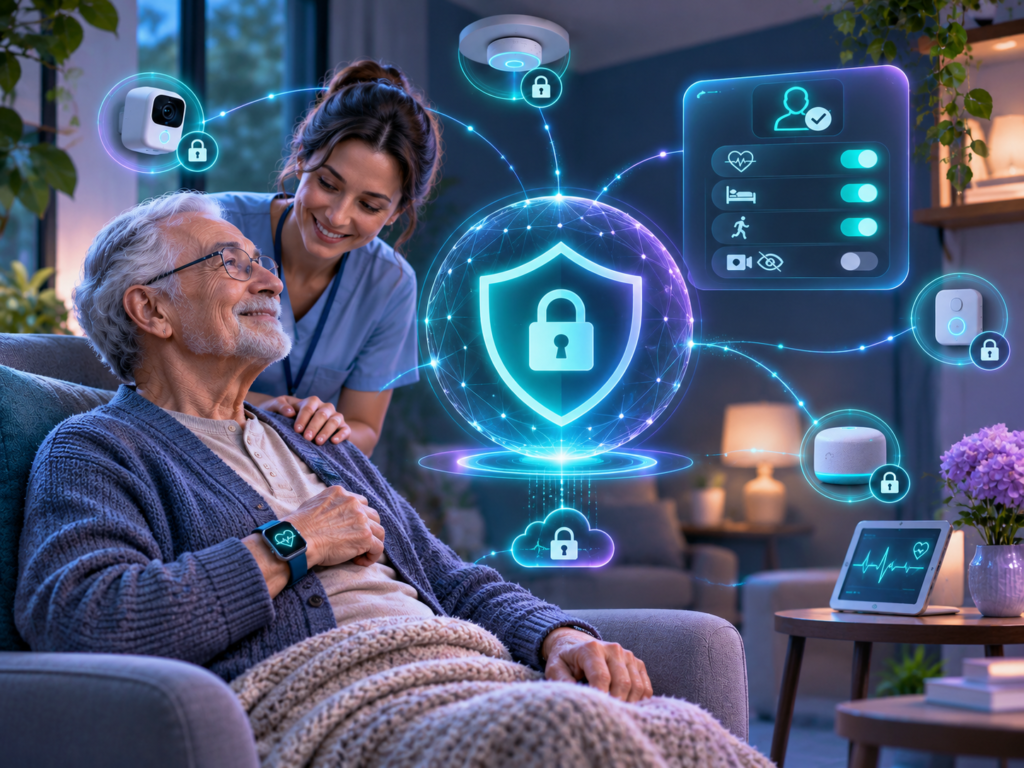
Monitoring the home creates an unusual relationship between safety and privacy.
The same technology that identifies a missed routine may also reveal sleeping patterns, visitors, movements, or time spent in private rooms.
Responsible elderly monitoring should therefore begin with the minimum information needed to achieve the safety objective.
Data Minimization
Collect only information relevant to the chosen monitoring purpose.
For example, room occupancy may be sufficient for a routine-awareness system.
Continuous video recording may provide more information without producing a proportionate improvement in care.
Consent and Transparency
The older adult should understand what is monitored and who can access the information wherever meaningful consent is possible.
Monitoring arrangements should be reviewed when health needs, household circumstances, or decision-making capacity change.
Access Control
Different people require different information.
A family caregiver may need event notifications.
A clinician may need selected measurements and symptoms.
A technical support representative should not automatically receive unrestricted access to sensitive information.
Cybersecurity Requirements
Evaluate whether the platform provides:
- Encrypted data transmission.
- Secure account authentication.
- Appropriate software updates.
- Clear data-retention policies.
- User-access controls.
- Device-disconnection notifications.
- A documented security and incident-response process.
Consumer Monitoring vs Regulated Medical Technology
Not every AI elderly monitoring product is a regulated medical device.
In the United States, whether a particular software or hardware function is subject to FDA oversight depends on its intended use and applicable regulatory requirements.
The FDA’s AI-enabled medical device information provides a starting point for understanding authorized products.
An FDA authorization for one medical function should not be assumed to validate every feature offered by the same company.
Similarly, HIPAA protection is not automatically applicable to every consumer monitoring app. Its applicability depends on the organizations and relationships involved.
A useful governance framework for organizations deploying intelligent systems is the NIST AI Risk Management Framework, which addresses issues including safety, validity, transparency, and responsible risk management.
Integrating AI Monitoring With Remote Health Monitoring
AI monitoring and clinical remote patient monitoring can complement one another, but they should not be treated as interchangeable.
Consumer elderly monitoring may focus on movement, routines, emergency communication, and environmental safety.
Clinical remote monitoring focuses on measurements and care processes relevant to a medical condition.
The broader Remote Health Monitoring center explains how connected devices can support the management of physiological measurements between healthcare visits.
Why Combining Both Can Matter
Consider an older adult recovering after hospitalization.
A connected medical device may transmit physiological measurements according to the clinician’s plan.
Meanwhile, a home activity system may identify a sustained reduction in mobility.
The physiological data and functional observations provide different information.
A care professional can consider them together with symptoms, medication changes, examination findings, and the individual’s circumstances.
The monitoring platform should not automatically translate the combined signals into a diagnosis.
Clinical Remote Monitoring Requirements
In the United States, Medicare remote physiologic monitoring follows specific medical-necessity, device, data collection, consent, and service requirements.
A consumer home-safety system does not automatically qualify for reimbursement simply because it includes AI or transmits information.
Clinical programs should follow current CMS remote patient monitoring guidance and applicable payer rules.
Connecting Monitoring to Teleconsultation
Monitoring is most useful when appropriate observations can lead to professional review.
Through Teleconsultation, a clinician may discuss new symptoms, review available measurements, evaluate medication concerns, or determine whether an in-person assessment is necessary.
A virtual consultation does not replace emergency care or physical assessment when those are required.
The Closed-Loop Care Principle
A useful clinical monitoring process follows five stages:
Observe → Verify → Interpret → Act → Reassess
Observation alone is not treatment.
The purpose of integrating monitoring into healthcare is to ensure that relevant observations can inform appropriate decisions and that the effects of those decisions can be reviewed.
Setting Up an Elderly Monitoring System: A 30-Day Plan
A structured installation process can help prevent a monitoring device from becoming an unused or misunderstood household gadget.
Days 1–7: Establish the Requirements
Identify the person’s primary concerns, daily routines, consent preferences, and existing caregiving arrangements.
Review internet availability, mobile coverage, power reliability, and sensor placement.
Determine who is responsible for receiving and responding to notifications.
Days 8–14: Install and Test
Install the selected devices according to manufacturer instructions.
Test alert delivery, supported fall-detection test procedures, device connectivity, and backup contacts.
Document uncovered areas of the home.
Do not assume successful installation proves reliable detection of all real-world events.
Days 15–21: Review Patterns
Assess which notifications are useful.
Determine whether pets, visitors, mobility aids, or ordinary routines are causing unexpected signals.
Review the person’s comfort and privacy concerns.
Adjust settings only within manufacturer recommendations and the agreed care plan.
Days 22–30: Evaluate the Arrangement
Review whether the system is functioning reliably and whether the response process works.
| Evaluation Question | Desired Finding |
|---|---|
| Are sensors reporting reliably? | Device status is visible and maintained |
| Are alerts reaching the right person? | Primary and backup contacts work |
| Are false alerts manageable? | Notifications remain actionable |
| Is the older adult comfortable? | Monitoring is acceptable and understood |
| Are important areas covered? | Known coverage gaps are documented |
| Is there a response plan? | Responsible individuals know their roles |
| Does the system meet the original need? | The monitoring objective remains clear |
Reassessment should continue beyond the first month, particularly when health status or living arrangements change.
Which System Fits Different Elder Care Situations?
No single elderly monitoring system is appropriate for every older adult.
The best arrangement depends on mobility, cognition, medical requirements, living environment, and available human support.
Independent Older Adult Living Alone
An individual who remains active and cognitively independent may primarily need a straightforward way to request assistance.
A wearable medical alert system with optional fall detection may be sufficient.
Additional passive monitoring should be considered only when it addresses a genuine concern.
Older Adult With Frequent Falls
A person with recurrent falls may benefit from appropriately selected fall alerts, but also needs formal fall-risk assessment and practical preventive measures.
A clinician may need to review balance, mobility aids, medication effects, vision, and the safety of the home.
Monitoring cannot replace these interventions.
Older Adult With Memory Difficulties
Passive sensors may be useful when a person cannot reliably operate a wearable device.
Door alerts and routine-awareness features may supplement an individualized safety plan.
The arrangement may still require direct supervision or in-person support.
Older Adult With Multiple Chronic Conditions
Someone with complex medical conditions may need clinician-directed physiological monitoring.
Activity information can sometimes add functional context, but should not be used to generate independent diagnoses.
Older Adult Recovering After Hospitalization
Monitoring may be helpful during periods of changing mobility or clinical risk.
The system should be selected according to discharge instructions and the actual support available at home.
Matching Monitoring to Care Needs
| Care Situation | Monitoring Priority | Potential Approach |
|---|---|---|
| Lives alone, independent | Emergency contact | Mobile or home medical alert |
| Recurrent falls | Fall response and prevention | Fall-detection capability plus clinical care |
| Difficulty remembering wearables | Passive observation | Environmental sensors |
| Concern about unplanned exits | Exit and location awareness | Door sensors and appropriate location tools |
| Chronic illness | Clinically relevant measurements | Connected medical devices and clinician oversight |
| Post-discharge recovery | Defined health and safety observations | Individualized monitoring plan |
| Family lives far away | Reliable remote notifications | Caregiver access with local backup contact |
These are decision categories, not individualized medical recommendations.
When AI Monitoring Is Not Enough
The presence of an elderly monitoring system can create a false sense of certainty if its limitations are not clearly understood.
A device may miss an event because the sensor is outside its effective range.
It may fail because the person is not wearing it, the battery is depleted, or the network connection has stopped working.
Even when an alert is correctly generated, no one may be available to respond.
Important Failure Scenarios
Technical failure: Sensors or communication equipment stop working.
Recognition failure: An actual event is not classified correctly.
Notification failure: An alert is not delivered or acknowledged.
Response failure: A correct alert receives no timely action.
Interpretation failure: An unusual pattern is assigned an incorrect meaning.
A dependable monitoring arrangement should consider each failure mode separately.
What Monitoring Cannot Reliably Replace
AI elderly monitoring does not replace:
- Emergency medical treatment.
- Clinical diagnosis and examination.
- Medication management by qualified professionals.
- Direct help with bathing, dressing, eating, or mobility.
- Appropriate dementia care and supervision.
- Fall-prevention assessments and interventions.
- Human companionship and social connection.
If an older adult is experiencing chest pain, severe breathing difficulty, signs of stroke, serious injury, sudden unresponsiveness, or another apparent medical emergency, seek emergency medical assistance rather than waiting for monitoring software to confirm the problem.
What’s Next for AI-Based Elderly Monitoring?
Future development is likely to focus on improving the practical usefulness of monitoring rather than simply increasing the number of connected devices.
Several technical directions are particularly relevant.
More Personalized Monitoring
Systems may increasingly compare current observations with longer-term individual patterns rather than relying exclusively on population averages.
The challenge will be preserving sensitivity to genuine deterioration while avoiding unnecessary alerts.
Privacy-Preserving Ambient Sensing
Radar, local processing, and reduced-data representations may allow some monitoring functions without transmitting ordinary household video.
Privacy will still depend on implementation, retention practices, and access controls.
Better Integration of Different Sensor Types
Combining environmental activity, wearable movement, and appropriate medical measurements may improve contextual interpretation.
Multisensor systems will also need robust methods for handling inconsistent and missing data.
Explainable Notifications
Caregivers and clinicians need to understand why an alert was generated.
A notification identifying a sustained activity change is generally more useful than an unexplained numerical risk score.
Improved Real-World Validation
Manufacturers will increasingly need evidence that reflects ordinary household conditions, diverse older adults, mobility limitations, and actual care workflows.
Performance measured in controlled environments is not automatically transferable to real-world use.
Monitoring That Supports Independence
Perhaps the most important direction is a shift toward systems that minimize unnecessary intervention.
The objective should be to identify meaningful concerns while allowing the person to maintain familiar routines, privacy, and control over daily life.
FAQs About AI-Based Elderly Monitoring Systems
What is the best AI-based elderly monitoring system for someone living alone?
The best AI-based elderly monitoring system for a person living alone depends on the primary safety concern. A medical alert system may suit someone who mainly needs emergency communication, while passive monitoring may help identify changes in household activity. For higher-risk situations, a combination may be appropriate, provided someone can respond to alerts.
Can an elderly monitoring system detect falls without a wearable?
Yes. Some elderly monitoring systems use radar, cameras, or other environmental sensors to identify fall-like events without requiring a wearable. Detection accuracy depends on the device, room coverage, and testing conditions. No contactless system should be assumed to detect every fall.
Is smart home monitoring for elderly people reliable without cameras?
Smart home monitoring for elderly people can use motion sensors, radar, bed sensors, and door contacts without conventional cameras. These technologies can support activity awareness, but their reliability depends on the intended function, installation, connectivity, and validation. Camera-free does not mean error-free.
Do AI elderly monitoring systems need Wi-Fi?
Not always. Some AI elderly monitoring systems use cellular connections, dedicated hubs, or local processing. Others require Wi-Fi for data transmission and notifications. Always confirm what happens when internet access or electrical power fails.
Does Medicare cover AI-based elderly monitoring systems?
Medicare does not automatically cover a consumer AI-based elderly monitoring system. Coverage depends on the type of device, medical necessity, applicable benefit or remote monitoring service, and current rules. Ordinary home-safety monitoring subscriptions should not be assumed to qualify.
FAQ Comparison Table
| Question Area | Main Answer | Key Consideration |
|---|---|---|
| Best system | Depends on care needs | Response capability |
| Wearable-free falls | Available in some products | Real-world accuracy |
| Camera-free monitoring | Possible | Coverage and reliability |
| Wi-Fi requirements | Product-dependent | Connectivity fallback |
| Medicare coverage | Not automatic | Eligibility and clinical requirements |
People Also Ask: Remote Elderly Monitoring
How can I monitor my elderly parents remotely without invading their privacy?
Start with the least intrusive monitoring approach that addresses an agreed safety concern. Motion sensors, selected activity summaries, and emergency buttons may be preferable to continuous video. Discuss consent, access permissions, and data retention with the older adult.
Do medical alert systems for seniors use AI?
Some medical alert systems for seniors use algorithms for automatic fall detection or event classification, but not every product uses machine learning. Many conventional systems rely on manual emergency buttons or fixed detection rules. Confirm the specific functionality rather than relying on an AI label.
Can AI predict a fall before it happens?
Some AI systems estimate fall risk from movement, gait, or other measurements. This is different from predicting the exact moment a fall will occur. A risk estimate cannot guarantee prevention and should not replace clinical fall-risk assessment.
How accurate is AI fall detection for seniors?
AI fall detection accuracy varies by sensor, algorithm, testing population, and environment. Published laboratory performance may not reflect real-world conditions. Review sensitivity, false alerts, missed falls, and testing methods before relying on a device.
Can an AI elderly monitoring system detect dementia or illness early?
An AI elderly monitoring system may identify changes in daily activity that justify a caregiver or clinical review. It cannot establish dementia, infection, or another illness solely from household behavior unless a particular diagnostic function has been appropriately validated and authorized. Medical evaluation remains necessary.
People Also Ask: Monitoring Capability Chart
| Capability | Technology Can Potentially Support | Requires Human or Clinical Assessment |
|---|---|---|
| Fall-like event identification | Yes, on supported products | Verification and care |
| Changing activity patterns | Yes | Interpretation |
| Wandering-related exit awareness | Sometimes | Context and safety planning |
| Fall-risk estimation | Some validated or research systems | Clinical risk assessment |
| Dementia diagnosis | Not from ordinary household monitoring | Yes |
| Emergency assistance | Alerts and communication | Reliable human response |
Editorial Insights: The Home as a Source of Care Signals
The significance of AI-based elderly monitoring systems is not that technology can observe more of an older adult’s daily life. It is that carefully selected observations may help people recognize changes that otherwise remain unnoticed between visits.
A conventional monitoring device tells a caregiver that something happened. A more advanced system may provide useful context about how that event relates to an individual’s usual routine.
But more sophisticated analysis does not automatically produce safer care.
A system that recognizes every minor deviation can create confusion. One that learns from unreliable data can establish misleading patterns. One that sends notifications without identifying who is responsible for responding may provide little practical protection.
The strongest elderly monitoring arrangements will therefore be judged by a combination of measurable reliability, clearly defined response responsibilities, clinical appropriateness, and respect for the individual.
For older adults, independence is not simply the absence of supervision. It includes being able to make meaningful decisions, maintain personal routines, preserve privacy, and obtain help when it is genuinely needed.
AI-supported monitoring can contribute to that environment when it is carefully selected, tested, and integrated with human care.
The future of elderly monitoring should not be measured by how much of a person’s life technology can record. It should be measured by how effectively technology supports safety while allowing that life to remain their own.
Explore the broader resources available from the TeleGeriatric Homepage for information about connected senior care, home health technologies, and geriatric telemedicine.