Best Remote Caregiver Monitoring Systems: Senior Safety Dashboards, Alerts, Sensors & Connected Elder Care
Amazon Affiliate Disclosure
TeleGeriatric.com participates in affiliate programs, including the Amazon Services LLC Associates Program. We may earn a commission when a reader purchases a qualifying product through an affiliate link. This does not increase the price paid by the reader.
Our recommendations for the best remote caregiver monitoring systems are based on senior safety, caregiver usability, monitoring reliability, alert accuracy, fall detection, medication tracking, GPS and wandering support, connected health devices, dashboard functionality, privacy, telemedicine compatibility, ease of installation, subscription costs, and long-term value. Product availability, specifications, connectivity, app compatibility, and pricing may change.
Medical and Editorial Notice
Remote caregiver monitoring systems, including fall detectors, medical alert devices, smart home sensors, GPS trackers, medication dispensers, and senior health dashboards, are intended to support caregiving and aging in place. They do not replace medical evaluation, professional supervision, emergency services, or direct caregiver assistance.
Consumer monitoring devices may produce false alerts, miss important events, or lose connectivity. Fall detection cannot identify every fall, medication dispensing does not confirm ingestion, and normal dashboard readings do not guarantee that a senior is safe or medically stable. Not all connected health devices are FDA-cleared or suitable for clinical decision-making.
Caregivers should interpret health readings alongside symptoms, medical history, and guidance from qualified healthcare professionals. Camera monitoring, GPS tracking, and activity surveillance should also respect the senior’s privacy, dignity, consent, and applicable data protection requirements.
Updated: November, 2026.
Why Remote Caregiver Monitoring Systems Matter
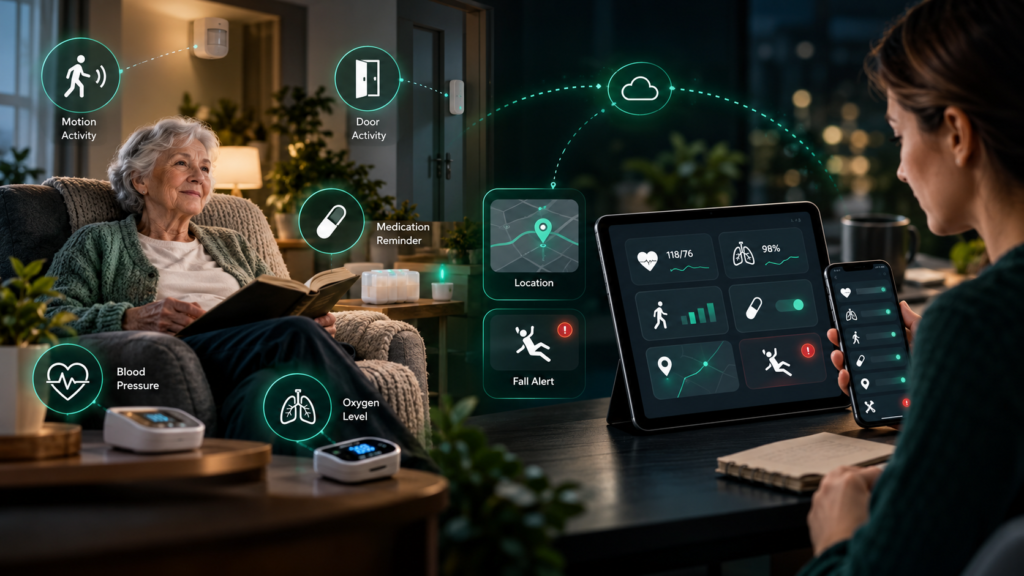
The best remote caregiver monitoring systems help families answer a question that every long-distance caregiver eventually asks: Is my parent okay right now?
Not in a vague way. Not through a rushed phone call. Not by waiting for a crisis.
A strong remote system gives the family usable signals: Mom got out of bed at 2:15 AM and returned after 8 minutes. Dad’s blood pressure was unusually high this morning. The front door opened at midnight. The medication dispenser was not accessed. The smart scale shows sudden weight gain. The pulse oximeter reading was low. The fall detector sent an alert from the bathroom. The GPS tracker shows a safe-zone exit.
That is the difference between scattered devices and a true elderly monitoring system for caregivers. A device measures one thing. A caregiver monitoring system organizes multiple signals into a care picture.
Family caregiving is growing rapidly. AARP and the National Alliance for Caregiving reported in 2025 that 63 million Americans are family caregivers, a major increase from previous years. CMS also defines remote patient monitoring as allowing patients to collect health data such as blood pressure, weight, and glucose levels through connected medical devices that automatically transmit data to providers for remote care. (Centers for Medicare & Medicaid Services)
This cluster focuses on caregiver-facing systems: dashboards, alerts, sensors, connected medical devices, smart home safety, medication adherence, fall detection, GPS location safety, and senior monitoring workflows.
For the broader device ecosystem, read Telemedicine Devices. For the full virtual-care framework, visit Geriatric Telemedicine or start from TeleGeriatric.
Quick Navigation: Best Remote Caregiver Monitoring Systems Guide
- Introduction: Why Remote Caregiver Monitoring Systems Matter
- What This Guide Is For
- Who Needs a Remote Caregiver Monitoring System?
- Main Types of Remote Caregiver Monitoring Systems
- Best Remote Caregiver Monitoring Systems 2026 🫲
- Remote Caregiver Monitoring System Comparison Chart
- Build-Your-Own Remote Caregiver Monitoring System
- How to Choose the Best Remote Caregiver Monitoring System
- Key Features That Matter Most
- Benefits of Remote Caregiver Monitoring Systems
- Costs: How Much Do Remote Caregiver Monitoring Systems Cost?
- Risks and Limitations
- Trends & Latest Tech in Remote Caregiver Monitoring
- Upcoming Models and Future Direction
- How Remote Caregiver Monitoring Fits Into Geriatric Telemedicine
- FAQs
- People Also Ask
- Closing Perspective: The Best Monitoring System Turns Signals Into Care
What This Guide Is For
This guide is written for adult children, spouses, family caregivers, telemedicine users, dementia-care households, chronic-care families, and aging-in-place planners choosing a remote caregiver monitoring system for seniors.
It explains:
- What remote caregiver monitoring systems actually do.
- Which systems fit different senior-care needs.
- How dashboards differ from single-device apps.
- What alerts caregivers should prioritize.
- How to compare camera-based and non-camera monitoring.
- Which devices belong in a connected senior monitoring setup.
- How remote caregiver systems support telemedicine.
- What privacy, consent, and cybersecurity risks matter.
- How costs and subscriptions compare.
- How to structure affiliate product sections responsibly.
This is a commercial buying guide, but the buying decision has real caregiving consequences. A monitoring system should reduce uncertainty, not create panic, surveillance anxiety, or notification overload.
Who Needs a Remote Caregiver Monitoring System?
Adult Children Caring From Another Home or City
A remote system helps caregivers notice changes without calling repeatedly. It can show whether the senior is moving normally, taking medication, checking vitals, opening doors at unusual times, or triggering safety alerts.
Seniors Living Alone
A senior living alone may be independent most of the time, but still need backup for falls, medication lapses, unusual inactivity, wandering risk, or health deterioration.
Seniors With Dementia or Memory Decline
Dementia care often requires monitoring routines rather than just vital signs. Door activity, bed exits, nighttime wandering, medication access, GPS location, and bathroom patterns can matter more than a single daily reading.
Seniors With Heart Failure, Diabetes, COPD, or Hypertension
Remote health monitoring can help caregivers and clinicians see trends. CMS describes remote patient monitoring as connected medical devices transmitting health data such as blood pressure, weight, and glucose to providers for management of the patient’s condition. (Centers for Medicare & Medicaid Services)
Seniors Recently Discharged From Hospital
Post-hospital recovery is a high-risk period. Families may need to track weight, blood pressure, oxygen, temperature, medication adherence, falls, and activity decline.
Caregivers Who Are Burning Out
A good monitoring system can reduce uncertainty. A bad system can increase anxiety. The best systems provide meaningful alerts, not constant noise.
Main Types of Remote Caregiver Monitoring Systems
Quick Picks: Best Remote Caregiver Monitoring System Categories
| Caregiver Need | Best System Type | Why It Fits |
|---|---|---|
| General aging-in-place support | Multi-sensor caregiver monitoring system | Tracks activity, doors, motion, routines, and alerts |
| Medical trend monitoring | Remote patient monitoring dashboard | Connects BP, weight, glucose, oxygen, and other readings |
| Dementia safety | Door, bed, GPS, and motion monitoring system | Helps detect wandering and unusual movement |
| Fall-risk support | Fall detection + caregiver alert system | Sends alerts after possible falls or risky bed exits |
| Medication adherence | Smart medication dispenser dashboard | Tracks missed doses, refills, and caregiver notifications |
| Long-distance caregiving | App-based senior remote monitoring dashboard | Lets adult children view alerts from another location |
| Privacy-sensitive monitoring | Non-camera sensor system | Uses motion, door, bed, radar, and device data |
| Emergency backup | Medical alert monitoring system | Adds professional response when family is unavailable |
| Chronic disease care | Connected health kit dashboard | Combines BP, glucose, oxygen, scale, ECG, and symptoms |
| Premium care coordination | Integrated elder care platform | Combines sensors, health devices, caregivers, and care team access |
1. Multi-Sensor Home Monitoring Systems
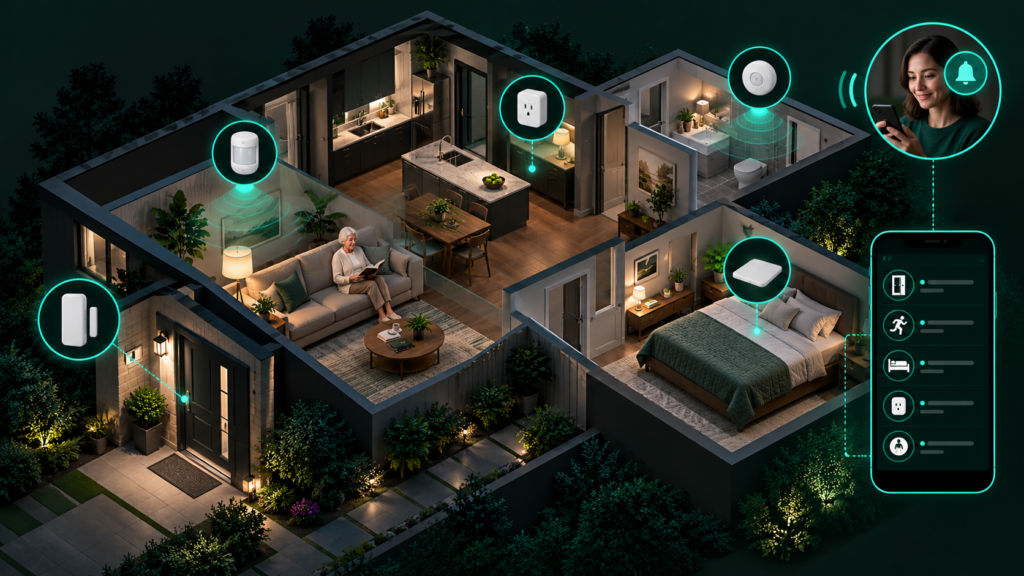
A multi-sensor system uses door sensors, motion sensors, bed sensors, room sensors, smart plugs, smart lights, and sometimes radar or environmental sensors to monitor activity patterns at home.
Best For
- Aging in place.
- Dementia safety.
- Nighttime movement.
- Routine monitoring.
- Door exits.
- Living-alone support.
- Privacy-sensitive care.
What It Can Track
- Front door opened.
- Bedroom motion detected.
- No kitchen activity by usual breakfast time.
- Bathroom visit lasted unusually long.
- Bed exit occurred at night.
- Medicine cabinet opened.
- No movement detected for several hours.
- Smart plug activity for kettle, lamp, or appliance.
- Room occupancy changes.
What to Look For
- Non-camera monitoring option.
- Door and motion sensors.
- Bed sensor compatibility.
- Smart lighting routines.
- Caregiver phone alerts.
- Pattern-based notifications.
- Low-battery alerts.
- Offline device alerts.
- Multi-caregiver access.
- Easy installation.
Editorial Note
For many families, non-camera sensors are the best starting point because they protect dignity while still showing whether normal routines are happening.
2. Senior Remote Monitoring Dashboards
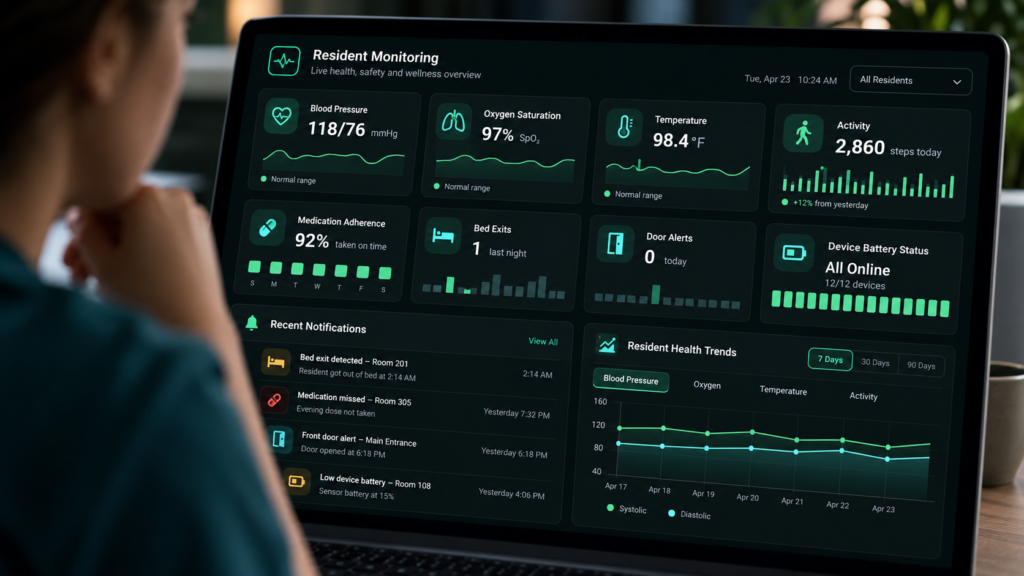
A senior remote monitoring dashboard combines data from several devices into one app or portal. Instead of opening six separate apps, the caregiver sees readings, alerts, routines, and device status in one place.
Best For
- Long-distance caregivers.
- Multi-device homes.
- Telemedicine preparation.
- Chronic disease monitoring.
- Family care coordination.
- Caregiver handoffs.
What It Should Show
- Blood pressure readings.
- Glucose readings.
- Weight trends.
- Oxygen saturation.
- Temperature.
- ECG reports.
- Medication adherence.
- Fall alerts.
- Door alerts.
- Bed exits.
- GPS safe-zone alerts.
- Battery and connectivity status.
What to Look For
- Clean dashboard.
- Easy alert settings.
- Multi-caregiver permissions.
- Reading history.
- Exportable reports.
- Device status view.
- Threshold alerts.
- Privacy controls.
- Clinician sharing option.
Practical Takeaway
The dashboard is where caregiver value is created. The best devices can fail as a care system if every reading lives in a separate app.
3. Remote Patient Monitoring Systems
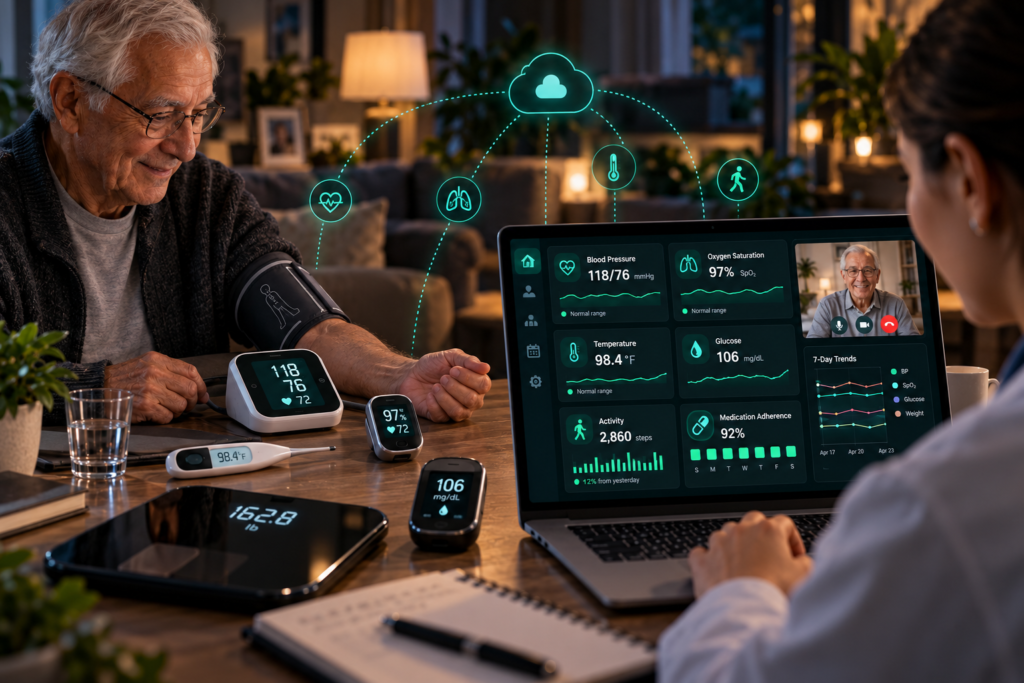
Remote patient monitoring systems are more medical than general caregiver systems. They typically connect devices such as blood pressure monitors, smart scales, pulse oximeters, glucose monitors, and sometimes thermometers or ECG devices.
Best For
- Hypertension.
- Heart failure.
- Diabetes.
- COPD.
- Post-discharge monitoring.
- Provider-led care programs.
- Telemedicine follow-up.
Common Devices
- Blood pressure monitor.
- Smart scale.
- Glucose monitor.
- Pulse oximeter.
- Thermometer.
- ECG monitor.
- Medication adherence device.
What to Look For
- Connected medical devices.
- Data transmission reliability.
- Provider dashboard.
- Caregiver view, if allowed.
- FDA-cleared devices where appropriate.
- Threshold alerts.
- Report export.
- Setup support.
- Data privacy.
Important Distinction
Remote patient monitoring is usually clinician-facing. Remote caregiver monitoring is family-facing. Some systems do both, but many do not.
4. Caregiver Alert Systems for Elderly Parents
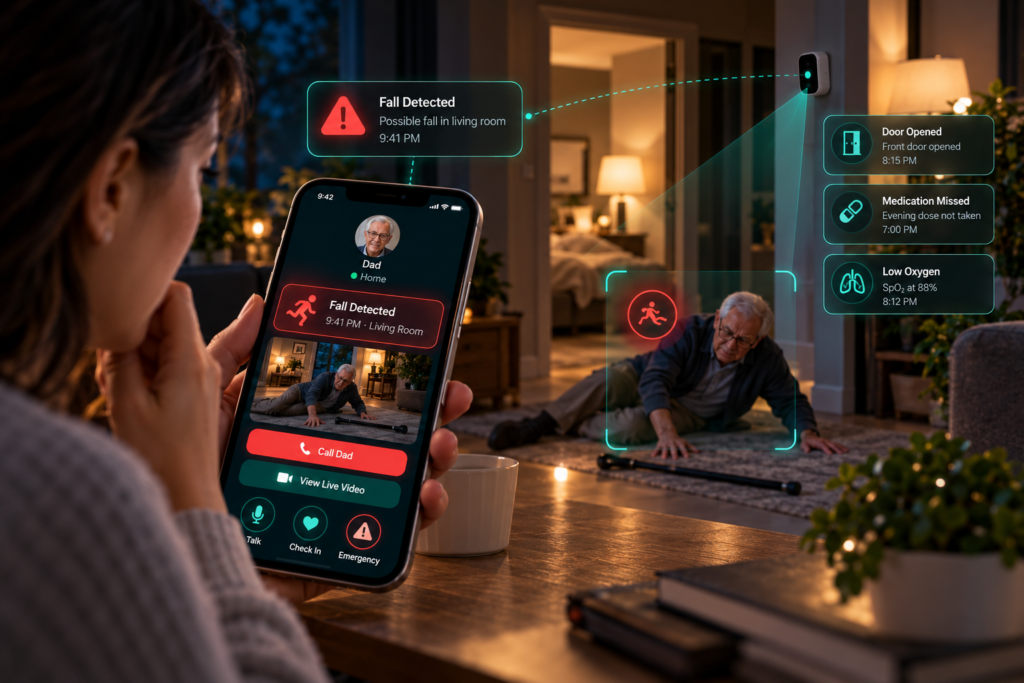
A caregiver alert system for elderly parents sends notifications when something important happens: fall detected, medication missed, door opened, safe zone exited, bed exit detected, low oxygen recorded, or no activity detected.
Best For
- Family caregivers.
- Seniors living alone.
- Dementia support.
- Medication adherence.
- Fall risk.
- Emergency awareness.
Useful Alerts
- Fall detected.
- SOS pressed.
- Medication missed.
- Low battery.
- Device offline.
- Front door opened at night.
- Bed exit detected.
- Did not return to bed.
- GPS safe-zone exit.
- No motion detected.
- High blood pressure.
- Low oxygen.
- Sudden weight change.
- Fever recorded.
What to Avoid
Avoid systems that alert on everything. Constant alerts create fatigue and make caregivers ignore the important ones.
5. Camera-Based Elderly Monitoring Systems
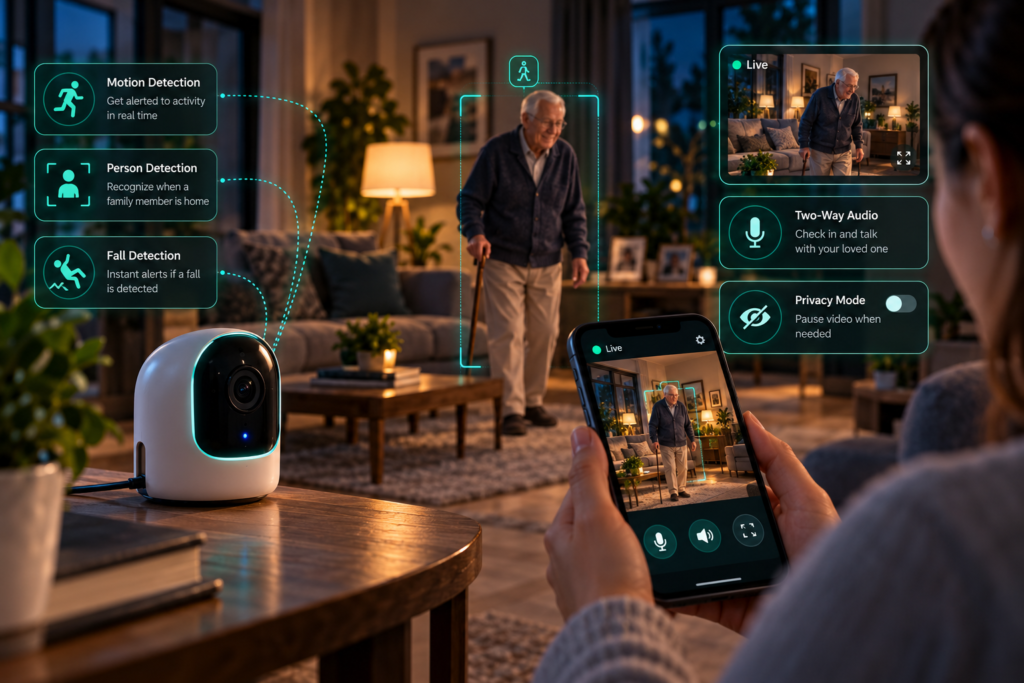
Camera-based systems can allow visual check-ins, motion detection, person detection, fall detection, and room monitoring. They can be helpful, but privacy is a major concern.
Best For
- High-risk situations.
- Caregiver-supervised consent.
- Common areas.
- Visual confirmation.
- Fall detection in selected rooms.
- Professional care settings.
What to Look For
- Privacy shutter or camera off mode.
- Local processing.
- No recording option.
- Motion alerts.
- Fall detection features.
- Two-way audio.
- Caregiver permission controls.
- Secure account access.
- Placement outside private areas.
Privacy Note
Avoid cameras in bedrooms, bathrooms, or private spaces unless there is a clear safety need, informed consent where possible, and careful dignity protection.
6. Non-Camera Caregiver Monitoring Systems
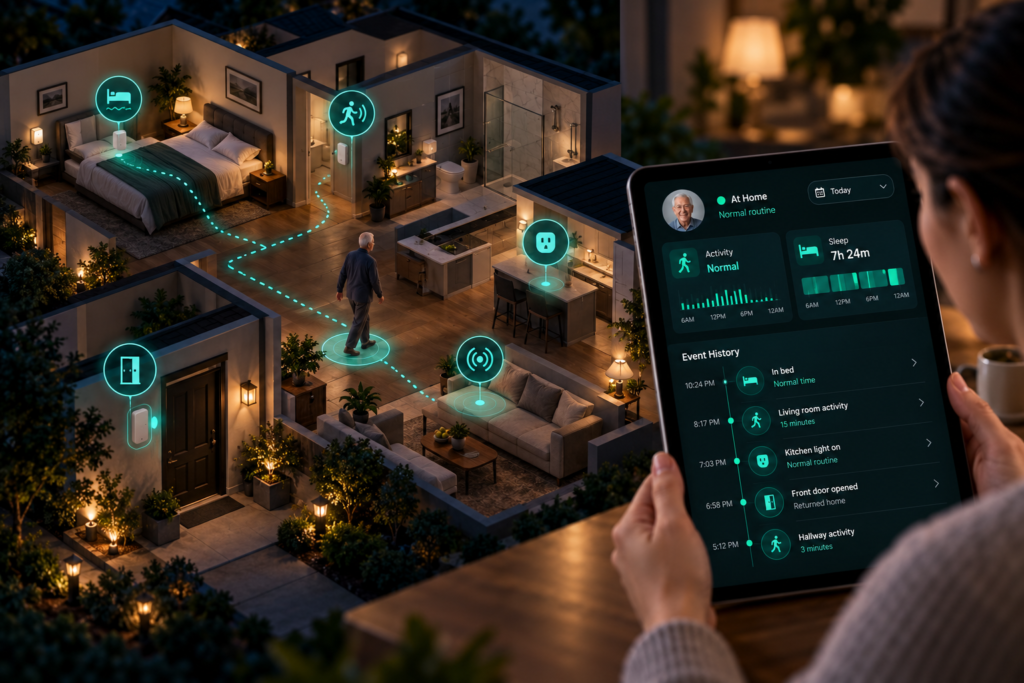
Non-camera systems use door sensors, motion sensors, radar, bed pads, smart plugs, pressure mats, and wearable data instead of video.
Best For
- Privacy-sensitive families.
- Dementia monitoring.
- Nighttime routines.
- Bed exits.
- Door activity.
- Bathroom safety.
- Aging-in-place support.
What to Look For
- Sensor-based activity patterns.
- Door alerts.
- Bed sensor integration.
- Motion routines.
- Smart lighting compatibility.
- Caregiver dashboard.
- No video recording.
- Battery alerts.
- Pattern-based alerts.
Practical Takeaway
Non-camera systems are often the best balance between safety and dignity.
7. Medication Monitoring Systems
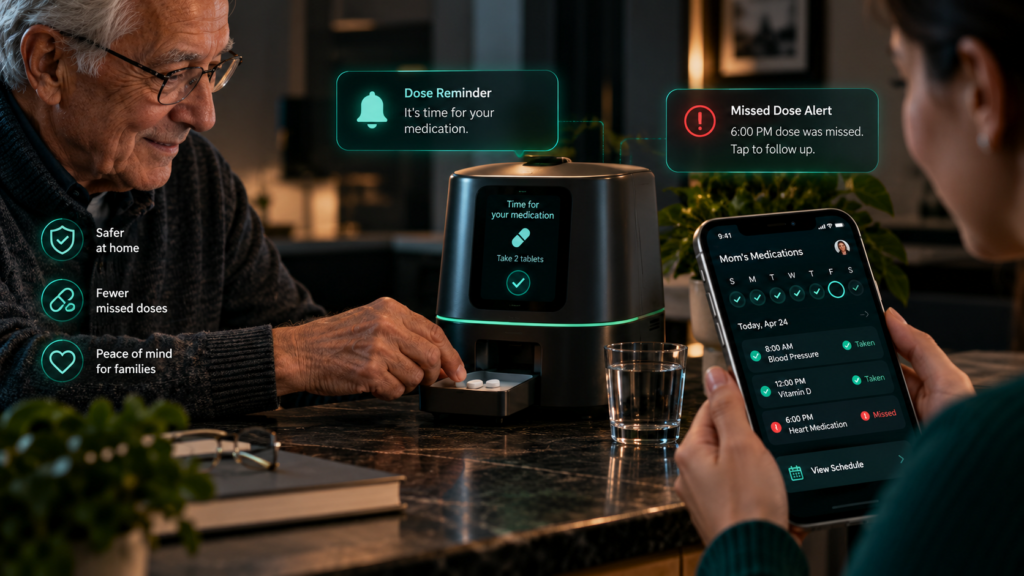
Medication monitoring systems track whether medication was dispensed, accessed, missed, or delayed. Some use smart pill dispensers, smart bottle caps, medication cabinets, or app-based reminders.
Best For
- Polypharmacy.
- Dementia or memory decline.
- Missed-dose risk.
- Double-dose risk.
- Remote caregiver support.
- Post-hospital medication changes.
What to Look For
- Missed-dose alerts.
- Caregiver notifications.
- Locked dispensing.
- Refill alerts.
- Dose history.
- Multiple daily schedules.
- Battery backup.
- Easy refill workflow.
- Report export.
For device-level buying guidance, link to Best Smart Medication Dispensers for Seniors.
8. Dementia and Wandering Monitoring Systems
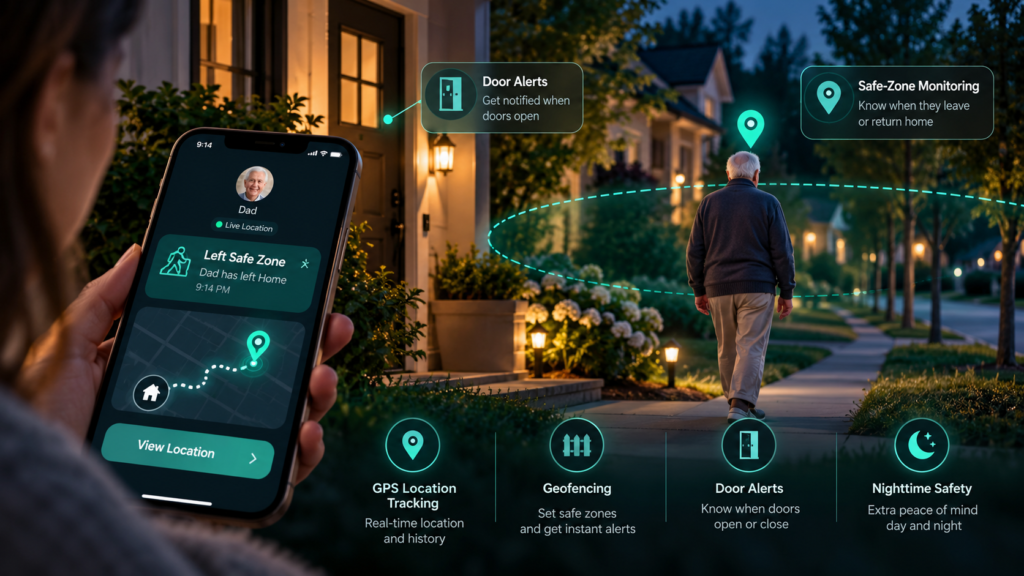
Dementia-focused monitoring systems combine bed sensors, door sensors, motion sensors, GPS trackers, smart locks, location alerts, and caregiver dashboards.
Best For
- Wandering risk.
- Nighttime exits.
- Front door monitoring.
- Early to moderate dementia.
- Caregiver coordination.
- Living-alone concerns.
What to Look For
- Door open alerts.
- Bed exit alerts.
- GPS safe-zone alerts.
- Location history.
- Multi-caregiver notifications.
- Smart lighting routines.
- Emergency contact escalation.
- Non-camera monitoring.
- Consent and dignity controls.
Practical Note
A dementia monitoring system should not feel like a prison. It should support safe movement, early alerts, and caregiver response.
9. Medical Alert + Caregiver Dashboard Systems
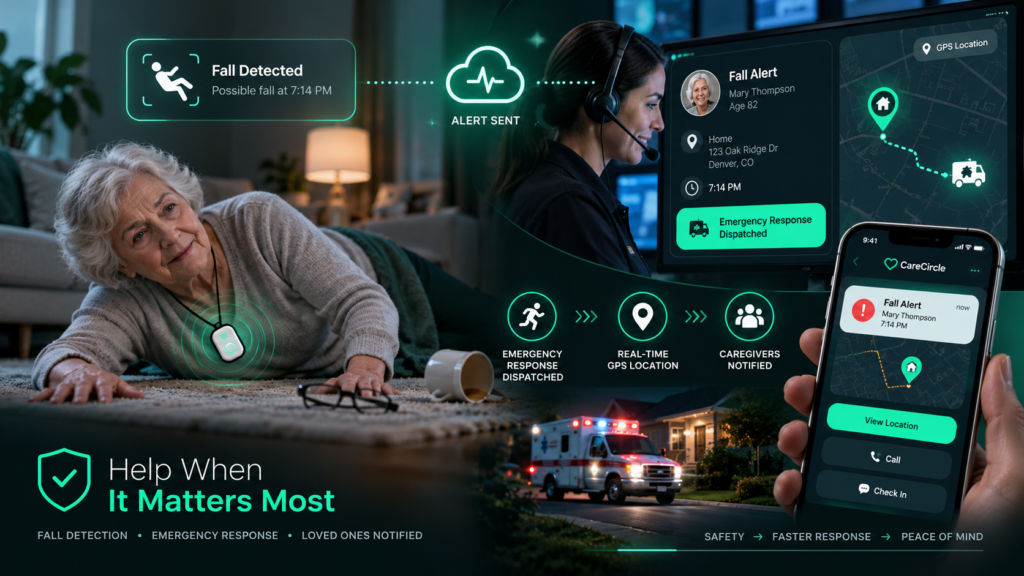
Some medical alert systems now include caregiver apps, GPS tracking, fall detection, battery status, emergency call history, location sharing, and check-in features.
Best For
- Seniors living alone.
- High fall risk.
- Emergency response needs.
- Caregivers who cannot always answer.
- Seniors who need professional monitoring.
What to Look For
- 24/7 monitoring.
- Fall detection option.
- GPS location.
- Caregiver app.
- Emergency call history.
- Battery alerts.
- Waterproof help button.
- Home base station.
- Mobile pendant or watch.
- Clear monthly pricing.
For emergency-first systems, link to Best Medical Alert Systems for Seniors.
Best Remote Caregiver Monitoring Systems 2026
The best remote caregiver monitoring systems in 2026 combine practical home safety technology with meaningful alerts, easy-to-understand caregiver dashboards, and reliable ways to check on an aging parent from another location. The right system may help families recognize unusual activity, respond to emergency calls, monitor blood pressure, manage medication schedules, or locate a senior who has wandered outside a designated safe area.
Not every elderly monitoring system for caregivers offers the same level of protection. Some products use motion and door sensors to recognize daily routines, while others focus on medical readings, automatic pill dispensing, GPS tracking, or emergency response. The most useful choice is the one that addresses the senior’s primary risk without creating unnecessary complexity.
For our 2026 product recommendations, we prioritized caregiver accessibility, monitoring capabilities, ease of installation, privacy, alert functionality, connected-device support, and recurring costs. These selections reflect published product capabilities and suitability for particular caregiving needs, not hands-on testing by TeleGeriatric.
Quick Comparison: Best Remote Caregiver Monitoring Systems for Seniors
| Category | Recommended Product | Best For |
|---|---|---|
| Best Overall | Nomo Smart Care Essential Care Kit + Vitals Bundle | Connected home safety and health monitoring |
| Best Multi-Sensor Monitoring | Nomo Smart Care Essential Care Kit | Daily routines, motion and door activity |
| Best Senior Monitoring Dashboard | Nomo Smart Care + Vitals Bundle | Centralized activity and vital-sign tracking |
| Best Remote Health Monitoring | Withings BPM Connect | Blood pressure monitoring and telemedicine |
| Best Caregiver Alert System | CallToU WiFi Caregiver Pager | Emergency assistance requests |
| Best Camera Monitoring | eufy Security Indoor Cam E220 | Visual check-ins and motion alerts |
| Best Non-Camera Monitoring | Aqara Presence Sensor FP2 | Radar-based room occupancy monitoring |
| Best Medication Monitoring | LiveFine Smart WiFi Automatic Pill Dispenser | Medication schedules and caregiver reminders |
| Best Dementia Wandering Monitoring | SecuLife SOS 4G LTE GPS Tracker | GPS location and geofencing |
| Best Medical Alert + Caregiver App | Lively Mobile2 | Professional emergency assistance and GPS |
Best Overall Remote Caregiver Monitoring System: Nomo Smart Care Essential Care Kit + Vitals Bundle
Best for: Families needing a combination of non-camera home monitoring, emergency notifications, connected health readings, and a senior remote monitoring dashboard.
The Nomo Smart Care Essential Care Kit + Vitals Bundle is our best overall remote caregiver monitoring system for seniors in 2026 because it combines several important aging-in-place functions into one connected ecosystem.
The system uses a central hub, motion-detecting satellites, and multifunctional tags to monitor household activity and recognize changes in everyday routines. Caregivers can receive notifications about unusual movement, unexpected inactivity, and other configured safety events through the Nomo Smart Care app.
Unlike ordinary motion detectors, the system aims to provide context about daily behavior, including typical waking times, nighttime movement, and activity around important household areas.
The Vitals Bundle adds a connected blood pressure monitor and non-contact thermometer, allowing families to keep compatible health readings alongside home activity information.
Key Features
- Camera-free motion and daily routine monitoring.
- Door, drawer, and cabinet activity tracking using tags.
- Caregiver notifications and shared family monitoring.
- Emergency assistance features and optional wearable fall detection.
- Connected blood pressure and temperature measurements.
- Centralized monitoring through the Nomo Smart Care app.
- Expandable home coverage through additional satellites and tags.
Why We Recommend It
Nomo offers a practical balance between home safety visibility, health information, and personal privacy. It is particularly suitable for adult children supporting a parent who lives independently but needs additional oversight.
What to Consider: Automatic fall detection requires an appropriately configured wearable tag, and no fall-detection system recognizes every fall. The bundle does not include glucose monitoring, ECG, or a complete clinician-managed remote patient monitoring program. A subscription is required.

- NOMO SMART CARE ESSENTIAL KIT – A complete elderly monitoring security system featuring a Smart Hub, two Satellite range…
- FAST SETUP, NO HASSLE – Quick plug-and-play installation; simply connect the Hub and Satellites to wall outlets and plac…
- TWO-WAY VOICE COMMUNICATION – Clear, reliable two-way talk through the Hub ensures instant communication during emergenc…
1. Best Multi-Sensor Home Monitoring System: Nomo Smart Care Essential Care Kit
Best for: Seniors living alone, aging-in-place monitoring, unusual activity notifications, nighttime movement, and privacy-sensitive families.
The Nomo Smart Care Essential Care Kit is our recommended multi-sensor remote caregiver monitoring system for families that want useful home activity information without installing surveillance cameras.
Its standard equipment includes one central hub, two satellites, and four multifunctional tags. The satellites help detect movement, while tags can be placed on doors, drawers, cabinets, and other frequently used household objects.
This arrangement allows caregivers to track patterns such as morning activity, bedroom movement, kitchen routines, and medicine cabinet access.
Rather than requiring a senior to operate an app throughout the day, the system passively collects activity information and presents relevant events to authorized family caregivers.
Key Features
- Home motion and household activity monitoring.
- Door and cabinet sensors.
- Daily routine information through a caregiver app.
- Configurable alerts and Care Circle notifications.
- Optional fall-detection pendant functionality.
- No video cameras required.
Why We Recommend It
For families choosing an elderly monitoring system for caregivers, Nomo offers a useful combination of routine awareness and emergency alert capabilities in one purpose-built product.
What to Consider: Detecting medicine cabinet access does not prove that medication was taken. Likewise, monitoring movement patterns cannot reliably diagnose a fall or medical emergency. A paid subscription is required after the trial.
Published Price: $199.99 for the Essential Care Kit, plus an ongoing subscription.
2. Best Senior Remote Monitoring Dashboard: Nomo Smart Care + Vitals Bundle
Best for: Long-distance caregiving, family care coordination, connected blood pressure measurements, temperature tracking, and reviewing senior activity patterns.
A useful senior remote monitoring dashboard should bring together information that helps caregivers understand both everyday activity and potential changes in health.
The Nomo Smart Care + Vitals Bundle is our preferred integrated consumer setup for this purpose. Its caregiver app combines compatible home monitoring information with blood pressure and temperature measurements.
This can be more convenient than maintaining separate applications for motion sensors, home activity alerts, and basic health readings.
Key Features
- Connected caregiver monitoring app.
- Blood pressure readings and recorded trends.
- Temperature measurements.
- Home activity and routine information.
- Notifications for configured safety events.
- Family caregiver communication and coordination.
Why We Recommend It
Nomo’s integrated approach makes it easier to review different aspects of a senior’s daily wellbeing without assembling an entirely custom smart home system.
What to Consider: This is a home safety and basic wellness platform, not a comprehensive medical dashboard. It does not automatically integrate all glucose monitors, pulse oximeters, ECG devices, or prescription medication dispensers.
3. Best Remote Health Monitoring Device: Withings BPM Connect

- FSA/HSA eligible
- QUICK & EAST TO READ RESULTS with color-coded feedback on display case – this blood pressure cuff arm measures systolic …
- ONE OF THE MOST ACCURATE BLOOD PRESSURE MONITORS – FDA cleared portable automatic blood pressure monitor upper arm for e…
Best for: Seniors with hypertension, at-home blood pressure monitoring, long-distance health tracking, and telemedicine follow-up.
The Withings BPM Connect is our preferred connected blood pressure monitor for caregivers who need dependable access to recorded cardiovascular measurements.
This FDA-cleared upper-arm blood pressure monitor measures systolic pressure, diastolic pressure, and heart rate. Its Wi-Fi connectivity allows readings to synchronize with the Withings app, where measurements can be reviewed over time.
Unlike a basic digital blood pressure cuff, BPM Connect makes it easier to preserve a measurement history and share results with authorized family members or healthcare professionals.
Key Features
- FDA-cleared blood pressure measurement device.
- Wi-Fi and Bluetooth connectivity.
- Systolic and diastolic blood pressure readings.
- Heart rate measurement.
- Historical readings and trends.
- Shareable health reports.
- Compatibility with the Withings health ecosystem.
Why We Recommend It
For caregivers assisting an older adult with hypertension or cardiovascular concerns, organized blood pressure records can be valuable when preparing for a virtual medical appointment.
What to Consider: BPM Connect is a connected medical device, not a complete remote patient monitoring system. It does not independently measure blood glucose, oxygen saturation, body weight, or ECG signals. Medical thresholds and follow-up plans should be established with a clinician.
4. Best Caregiver Alert System for Elderly Parents: CallToU WiFi Caregiver Pager

- ONE-TOUCH CAREGIVER CALL BUTTON – When help is needed, simply press the wireless call button. The CallToU caregiver page…
- RECEIVER + CELL PHONE ALERTS – This WiFi caregiver pager provides local sound and flashing-light alerts while also sendi…
- SHARE ALERTS WITH FAMILY OR CARE STAFF – Share app notifications with family members, caregivers, or care staff so multi…
Best for: Seniors who need a straightforward way to request help from family members or caregivers.
The CallToU WiFi Caregiver Pager with App Emergency Alert is a practical option for families seeking a caregiver alert system for elderly parents without purchasing a complex whole-home monitoring platform.
The system connects a wireless emergency help button to a compatible receiver and smartphone notification service. When the senior presses the button, the system can notify caregivers so they can respond.
This makes it useful for older adults with limited mobility, individuals recovering from illness, and households where a caregiver may be working in another room or away from home.
Key Features
- Wireless emergency call button.
- Smartphone app alert capability.
- Receiver with audible announcements and visual display.
- Remote caregiver notifications over an internet connection.
- Straightforward emergency assistance workflow.
Why We Recommend It
Its main advantage is simplicity. A senior does not need to navigate several smartphone menus to request help.
What to Consider: This is a manually activated caregiver call system, not an automatic fall detector. It cannot independently identify unconsciousness, wandering, abnormal vital signs, or prolonged inactivity.
5. Best Camera-Based Elderly Monitoring System: eufy Security Indoor Cam E220
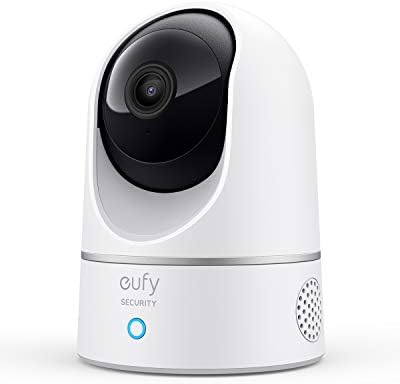
- 𝐑𝐞𝐥𝐞𝐯𝐚𝐧𝐭 𝐑𝐞𝐜𝐨𝐫𝐝𝐢𝐧𝐠𝐬 | The on-device AI determines whether a human or pet is present and only records when an event of in…
- 𝐓𝐡𝐞 𝐊𝐞𝐲 𝐢𝐬 𝐢𝐧 𝐭𝐡𝐞 𝐃𝐞𝐭𝐚𝐢𝐥 | View every event in up to 2K clarity (1080P while using HomeKit) so you see exactly what is h…
- 𝐒𝐦𝐚𝐫𝐭 𝐈𝐧𝐭𝐞𝐠𝐫𝐚𝐭𝐢𝐨𝐧 | Connect your IndoorCam to Apple HomeKit (download our HomeKit User guide in the product information …
Best for: Visual wellness checks, monitoring agreed-upon common living areas, and two-way communication with older adults.
The eufy Security Indoor Cam E220 is our recommended camera-based monitoring option for families who need visual confirmation of a senior’s wellbeing.
The camera provides 2K video, pan-and-tilt coverage, human motion detection, night vision, and two-way audio communication.
Through the eufy Security app, an authorized caregiver can check a designated living area, receive configured motion notifications, and communicate directly through the camera.
This can be helpful when a family member notices unusual activity or cannot reach an elderly parent by telephone.
Key Features
- 2K indoor video monitoring.
- Pan-and-tilt room coverage.
- Human motion detection.
- Two-way audio.
- Night vision.
- Remote access through the eufy Security app.
- Local recording options using compatible storage.
Why We Recommend It
The E220 combines accessible remote viewing with useful motion and communication features at a relatively approachable consumer price.
What to Consider: The E220 is a general-purpose security camera, not a medical-grade fall detection system. It does not offer dedicated automatic fall detection or a built-in physical privacy shutter. Place cameras only in appropriate locations with consent and carefully configured access permissions.
6. Best Non-Camera Caregiver Monitoring System: Aqara Presence Sensor FP2

- [𝐀𝐝𝐯𝐚𝐧𝐜𝐞𝐝 𝐌𝐮𝐥𝐭𝐢-𝐙𝐨𝐧𝐞 𝐃𝐞𝐭𝐞𝐜𝐭𝐢𝐨𝐧] The Aqara Presence Sensor FP2 (2.4GHz Wi-Fi only) outperforms traditional PIR motion sen…
- [𝐌𝐮𝐥𝐭𝐢-𝐏𝐞𝐫𝐬𝐨𝐧 & 𝐅𝐚𝐥𝐥 𝐃𝐞𝐭𝐞𝐜𝐭𝐢𝐨𝐧] The mmWave Presence Sensor FP2 can detect up to 5 people at the same time and trigger di…
- [Ultra-high Precision with More Privacy] The presence sensor uses millimeter-wave radar to accurately detect human prese…
Best for: Privacy-first room monitoring, detecting occupancy, nighttime movement awareness, and smart home safety automation.
The Aqara Presence Sensor FP2 is an advanced non-camera monitoring device that uses millimeter-wave radar technology to detect people within a room.
Unlike basic passive infrared motion sensors, which primarily respond to movement, the FP2 is designed to recognize continued presence even when someone remains relatively still.
This makes it useful for monitoring room occupancy and building automations around everyday senior activity.
The device supports zone-based detection, multiple-person presence monitoring, and compatible smart home platforms.
Key Features
- Millimeter-wave radar presence sensing.
- No video or audio recording.
- Room occupancy and zone monitoring.
- Multi-person detection.
- Fall detection functionality under supported configurations.
- Integration with Aqara Home and compatible smart home ecosystems.
- Automation possibilities for lighting and activity notifications.
Why We Recommend It
The FP2 is particularly attractive for families that want monitoring in sensitive living environments without installing a camera.
What to Consider: Aqara FP2 is a smart home sensor, not a standalone elderly care service. Remote caregiver alerts may require additional app configuration and automations. Its fall-detection functionality has important limitations and must not replace a dedicated emergency response device.
7. Best Medication Monitoring System: LiveFine Smart WiFi Automatic Pill Dispenser

- WIFI-CONNECTED REMOTE MONITORING – Pairs with the free LiveFine app so family members, caregivers, and visiting nurses c…
- 28-DAY CAPACITY WITH UP TO 9 ALERTS PER DAY – Organizes prescriptions, vitamins, and supplements across 28 compartments …
- JUMBO LCD DISPLAY WITH ADJUSTABLE ALARMS – Shows time, next alarm, and battery status at a glance – choose from 3 beep t…
Best for: Seniors managing multiple medications, forgetfulness, scheduled doses, and remote medication supervision.
The LiveFine Smart WiFi Automatic Pill Dispenser is our recommended connected medication monitoring product for caregivers concerned about missed or incorrectly timed doses.
Its 28-compartment rotating tray allows medication to be organized in advance. At scheduled times, the dispenser presents the appropriate compartment and provides audible and visual reminders.
The companion app supports medication scheduling and remote monitoring, allowing caregivers to stay informed about the dispensing routine.
This is especially valuable when adult children want more oversight than a conventional weekly pill organizer provides.
Key Features
- 28 medication compartments.
- Scheduled automatic compartment rotation.
- Audible and visual dose reminders.
- Wi-Fi-enabled mobile app.
- Remote caregiver monitoring.
- Configurable medication schedules.
- Locking cover to help limit unscheduled access.
Why We Recommend It
LiveFine offers an accessible middle ground between ordinary pill boxes and more expensive managed medication-dispensing services.
What to Consider: Dispensing or accessing a compartment does not prove that medication was swallowed. Caregivers must organize the medications accurately, verify compatibility, and maintain the refill schedule.
8. Best Dementia and Wandering Monitoring System: SecuLife SOS 4G LTE GPS Tracker
Best for: Seniors at risk of wandering, becoming disoriented outdoors, or needing GPS-based caregiver assistance.
The SecuLife SOS 4G LTE GPS Tracker for Seniors is our recommended wearable location-monitoring option for families managing dementia-related wandering concerns.
The device combines cellular connectivity with GPS location tracking and emergency assistance functionality.
Through the corresponding caregiver platform, family members can review location information and configure geographical boundaries intended to generate alerts when the senior leaves or enters designated areas.
This capability can be valuable when an older adult is still mobile but sometimes becomes confused about familiar surroundings.
Key Features
- GPS location monitoring.
- 4G LTE cellular connectivity.
- Geofencing and safe-zone alerts.
- SOS emergency assistance button.
- Caregiver location access.
- Location history features, depending on the service plan.
- Two-way communication and fall-alert capabilities on supported configurations.
Why We Recommend It
For dementia-related wandering, location visibility and prompt caregiver notifications may be more useful than standard room-based motion sensors alone.
What to Consider: GPS accuracy varies with surroundings, and location tracking requires cellular coverage, a charged device, and an active service plan. Confirm the exact model’s supported fall alerts and plan features before purchase. GPS tracking does not prevent wandering or guarantee immediate rescue.
9. Best Medical Alert System With Caregiver Dashboard: Lively Mobile2
Best for: Seniors living alone, people at increased fall risk, and families needing professional emergency response beyond ordinary smartphone notifications.
The Lively Mobile2 Medical Alert Device combines a wearable emergency assistance button with location tracking, professional response services, and caregiver-accessible information.
When the senior presses the help button, the system connects them to Lively’s emergency response service.
The associated Lively Link caregiver app allows authorized family members to access information such as device location, battery status, and certain emergency assistance activity.
Optional automatic fall detection can add another layer of protection for seniors who may be unable to press the button after an accident.
Key Features
- 24/7 professional emergency response through an active plan.
- Wearable emergency assistance button.
- GPS location features.
- Lively Link caregiver app.
- Battery status and location information.
- Optional fall detection.
- Two-way communication with response agents.
Why We Recommend It
Lively Mobile2 is particularly useful when an elderly parent may need immediate professional assistance while family members are unavailable.
What to Consider: Activation and ongoing service fees apply, and automatic fall detection requires the appropriate service option. The device does not provide detailed room activity tracking, medication dispensing, or clinical health monitoring.
Which Remote Caregiver Monitoring System Should You Buy?
Choosing among the best remote caregiver monitoring systems should begin with the specific risk the household needs to manage.
For comprehensive at-home caregiver monitoring, the Nomo Smart Care Essential Care Kit + Vitals Bundle provides the broadest combination of home activity monitoring, connected health readings, and caregiver coordination among our selected consumer products.
For chronic disease monitoring, Withings BPM Connect is a better starting point when the immediate priority is blood pressure tracking and sharing results with a healthcare professional.
For dementia and wandering concerns, SecuLife adds location-based safety capabilities that ordinary indoor monitoring systems cannot provide.
For medication adherence, LiveFine addresses a specific problem by organizing scheduled doses and supporting remote caregiver oversight.
For emergency response, Lively Mobile2 is preferable when a senior needs access to professional monitoring rather than relying exclusively on family members to notice and respond to notifications.
Families prioritizing privacy-sensitive monitoring should consider Nomo or the Aqara Presence Sensor FP2 before installing indoor cameras.
TeleGeriatric Buying Advice: A remote caregiver monitoring system for seniors should answer a meaningful care question, not merely collect more information. Before purchasing, confirm the exact device model, required accessories, internet or cellular requirements, caregiver access permissions, subscription costs, and what happens when an alert is triggered. For higher-risk seniors, combining a home monitoring system with a separate professionally monitored medical alert device may offer more appropriate coverage than relying on either technology alone.
Product availability, pricing, subscriptions, and features may change. Check the current seller listing and manufacturer documentation before purchasing. These products support caregiving but do not replace medical evaluation, emergency services, or direct human supervision.
Remote Caregiver Monitoring System Comparison Chart
| System Type | Best For | Caregiver Value | Senior Privacy | Medical Value | Watch-Out |
|---|---|---|---|---|---|
| Multi-sensor home system | Daily routine monitoring | High | High | Medium | Needs good placement |
| Remote health dashboard | Chronic disease readings | High | High | Very high | Device compatibility matters |
| Medical alert + caregiver app | Emergency response | High | High | Medium | Monthly fees |
| Camera monitoring system | Visual confirmation | High | Low to medium | Medium | Privacy concerns |
| Non-camera sensor system | Privacy-first monitoring | High | Very high | Medium | Less visual context |
| Medication monitoring system | Missed doses | High | High | High | Refill workflow matters |
| Dementia wandering system | Door exits and GPS | Very high | Medium to high | Medium | Must respect dignity |
| Bed and nighttime monitoring | Night exits and fall risk | High | High | Medium | Not full fall detection |
| Smart home routine setup | Lights, reminders, sensors | Medium | High | Low to medium | Can become complex |
Build-Your-Own Remote Caregiver Monitoring System
Essential Setup
| Device | What It Monitors | Best Cluster Link |
|---|---|---|
| Smart speaker | Reminders, calls, routines | Best Smart Speakers |
| Door sensor | Exit activity | Best Smart Home Sensors |
| Motion sensor | Room activity | Best Smart Home Sensors |
| Bed sensor | Nighttime bed exits | Best Bed Sensors |
| Medical alert system | Emergency help | Best Medical Alert Systems |
| Smart medication dispenser | Medication adherence | Best Smart Medication Dispensers |
Advanced Setup
| Device | What It Adds | Best Use Case |
|---|---|---|
| Blood pressure monitor | Cardiovascular readings | Hypertension, dizziness, heart disease |
| Smart scale | Weight and fluid trends | Heart failure, frailty, nutrition |
| Pulse oximeter | Oxygen saturation and pulse | COPD, respiratory illness, recovery |
| Glucose monitor | Diabetes readings | Diabetes care |
| ECG monitor | Rhythm snapshots | Palpitations, AFib discussion |
| GPS tracker | Location safety | Dementia wandering |
| Fall detector | Fall alerts | Living alone, high fall risk |
| Tablet | Telemedicine interface | Video visits and dashboards |
For a complete bundle approach, link readers to Best Home Health Monitoring Kits for Seniors.
How to Choose the Best Remote Caregiver Monitoring System
1. Start With the Caregiver Question
Different systems answer different questions:
- Is the senior moving normally?
- Did they leave the house?
- Did they take medication?
- Did they get out of bed at night?
- Did they fall?
- Are blood pressure, glucose, oxygen, or weight changing?
- Did they attend the telemedicine visit?
- Is the device battery low?
- Is the senior outside a safe zone?
Choose the system based on the question that matters most.
2. Avoid Dashboard Fragmentation
A caregiver should not have to open ten apps every morning. Choose systems that integrate devices or at least reduce app overload.
3. Prefer Meaningful Alerts Over Constant Notifications
The best system alerts caregivers about meaningful deviations, not every small movement. Alert fatigue is real.
4. Match Monitoring to the Senior’s Consent and Comfort
A capable senior should be part of the decision. For dementia or cognitive impairment, caregivers should still choose the least intrusive monitoring that meets the safety need.
5. Decide Whether Professional Monitoring Is Needed
Family-only alerts are cheaper but depend on family response. Professional monitoring adds cost but may be safer when caregivers are unavailable.
6. Check Device Compatibility
Before buying, confirm whether the dashboard supports the exact devices you want: BP monitor, scale, oximeter, ECG, medication dispenser, fall detector, GPS tracker, sensors, or smart speaker.
7. Build a Response Plan
Monitoring is not care unless someone responds. Decide who does what when:
- A fall alert arrives.
- The door opens at night.
- Medication is missed.
- Oxygen is low.
- GPS safe zone is exited.
- No activity is detected.
- Device goes offline.
8. Review Cybersecurity and Privacy
Connected caregiver systems collect health, movement, location, and home activity data. FDA cybersecurity guidance for medical devices emphasizes secure design, labeling, and documentation for devices with cybersecurity risk; families should apply the same caution when choosing connected senior-care products. (U.S. Food and Drug Administration)
Key Features That Matter Most
| Feature | Why It Matters |
|---|---|
| Multi-caregiver access | Lets siblings, spouse, or paid caregivers coordinate |
| Meaningful alerts | Reduces notification fatigue |
| Device status | Shows battery, offline status, and connection problems |
| Non-camera option | Protects privacy and dignity |
| Bed exit monitoring | Helps detect nighttime risk |
| Door alerts | Supports dementia and wandering safety |
| Fall detection | Adds emergency awareness |
| Medication alerts | Supports adherence |
| GPS location | Helps with wandering and outdoor safety |
| Vital sign integration | Supports chronic disease care |
| Exportable reports | Helps telemedicine visits |
| Alert escalation | Routes events if first caregiver misses alert |
| Custom thresholds | Matches alerts to the senior’s risk |
| Privacy controls | Limits unnecessary sharing |
| Setup support | Reduces installation failure |
Benefits of Remote Caregiver Monitoring Systems
Better Awareness Without Constant Calling
Caregivers can see routine signals without repeatedly interrupting the senior.
Faster Response to Safety Events
Fall alerts, door exits, low oxygen, missed medication, and GPS safe-zone exits can trigger faster action.
Better Telemedicine Preparation
Caregivers can bring real home data to virtual visits: blood pressure trends, weight changes, medication adherence, sleep disruption, bed exits, falls, and activity decline.
Reduced Guesswork
Instead of “I think Dad is fine,” caregivers can see whether normal routines are happening.
Support for Aging in Place
A strong monitoring system can help a senior remain at home longer when paired with human care, home safety, and clinical oversight.
Better Family Coordination
Multiple caregivers can share information, divide tasks, and avoid duplicated calls.
Costs: How Much Do Remote Caregiver Monitoring Systems Cost?
| Cost Tier | What to Expect | Best For |
|---|---|---|
| Basic smart home alerts | Door sensor, motion sensor, smart speaker | Low-cost awareness |
| Bed and activity monitoring | Bed sensor, motion, caregiver pager/app | Nighttime safety |
| Medical alert with app | SOS, fall detection, GPS, caregiver app | Emergency support |
| Medication monitoring | Smart dispenser or smart caps | Adherence tracking |
| Health monitoring dashboard | Connected vitals and reports | Chronic disease care |
| Full caregiver platform | Sensors, devices, dashboard, alerts | Aging-in-place system |
| Professional monitoring plan | 24/7 response center | High-risk seniors |
Costs may include device purchase, installation, monthly app access, cellular service, professional monitoring, cloud storage, replacement sensors, batteries, and subscription features.
AARP’s 2025 caregiving report shows the scale of family caregiving pressure, with 63 million Americans providing care. (AARP) That pressure is one reason families are willing to pay for systems that reduce uncertainty and improve response.
Risks and Limitations
False Reassurance
A dashboard can look normal while the senior is still unwell. Monitoring systems do not replace conversations, visits, medical evaluation, or emergency judgment.
Alert Fatigue
Too many notifications can make caregivers ignore alerts. Tune thresholds carefully.
Privacy Tension
Monitoring can feel intrusive. Choose the least invasive system that solves the safety problem.
Device Failure
Dead batteries, weak Wi-Fi, app outages, disconnected sensors, and forgotten wearables can create blind spots.
Incomplete Integration
A system that does not connect key devices may force caregivers back into multiple apps.
No Response Plan
Alerts are useless without action. Every high-risk alert needs a predefined response.
Cybersecurity Risk
Connected systems may contain protected health information, location data, movement patterns, and household routines. FDA has identified cybersecurity vulnerabilities in certain patient monitors used in healthcare and home settings, warning about risks such as unauthorized access, device manipulation, data export, and network compromise. (Reuters)
Trends & Latest Tech in Remote Caregiver Monitoring
1. Monitoring Is Moving From Single Devices to Care Platforms
Families no longer want just a pill reminder or motion sensor. They want a combined dashboard that shows safety, medication, vitals, and routines.
2. Remote Patient Monitoring Is Becoming More Mainstream
CMS’s 2026 remote patient monitoring page describes connected medical devices transmitting patient-collected data such as blood pressure, weight, and glucose to providers for remote management. (Centers for Medicare & Medicaid Services)
3. Caregiver Dashboards Are Becoming the Control Center
The strongest systems are designed around caregiver workflow: who receives alerts, who responds, who sees the history, and who shares reports with clinicians.
4. Non-Camera Monitoring Is Growing
Families want safety without constant video surveillance. Door sensors, motion sensors, radar sensors, bed sensors, smart plugs, and wearable data are becoming more attractive.
5. Cybersecurity Is Becoming a Buying Factor
FDA guidance and safety communications show that connected health devices must be evaluated for more than features. Security, updates, account controls, and vendor credibility matter. (U.S. Food and Drug Administration)
Upcoming Models and Future Direction
More Unified Caregiver Dashboards
Future systems will likely combine vitals, medication, fall safety, bed exits, door activity, GPS location, and telemedicine appointments in one interface.
Smarter Pattern Recognition
Instead of isolated alerts, systems may flag meaningful patterns: less kitchen activity, more nighttime bathroom trips, missed medication, rising weight, and lower activity together.
Better Integration With Telemedicine
Remote caregiver systems will increasingly support virtual visits by generating summaries, trend charts, and caregiver notes.
More Privacy-First Sensors
Radar, motion, pressure, and environmental sensors will continue growing because they avoid the discomfort of cameras.
More Caregiver Escalation Logic
Future systems may notify one caregiver first, then another, then a neighbor, then professional response depending on severity.
How Remote Caregiver Monitoring Fits Into Geriatric Telemedicine
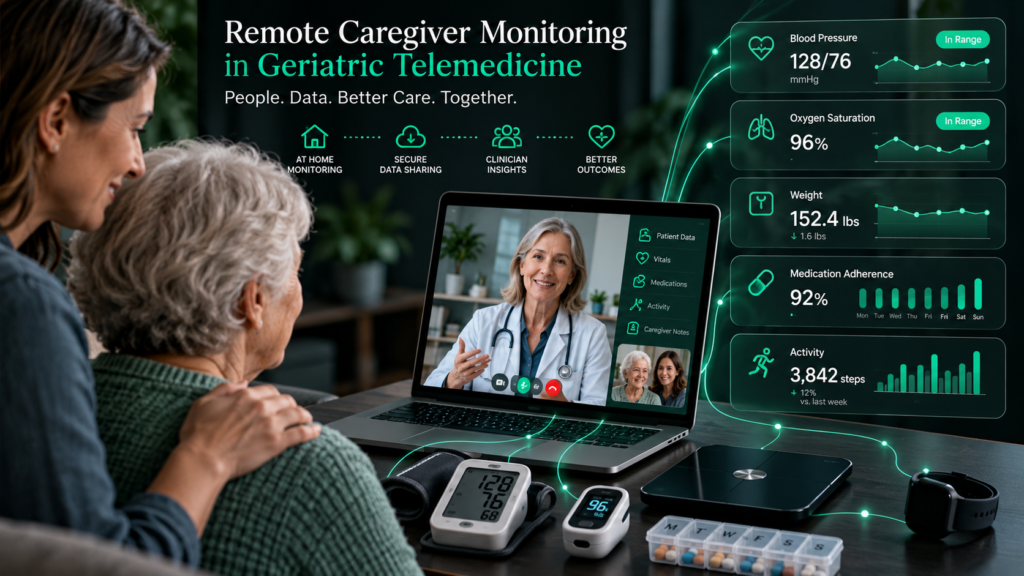
Remote caregiver monitoring systems belong directly under Telemedicine Devices because they connect home reality to virtual care.
A system may integrate:
- Home health monitoring kits for combined device bundles.
- Blood pressure monitors for cardiovascular trends.
- Glucose monitors for diabetes care.
- Pulse oximeters for oxygen and respiratory monitoring.
- Smart scales for weight and fluid trends.
- Smart medication dispensers for adherence.
- Home fall detection devices for safety.
- GPS trackers for dementia for wandering.
- Bed sensors for nighttime monitoring.
- Smart home sensors for passive home activity.
- Device integration systems for multi-device syncing.
In a telemedicine visit, the caregiver can say more than “something feels off.” They can show a pattern.
FAQ: Best Remote Caregiver Monitoring Systems
What is the best remote caregiver monitoring system for seniors?
The best remote caregiver monitoring system for seniors depends on the care problem. For general aging in place, a non-camera sensor system with motion, door, bed, and caregiver alerts may be best. For chronic disease, choose a health dashboard that connects blood pressure, glucose, oxygen, weight, and medication data. For dementia, prioritize bed exits, door alerts, GPS tracking, and caregiver escalation. The best system gives meaningful alerts without overwhelming the family.
How does an elderly monitoring system for caregivers work?
An elderly monitoring system uses connected devices such as sensors, wearables, medical devices, medication dispensers, GPS trackers, and smart home tools to send alerts or readings to a caregiver app or dashboard. Some systems track routines, while others monitor health readings or emergency events. The caregiver receives notifications when readings or activity patterns cross configured thresholds.
Can remote caregiver monitoring help seniors age in place?
Yes, remote caregiver monitoring can support aging in place when it helps families respond earlier to falls, missed medication, wandering, inactivity, abnormal readings, or routine changes. It works best when paired with human check-ins, home safety modifications, telemedicine, emergency planning, and clinician guidance. Monitoring should support independence, not replace care.
Are camera-free senior monitoring systems better?
Camera-free systems are often better for privacy and dignity because they use motion sensors, door sensors, bed sensors, radar, smart plugs, and connected devices rather than video. Cameras may be useful in some high-risk situations, but many families prefer non-camera monitoring in bedrooms, bathrooms, and private living spaces.
How much does a remote caregiver monitoring system cost?
Costs vary widely. Basic systems may use low-cost door sensors, motion sensors, smart speakers, and caregiver app notifications. More advanced systems include medical alert monitoring, GPS tracking, smart medication dispensers, fall detection, health dashboards, and professional monitoring fees. Families should compare device cost, monthly subscriptions, cellular fees, installation, replacement sensors, and app access.
What is the difference between a caregiver alert system and a medical alert system?
A caregiver alert system notifies family members or professional caregivers about safety concerns, unusual activity, missed medication, or emergencies. A medical alert system primarily provides emergency assistance through an SOS button, automatic fall detection, or a monitored response center.
Advanced smart caregiver alert systems can combine both functions, offering real-time caregiver notifications, GPS tracking, emergency response, and home activity monitoring. Families seeking comprehensive elderly safety monitoring should prioritize systems that offer both routine alerts and reliable emergency escalation.
Can smart caregiver alert systems detect falls automatically without cameras?
Yes. Some smart caregiver alert systems for seniors use wearable motion sensors, accelerometers, or contactless radar technology to identify possible falls without recording video.
Wearable fall detection devices are useful for mobile seniors, while compatible radar-based systems can monitor designated indoor areas without requiring a wearable. However, automatic fall detection cannot identify every fall, and false alerts are possible. A reliable caregiver monitoring system with fall detection should include an accessible SOS button, battery notifications, and a clear emergency response procedure.
Does a 4G medical alert system work without Wi-Fi or a landline?
Yes. A 4G medical alert system for seniors can communicate through a supported cellular network without requiring home Wi-Fi or a traditional telephone line.
Cellular medical alert devices may support GPS location tracking, emergency SOS calls, automatic fall detection, and caregiver app notifications. However, reliable operation requires compatible cellular coverage, an activated service plan, and sufficient battery power. Families should confirm the provider’s network coverage, subscription requirements, and backup arrangements before choosing a 4G caregiver alert system for elderly parents.
Is the Connected Caregiver Safety+ 4G Medical Alert System suitable for seniors living alone?
The Connected Caregiver Safety+ 4G Medical Alert System is designed to support independent senior safety through cellular connectivity, emergency SOS assistance, automatic fall detection, GPS location features, and 24/7 monitoring.
Depending on the model, its caregiver app may provide location information, activity data, battery status, and emergency notifications. These features make it a potential option for seniors who need mobile emergency protection and family oversight.
However, Safety+ is not a complete home activity monitoring system. Families should verify the specific model’s features, cellular coverage, activation requirements, monitoring subscription, and caregiver access before purchasing.
What features should a caregiver monitoring system have for 24/7 elderly safety?
A 24/7 caregiver monitoring system for seniors should match the person’s actual risks rather than simply offering the greatest number of connected devices.
Essential features may include automatic fall detection, emergency SOS alerts, caregiver notifications, battery and connection monitoring, and a backup response plan. For dementia care, consider door sensors, nighttime activity alerts, and GPS geofencing. For chronic illness, connected blood pressure monitors, smart scales, and medication tracking may be more valuable.
The best remote caregiver monitoring system combines dependable alerts, simple caregiver dashboards, privacy controls, and clearly assigned emergency responsibilities.
What Is an Elderly Monitoring System, and How Does It Help Caregivers?
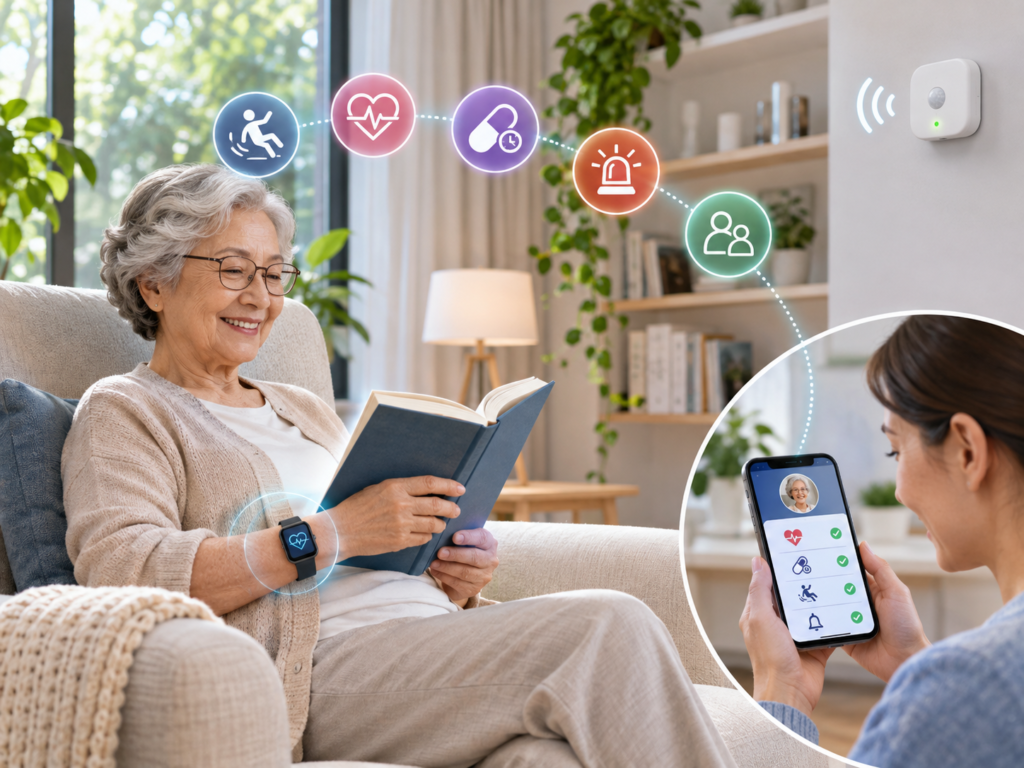
An elderly monitoring system is a technology-based solution that helps families and caregivers remotely track an older adult’s safety, daily activities, and well-being. Depending on the system, it may include fall detection sensors, wearable health monitors, movement tracking, emergency SOS alerts, medication reminders, and remote caregiver notifications. Advanced elderly monitoring systems may also identify unusual activity patterns, such as prolonged inactivity or changes in sleep routines. These technologies support aging in place, promote independent living, and help caregivers respond promptly to potential safety concerns. However, an elderly monitoring system complements rather than replaces professional medical care or direct supervision when needed.
What Are Medical Guardian Medical Alert Systems, and How Do They Help Seniors Stay Safe?
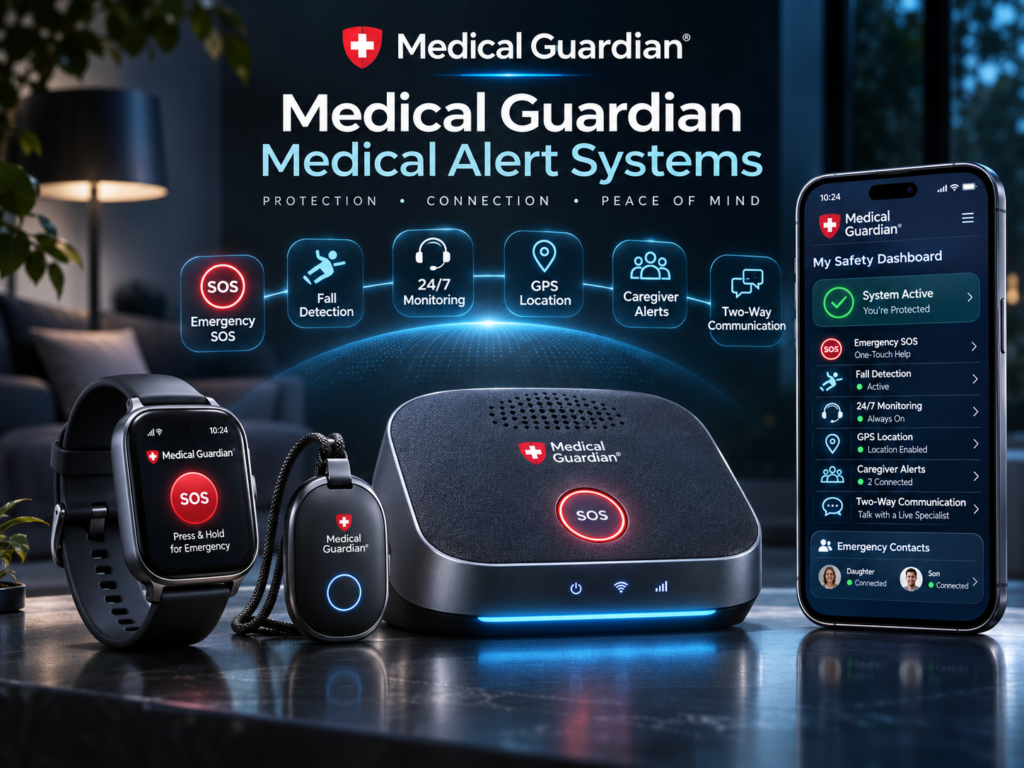
Medical Guardian medical alert systems are emergency response devices designed to help seniors maintain independence while providing access to 24/7 professional emergency monitoring. These medical alert systems for seniors include in-home emergency alert devices, GPS-enabled mobile medical alert systems, and wearable medical alert smartwatches. Popular options include MGHome, Guardian Flex, and MGMove, offering features such as one-touch SOS assistance, two-way communication, GPS location tracking on compatible mobile devices, and optional automatic fall detection.
When an emergency occurs, Medical Guardian’s monitoring center can assess the situation and contact emergency responders or designated caregivers. The MyGuardian caregiver portal also provides connected-care features for family members. For older adults aging in place, Medical Guardian medical alert systems with fall detection can provide an additional layer of protection, although fall detection requires an eligible add-on and cannot identify every fall. These systems are particularly useful for seniors living alone, older adults with mobility concerns, and families seeking reliable elderly emergency alert systems, personal emergency response systems (PERS), and remote senior safety monitoring.
People Also Ask: Senior Remote Monitoring Dashboards and Caregiver Alerts
What should a senior remote monitoring dashboard include?
A senior remote monitoring dashboard should include meaningful alerts, device status, battery levels, health readings, medication adherence, fall alerts, bed exits, door activity, GPS location, activity patterns, caregiver notes, and report export. The dashboard should be simple enough that caregivers can understand what needs attention quickly.
Can caregivers monitor elderly parents without cameras?
Yes. Caregivers can monitor elderly parents without cameras using door sensors, motion sensors, bed sensors, smart speakers, smart plugs, medication dispensers, GPS trackers, medical alert systems, and connected health devices. This approach can show routines and alerts while preserving privacy.
What alerts matter most for elderly caregiver monitoring?
The most important alerts depend on risk, but common high-value alerts include fall detected, SOS pressed, medication missed, door opened at night, bed exit detected, safe-zone exit, no activity for unusual periods, low oxygen, high blood pressure, sudden weight gain, fever, low battery, and device offline.
Is remote caregiver monitoring the same as remote patient monitoring?
No. Remote caregiver monitoring is usually family-facing and focuses on safety, routines, medication, location, and home activity. Remote patient monitoring is typically healthcare-facing and uses connected medical devices to transmit health data to providers for management of a condition. Some systems overlap, but they are not the same.
What is the safest monitoring system for a parent with dementia?
The safest system for a parent with dementia usually combines non-camera home sensors, bed exit alerts, door sensors, GPS tracking, medication support, caregiver notifications, and emergency response planning. The right setup depends on whether the main risk is wandering, falls, medication errors, nighttime confusion, or living alone.
Can a caregiver monitoring system send emergency alerts to multiple family members?
Yes. Many caregiver monitoring systems with mobile apps support multiple authorized family members, shared caregiver dashboards, or designated emergency contacts.
Some systems notify several caregivers simultaneously, while others contact people sequentially through an escalation list. The best setup identifies a primary caregiver, backup contacts, and a clear emergency response procedure. Families should verify whether shared access, SMS alerts, and emergency escalation are included or require additional subscriptions.
What is the best smart caregiver alert system for dementia wandering and nighttime safety?
A smart caregiver alert system for dementia patients should prioritize nighttime door alerts, bed-exit notifications, GPS tracking, and configurable geofencing.
Door and motion sensors help identify potentially unsafe nighttime activity, while a wearable GPS device may support location tracking outside the home. For seniors at risk of wandering, combine an elderly caregiver monitoring system with an agreed response plan and regular human supervision. No sensor system can guarantee that wandering will be prevented.
Can a 4G medical alert device replace a complete remote caregiver monitoring system?
Not entirely. A 4G medical alert device generally concentrates on emergency SOS communication, fall detection, and mobile location tracking.
A comprehensive remote caregiver monitoring system for elderly parents may additionally monitor medication routines, bed activity, door movement, home safety sensors, and connected health readings. A medical alert wearable can therefore complement a broader home monitoring setup, especially when families need both emergency assistance and continuous insight into daily safety patterns.
What happens if a smart caregiver alert system loses power or cellular connection?
A smart caregiver alert system may stop sending notifications when its battery is depleted, internet service fails, or cellular connectivity becomes unavailable. Some devices provide low-battery, offline-status, or backup-power notifications, but these capabilities vary by product.
For dependable connected caregiver safety, choose a system with connectivity monitoring, appropriate battery backup, alternative communication arrangements, and a documented emergency contact plan. Test devices regularly and ensure caregivers know how to respond when monitoring becomes unavailable.
Are caregiver alert systems secure for monitoring elderly parents remotely?
A caregiver alert system for elderly parents should protect personal information through encrypted communications, secure account access, and appropriate permissions for family caregivers.
Before purchasing smart caregiver alert systems, review how the provider stores GPS locations, health information, home activity history, and emergency contact details. Prefer systems with multifactor authentication, configurable data sharing, clear privacy policies, and a defined data retention policy. Monitoring should be discussed with the older adult wherever possible, respecting privacy, consent, and independence.
Caregiver Alert System Comparison Chart
| Monitoring technology | Primary purpose | Best suited for |
|---|---|---|
| 4G medical alert system | Emergency SOS, cellular communication, optional fall detection | Seniors living alone or regularly leaving home |
| Smart caregiver alert system | Home safety notifications and unusual activity alerts | Independent aging in place |
| GPS caregiver monitoring system | Location tracking and geofencing | Seniors at risk of wandering |
| Camera-free monitoring system | Motion, door, and bed activity detection | Privacy-conscious households |
| Connected health monitoring system | Blood pressure, weight, glucose, and other compatible readings | Seniors managing chronic conditions |
Caregiver Emergency Alert Escalation Flowchart
Safety event detected → Caregiver alert generated → Primary caregiver notified → Acknowledgment or response assessed → Backup caregiver or monitoring center contacted if required → Emergency services contacted when necessary
This represents a recommended escalation design, not a feature guaranteed by every monitoring product. Actual notification and dispatch procedures vary by provider.
Closing Perspective: The Best Monitoring System Turns Signals Into Care
The best remote caregiver monitoring system is not the one with the most sensors. It is the one that helps the right person respond at the right time.
For one family, that may be a simple door sensor, smart speaker, and bed alarm. For another, it may be a full caregiver dashboard with fall detection, medication adherence, GPS tracking, vital signs, and professional monitoring. For a senior with chronic disease, health readings may matter most. For dementia, door activity and location may matter more than blood pressure.
In geriatric telemedicine, remote caregiver monitoring is the bridge between home life and clinical care. It turns scattered events into patterns: sleep disruption, missed medication, declining activity, abnormal readings, wandering attempts, and safety alerts. A good system does not watch for the sake of watching. It helps families care with more precision, less guessing, and faster response.