
Oxygen Saturation Monitoring in Elderly Patients
Amazon Affiliate Disclosure
TeleGeriatric.com participates in affiliate programs that may provide a commission when qualifying purchases are made through selected links. This never influences our editorial evaluations, recommendations, or educational content.
Introduction
Oxygen saturation monitoring in elderly patients has become one of the most valuable tools in modern home healthcare. As people age, the lungs, heart, blood vessels, and immune system gradually lose some of their physiological reserve. Even relatively small changes in oxygen delivery can influence energy levels, thinking ability, sleep quality, balance, mobility, and overall wellbeing.
Unlike symptoms such as shortness of breath, declining oxygen levels often develop quietly. Many older adults experience significant reductions in blood oxygen before obvious warning signs appear. This makes routine monitoring particularly valuable for individuals living with chronic respiratory disease, heart conditions, recovering from infections, or those receiving long-term home care.
A simple pulse oximeter provides an almost instant snapshot of how effectively oxygen is being transported throughout the body. When incorporated into a structured home care routine, oxygen saturation measurements allow caregivers, clinicians, and family members to recognize subtle changes earlier, adjust treatment plans sooner, and reduce avoidable emergency visits.
For families embracing digital healthcare, oxygen monitoring forms one component of a broader Remote Patient Monitoring strategy that enables clinicians to follow health trends from a distance while improving continuity of care.
As remote healthcare continues expanding, oxygen monitoring increasingly works alongside virtual consultations available through Telemedicine, creating a connected model where health information reaches healthcare professionals without requiring frequent clinic visits.
Quick Picks
Jump directly to the section most relevant to your needs.
- What Is Oxygen Saturation Monitoring?
- Why Oxygen Levels Matter in Older Adults
- How Pulse Oximetry Works
- Who Needs Oxygen Saturation Monitoring?
- Benefits of Oxygen Saturation Monitoring
- Normal Oxygen Levels in Elderly Patients
- How to Measure Oxygen Saturation Correctly
- Common Conditions That Require Monitoring
- Common Mistakes During Monitoring
- Oxygen Saturation Monitoring Compared with Other Home Health Measurements
- Choosing the Right Pulse Oximeter
- Integrating Oxygen Monitoring into Daily Home Care
- Upcoming Trends & Latest Technology
- People Also Ask
- Frequently Asked Questions
- Editorial Insights
What Is Oxygen Saturation Monitoring?
Oxygen saturation monitoring measures the percentage of hemoglobin molecules carrying oxygen within the bloodstream. The value is commonly displayed as SpO₂, representing peripheral capillary oxygen saturation.
Although breathing feels effortless, every breath initiates a remarkably complex biological process. Oxygen enters the lungs, crosses microscopic air sacs called alveoli, binds to hemoglobin inside red blood cells, and is transported to every organ.
Pulse oximetry estimates how efficiently this process is occurring without requiring blood samples.
Modern devices accomplish this using harmless red and infrared light transmitted through the fingertip. Sophisticated sensors analyze changes in light absorption during each heartbeat, calculating oxygen saturation and pulse rate within seconds.
This painless, non-invasive technology has transformed home healthcare by allowing continuous observation without specialized medical equipment.
What SpO₂ Represents
| Measurement | Meaning | Clinical Importance |
|---|---|---|
| SpO₂ | Percentage of oxygen attached to hemoglobin | Indicates oxygen delivery efficiency |
| Pulse Rate | Heartbeats per minute | Evaluates cardiovascular response |
| Perfusion Indicator (some devices) | Blood flow quality | Improves reading accuracy |
Rather than diagnosing disease independently, oxygen saturation acts as an early physiological signal that may reveal respiratory compromise before symptoms become severe.
Why Oxygen Levels Matter in Older Adults
Aging affects nearly every component involved in oxygen transport.
Over time:
- Lung elasticity decreases.
- Chest wall movement becomes less efficient.
- Respiratory muscles gradually weaken.
- Cardiac pumping efficiency may decline.
- Chronic illnesses become more common.
- Recovery after illness often slows.
These changes reduce physiological reserve, meaning older adults have less capacity to compensate when oxygen demand suddenly increases.
For example, a mild chest infection that barely affects a younger adult may significantly reduce oxygen saturation in someone over 75 years old.
Similarly, heart failure, chronic obstructive pulmonary disease (COPD), pulmonary fibrosis, anemia, sleep-disordered breathing, and pneumonia may all influence oxygen delivery.
Routine monitoring allows these gradual physiological changes to become visible long before they result in medical emergencies.
How Pulse Oximetry Works
Pulse oximeters use two wavelengths of light.
One wavelength is absorbed differently by oxygen-rich blood, while another is absorbed by oxygen-poor blood.
During each heartbeat, arterial blood briefly increases within the finger. The device isolates these pulsatile changes and estimates oxygen saturation using sophisticated mathematical algorithms.
The entire measurement usually requires less than 20 seconds.
Advantages of Pulse Oximetry
| Feature | Benefit |
|---|---|
| Non-invasive | No needles or blood sampling |
| Rapid | Results within seconds |
| Portable | Suitable for home use |
| Affordable | Accessible for long-term monitoring |
| Repeatable | Enables daily trend analysis |
| Safe | No radiation exposure |
Rather than focusing on a single reading, healthcare professionals often evaluate patterns over days or weeks. Trending data frequently provides more clinical value than isolated measurements.
Who Needs Oxygen Saturation Monitoring?
Not every older adult requires routine daily oxygen monitoring. However, certain individuals benefit significantly from structured observation.
Individuals with Chronic Lung Disease
Conditions affecting the lungs often reduce oxygen exchange gradually.
Examples include:
- COPD
- Pulmonary fibrosis
- Chronic bronchitis
- Severe asthma
- Emphysema
Regular measurements help identify worsening disease before severe symptoms develop.
Individuals Living with Heart Disease
Heart failure reduces the body’s ability to circulate oxygenated blood efficiently.
Monitoring oxygen saturation alongside blood pressure, weight, and heart rate provides a more complete picture of cardiovascular health.
Future monitoring plans may also integrate Glucose monitoring for seniors and weight assessment to create a comprehensive home monitoring routine for individuals managing multiple chronic conditions.
Individuals Recovering from Respiratory Infection
Recovery from pneumonia, influenza, or viral respiratory illness may continue for several weeks.
Monitoring oxygen saturation helps ensure recovery progresses steadily while identifying unexpected deterioration.
Individuals Receiving Home Oxygen Therapy
Daily oxygen measurements assist clinicians in evaluating treatment effectiveness and determining whether oxygen flow settings remain appropriate.
Individuals with Limited Mobility
Reduced physical activity increases vulnerability to respiratory complications.
Periodic oxygen monitoring helps establish baseline health while detecting changes that might otherwise remain unnoticed.
Why Healthcare Professionals Monitor Trends Instead of Individual Readings
One oxygen measurement provides only a snapshot.
Multiple measurements collected consistently reveal the body’s overall respiratory performance.
For example:
| Day | Morning SpO₂ | Evening SpO₂ | Trend |
|---|---|---|---|
| Monday | 97% | 97% | Stable |
| Tuesday | 96% | 96% | Stable |
| Wednesday | 95% | 95% | Mild decline |
| Thursday | 94% | 94% | Requires observation |
| Friday | 92% | 92% | Clinical review recommended |
Trend analysis frequently identifies deterioration several days before severe symptoms become apparent.
For this reason, remote monitoring programs increasingly emphasize continuous observation rather than occasional measurements.
Benefits of Oxygen Saturation Monitoring
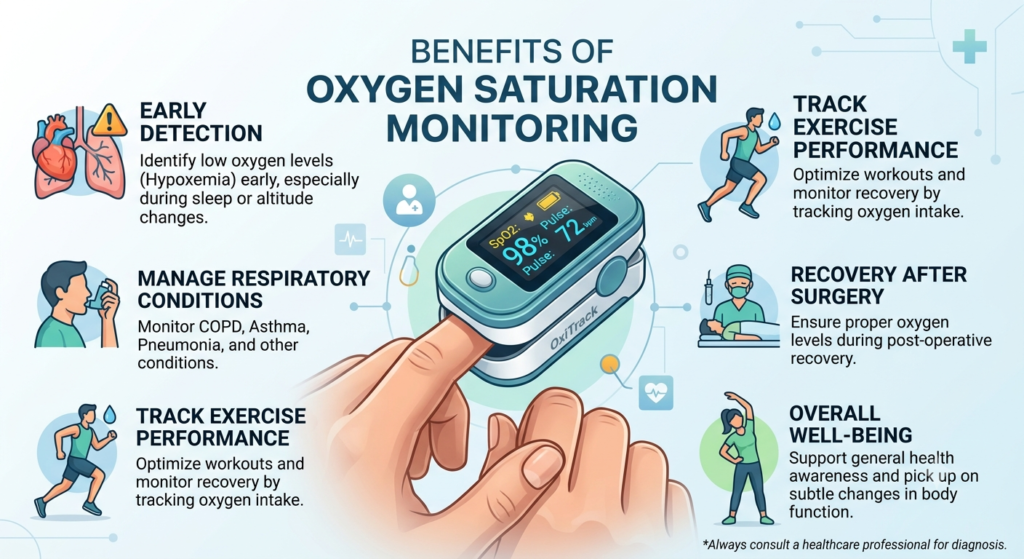
Routine oxygen saturation monitoring extends far beyond checking a number on a screen. When measurements are collected consistently and interpreted alongside symptoms, activity levels, medications, and medical history, they become a powerful indicator of respiratory and cardiovascular health. For older adults, this proactive approach supports earlier intervention, more personalized treatment, and greater confidence in home-based care.
Earlier Detection of Respiratory Deterioration
Many respiratory conditions worsen gradually rather than suddenly. Oxygen saturation often begins to decline before noticeable symptoms such as severe breathlessness, confusion, or chest discomfort appear.
Regular monitoring helps identify subtle physiological changes that may indicate:
- Developing pneumonia
- COPD exacerbations
- Worsening heart failure
- Pulmonary edema
- Medication-related respiratory depression
- Post-operative complications
Early recognition allows healthcare professionals to intervene before hospitalization becomes necessary.
Reduced Hospital Admissions
One of the primary objectives of home monitoring is preventing avoidable emergency department visits.
When clinicians receive oxygen saturation trends through remote monitoring platforms, they can often:
- Adjust medications
- Recommend additional assessments
- Schedule virtual consultations
- Arrange home nursing visits
- Escalate care before serious deterioration
This proactive model reduces healthcare costs while minimizing stress for older adults and their families.
Better Chronic Disease Management
Several long-term illnesses directly influence oxygen delivery throughout the body.
These include:
- Chronic obstructive pulmonary disease (COPD)
- Congestive heart failure
- Pulmonary fibrosis
- Interstitial lung disease
- Sleep apnea
- Severe asthma
Routine SpO₂ monitoring provides objective information that complements symptom reporting and helps guide long-term treatment decisions.
Improved Independence
Many older adults wish to remain safely in their own homes for as long as possible.
Knowing that oxygen levels are being monitored provides reassurance for individuals, caregivers, and family members. Small health changes can be identified without requiring constant clinic visits, supporting greater independence while maintaining clinical oversight.
Enhanced Telemedicine Consultations
Virtual healthcare becomes significantly more informative when objective health measurements accompany symptom descriptions.
Instead of simply saying, “I’m feeling more tired today,” an individual can report:
- Oxygen saturation
- Heart rate
- Blood pressure
- Blood glucose (if applicable)
- Body weight
These measurements help healthcare professionals make more informed decisions during remote consultations.
Key Benefits at a Glance
| Benefit | Practical Impact |
|---|---|
| Earlier detection | Identifies deterioration before symptoms worsen |
| Home-based monitoring | Reduces unnecessary clinic visits |
| Better treatment decisions | Supports individualized care plans |
| Improved caregiver confidence | Provides measurable health trends |
| Supports aging in place | Encourages safe independent living |
| Better chronic disease management | Enables continuous observation |
| Remote clinician oversight | Facilitates timely intervention |
Normal Oxygen Levels in Elderly Patients
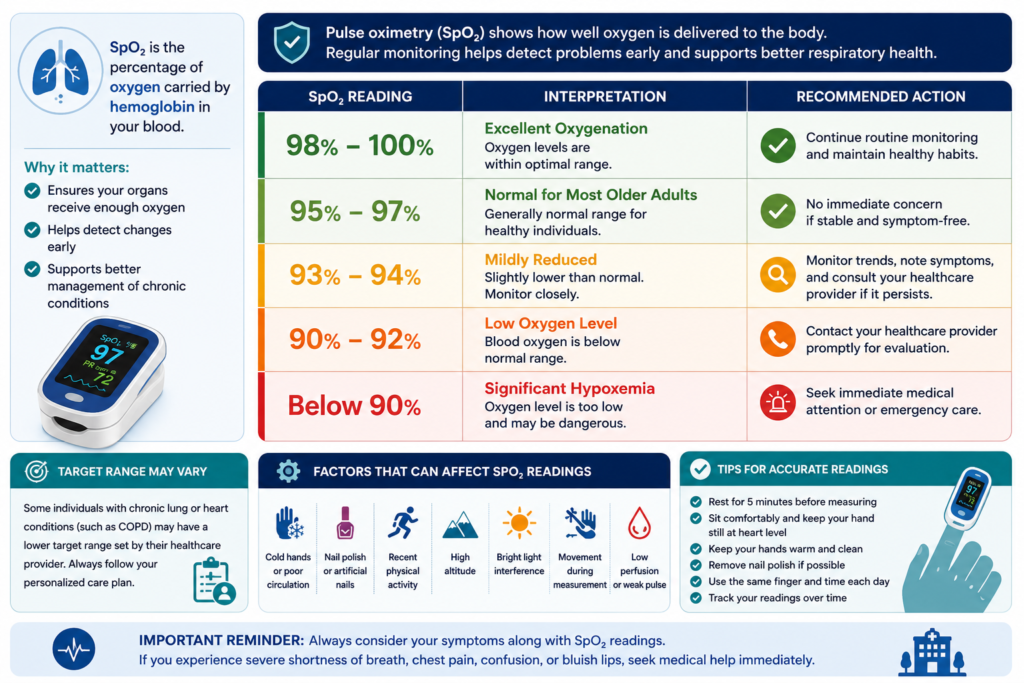
One of the most common questions surrounding blood oxygen monitoring for elderly individuals is whether normal oxygen levels change with age.
Although aging affects lung function, healthy older adults generally maintain oxygen saturation levels similar to younger adults. However, people with chronic respiratory or cardiovascular disease may have individualized target ranges determined by their healthcare professional.
Understanding these ranges helps prevent unnecessary anxiety while ensuring genuinely concerning readings receive prompt attention.
General Oxygen Saturation Reference Chart
| SpO₂ Reading | Interpretation | Recommended Action |
|---|---|---|
| 98–100% | Excellent oxygenation | Continue routine monitoring |
| 95–97% | Normal for most adults | No immediate concern if stable |
| 93–94% | Mildly reduced | Monitor trends and symptoms |
| 90–92% | Low oxygen level | Contact healthcare provider |
| Below 90% | Significant hypoxemia | Seek urgent medical evaluation |
These values should always be interpreted within the context of an individual’s overall health. Some people living with advanced COPD, for example, may have lower baseline oxygen levels that remain appropriate for their condition under medical supervision.
Factors That Influence Oxygen Saturation
Several variables may temporarily affect readings without indicating serious illness.
These include:
- Cold hands reducing blood flow
- Nail polish or artificial nails
- Poor sensor placement
- Hand movement
- Low peripheral circulation
- Bright sunlight interfering with the sensor
- Recent physical activity
- High altitude
Repeating the measurement after correcting these factors often improves accuracy.
How to Measure Oxygen Saturation Correctly
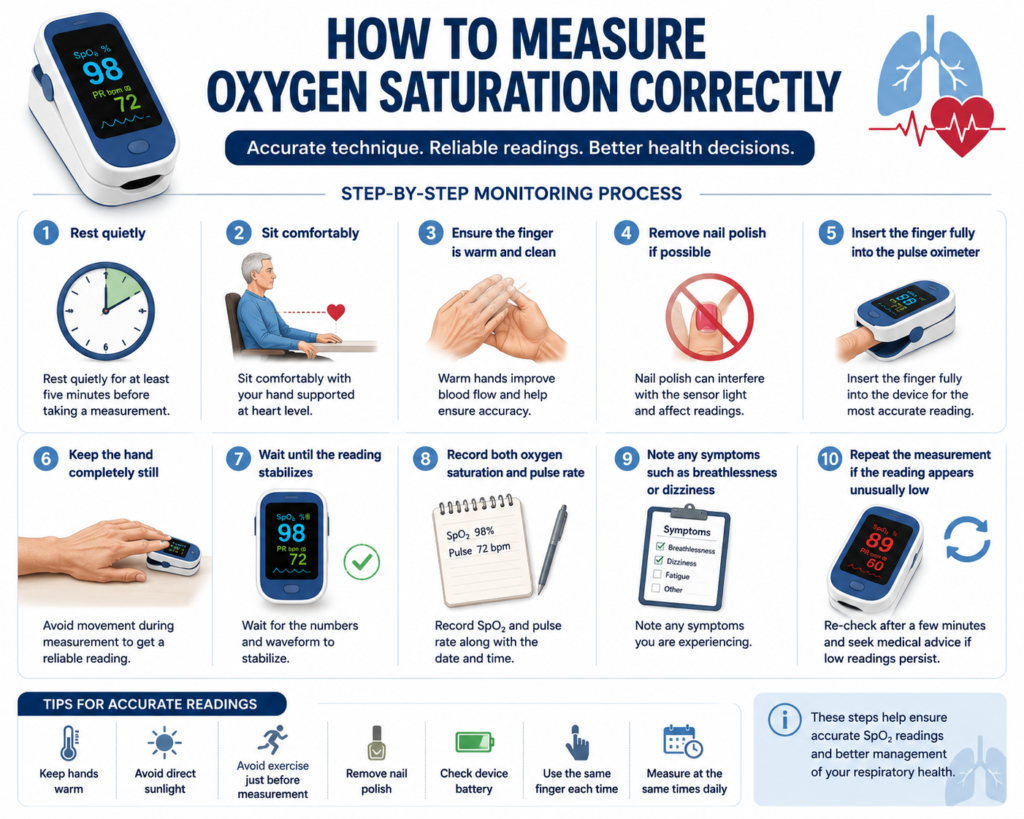
Pulse oximeters are straightforward to use, but obtaining reliable readings requires consistent technique. Even small errors can lead to misleading results.
Step-by-Step Monitoring Process
- Rest quietly for at least five minutes before taking a measurement.
- Sit comfortably with your hand supported at heart level.
- Ensure the finger is warm and clean.
- Remove nail polish if possible.
- Insert the finger fully into the pulse oximeter.
- Keep the hand completely still.
- Wait until the reading stabilizes.
- Record both oxygen saturation and pulse rate.
- Note any symptoms such as breathlessness or dizziness.
- Repeat the measurement if the reading appears unusually low.
Consistency is often more important than the exact time of day. Measuring under similar conditions each day allows trends to become more meaningful.
Daily Monitoring Framework
| Time | Activity | Measurements |
|---|---|---|
| Morning | Before breakfast | SpO₂, pulse |
| Afternoon | After light activity | SpO₂, pulse |
| Evening | Before bedtime | SpO₂, pulse |
| During symptoms | As needed | SpO₂, pulse, symptom notes |
Best Pulse Oximeter for Seniors: What Actually Matters
Many people assume all pulse oximeters deliver identical performance because they appear similar on the outside. In reality, differences in sensor quality, display readability, signal processing, and ease of use can significantly affect the monitoring experience, particularly for older adults.
The best pulse oximeter for seniors is not necessarily the one with the most features. Instead, it should provide reliable readings, simple operation, and a comfortable design that encourages consistent daily use.
For individuals participating in remote patient monitoring programs, selecting an appropriate device also improves communication with healthcare professionals by ensuring measurements remain consistent over time.
Features Worth Looking For
When comparing pulse oximeters, prioritize features that improve accuracy, readability, and usability rather than unnecessary complexity.
An ideal device should include:
- Large, high-contrast display
- Bright OLED or LED screen
- One-button operation
- Fast and stable SpO₂ readings
- Accurate pulse rate measurement
- Comfortable finger chamber
- Automatic power-off
- Low battery indicator
- Durable construction
- FDA-cleared or medically validated design where available
These features make daily monitoring easier for older adults who may have reduced vision, arthritis, or limited dexterity.
Helpful Advanced Features
Modern connected pulse oximeters increasingly support remote healthcare by automatically recording and sharing measurements.
Useful advanced capabilities include:
- Bluetooth connectivity
- Smartphone synchronization
- Historical trend reports
- Multiple user profiles
- Cloud data storage
- Automatic report generation
- Integration with remote patient monitoring platforms
While these features are not essential for everyone, they become valuable for individuals with chronic respiratory disease or those receiving ongoing telemedicine support.
Comparison of Basic and Smart Pulse Oximeters
| Feature | Basic Pulse Oximeter | Smart Pulse Oximeter |
|---|---|---|
| Instant SpO₂ reading | ✓ | ✓ |
| Pulse rate | ✓ | ✓ |
| Large display | Usually | Usually |
| Bluetooth connectivity | ✗ | ✓ |
| Smartphone app | ✗ | ✓ |
| Historical trends | Limited | Extensive |
| Cloud backup | ✗ | ✓ |
| Clinician data sharing | ✗ | ✓ |
| Remote monitoring compatibility | Limited | Excellent |
Common Buying Mistakes
Many individuals focus on price alone when purchasing a pulse oximeter, but several other factors often have a greater impact on long-term satisfaction.
Common mistakes include:
- Choosing a device with a very small display
- Ignoring comfort and finger fit
- Purchasing models with inconsistent readings
- Selecting devices without trend recording when long-term monitoring is required
- Buying solely based on appearance instead of performance
A dependable pulse oximeter should encourage regular use. Consistent monitoring with a reliable device provides far more clinical value than occasional measurements from an unreliable one.
Editorial Insight
For most older adults, simplicity and consistency matter more than advanced technology. A pulse oximeter that is easy to read, comfortable to use, and capable of producing stable readings every day is often the best choice. If long-term remote care or chronic disease management is part of the healthcare plan, a connected device with automatic data sharing can further improve communication between patients, caregivers, and clinicians.
Common Medical Conditions That Benefit from Oxygen Monitoring
While oxygen saturation monitoring has value for many older adults, certain medical conditions benefit particularly from routine observation.
Chronic Obstructive Pulmonary Disease (COPD)
COPD progressively limits airflow and reduces gas exchange within the lungs.
Monitoring helps:
- Detect exacerbations early
- Evaluate response to medications
- Assess oxygen therapy
- Monitor recovery after infections
Heart Failure
Fluid accumulation within the lungs can reduce oxygen exchange before severe symptoms appear.
Regular oxygen measurements, combined with daily weight tracking, help identify early signs of worsening heart failure.
Pneumonia
Older adults often experience atypical symptoms during respiratory infections.
Rather than presenting with high fever, they may first develop:
- Fatigue
- Confusion
- Reduced appetite
- Falling oxygen saturation
Monitoring provides an additional layer of safety during recovery.
Sleep Apnea
Although overnight sleep studies remain the diagnostic standard, periodic oxygen monitoring can help clinicians evaluate treatment effectiveness after diagnosis.
Post-Surgical Recovery
Following surgery, especially chest or abdominal procedures, temporary reductions in lung expansion may lower oxygen levels.
Routine monitoring supports safer recovery at home.
COVID-19 and Other Viral Respiratory Illnesses
The widespread use of pulse oximeters increased substantially during the COVID-19 pandemic.
Healthcare professionals recognized that declining oxygen saturation sometimes occurred before individuals noticed worsening breathing.
Today, pulse oximetry remains a valuable component of home recovery plans for many respiratory infections.
Common Mistakes During Oxygen Monitoring
Although pulse oximeters are reliable when used correctly, several avoidable mistakes can produce inaccurate readings.
Measuring Immediately After Physical Activity
Exercise temporarily alters heart rate, breathing, and circulation.
Waiting several minutes before measuring improves consistency.
Cold Fingers
Reduced circulation decreases signal quality.
If hands feel cold:
- Rub them together
- Wash with warm water
- Wait a few minutes before measuring
Excessive Hand Movement
Motion remains one of the leading causes of inaccurate readings.
Even slight finger movement may interfere with the sensor’s ability to detect arterial blood flow.
Ignoring Long-Term Trends
Many people become concerned about a single reading while overlooking gradual changes occurring over several weeks.
Healthcare professionals usually place greater importance on trends than isolated values.
Replacing Clinical Assessment with Home Monitoring
Pulse oximeters provide valuable information but should never replace professional medical evaluation.
Symptoms such as:
- Chest pain
- Severe breathlessness
- Blue lips
- Confusion
- Difficulty speaking
- Loss of consciousness
require immediate medical attention regardless of the displayed oxygen saturation.
Accuracy Checklist
| Best Practice | Why It Matters |
|---|---|
| Warm hands | Improves blood flow |
| Remove nail polish | Reduces light interference |
| Stay still | Prevents motion artifacts |
| Rest before measuring | Improves consistency |
| Measure at similar times | Enables trend comparison |
| Record symptoms | Provides clinical context |
| Monitor over time | Identifies meaningful changes |
Integrating Oxygen Monitoring into Daily Home Care
Oxygen saturation monitoring becomes most valuable when combined with other routine health measurements rather than viewed in isolation.
A comprehensive home monitoring routine may include:
- Oxygen saturation
- Heart rate
- Blood pressure
- Body temperature
- Daily weight
- Blood glucose (when appropriate)
- Symptom diary
- Medication adherence
Together, these measurements create a broader picture of an older adult’s health and help healthcare professionals identify patterns that might otherwise remain unnoticed.
For individuals living with heart failure, combining oxygen monitoring with daily body weight assessment provides additional insight into fluid retention and disease progression. This approach is explored further in Weight and fluid tracking in heart failure patients, where changes in body weight often complement oxygen saturation trends during long-term monitoring.
Oxygen Saturation Monitoring Compared with Other Home Health Measurements
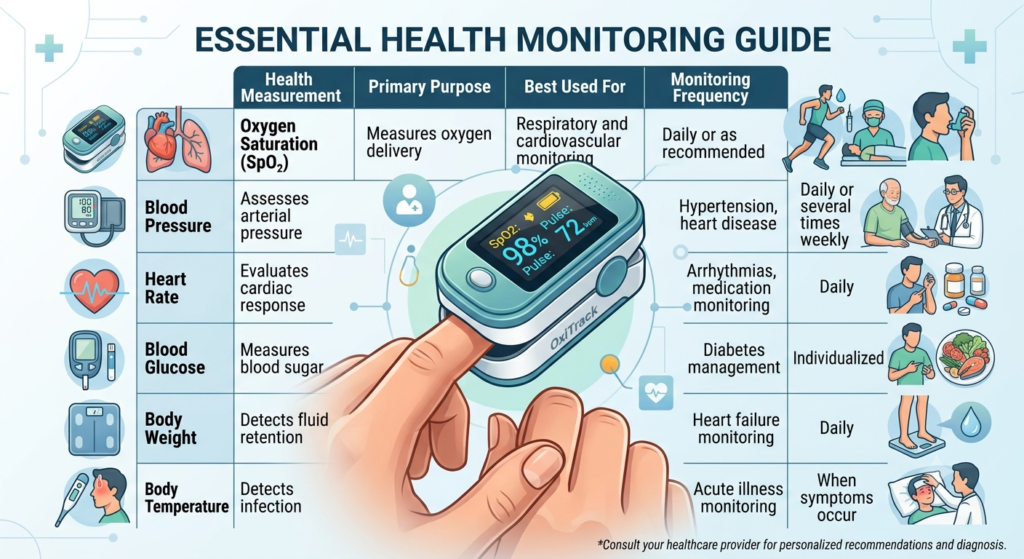
No single health measurement can fully describe an older adult’s overall condition. Oxygen saturation is one piece of a much larger clinical picture. When combined with other physiological measurements, it helps healthcare professionals recognize changes earlier and make more informed decisions.
The table below illustrates how oxygen saturation complements other commonly monitored health metrics.
| Health Measurement | Primary Purpose | Best Used For | Monitoring Frequency |
|---|---|---|---|
| Oxygen Saturation (SpO₂) | Measures oxygen delivery | Respiratory and cardiovascular monitoring | Daily or as recommended |
| Blood Pressure | Assesses arterial pressure | Hypertension, heart disease | Daily or several times weekly |
| Heart Rate | Evaluates cardiac response | Arrhythmias, medication monitoring | Daily |
| Blood Glucose | Measures blood sugar | Diabetes management | Individualized |
| Body Weight | Detects fluid retention | Heart failure monitoring | Daily |
| Body Temperature | Detects infection | Acute illness monitoring | When symptoms occur |
Rather than replacing one another, these measurements work together to provide a comprehensive understanding of health. A person with stable oxygen levels but rapidly increasing body weight may be developing fluid overload, while declining oxygen saturation combined with fever may indicate a respiratory infection.
Choosing the Right Pulse Oximeter
Not all pulse oximeters offer the same level of performance. While many consumer devices appear similar, differences in sensor quality, display readability, durability, and measurement consistency become increasingly important for older adults.
Features Worth Prioritizing
A suitable pulse oximeter for seniors should include:
- Large, high-contrast display
- Bright screen for daytime and nighttime use
- Simple one-button operation
- Fast stabilization of readings
- Automatic shut-off to preserve battery life
- Comfortable finger chamber
- Reliable readings with weaker circulation
- Low battery indicator
- Durable construction
- Easy-to-read pulse waveform or perfusion indicator (if available)
Features That Add Clinical Value
Some advanced devices include additional capabilities that improve long-term monitoring.
These may include:
- Bluetooth connectivity
- Smartphone synchronization
- Cloud-based data storage
- Trend reports
- Automatic clinician sharing
- Multiple user profiles
- Continuous overnight monitoring
- Integration with remote patient monitoring platforms
For individuals enrolled in home telehealth programs, connected devices reduce manual record keeping and allow clinicians to review measurements remotely.
Device Comparison Chart
| Feature | Basic Pulse Oximeter | Advanced Connected Device |
|---|---|---|
| Instant SpO₂ reading | ✓ | ✓ |
| Pulse rate | ✓ | ✓ |
| Large display | Usually | Usually |
| Bluetooth | No | Yes |
| Historical trends | Limited | Extensive |
| Smartphone app | No | Yes |
| Cloud sharing | No | Yes |
| Remote clinician access | No | Yes |
| Continuous monitoring | No | Some models |
Creating an Effective Oxygen Monitoring Routine
Consistency produces more useful information than frequent but irregular measurements.
Healthcare professionals often recommend establishing a predictable routine that fits naturally into daily life.
Sample Weekly Monitoring Framework
| Day | Morning | Afternoon | Evening |
|---|---|---|---|
| Monday | SpO₂ + Pulse | — | SpO₂ |
| Tuesday | SpO₂ + Pulse | After walking | SpO₂ |
| Wednesday | SpO₂ + Pulse | — | SpO₂ |
| Thursday | SpO₂ + Pulse | Light activity | SpO₂ |
| Friday | SpO₂ + Pulse | — | SpO₂ |
| Saturday | SpO₂ + Pulse | Outdoor activity | SpO₂ |
| Sunday | SpO₂ + Pulse | — | SpO₂ |
Individuals with chronic lung disease or heart failure may require more frequent measurements depending on their healthcare provider’s recommendations.
Recording readings in a notebook, spreadsheet, or digital monitoring application allows trends to emerge over weeks and months.
Warning Signs That Should Never Be Ignored
Pulse oximeters provide valuable information, but symptoms always deserve equal attention.
Seek prompt medical evaluation if oxygen saturation decreases significantly or if it is accompanied by:
- Persistent shortness of breath
- Chest pain
- Bluish lips or fingertips
- New confusion
- Difficulty waking
- Severe dizziness
- Rapid breathing
- Persistent coughing with worsening symptoms
- Fainting
- Sudden inability to speak in full sentences
A pulse oximeter should support clinical decision-making, not replace professional assessment.
Upcoming Trends & Latest Technology
Home respiratory monitoring is evolving rapidly. Modern healthcare increasingly combines wearable technology, connected medical devices, and digital health platforms to provide continuous insight into an older adult’s condition.
Over the coming years, oxygen saturation monitoring is expected to become more predictive, more automated, and better integrated into everyday life.
Continuous Wearable Sensors
Traditional fingertip devices provide individual readings.
Wearable sensors now allow:
- Continuous oxygen monitoring
- Overnight respiratory observation
- Activity-related oxygen tracking
- Automatic trend reporting
- Long-term data collection
These devices reduce the need for repeated manual measurements while providing clinicians with far richer datasets.
Artificial Intelligence-Assisted Trend Analysis
Modern monitoring platforms increasingly analyze changes over time rather than relying solely on fixed thresholds.
Future systems may identify subtle deterioration by recognizing:
- Gradual downward oxygen trends
- Changes during sleep
- Recovery rates after activity
- Combined changes across multiple vital signs
- Early signs of respiratory decline
Instead of reacting to emergencies, healthcare teams can intervene much earlier.
Integrated Home Monitoring Ecosystems
Future remote healthcare is likely to combine multiple connected devices into a single monitoring platform.
A typical system may include:
- Pulse oximeter
- Blood pressure monitor
- Digital weight scale
- Blood glucose monitor
- Smart thermometer
- Medication reminders
- Video consultations
Together, these technologies provide a more complete picture of health while reducing unnecessary clinic visits.
Contact-Free Monitoring
Researchers continue developing systems capable of estimating respiratory parameters without requiring wearable sensors.
Emerging technologies include:
- Camera-based monitoring
- Radar sensors
- Smart beds
- Intelligent room sensors
- Ambient monitoring systems
Although still developing, these innovations may simplify monitoring for individuals with limited mobility or cognitive impairment.
Future Technology Overview
| Technology | Current Availability | Potential Benefit |
|---|---|---|
| Bluetooth pulse oximeters | Widely available | Automatic data transfer |
| Wearable oxygen sensors | Increasing | Continuous monitoring |
| Smart health dashboards | Growing | Integrated health records |
| AI-assisted trend detection | Emerging | Earlier intervention |
| Contact-free monitoring | Experimental | Improved comfort |
| Predictive remote monitoring | Developing | Preventive healthcare |
People Also Ask
What is a normal oxygen level for elderly people?
Healthy older adults generally maintain oxygen saturation between 95% and 100%, similar to younger adults. However, individuals with chronic respiratory diseases such as COPD may have lower target ranges established by their healthcare provider. Rather than focusing on a single reading, clinicians evaluate long-term trends, symptoms, and overall health.
| Oxygen Saturation | Interpretation |
|---|---|
| 95–100% | Typical range for most healthy adults |
| 93–94% | Mild reduction requiring observation |
| 90–92% | Low level requiring medical advice |
| Below 90% | Medical assessment recommended promptly |
How often should elderly patients check their oxygen saturation?
Monitoring frequency depends on the individual’s medical condition.
| Situation | Suggested Frequency |
|---|---|
| Healthy older adult | Occasionally or as advised |
| COPD | Daily or as instructed |
| Heart failure | Daily if recommended |
| Respiratory infection | Several times daily during recovery |
| Home oxygen therapy | According to treatment plan |
Consistency is more valuable than frequent random measurements.
Can a pulse oximeter detect lung disease?
A pulse oximeter cannot diagnose lung disease. It measures how effectively oxygen reaches the bloodstream. Low oxygen saturation may suggest respiratory problems but requires clinical evaluation to determine the underlying cause.
Pulse oximetry should always be interpreted alongside symptoms, physical examination, and other investigations.
Why does oxygen saturation change during physical activity?
Exercise increases the body’s demand for oxygen. Most healthy individuals maintain stable oxygen saturation despite increased activity because the lungs and heart respond efficiently.
Older adults with chronic respiratory disease may experience noticeable decreases during exertion, which can help clinicians evaluate disease severity and treatment effectiveness.
Are smartwatch oxygen measurements as accurate as fingertip pulse oximeters?
Modern smartwatches continue improving, but fingertip pulse oximeters generally remain more accurate for routine home monitoring, particularly when precise measurements are required for medical decision-making.
Smartwatches provide valuable trend information but should not replace clinically validated devices when monitoring chronic disease.
Frequently Asked Questions
Can cold hands affect oxygen saturation readings?
Yes. Cold fingers reduce blood circulation, making it more difficult for the sensor to detect pulsatile blood flow accurately. Warming the hands before measurement usually improves reliability.
Does nail polish interfere with pulse oximeter readings?
Dark nail polish, artificial nails, and thick acrylic coatings may interfere with the light sensors used by pulse oximeters. Measuring on an uncovered finger often produces more consistent results.
Should oxygen saturation be measured before or after exercise?
Routine monitoring is generally performed after several minutes of rest to establish a consistent baseline. Measurements taken after activity may still be useful if specifically recommended by a healthcare professional to evaluate exercise tolerance.
Can oxygen saturation fluctuate throughout the day?
Small variations are normal. Changes in body position, activity level, breathing pattern, and circulation may produce slight differences. Persistent downward trends are generally more important than minor hourly fluctuations.
Is oxygen saturation monitoring safe for long-term daily use?
Yes. Pulse oximeters use harmless light rather than radiation and can be used repeatedly without causing injury. Daily monitoring is considered safe when performed according to the manufacturer’s instructions.
Editorial Insights
Oxygen saturation monitoring has evolved from a hospital-based assessment into one of the most practical tools for supporting healthy aging at home. Its greatest value lies not in isolated readings, but in revealing patterns that help identify gradual changes before they become medical emergencies.
As healthcare increasingly shifts toward connected, preventive care, pulse oximetry will become part of a broader ecosystem of intelligent home monitoring. Combined with blood pressure, heart rate, weight, glucose, and symptom tracking, oxygen saturation provides clinicians with a richer understanding of an individual’s health between appointments.
For older adults managing chronic respiratory or cardiovascular conditions, consistent monitoring encourages earlier intervention, more personalized treatment, and greater confidence in remaining independent. As wearable technology, predictive analytics, and connected health platforms continue to mature, oxygen saturation monitoring is poised to become a central component of modern geriatric care rather than simply another vital sign.